Loading...
Mahmud III of Mali vs Napoleon Bonaparte
Napoleon Bonaparte leads by 31.5 pts · 2 figures compared
…
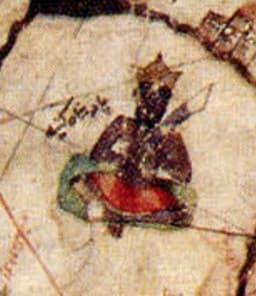
Mahmud III of Mali
Emperor · Medieval
39.4Total

Napoleon Bonaparte
General · Modern
70.9Total
Basic Information
Born
1450
1769
Died
1500
1821
Era
Medieval
Modern
Nationality
Mali Empire
France
Occupation
Emperor
General
Civilization
Other
Western
Score Comparison
Military (10%)
21.2
94.0
Political (20%)
32.2
72.0
Influence (20%)
50.2
40.0
Legacy (20%)
40.0
80.0
Leadership (15%)
41.5
78.0
Strategy (15%)
36.8
90.0
TOTAL
39.4
70.9
Mahmud III of Mali — Complete Timeline
1481 AD
Diplomatic mission to PortugalPolitical Action◆ Major
Mahmud III sent an embassy to King John II of Portugal, requesting military assistance against the rising Songhai Empire. The Portuguese did not provide substantial aid, but the mission demonstrated Mali's weakened state and its search for external allies.
Mali EmpirePortugalDiplomacySonghai
Impact: regional
Napoleon Bonaparte — Complete Timeline
1799 AD
Coup of 18 BrumaireOther◆ Major
Napoleon Bonaparte, with support from his brother Lucien and key political figures, overthrew the Directory in a bloodless coup. He established the Consulate with himself as First Consul, effectively becoming the ruler of France. This event ended the French Revolution's most unstable period.
French RevolutionCoupRise to Power
Impact: regional
1804 AD
Promulgation of the Napoleonic CodeOther◆ Major
Napoleon enacted the Civil Code of the French, known as the Napoleonic Code, a comprehensive set of laws that replaced the fragmented feudal legal systems. The code established legal equality, protected property rights, and secularized law. It became the basis for legal systems in many European and world countries.
Legal ReformNapoleonic CodeCivil Law
Impact: globalconstructive
1805 AD
Battle of AusterlitzWar◆ Major
Napoleon's Grande Arm
Napoleonic WarsBattleDecisive Victory
Impact: global
1812 AD
Invasion of RussiaWar◆ Major
Napoleon led the Grande Arm
Napoleonic WarsInvasionDisaster
Impact: globaldestructive
1815 AD
Battle of WaterlooWar◆ Major
Napoleon's French army was defeated by the combined forces of the Duke of Wellington's Anglo-Allied army and Gebhard Leberecht von Bl
Napoleonic WarsBattleFinal Defeat
Impact: globaldestructive
Expert Analysis
mahmud-iii-of-mali-vs-napoleon-bonaparte
# The Emperor and the Mansa: Two Paths of Power in an Age of Transformation
On a sweltering July afternoon in 1798, a short, intense man in his late twenties stood before the pyramids of Giza, addressing his army with words that would echo through history: "Soldiers, from the height of these pyramids, forty centuries look down upon you." Napoleon Bonaparte had just conquered Egypt, a feat that seemed to confirm his destiny as a man who could reshape the world. Three centuries earlier, in 1481, another ruler—Mansa Mahmud III of the Mali Empire—dispatched an embassy to the distant court of King John II of Portugal, begging for military aid against a rising enemy. One man would leave his mark across continents and centuries; the other would fade into near-oblivion. Why such different outcomes from two men who both sought to defend and expand their power?
Origins
Napoleon was born in 1769 on the Mediterranean island of Corsica, a territory that had passed from Genoese to French control only months before his birth. His family belonged to the minor nobility, but they were neither wealthy nor powerful. The young Napoleon grew up speaking Italian, not French, and his accent would mark him as an outsider throughout his life. Yet the French Revolution, which erupted when he was twenty, tore open the old order and created opportunities unimaginable under the ancien régime. A talented artillery officer could rise on merit alone.
Mahmud III was born around 1450 into a vastly different world. The Mali Empire had been the wealthiest and most powerful state in West Africa for centuries, its gold flowing north across the Sahara to Europe and the Middle East. The legendary Mansa Musa, who had made his pilgrimage to Mecca in 1324 with such staggering wealth that he crashed the Egyptian gold market, was an ancestor. But by Mahmud’s time, the empire was in decline. Succession disputes, rebellious provinces, and the rise of the Songhai Empire to the east had eroded Mali’s power. Unlike Napoleon, who inherited a world in revolutionary flux, Mahmud inherited a fading legacy.
Rise to Power
Napoleon’s ascent was meteoric. In 1793, at just twenty-four, he commanded the artillery that drove British forces from the port of Toulon. Two years later, he saved the revolutionary government from a royalist uprising with a "whiff of grapeshot"—a brutal cannonade that cleared the streets of Paris. By 1796, he was given command of the French army in Italy, where he turned a starving, ragged force into a conquering legion, defeating the Austrians in a series of brilliant campaigns. Each victory elevated him further. He was not a man who waited for opportunity; he seized it.
Mahmud III’s rise was more constrained. He became mansa around 1450, inheriting an empire that had already lost its western provinces to the rising Songhai. His authority was limited by powerful provincial governors and rival clans. Unlike Napoleon, who could forge a new army from the raw material of revolutionary France, Mahmud could not simply command loyalty; he had to negotiate, bribe, and plead. When the Songhai threat grew unbearable, he turned to the only distant power he knew could provide modern weapons: Portugal. In 1481, he sent an embassy to King John II, requesting military assistance. The Portuguese king received the envoys with courtesy but offered little concrete help. Portugal was more interested in its own African adventures—exploring the coast, trading for gold and slaves—than in propping up a fading inland empire.
Leadership & Governance
Napoleon was a military genius, scoring 93 in strategy, but he was also a political reformer. The Napoleonic Code, introduced in 1804, standardized French law, abolished feudal privileges, and established principles of equality before the law. He reorganized education, created the Bank of France, and built roads and canals that knit the nation together. His leadership score of 80 reflects a man who could inspire fierce loyalty—his soldiers called him "the Little Corporal" with affection—but also demand absolute obedience. He governed through a blend of meritocracy and autocracy, promoting talented men regardless of birth while concentrating all power in his own hands.
Mahmud III’s governance was far more traditional. As mansa, he was the supreme ruler, but his power was checked by the council of elders, the provincial governors, and the powerful Muslim scholars who interpreted Islamic law. His political score of 48.1 suggests a ruler who struggled to assert authority. The diplomatic mission to Portugal was a sign of desperation: a medieval emperor seeking modern technology because his own resources were insufficient. He lacked Napoleon’s ability to mobilize a nation, to reform its institutions, to create new sources of strength.
Triumph & Tragedy
Napoleon’s greatest triumph was the Empire itself. By 1810, he controlled most of Europe from Spain to Poland, his brothers and marshals installed on thrones across the continent. His military strategy—rapid marches, concentration of force, decisive battles—rewrote the rules of warfare. His greatest tragedy was his invasion of Russia in 1812. He marched with half a million men; fewer than fifty thousand returned. The disaster shattered his aura of invincibility, and within two years, he was exiled to Elba. He escaped, returned for the Hundred Days, and met final defeat at Waterloo in 1815, where his 94 military score could not overcome the combined forces of Britain and Prussia.
Mahmud III’s triumphs were modest. He maintained the Mali Empire for another half-century, resisting Songhai expansion longer than many expected. His tragedy was that he could not reverse decline. The Portuguese aid never came in sufficient force, and after his death around 1500, the empire fragmented further. By the time the Songhai conquered the last Malian strongholds in the 1540s, Mahmud’s name was already fading from memory.
Character & Destiny
Napoleon was driven by an insatiable ambition, a belief that he was destined to shape history. "Impossible," he once said, "is a word to be found only in the dictionary of fools." His personality—brilliant, ruthless, charismatic—allowed him to rise but also led to his fall. He could not stop conquering, could not accept limits, could not trust his subordinates with real power. His character was both his engine and his undoing.
Mahmud III was a man of his time and place. He was a traditional ruler trying to save a traditional empire in a world that was changing around him. He lacked Napoleon’s revolutionary context, his access to new ideas and technologies, his ability to remake society. His character was cautious, diplomatic, patient—qualities that might have served a stable empire but could not reverse decay.
Legacy
Napoleon’s legacy is immense. The Napoleonic Code influenced legal systems across Europe and the Americas. He reshaped the map of Europe, spread nationalism, and inspired military thinkers for generations. His score of 82.4 overall reflects a man who, despite his ultimate defeat, changed the world.
Mahmud III’s legacy is faint. Historians remember him primarily for the Portuguese embassy, a footnote in the story of European expansion into Africa. His overall score of 48.9 reflects a ruler who could not stop the decline of his empire. Yet his story is not without meaning. It reminds us that history does not belong only to the victorious, but also to those who struggled against forces too great for any single ruler to overcome.
Conclusion
Napoleon and Mahmud III stand at opposite ends of the spectrum of historical success, yet both faced the same fundamental challenge: how to preserve and extend power in a world of change. Napoleon rode the wave of revolution; Mahmud was swept away by the tide of decline. One had the tools to remake his world; the other could only try to hold on to what was slipping away. Their stories, read together, reveal the cruel truth that history favors those who arrive at the right moment with the right ideas—and that even the most determined ruler cannot always choose his time.
Rankings
🥇
Napoleon BonaparteLeader
Mil: 94.0Pol: 72.0Inf: 40.0
70.9
🥈
Mahmud III of Mali
Mil: 21.2Pol: 32.2Inf: 50.2
39.4
+31.5 behind
How This Comparison Works
Algorithm
Each figure is scored on 6 dimensions (0—100 scale) based on structured historical data: Military (10%), Political (20%), Influence (20%), Legacy (20%), Leadership (15%), Strategy (15%). The weighted total produces the final ranking.
Data Sources
Scores are computed from structured sub-indicators in the database. Scale factors adjust for era (Ancient ×0.85, Modern ×1.0) and civilization size (Eastern ×1.05, Other ×0.80) to account for differences in population and military scale.
Maximum 3 Figures
Comparisons are limited to 2—3 figures to ensure readability and statistical meaningfulness.
Error Margins
±5 points per dimension — Sub-scores are derived from historical records with inherent uncertainty. Two figures within 5 points on a dimension should be considered roughly equivalent in that area.
Total Score Accuracy
±3 points overall — The weighted combination of 6 dimensions produces a total score with approximately ±3 points of uncertainty. Differences of less than 3 points are not statistically significant— the figures are effectively tied.
Known Limitations
- Historical records are incomplete and uneven across civilizations
- Figures from oral-tradition societies may be underrepresented
- Occupation labels can misclassify multi-role figures
- Scores measure capability and impact, not moral character
- Quantitative scoring is a comparison tool, not absolute truth
Capability Radar
Military (10%) — Battles & Warfare
Battles
10
95
Win Rate
10
90
Expansion
10
95
Political (20%) — Governance & Reform
Reform
20
95
Diplomacy
40
80
Economy
20
85
Influence (20%) — Cultural & Global Reach
Cultural
20
85
Global
20
90
Legacy (20%) — Historical Impact
Historical
20
95
Longevity
20
90
Leadership (15%) — Power & Stability
Tenure
30
85
Stability
20
70
Strategy (15%) — Tactics & Innovation
Strategy
10
95
Tactics
10
98
Reform
10
92
Similar Comparisons
Comments & Discussion
征服者之魂6/17/2026
拿破仑的崛起靠的是革命浪潮,他抓到机会,也利用了火药。而马哈茂德三世呢?他活在1481年,面临葡萄牙的海洋霸权,却只能派使者去跪求帮助。差距不在个人能力,在时代:一个开了全球化先河,一个被困在旧世界的角落。拿破仑赢在运气,马哈茂德败在命不好。历史不赏脸的,就是输家。
傲慢与无知6/17/2026
历史课本把拿破仑吹成神,但他不过是欧洲病态系统里的一条毒蛇。反观马哈茂德三世,他的处境更艰难:内部诸侯割据,外部葡萄牙虎视眈眈。可我们只说拿破仑多伟大,却不问马哈茂德为何失败。因为欧洲中心主义作祟,非洲帝王就被看作“乞讨者”。别骗自己了,拿破仑的成功建在血与火之上,而马哈茂德的悲剧才是常态。
Chronicler68956/17/2026
Let’s crunch: Napoleon’s Grande Armée peaked at 600,000 men. Mali under Mahmud III might have mustered 20,000. One faced coalition after coalition; the other just the Songhai and Portuguese. The real difference? Institutional capacity. Napoleon had a centralized state feeding his war machine; Mahmud had a decentralized feudal mess. No amount of genius can fix that. He lost before he started—sad but true.
Chronicler95426/17/2026
Let’s zoom out: Mahmud III’s 1481 embassy to Portugal wasn’t just begging—it was a strategic move in a game where Mali had dominated for centuries. Napoleon’s 1798 pyramid speech? Pure theater, but brilliant. One was the end of a story, the other the beginning. Mahmud’s Mali was already in decline, while Napoleon was an empire in the making. That’s the difference: not ability, but where you sit in the cycle. Respect the context.