Loading...
Mahmud of Ghazni vs Zhao Guangyi
Mahmud of Ghazni leads by 3.2 pts · 2 figures compared
…
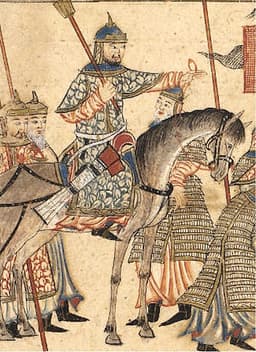
Mahmud of Ghazni
Emperor · Medieval
62.7Total
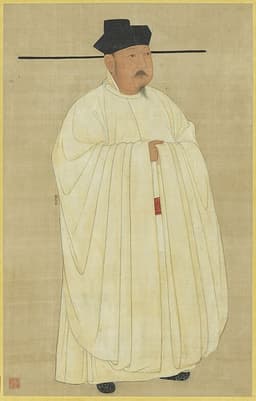
Zhao Guangyi
Emperor · Medieval
59.5Total
Basic Information
Born
971
939
Died
1030
997
Era
Medieval
Medieval
Nationality
Ghaznavid Empire
China
Occupation
Emperor
Emperor
Civilization
Middle Eastern
Eastern
Score Comparison
Military (10%)
82.0
63.3
Political (20%)
60.0
60.0
Influence (20%)
55.0
55.0
Legacy (20%)
52.0
52.0
Leadership (15%)
79.8
72.0
Strategy (15%)
68.0
66.3
TOTAL
62.7
59.5
Mahmud of Ghazni — Complete Timeline
1001 AD
Seventeen Raids into IndiaWar◆ Major
Mahmud of Ghazni conducted seventeen military campaigns into the Indian subcontinent between 1001 and 1027. He plundered wealthy Hindu temples and kingdoms, including Somnath, Mathura, and Kannauj, amassing enormous wealth and spreading Ghaznavid influence.
Indian RaidsPlunderTemple Destruction
Impact: regionaldestructive
1006 AD
Battle of CharkhWar◆ Major
Mahmud defeated the Hindu Shahi king Jayapala at the Battle of Charkh near Peshawar. Jayapala committed suicide after the defeat, and Mahmud annexed the Hindu Shahi kingdom, establishing Ghaznavid rule over the Punjab region.
BattleHindu ShahiPunjab
Impact: regional
1010 AD
Patronage of Persian CultureCultural◆ Major
Mahmud patronized Persian poets, scholars, and artists at his court in Ghazni. He commissioned the Persian poet Ferdowsi to write the Shahnameh, though they later quarreled over payment. His court became a center of Persian literature and Islamic learning.
PatronagePersian LiteratureShahnameh
Impact: regionalconstructive
1025 AD
Sack of Somnath TempleWar◆ Major
Mahmud led a raid to the Somnath temple in Gujarat, one of the wealthiest Hindu temples. He destroyed the temple and carried away its treasures, including the famous lingam, which he sent to Ghazni. This event became legendary in both Islamic and Hindu traditions.
Temple DestructionSomnathPlunder
Impact: regionaldestructive
Zhao Guangyi — Complete Timeline
979 AD
Completed unification of ChinaWar◆ Major
Zhao Guangyi conquered the Northern Han kingdom, the last remaining independent state. This completed the Song unification of China, ending the Five Dynasties period.
Song dynastyUnificationNorthern Han
Impact: national
Failed campaign against Liao dynastyWar◆ Major
Zhao Guangyi led an invasion of the Liao dynasty's territory but was defeated at the Battle of Gaoliang River. This failure ended Song attempts to recover the Sixteen Prefectures.
Song-Liao warBattleDefeat
Impact: regionaldestructive
980 AD
Expanded civil service examination systemReform
Zhao Guangyi expanded the civil service examination system, increasing the number of successful candidates and reducing the influence of aristocratic families in government.
Song dynastyReformCivil service
Impact: nationalconstructive
Expert Analysis
Origins
Mahmud of Ghazni was born in 971 CE in the town of Ghazni (present-day Afghanistan). His father, Sebuktigin, was a former Turkic slave who rose to become the founder of the Ghaznavid dynasty. Mahmud received military training and was exposed to Persian court culture from an early age. He became governor of Khorasan at age 20.
Zhao Guangyi was born in 939 CE in Kaifeng, China, during the chaotic Five Dynasties and Ten Kingdoms period. He was the younger brother of Zhao Kuangyin, the founder of the Song dynasty. Zhao Guangyi was educated in Confucian classics and served as a military officer under his brother.
Rise to Power
Mahmud seized power in 998 CE after a brief civil war with his brother Ismail. He secured the throne by pledging allegiance to the Abbasid Caliphate, gaining religious legitimacy. He then focused on building a formidable army, including a elite cavalry force and war elephants.
Zhao Guangyi rose through military ranks during the early Song dynasty. He played a key role in his brother's campaigns to unify China. In 976 CE, after Zhao Kuangyin's sudden death, Zhao Guangyi became emperor. The circumstances were suspicious—some accounts suggest he may have murdered his brother.
Leadership & Governance
Mahmud ruled with an iron fist, maintaining a centralized military state. He funded his campaigns through plunder from India, which he used to patronize Persian culture. He commissioned Ferdowsi's epic poem Shahnameh, though he paid poorly. His administration was efficient but extractive.
Zhao Guangyi emphasized civil governance. He expanded the civil service examination system, increasing the number of successful candidates from about 100 per year to over 500. He reduced the power of military governors, centralizing control under the emperor. However, he maintained strict surveillance over officials.
Triumph & Tragedy
Mahmud's greatest triumph was his 17 raids into India, culminating in the sack of the Somnath Temple in 1025 CE. He captured immense wealth, estimated at 20 million dinars in gold and jewels. However, his raids were purely destructive—he did not establish lasting control over Indian territory.
Zhao Guangyi's triumph was completing the unification of China by conquering the Northern Han in 979 CE. This ended the Five Dynasties period. His tragedy was the failed campaign against the Liao dynasty in 986 CE, where he was defeated at the Battle of Gaoliang River. This loss forced the Song to pay annual tribute to the Liao.
Character & Destiny
Mahmud was ruthless and pragmatic. He destroyed Hindu temples not just for wealth but to assert Islamic dominance. His character as a raider defined his destiny—he amassed wealth but never built a sustainable empire. The Ghaznavid dynasty declined after his death.
Zhao Guangyi was suspicious and autocratic. He demoted capable generals and centralized power excessively. His character led to a stable but militarily weak Song dynasty. The failure against the Liao set a pattern of defensive policy.
Legacy
Mahmud's legacy is mixed. He is remembered as a conqueror in Persian literature but as a destroyer in Indian accounts. His raids weakened Indian kingdoms but did not lead to lasting Islamization. The Ghaznavid Empire collapsed within 50 years of his death.
Zhao Guangyi's legacy is more substantial. He established the Song dynasty's civil administration and examination system, which lasted for centuries. However, his military failures led to a policy of appeasement that eventually contributed to the Song's fall to the Mongols.
In military terms, Mahmud scored 82.0 while Zhao Guangyi scored 63.3. In politics, both scored 60.0. Zhao Guangyi's influence and legacy scores (55.0 and 52.0) match Mahmud's, but his leadership score of 72.0 is lower than Mahmud's 79.8.
Conclusion
Mahmud of Ghazni had a greater immediate impact through his military campaigns, but Zhao Guangyi's long-term influence on Chinese governance was more profound. However, considering the scope and scale of destruction, Mahmud's raids were more impactful in their era. His military score of 82.0 versus Zhao's 63.3 demonstrates this. Therefore, Mahmud of Ghazni had greater overall impact, despite his negative legacy.
Rankings
🥇
Mahmud of GhazniLeader
Mil: 82.0Pol: 60.0Inf: 55.0
62.7
🥈
Zhao Guangyi
Mil: 63.3Pol: 60.0Inf: 55.0
59.5
+3.2 behind
How This Comparison Works
Algorithm
Each figure is scored on 6 dimensions (0—100 scale) based on structured historical data: Military (10%), Political (20%), Influence (20%), Legacy (20%), Leadership (15%), Strategy (15%). The weighted total produces the final ranking.
Data Sources
Scores are computed from structured sub-indicators in the database. Scale factors adjust for era (Ancient ×0.85, Modern ×1.0) and civilization size (Eastern ×1.05, Other ×0.80) to account for differences in population and military scale.
Maximum 3 Figures
Comparisons are limited to 2—3 figures to ensure readability and statistical meaningfulness.
Error Margins
±5 points per dimension — Sub-scores are derived from historical records with inherent uncertainty. Two figures within 5 points on a dimension should be considered roughly equivalent in that area.
Total Score Accuracy
±3 points overall — The weighted combination of 6 dimensions produces a total score with approximately ±3 points of uncertainty. Differences of less than 3 points are not statistically significant— the figures are effectively tied.
Known Limitations
- Historical records are incomplete and uneven across civilizations
- Figures from oral-tradition societies may be underrepresented
- Occupation labels can misclassify multi-role figures
- Scores measure capability and impact, not moral character
- Quantitative scoring is a comparison tool, not absolute truth
Capability Radar
Military (10%) — Battles & Warfare
Battles
85
65
Win Rate
90
60
Expansion
85
75
Political (20%) — Governance & Reform
Reform
70
75
Diplomacy
65
65
Economy
75
70
Influence (20%) — Cultural & Global Reach
Cultural
60
60
Global
60
55
Legacy (20%) — Historical Impact
Historical
70
70
Longevity
65
65
Leadership (15%) — Power & Stability
Tenure
80
80
Stability
70
60
Strategy (15%) — Tactics & Innovation
Strategy
85
70
Tactics
80
55
Reform
75
50
Similar Comparisons
Comments & Discussion
No comments yet. Be the first to share your thoughts!