Loading...
Parakramabahu I vs Zhao Guangyi
Parakramabahu I leads by 6.6 pts · 2 figures compared
…
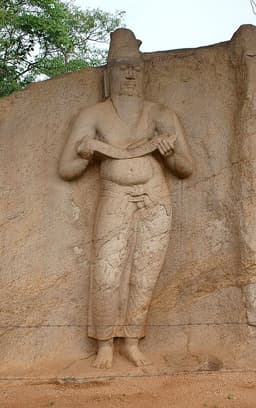
Parakramabahu I
Emperor · Medieval
66.1Total
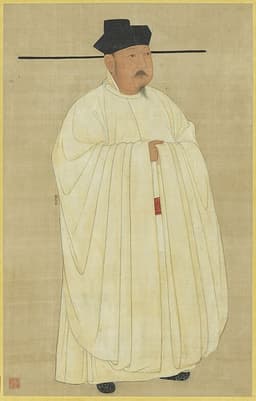
Zhao Guangyi
Emperor · Medieval
59.5Total
Basic Information
Born
1123
939
Died
1186
997
Era
Medieval
Medieval
Nationality
Sri Lanka
China
Occupation
Emperor
Emperor
Civilization
Indian
Eastern
Score Comparison
Military (10%)
82.0
63.3
Political (20%)
72.0
60.0
Influence (20%)
61.0
55.0
Legacy (20%)
52.0
52.0
Leadership (15%)
82.0
72.0
Strategy (15%)
65.4
66.3
TOTAL
66.1
59.5
Parakramabahu I — Complete Timeline
1153 AD
Unification of Sri LankaWar
Parakramabahu I unified the entire island of Sri Lanka under his rule after a series of military campaigns. He defeated the rulers of Ruhuna and other regional kingdoms, ending a period of fragmentation.
Impact: national
1160 AD
Construction of Parakrama SamudraOther◆ Major
Parakramabahu I constructed the Parakrama Samudra, a massive man-made sea of interconnected tanks and canals near Polonnaruwa. This irrigation system, covering over 5,000 acres, was a major engineering achievement.
Impact: regionalconstructive
1165 AD
Invasion of BurmaWar◆ Major
Parakramabahu I launched a naval invasion of Burma (Pagan Kingdom) in retaliation for a trade dispute. The Sinhalese fleet captured the port of Kusumiya and sacked the city, demonstrating Sri Lanka's naval power.
Impact: regional
Reform of the Buddhist SanghaReform◆ Major
Parakramabahu I convened a council to purify the Buddhist Sangha. He expelled corrupt monks and re-established discipline, strengthening Theravada Buddhism in Sri Lanka.
Impact: nationalconstructive
1170 AD
Construction of Polonnaruwa VatadageCultural◆ Major
Parakramabahu I built the Polonnaruwa Vatadage, a circular relic house for the Tooth Relic of the Buddha. This structure is considered a masterpiece of Sinhalese architecture.
Impact: nationalconstructive
Zhao Guangyi — Complete Timeline
979 AD
Completed unification of ChinaWar◆ Major
Zhao Guangyi conquered the Northern Han kingdom, the last remaining independent state. This completed the Song unification of China, ending the Five Dynasties period.
Song dynastyUnificationNorthern Han
Impact: national
Failed campaign against Liao dynastyWar◆ Major
Zhao Guangyi led an invasion of the Liao dynasty's territory but was defeated at the Battle of Gaoliang River. This failure ended Song attempts to recover the Sixteen Prefectures.
Song-Liao warBattleDefeat
Impact: regionaldestructive
980 AD
Expanded civil service examination systemReform
Zhao Guangyi expanded the civil service examination system, increasing the number of successful candidates and reducing the influence of aristocratic families in government.
Song dynastyReformCivil service
Impact: nationalconstructive
Expert Analysis
Origins
Parakramabahu I (born 1123) was a prince of the Kingdom of Polonnaruwa in Sri Lanka. His father, King Manabharana, ruled a minor principality. Parakramabahu grew up during a period of fragmentation, with multiple competing kingdoms on the island. He received a traditional Sinhalese education in Buddhist scriptures and statecraft, and early on displayed ambition to reunify the island.
Zhao Guangyi (born 939) was the younger brother of Song Taizu, the founder of the Song dynasty. He was born in Kaifeng into a military family that had served the Later Zhou. He was educated in Confucian classics and military strategy, and he assisted his brother in consolidating power before ascending the throne himself.
Rise to Power
Parakramabahu I seized power in 1153 after a series of civil wars. He first consolidated control over the Dakkhinadesa region, then launched campaigns against the Kingdom of Ruhuna. By 1155, he had unified the entire island, defeating the last independent ruler in Ruhuna. His military score of 82.0 reflects his success in these campaigns.
Zhao Guangyi became emperor in 976 upon the death of his brother, Song Taizu. He had already been a key general and administrator. His first major act was to conquer the Northern Han kingdom in 979, completing the unification of China proper. His political score of 60.0 reflects his ability to secure the throne despite suspicions of fratricide.
Leadership & Governance
Parakramabahu I was an autocratic ruler who centralized power. He reformed the Buddhist Sangha, expelling corrupt monks and re-establishing discipline. He also built the Parakrama Samudra, a massive irrigation system that boosted agriculture. His leadership score of 82.0 reflects his effective governance, but his legacy score of 52.0 is limited by the subsequent decline of Polonnaruwa.
Zhao Guangyi expanded the civil service examination system, reducing aristocratic influence and promoting meritocracy. He also compiled the Four Great Books of Song, promoting Confucian learning. However, his military failures against the Liao dynasty (scoring 63.3) undermined his reputation. His governance score of 72.0 reflects his administrative reforms.
Triumph & Tragedy
Parakramabahu I's greatest triumph was the unification of Sri Lanka and the construction of the Parakrama Samudra, which still irrigates thousands of acres. His naval invasion of Burma in 1164 captured the port of Kusumi, but the campaign was costly and did not lead to lasting conquest. His tragedy was that his empire fragmented after his death, and Polonnaruwa declined.
Zhao Guangyi's triumph was completing the unification of China, ending the Five Dynasties period. However, his failed campaign against the Liao at the Battle of Gaoliang River in 979 ended Song hopes of recovering the Sixteen Prefectures. This failure haunted Song foreign policy for centuries.
Character & Destiny
Parakramabahu I was ambitious and ruthless, willing to wage war to achieve unification. He was also a patron of Buddhism and public works. His character led him to build a centralized state, but his overextension in Burma strained resources. Historical assessments note his energy but also his lack of long-term planning for succession.
Zhao Guangyi was cautious and suspicious, possibly involved in his brother's death. He prioritized stability and cultural projects over military expansion. His character led to a consolidation of Song power but also a defensive posture that left the dynasty vulnerable to northern invaders.
Legacy
Parakramabahu I is remembered as the greatest Sinhalese king, with his irrigation works still in use. His unification is a touchstone of Sri Lankan nationalism. However, his legacy score of 52.0 reflects the temporary nature of his achievements.
Zhao Guangyi's legacy is mixed: he completed unification but failed to secure the north. The civil service system he expanded became a hallmark of Chinese governance. His legacy score of 52.0 is similar, but his influence on Chinese bureaucracy is enduring.
Conclusion
Parakramabahu I had a higher total score (66.1 vs. 59.5) and a more decisive military impact. While Zhao Guangyi's administrative reforms were significant, Parakramabahu's unification of Sri Lanka and his engineering feats were more transformative for his region. Thus, Parakramabahu I was the greater figure.
Rankings
🥇
Parakramabahu ILeader
Mil: 82.0Pol: 72.0Inf: 61.0
66.1
🥈
Zhao Guangyi
Mil: 63.3Pol: 60.0Inf: 55.0
59.5
+6.6 behind
How This Comparison Works
Algorithm
Each figure is scored on 6 dimensions (0—100 scale) based on structured historical data: Military (10%), Political (20%), Influence (20%), Legacy (20%), Leadership (15%), Strategy (15%). The weighted total produces the final ranking.
Data Sources
Scores are computed from structured sub-indicators in the database. Scale factors adjust for era (Ancient ×0.85, Modern ×1.0) and civilization size (Eastern ×1.05, Other ×0.80) to account for differences in population and military scale.
Maximum 3 Figures
Comparisons are limited to 2—3 figures to ensure readability and statistical meaningfulness.
Error Margins
±5 points per dimension — Sub-scores are derived from historical records with inherent uncertainty. Two figures within 5 points on a dimension should be considered roughly equivalent in that area.
Total Score Accuracy
±3 points overall — The weighted combination of 6 dimensions produces a total score with approximately ±3 points of uncertainty. Differences of less than 3 points are not statistically significant— the figures are effectively tied.
Known Limitations
- Historical records are incomplete and uneven across civilizations
- Figures from oral-tradition societies may be underrepresented
- Occupation labels can misclassify multi-role figures
- Scores measure capability and impact, not moral character
- Quantitative scoring is a comparison tool, not absolute truth
Capability Radar
Military (10%) — Battles & Warfare
Battles
75
65
Win Rate
80
60
Expansion
70
75
Political (20%) — Governance & Reform
Reform
80
75
Diplomacy
70
65
Economy
75
70
Influence (20%) — Cultural & Global Reach
Cultural
65
60
Global
40
55
Legacy (20%) — Historical Impact
Historical
70
70
Longevity
60
65
Leadership (15%) — Power & Stability
Tenure
85
80
Stability
80
60
Strategy (15%) — Tactics & Innovation
Strategy
75
70
Tactics
70
55
Reform
65
50
Similar Comparisons
Comments & Discussion
No comments yet. Be the first to share your thoughts!