Loading...
Mahmud of Ghazni vs Taejo of Joseon
Taejo of Joseon leads by 7.7 pts · 2 figures compared
…
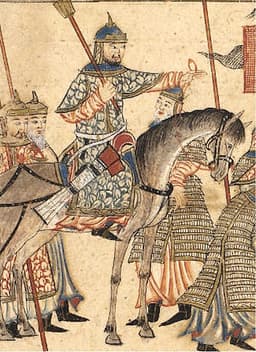
Mahmud of Ghazni
Emperor · Medieval
62.7Total
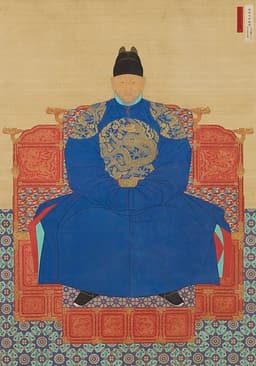
Taejo of Joseon
Emperor · Medieval
70.4Total
Basic Information
Born
971
1335
Died
1030
1408
Era
Medieval
Medieval
Nationality
Ghaznavid Empire
Korea
Occupation
Emperor
Emperor
Civilization
Middle Eastern
Eastern
Score Comparison
Military (10%)
82.0
74.7
Political (20%)
60.0
65.0
Influence (20%)
55.0
65.0
Legacy (20%)
52.0
80.0
Leadership (15%)
79.8
72.0
Strategy (15%)
68.0
61.2
TOTAL
62.7
70.4
Mahmud of Ghazni — Complete Timeline
1001 AD
Seventeen Raids into IndiaWar◆ Major
Mahmud of Ghazni conducted seventeen military campaigns into the Indian subcontinent between 1001 and 1027. He plundered wealthy Hindu temples and kingdoms, including Somnath, Mathura, and Kannauj, amassing enormous wealth and spreading Ghaznavid influence.
Indian RaidsPlunderTemple Destruction
Impact: regionaldestructive
1006 AD
Battle of CharkhWar◆ Major
Mahmud defeated the Hindu Shahi king Jayapala at the Battle of Charkh near Peshawar. Jayapala committed suicide after the defeat, and Mahmud annexed the Hindu Shahi kingdom, establishing Ghaznavid rule over the Punjab region.
BattleHindu ShahiPunjab
Impact: regional
1010 AD
Patronage of Persian CultureCultural◆ Major
Mahmud patronized Persian poets, scholars, and artists at his court in Ghazni. He commissioned the Persian poet Ferdowsi to write the Shahnameh, though they later quarreled over payment. His court became a center of Persian literature and Islamic learning.
PatronagePersian LiteratureShahnameh
Impact: regionalconstructive
1025 AD
Sack of Somnath TempleWar◆ Major
Mahmud led a raid to the Somnath temple in Gujarat, one of the wealthiest Hindu temples. He destroyed the temple and carried away its treasures, including the famous lingam, which he sent to Ghazni. This event became legendary in both Islamic and Hindu traditions.
Temple DestructionSomnathPlunder
Impact: regionaldestructive
Taejo of Joseon — Complete Timeline
1380 AD
Battle of HwangsanWar
General Yi Seong-gye defeated a Japanese pirate (wokou) force at Hwangsan. This victory enhanced his military reputation and demonstrated his capability as a commander.
WokouGoryeo Military
1388 AD
Wihwado RetreatPolitical Action
General Yi Seong-gye, ordered to invade the Ming dynasty's Liaodong region, turned his army back at Wihwado Island. This act of defiance against the Goryeo court led to a coup that eventually brought him to power.
CoupGoryeo-Ming RelationsPower Shift
Impact: national
1391 AD
Land Reform and the Gwajeon LawReform◆ Major
Taejo implemented the Gwajeon Law, a land reform that redistributed land from the old Goryeo aristocracy to his supporters and the state. This weakened the old elite and strengthened the new Joseon ruling class.
Land ReformSocial ChangeJoseon
Impact: nationalconstructive
1392 AD
Founding of the Joseon DynastyPolitical Action
Yi Seong-gye deposed the last Goryeo king and founded the Joseon dynasty, with its capital at Hanyang (modern Seoul). He established a new ruling class based on Confucian ideology, replacing the Buddhist-influenced Goryeo system.
Joseon DynastyConfucianismKorean History
Impact: regionalconstructive
1394 AD
Promulgation of the Gyeongguk DaejeonReform◆ Major
Taejo of Joseon ordered the compilation of the Gyeongguk Daejeon, a comprehensive legal code that established the administrative and social structure of the Joseon dynasty. This code remained in effect for centuries.
Legal CodeGovernanceConfucianism
Impact: nationalconstructive
Expert Analysis
Origins
Mahmud of Ghazni was born in 971 in the city of Ghazni (present-day Afghanistan). His father, Sebuktigin, was a Turkic slave-soldier who founded the Ghaznavid dynasty. Mahmud received military training and court education under his father's rule. Upon Sebuktigin's death in 997, Mahmud fought his brother Ismail for succession, emerging victorious in 998.
Taejo of Joseon, born Yi Seong-gye in 1335 in the Goryeo kingdom (modern-day Korea), came from a minor military family. His father, Yi Ja-chun, was a Mongol official. Yi Seong-gye grew up in a turbulent period when the Goryeo dynasty was weakened by Mongol influence and internal strife. He began his military career as a low-ranking officer.
Rise to Power
Mahmud's rise came through military conquest. After securing Ghazni, he launched campaigns into Khorasan and Transoxiana, gaining recognition from the Abbasid Caliph in Baghdad, who granted him the title of Sultan in 999. Mahmud then focused on India, conducting seventeen raids between 1001 and 1027. The Battle of Charkh (1001) against the Hindu Shahi king Jayapala marked his first major Indian victory, leading to the annexation of the Punjab region.
Taejo's rise began with military successes against Japanese pirates (wokou) and later against Mongol remnants. His greatest turning point was the Wihwado Retreat in 1388. Ordered by the Goryeo court to invade the Ming dynasty's Liaodong region, General Yi instead turned his army back, defying the king. This act gained him popular support. He then purged his rivals, deposed the last Goryeo king, and founded the Joseon dynasty in 1392.
Leadership & Governance
Mahmud ruled as an autocratic military leader. He centralized power in Ghazni, appointed loyal Turkic and Persian officials, and used plundered wealth to maintain a large army. He patronized Persian culture, commissioning Ferdowsi's epic Shahnameh (though payment was disputed). However, his governance relied heavily on continuous conquest for revenue, making the empire unstable after his death.
Taejo established a Confucian bureaucracy, replacing the previous Buddhist-dominated aristocracy. He promulgated the Gyeongguk Daejeon, a legal code that structured government and society. His Gwajeon Law redistributed land from the old Goryeo elite to his supporters and the state, weakening traditional power bases and creating a new scholar-official class. He moved the capital to Hanyang (Seoul) and built palaces and city walls. His governance focused on institutional longevity rather than personal glory.
Triumph & Tragedy
Mahmud's greatest success was his military campaign against the Somnath Temple in 1025, where he captured immense wealth and destroyed a major Hindu shrine. He also expanded the Ghaznavid Empire to its peak, stretching from the Caspian Sea to the Indus River. However, his repeated raids devastated northern India but failed to establish lasting Ghaznavid control beyond the Punjab. His empire fragmented shortly after his death in 1030.
Taejo's triumph was founding the Joseon dynasty, which lasted 505 years (1392-1910). His land reforms and legal codes created a stable administrative system. However, his later years were marred by succession struggles. He abdicated in 1398 after his son Yi Bang-won (later King Taejong) killed rival princes. Taejo's tragedy was that his own family's ambition overshadowed his founding vision.
Character & Destiny
Mahmud was ambitious, ruthless, and pragmatic. He used religion (Islam) to justify his Indian raids, though he also persecuted non-Muslims within his realm. His character drove him to constant warfare, but his lack of long-term planning led to his empire's collapse. Historians note his patronage of learning but criticize his destructive campaigns. In overall scores, Mahmud scored 62.7, with military at 82.0 and strategy at 68.0.
Taejo was pragmatic, cautious, and institution-minded. He prioritized stability over expansion, avoiding conflict with Ming China. His decision to retreat at Wihwado showed political acumen. However, his abdication and the subsequent power struggles reveal a leader unable to control his heirs. Taejo's total score is 70.4, with legacy at 80.0 and political at 65.0.
Legacy
Mahmud's legacy is mixed. He introduced Persian culture to the Indian subcontinent and contributed to the spread of Islam, but his plundering destroyed many Hindu temples and monuments. The Ghaznavid dynasty collapsed within decades, and his impact on India was largely ephemeral beyond the Punjab. In modern times, he is often viewed as a foreign invader.
Taejo's legacy is profound. The Joseon dynasty shaped Korean identity, language, and culture for five centuries. His Confucian reforms influenced Korea until the 20th century. The Gyeongguk Daejeon served as a model for governance, and Seoul remains the capital. Taejo's legacy score of 80.0 reflects this enduring impact.
Conclusion
While Mahmud of Ghazni was a formidable military commander with a score of 62.7, Taejo of Joseon had greater overall impact with a score of 70.4. Taejo's founding of the Joseon dynasty created a stable, long-lasting state that shaped Korean civilization, whereas Mahmud's empire was transient and left no lasting political structures in India. Taejo's legacy is more significant because he built institutions that endured for centuries, while Mahmud's conquests were ultimately destructive and short-lived.
Rankings
🥇
Taejo of JoseonLeader
Mil: 74.7Pol: 65.0Inf: 65.0
70.4
🥈
Mahmud of Ghazni
Mil: 82.0Pol: 60.0Inf: 55.0
62.7
+7.7 behind
How This Comparison Works
Algorithm
Each figure is scored on 6 dimensions (0—100 scale) based on structured historical data: Military (10%), Political (20%), Influence (20%), Legacy (20%), Leadership (15%), Strategy (15%). The weighted total produces the final ranking.
Data Sources
Scores are computed from structured sub-indicators in the database. Scale factors adjust for era (Ancient ×0.85, Modern ×1.0) and civilization size (Eastern ×1.05, Other ×0.80) to account for differences in population and military scale.
Maximum 3 Figures
Comparisons are limited to 2—3 figures to ensure readability and statistical meaningfulness.
Error Margins
±5 points per dimension — Sub-scores are derived from historical records with inherent uncertainty. Two figures within 5 points on a dimension should be considered roughly equivalent in that area.
Total Score Accuracy
±3 points overall — The weighted combination of 6 dimensions produces a total score with approximately ±3 points of uncertainty. Differences of less than 3 points are not statistically significant— the figures are effectively tied.
Known Limitations
- Historical records are incomplete and uneven across civilizations
- Figures from oral-tradition societies may be underrepresented
- Occupation labels can misclassify multi-role figures
- Scores measure capability and impact, not moral character
- Quantitative scoring is a comparison tool, not absolute truth
Capability Radar
Military (10%) — Battles & Warfare
Battles
85
75
Win Rate
90
80
Expansion
85
65
Political (20%) — Governance & Reform
Reform
70
85
Diplomacy
65
70
Economy
75
65
Influence (20%) — Cultural & Global Reach
Cultural
60
80
Global
60
60
Legacy (20%) — Historical Impact
Historical
70
85
Longevity
65
80
Leadership (15%) — Power & Stability
Tenure
80
70
Stability
70
75
Strategy (15%) — Tactics & Innovation
Strategy
85
75
Tactics
80
70
Reform
75
60
Similar Comparisons
Comments & Discussion
No comments yet. Be the first to share your thoughts!