Loading...
Mangalesha vs Napoleon Bonaparte
Napoleon Bonaparte leads by 23.1 pts · 2 figures compared
…
Mangalesha
Emperor · Medieval
47.8Total

Napoleon Bonaparte
General · Modern
70.9Total
Basic Information
Born
597
1769
Died
609
1821
Era
Medieval
Modern
Nationality
India
France
Occupation
Emperor
General
Civilization
Indian
Western
Score Comparison
Military (10%)
46.7
94.0
Political (20%)
36.5
72.0
Influence (20%)
53.3
40.0
Legacy (20%)
44.2
80.0
Leadership (15%)
58.8
78.0
Strategy (15%)
45.0
90.0
TOTAL
47.8
70.9
Mangalesha — Complete Timeline
597 AD
Regency and usurpationPolitical Action◆ Major
Mangalesha became regent for his young nephew Pulakeshin II after the death of Kirtivarman I. He later attempted to usurp the throne for himself, leading to a civil war with Pulakeshin II, who eventually defeated and killed him.
UsurpationCivil WarChalukya
Impact: regionaldestructive
600 AD
Construction of Cave 3 at BadamiCultural◆ Major
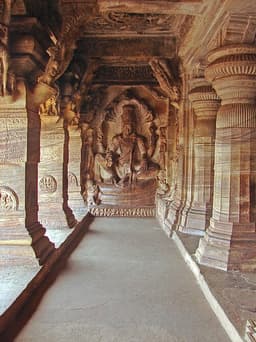
Mangalesha commissioned the excavation of Cave 3 at Badami, a Hindu rock-cut temple dedicated to Vishnu. This cave contains some of the earliest and finest examples of Chalukya architecture and sculpture.
Badami CavesArchitectureChalukya
Impact: regionalconstructive
Napoleon Bonaparte — Complete Timeline
1799 AD
Coup of 18 BrumaireOther◆ Major
Napoleon Bonaparte, with support from his brother Lucien and key political figures, overthrew the Directory in a bloodless coup. He established the Consulate with himself as First Consul, effectively becoming the ruler of France. This event ended the French Revolution's most unstable period.
French RevolutionCoupRise to Power
Impact: regional
1804 AD
Promulgation of the Napoleonic CodeOther◆ Major
Napoleon enacted the Civil Code of the French, known as the Napoleonic Code, a comprehensive set of laws that replaced the fragmented feudal legal systems. The code established legal equality, protected property rights, and secularized law. It became the basis for legal systems in many European and world countries.
Legal ReformNapoleonic CodeCivil Law
Impact: globalconstructive
1805 AD
Battle of AusterlitzWar◆ Major
Napoleon's Grande Arm
Napoleonic WarsBattleDecisive Victory
Impact: global
1812 AD
Invasion of RussiaWar◆ Major
Napoleon led the Grande Arm
Napoleonic WarsInvasionDisaster
Impact: globaldestructive
1815 AD
Battle of WaterlooWar◆ Major
Napoleon's French army was defeated by the combined forces of the Duke of Wellington's Anglo-Allied army and Gebhard Leberecht von Bl
Napoleonic WarsBattleFinal Defeat
Impact: globaldestructive
Expert Analysis
mangalesha-vs-napoleon-bonaparte
# The Emperor and the Regent: Two Paths to Immortality
On a June morning in 1815, Napoleon Bonaparte stood on a muddy field near Waterloo, watching his Imperial Guard advance into the muzzles of British cannons. Twelve thousand miles away and twelve centuries earlier, a Chalukya prince named Mangalesha climbed the red sandstone cliffs of Badami, ordering his masons to carve a temple into the living rock. One man sought to conquer the world; the other sought to leave a mark upon it. Both succeeded, but in ways that reveal the profound differences between East and West, between the age of empires and the age of faith.
Origins
Napoleon was born in 1769 on the Mediterranean island of Corsica, a place that had only recently become French. His family was minor nobility, poor enough that young Napoleone Buonaparte—he would later Frenchify his name—entered military school on a scholarship. He was short, intense, and fiercely ambitious, a boy who devoured histories of Alexander and Caesar as other children played. The France of his youth was a powder keg: the old monarchy was rotting, the Enlightenment was fermenting new ideas, and revolution was brewing in the streets of Paris.
Mangalesha emerged from a different world entirely. Born in 597 CE into the Chalukya dynasty of Badami, in what is now Karnataka, he was the younger son of a ruling house that had carved a kingdom out of the Deccan Plateau. India in the seventh century was a patchwork of warring dynasties—the Pallavas to the south, the Vakatakas to the north—but it was also a civilization suffused with religious devotion. Hinduism was experiencing a renaissance, and kings competed not just on the battlefield but in the grandeur of their temples. Mangalesha grew up in a world where power was measured in stone as much as in steel.
Rise to Power
Napoleon’s ascent was meteoric, driven by the chaos of the French Revolution. In 1793, at just 24, he recaptured the port of Toulon from British forces, earning the rank of brigadier general. By 1796, he was commanding the Army of Italy, crossing the Alps in winter and smashing Austrian armies with a speed that stunned Europe. His Italian campaign was a masterpiece of maneuver—he split enemy forces, struck at their flanks, and turned supply lines into traps. Each victory fed his legend, and each legend fed his ambition.
Mangaleshe’s path was quieter, but no less decisive. When his elder brother Kirtivarman I died in 597 CE, the throne passed to Kirtivarman’s infant son, Pulakeshin II. Mangalesha became regent—a role that in many dynasties meant ruling until the boy came of age, then stepping aside. But Mangalesha saw opportunity. He consolidated power, sidelined his nephew’s supporters, and by 600 CE had effectively usurped the throne. It was a palace revolution, not a popular one, but it gave him the authority to pursue his true ambition: building.
Leadership & Governance
Napoleon ruled with a genius for organization that matched his military brilliance. As First Consul after 1799, and Emperor after 1804, he reformed France from top to bottom. The Napoleonic Code standardized laws across a fractured nation, abolishing feudal privileges and establishing merit-based advancement. He created the Bank of France, stabilized the currency, and built roads and canals that tied his empire together. On the battlefield, his strategy was simple but devastating: concentrate overwhelming force at the enemy’s weakest point, then exploit the breakthrough. At Austerlitz in 1805, he lured the Russian and Austrian armies into a trap, crushing them in a single day.
Mangalesha governed on a smaller stage, but his vision was no less ambitious. His greatest achievement was Cave 3 at Badami, a rock-cut temple dedicated to Vishnu that remains one of the finest examples of Indian architecture from the period. The cave is a marvel of engineering—masons carved pillars, sculptures, and a sanctum from a single sandstone cliff, creating a space that feels both ancient and alive. The walls are covered with friezes of Hindu deities, including a magnificent image of Vishnu reclining on the serpent Shesha. Mangalesha’s name is inscribed on a pillar, not as a conqueror, but as a patron of art and faith.
Triumph & Tragedy
Napoleon’s greatest triumph was his empire at its height in 1810, stretching from Spain to Poland, from the Baltic to the Adriatic. He had remade Europe in his image, installing relatives on thrones and redrawing borders with a stroke of his pen. But his tragedy was hubris. In 1812, he invaded Russia with 600,000 men; six months later, fewer than 100,000 staggered back. The retreat from Moscow was a horror of frost and starvation, and it shattered the myth of his invincibility. Exiled to Elba in 1814, he escaped the next year, rallied France once more, and met his final defeat at Waterloo—a battle he might have won if only the rains had stopped earlier, or if his generals had arrived in time.
Mangalesha’s tragedy was more intimate. His nephew Pulakeshin II, now a young man, refused to accept the usurpation. Around 609 CE, the two met in battle, and Mangalesha was killed. His reign lasted barely a decade, and his name survives only in the cave he built. Pulakeshin II went on to become one of the greatest Chalukya kings, defeating the Pallavas and earning the title “Lord of the Three Seas.” Mangalesha was erased from the official dynastic records, remembered only as a footnote—until his cave was rediscovered by archaeologists in the 19th century.
Character & Destiny
Napoleon was a man of restless energy, driven by a belief that he was destined for greatness. “Impossible,” he once said, “is a word to be found only in the dictionary of fools.” He worked eighteen-hour days, dictated letters to four secretaries simultaneously, and slept only four hours a night. But his ambition was also his flaw: he could not stop, could not consolidate, could not share power. His empire was a pyramid balanced on his own shoulders, and when he fell, it crumbled.
Mangalesha was a different sort of ruler—a builder, not a conqueror. He seems to have understood that power in the medieval Indian world was not just about land but about legacy. A temple outlasts a throne; a god’s image endures longer than a king’s name. His decision to carve Cave 3 was both an act of devotion and a bid for immortality. In the end, it succeeded where his usurpation failed.
Legacy
Napoleon is remembered as one of history’s great generals, a figure who reshaped Europe and whose legal code still influences laws from France to Louisiana. His name adorns streets, bridges, and battles, and his life has been the subject of thousands of books. But his legacy is ambiguous: he was a liberator who abolished serfdom in Poland, yet a tyrant who restored slavery in the Caribbean; a democrat who spread the ideals of the Revolution, yet an emperor who crowned himself.
Mangalesha’s legacy is simpler, but no less profound. Cave 3 at Badami is a UNESCO World Heritage site, visited by pilgrims and tourists alike. It stands as a testament to a king who chose to build rather than to fight, who understood that the greatest monuments are not made of men but of stone. His name is obscure outside of India, but within those cave walls, he lives on—a reminder that history remembers not just the conquerors, but the creators.
Conclusion
Napoleon and Mangalesha never met, never knew of each other’s worlds. One died on a lonely island in the South Atlantic, the other on a battlefield in the Deccan. Yet their stories share a common thread: both men seized power when opportunity arose, and both used that power to leave a mark on their age. Napoleon’s mark was a scar across Europe—deep, dramatic, but eventually healed. Mangalesha’s was a carving in a cave—quiet, enduring, and still visible. Which of them achieved more? The answer depends on what you value: the thunder of cannon or the silence of stone. But perhaps the final word belongs to Napoleon himself, who once said, “Glory is fleeting, but obscurity is forever.” Mangalesha, in his obscure cave, might have disagreed.
Rankings
🥇
Napoleon BonaparteLeader
Mil: 94.0Pol: 72.0Inf: 40.0
70.9
🥈
Mangalesha
Mil: 46.7Pol: 36.5Inf: 53.3
47.8
+23.1 behind
How This Comparison Works
Algorithm
Each figure is scored on 6 dimensions (0—100 scale) based on structured historical data: Military (10%), Political (20%), Influence (20%), Legacy (20%), Leadership (15%), Strategy (15%). The weighted total produces the final ranking.
Data Sources
Scores are computed from structured sub-indicators in the database. Scale factors adjust for era (Ancient ×0.85, Modern ×1.0) and civilization size (Eastern ×1.05, Other ×0.80) to account for differences in population and military scale.
Maximum 3 Figures
Comparisons are limited to 2—3 figures to ensure readability and statistical meaningfulness.
Error Margins
±5 points per dimension — Sub-scores are derived from historical records with inherent uncertainty. Two figures within 5 points on a dimension should be considered roughly equivalent in that area.
Total Score Accuracy
±3 points overall — The weighted combination of 6 dimensions produces a total score with approximately ±3 points of uncertainty. Differences of less than 3 points are not statistically significant— the figures are effectively tied.
Known Limitations
- Historical records are incomplete and uneven across civilizations
- Figures from oral-tradition societies may be underrepresented
- Occupation labels can misclassify multi-role figures
- Scores measure capability and impact, not moral character
- Quantitative scoring is a comparison tool, not absolute truth
Capability Radar
Military (10%) — Battles & Warfare
Battles
30
95
Win Rate
30
90
Expansion
35
95
Political (20%) — Governance & Reform
Reform
30
95
Diplomacy
35
80
Economy
30
85
Influence (20%) — Cultural & Global Reach
Cultural
40
85
Global
20
90
Legacy (20%) — Historical Impact
Historical
35
95
Longevity
30
90
Leadership (15%) — Power & Stability
Tenure
40
85
Stability
35
70
Strategy (15%) — Tactics & Innovation
Strategy
30
95
Tactics
35
98
Reform
20
92
Similar Comparisons
Comments & Discussion
NICKNAME: The Grand Strategist6/17/2026
Waterloo was a tactical masterpiece undone by logistics, not luck. Napoleon’s fatal flaw wasn’t Wellington—it was his failure to secure Prussian coordination. If Grouchy had marched to the guns, Blücher never links up. Meanwhile, Mangalesha carved temples. One man gambled with armies; the other bet on eternity. Show me a tactical doctrine that outlasts stone.
NICKNAME: 凿石铁鸟6/17/2026
拿破仑输在没读《孙子兵法》!滑铁卢那天他的元帅们都在瞎转悠,而曼伽勒沙在巴达米石壁上刻下的是真实存在的地图。法国人靠枪炮统治十年,印度人用凿子统治千年。问个实在的:拿破仑法典现在还有谁背?曼伽勒沙的洞窟神庙可是联合国教科文组织认证的硬通货!
NICKNAME: The Eastern Marauder6/17/2026
Let’s be blunt: Napoleon was a tactical thaumaturge but a strategic disaster. He conquered Europe faster than he could administer it—his Continental System bled France dry. Mangalesha? He annexed land, minted coins, and left behind structures. Napoleon’s legacy is a corpse count and a code that cribbed Roman law. Mangalesha’s legacy is a temple where people still pray. Who really won?
NICKNAME: 数据猎人6/17/2026
看数字:拿破仑打了60场仗只输了7场,但最终被放逐到南大西洋孤岛。曼伽勒沙只扩张到卡纳塔克邦南部,结果被侄子干掉。论统治效率,法国人在10年内换了5个政权,印度人维持了30多年稳定。拿破仑的“伟大”被死亡人数稀释,曼伽勒沙的“平庸”被持久和平加冕。你们选哪边?
NICKNAME: The Revisionist's Ch6/17/2026
Stop romanticizing temple builders. Mangalesha was a fratricidal warmonger who massacred his nephew's faction to seize power—a classic South Asian warlord. Napoleon at least institutionalized meritocracy and legal reform. One carved rock, the other carved modernity. You want to take your case to a modern Karnataka citizen and ask if they worship Mangalesha or a French legal concept? Exactly.