Loading...
Manuel Avila Camacho vs Qin Shi Huang
Qin Shi Huang leads by 29.1 pts · 2 figures compared
…

Manuel Avila Camacho
General · Modern
56.1Total
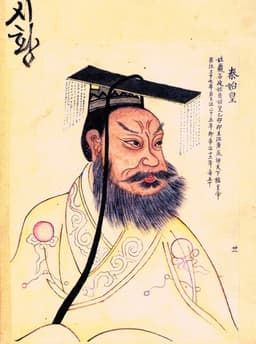
Qin Shi Huang
Emperor · Ancient
85.2Total
Basic Information
Born
1897
-259
Died
1955
-210
Era
Modern
Ancient
Nationality
Mexico
China
Occupation
General
Emperor
Civilization
Western
Eastern
Score Comparison
Military (10%)
22.6
80.0
Political (20%)
72.0
90.0
Influence (20%)
59.0
85.0
Legacy (20%)
50.0
90.0
Leadership (15%)
80.0
78.0
Strategy (15%)
38.3
82.0
TOTAL
56.1
85.2
Manuel Avila Camacho — Complete Timeline
1940 AD
Served as president of Mexico during World War IIPolitical Action◆ Major
Ávila Camacho assumed the presidency in 1940 and led Mexico through World War II. He shifted Mexico from neutrality to active support for the Allies, declaring war on the Axis powers in 1942 after German submarine attacks on Mexican ships.
World War IIPresidencyAllied cooperation
Impact: global
1941 AD
Normalized relations with the United StatesPolitical Action◆ Major
Ávila Camacho strengthened ties with the United States through economic agreements and military cooperation. This included settling oil expropriation disputes and allowing U.S. military bases on Mexican soil, which bolstered the Allied war effort.
US-Mexico relationsWorld War IIDiplomacy
Impact: regionalconstructive
1943 AD
Established the Mexican Social Security Institute (IMSS)Reform◆ Major
Ávila Camacho signed the law creating the Mexican Social Security Institute (IMSS), providing healthcare and pensions to workers. This institution became a cornerstone of Mexico's welfare state and social policy.
Social securityHealthcareWelfare state
Impact: nationalprogressive
Qin Shi Huang — Complete Timeline
246 BC
Construction of the Mausoleum and Terracotta ArmyOther◆ Major
Qin Shi Huang commissioned a vast mausoleum complex near Xi'an, guarded by thousands of life-sized terracotta soldiers, horses, and chariots. The project employed hundreds of thousands of workers and reflected his obsession with immortality and imperial power.
Impact: global
230 BC
Conquest of the Six Warring StatesWar
From 230 to 221 BCE, Ying Zheng led the Qin state in a series of campaigns that conquered the Han, Zhao, Wei, Chu, Yan, and Qi states. This unified China under a single ruler for the first time, ending the Warring States period.
Impact: global
221 BC
Standardization of Writing, Currency, and MeasurementsReform◆ Major
Qin Shi Huang ordered the standardization of Chinese script, currency, and weights and measures across the unified empire. This facilitated administration, trade, and cultural integration, laying a foundation for future dynasties.
Impact: globalconstructive
Proclamation of the Qin DynastyPolitical Action
After conquering the last independent state, Ying Zheng declared himself Shi Huangdi (First Emperor), founding the Qin Dynasty. He adopted a new title to signify his supreme authority and initiated centralized imperial rule.
Impact: global
214 BC
Initiation of the Great Wall ConstructionOther◆ Major
Qin Shi Huang ordered the connection and extension of existing northern fortifications to create a unified defensive wall against nomadic Xiongnu raids. This project involved massive conscripted labor and became the precursor to the later Great Wall.
Impact: regional
213 BC
Burning of Books and Burying of ScholarsPolitical Action◆ Major
On the advice of Li Si, Qin Shi Huang ordered the burning of historical records and philosophical texts not aligned with Legalist doctrine. He also had 460 Confucian scholars buried alive to suppress dissent and consolidate ideological control.
Impact: nationaldestructive
Expert Analysis
manuel-avila-camacho-vs-qin-shi-huang
# The First Emperor and the Gentleman President: Two Paths to Power
In 221 BC, a young king in his late twenties stood atop a conquered city in northern China, watching his soldiers erase the last independent kingdom from the map. He would soon declare himself *Shi Huangdi*—the First Emperor—and begin a reign of iron standardization that would shape China for two millennia. Two thousand one hundred and sixty-one years later, in 1940, a Mexican general with a gentle demeanor took the presidential oath in Mexico City, inheriting a nation torn by revolution and facing the greatest war in human history. One man built an empire through fire and terror; the other held his fractured country together through compromise and quiet cooperation. What drove such different outcomes? The answer lies not merely in their personalities, but in the worlds that made them.
Origins
Ying Zheng was born in 259 BC into a violent crucible. The Warring States period had raged for centuries, a seven-way struggle where survival meant total conquest or total annihilation. His father was a hostage in another kingdom; his mother was a concubine. By age thirteen, Ying Zheng had inherited a throne surrounded by scheming eunuchs, ambitious generals, and the constant threat of assassination. He learned early that trust was weakness and that the world was a zero-sum game.
Manuel Ávila Camacho was born in 1897 in Teziutlán, a small town in the Mexican state of Puebla. His family was modest—his father owned a general store—and young Manuel grew up in the shadow of the Porfiriato, the long dictatorship of Porfirio Díaz. The Mexican Revolution erupted when he was thirteen, and like many young men, he joined the Constitutionalist forces. But Ávila Camacho was never a firebrand. He rose through the ranks not through battlefield heroics but through administrative competence and personal loyalty, serving as a staff officer and later as Minister of War. His world was one of negotiation, not annihilation.
Rise to Power
Qin Shi Huang’s path was a military march. From 230 to 221 BC, his armies swept through the six rival kingdoms—Han, Zhao, Wei, Chu, Yan, and Qi—in a series of campaigns that combined overwhelming force with calculated cruelty. He understood that to unify, he must first destroy. When the last king surrendered, Ying Zheng did not simply declare victory; he declared a new cosmic order. He took the title *Shi Huangdi*, combining the legendary “August” and “Sovereign” titles, claiming authority over heaven and earth.
Ávila Camacho rose through politics, not war. In 1940, Mexico was still healing from the Revolution and the Cristero War, a bitter religious conflict. The outgoing president, Lázaro Cárdenas, had nationalized the oil industry and pursued socialist reforms, deeply angering the United States and conservative elites. Ávila Camacho was the compromise candidate—a moderate general who could reassure both Washington and Mexican businessmen. He won an election widely seen as rigged, but he governed with a light touch, famously stating, “I am a man of peace, not of war.”
Leadership & Governance
The First Emperor ruled through absolute control. He standardized writing, currency, and weights and measures across his empire, a monumental achievement that allowed China to function as a single entity. He ordered the construction of roads, canals, and the first version of the Great Wall, linking existing fortifications into a unified defensive line. But his methods were brutal. In 213 BC, on the advice of his chancellor Li Si, he ordered the burning of all historical records and philosophical texts not aligned with Legalist doctrine, and had hundreds of scholars buried alive. His mausoleum, commissioned in 246 BC, was guarded by thousands of life-sized terracotta soldiers, a symbol of his desire to control even the afterlife.
Ávila Camacho governed through consensus. In 1941, he normalized relations with the United States, negotiating economic agreements and military cooperation that brought Mexico into the Allied sphere. In 1943, he signed the law creating the Mexican Social Security Institute (IMSS), providing healthcare and pensions to workers for the first time. He did not nationalize industries or purge opponents; he balanced the demands of labor, business, and the military. His leadership during World War II was cautious and pragmatic—Mexico declared war on the Axis in 1942, but its contribution was limited to a symbolic air squadron and raw material exports.
Triumph & Tragedy
Qin Shi Huang’s triumph was the unification of China itself. He created a centralized bureaucracy, a standardized script that allowed communication across vast distances, and a legal code that applied equally to all subjects. These foundations would outlast his dynasty by two thousand years. His tragedy was the human cost. Millions died building the Great Wall and his mausoleum. His brutal policies crushed dissent but also destroyed intellectual diversity. When he died in 210 BC, his empire collapsed within three years, torn apart by rebellions that his iron hand had only suppressed, not resolved.
Ávila Camacho’s triumph was stability. He led Mexico through the chaos of World War II without internal collapse, without foreign invasion, and without the authoritarian turn that befell many wartime leaders. His tragedy was that his achievements were modest. The IMSS was underfunded for decades. The economic agreements with the United States tied Mexico to its northern neighbor in ways that limited its industrial independence. He is remembered as a caretaker, not a visionary.
Character & Destiny
Qin Shi Huang was paranoid, ruthless, and obsessive. He feared assassination so deeply that he slept in a different palace every night and never revealed his whereabouts. He believed in a single, unified truth—his truth—and would tolerate no alternative. This personality drove his greatest achievements and his most catastrophic failures. He could not delegate, could not compromise, and could not imagine a world where he was not the absolute center.
Ávila Camacho was modest, pragmatic, and conciliatory. He famously said, “I am a man of the middle.” He understood that Mexico’s survival depended on balancing internal factions and external powers. He did not seek glory; he sought stability. This personality allowed him to navigate a dangerous era without disaster, but it also meant he left no grand vision, no enduring legend.
Legacy
Qin Shi Huang is remembered as the father of China. His standardization of writing allowed Chinese civilization to survive centuries of division. The terracotta warriors are a global symbol of ancient power. But he is also remembered as a tyrant, a book-burner, a man who valued order over life. His legacy is as ambiguous as it is immense.
Ávila Camacho is remembered as the “Gentleman President.” He is honored in Mexico for guiding the nation through war without repression, for laying the foundations of the welfare state, and for proving that a military man could govern with restraint. But he is not a household name outside Mexico, and his achievements are measured in the absence of catastrophe rather than the presence of greatness.
Conclusion
Standing at opposite ends of history, these two leaders reveal something essential about power. Qin Shi Huang’s world was one of total war, where only absolute control could forge a nation. Ávila Camacho’s world was one of total diplomacy, where only careful balance could preserve one. Neither path is morally superior; each was shaped by its time. The First Emperor built the stage on which all later Chinese history would play out. The Gentleman President kept the theater from burning down during the storm. Both, in their own ways, did what history demanded of them—and we are still living with the consequences.
Rankings
🥇
Qin Shi HuangLeader
Mil: 80.0Pol: 90.0Inf: 85.0
85.2
🥈
Manuel Avila Camacho
Mil: 22.6Pol: 72.0Inf: 59.0
56.1
+29.1 behind
How This Comparison Works
Algorithm
Each figure is scored on 6 dimensions (0—100 scale) based on structured historical data: Military (10%), Political (20%), Influence (20%), Legacy (20%), Leadership (15%), Strategy (15%). The weighted total produces the final ranking.
Data Sources
Scores are computed from structured sub-indicators in the database. Scale factors adjust for era (Ancient ×0.85, Modern ×1.0) and civilization size (Eastern ×1.05, Other ×0.80) to account for differences in population and military scale.
Maximum 3 Figures
Comparisons are limited to 2—3 figures to ensure readability and statistical meaningfulness.
Error Margins
±5 points per dimension — Sub-scores are derived from historical records with inherent uncertainty. Two figures within 5 points on a dimension should be considered roughly equivalent in that area.
Total Score Accuracy
±3 points overall — The weighted combination of 6 dimensions produces a total score with approximately ±3 points of uncertainty. Differences of less than 3 points are not statistically significant— the figures are effectively tied.
Known Limitations
- Historical records are incomplete and uneven across civilizations
- Figures from oral-tradition societies may be underrepresented
- Occupation labels can misclassify multi-role figures
- Scores measure capability and impact, not moral character
- Quantitative scoring is a comparison tool, not absolute truth
Capability Radar
Military (10%) — Battles & Warfare
Battles
10
85
Win Rate
10
90
Expansion
5
90
Political (20%) — Governance & Reform
Reform
55
95
Diplomacy
75
75
Economy
60
90
Influence (20%) — Cultural & Global Reach
Cultural
40
95
Global
45
85
Legacy (20%) — Historical Impact
Historical
50
95
Longevity
40
95
Leadership (15%) — Power & Stability
Tenure
65
70
Stability
70
65
Strategy (15%) — Tactics & Innovation
Strategy
20
85
Tactics
15
80
Reform
30
95
Similar Comparisons
Comments & Discussion
AngryTerracotta6/17/2026
Ying Zheng built 4,800 miles of roads to connect his empire, but Ávila Camacho could barely keep Mexico's trains running. The First Emperor's infrastructure forced unity; the "Gentleman President" patched things together with handshakes. Give me standardization or give me stagnation. One man created a civilization; the other managed a crisis. No contest there.
数据屠夫6/17/2026
拿人口数量吹效率?秦始皇修长城征发百万民夫,死亡率高到史书都含糊其辞。Ávila Camacho执政期间墨西哥人口从2000万涨到2600万,没搞什么大基建,恰恰是没瞎折腾。所谓“统一”,是活人堆出来的幻觉。历史爱好者别老给独裁者贴金。
StoicSinology6/17/2026
Comparison ignores that Qin standardization—scripts, weights, axle widths—survived dynasties while Ávila Camacho's wartime unity dissolved after 1946. The First Emperor baked permanence into reality; the Mexican general baked temporary consensus. One legacy: a civilization's template. The other: a footnote in a chaotic century. I'll take the bronze-age visionary over the polite manager.
儒家逆徒6/17/2026
讲什么“温和总统”?Ávila Camacho 1942年对德日宣战,表面中立实则倒向美国,让墨西哥成为美帝的后勤基地。秦始皇至少不跪任何人,焚书坑儒也是为统一思想。你选一个向外国低头、靠妥协混日子的总统,还是一个把天下捏成铁板的皇帝?我就站嬴政这暴君。
LostLegionnaire6/17/2026
Twenty million died during Qin unification and consolidation, per estimates. Ávila Camacho navigated WWII without a single major battle on Mexican soil. One man's standardization cost a population collapse; the other's "weakness" saved lives. You can keep your axle-width uniformity, I'll take the gentleman who kept his people breathing through a world war.