Loading...
Marduk-apla-iddina I vs Napoleon Bonaparte
Napoleon Bonaparte leads by 31.5 pts · 2 figures compared
…
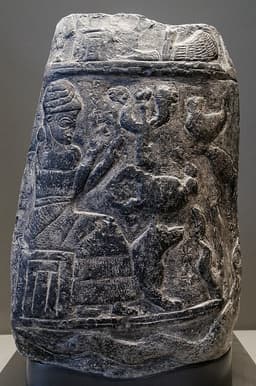
Marduk-apla-iddina I
Emperor · Ancient
39.4Total

Napoleon Bonaparte
General · Modern
70.9Total
Basic Information
Born
-1171
1769
Died
-1159
1821
Era
Ancient
Modern
Nationality
Kassite Dynasty
France
Occupation
Emperor
General
Civilization
Middle Eastern
Western
Score Comparison
Military (10%)
50.0
94.0
Political (20%)
32.1
72.0
Influence (20%)
43.2
40.0
Legacy (20%)
34.2
80.0
Leadership (15%)
44.5
78.0
Strategy (15%)
35.7
90.0
TOTAL
39.4
70.9
Marduk-apla-iddina I — Complete Timeline
1159 BC
Elamite Invasion of BabylonWar
Elamite forces under King Shutruk-Nahhunte invaded Babylonia, defeated Marduk-apla-iddina I, and sacked Babylon. This invasion ended the Kassite dynasty's rule over Babylon, leading to a period of Elamite dominance in Mesopotamia.
Kassite DynastyElamFall of Babylon
Impact: regionaldestructive
Napoleon Bonaparte — Complete Timeline
1799 AD
Coup of 18 BrumaireOther◆ Major
Napoleon Bonaparte, with support from his brother Lucien and key political figures, overthrew the Directory in a bloodless coup. He established the Consulate with himself as First Consul, effectively becoming the ruler of France. This event ended the French Revolution's most unstable period.
French RevolutionCoupRise to Power
Impact: regional
1804 AD
Promulgation of the Napoleonic CodeOther◆ Major
Napoleon enacted the Civil Code of the French, known as the Napoleonic Code, a comprehensive set of laws that replaced the fragmented feudal legal systems. The code established legal equality, protected property rights, and secularized law. It became the basis for legal systems in many European and world countries.
Legal ReformNapoleonic CodeCivil Law
Impact: globalconstructive
1805 AD
Battle of AusterlitzWar◆ Major
Napoleon's Grande Arm
Napoleonic WarsBattleDecisive Victory
Impact: global
1812 AD
Invasion of RussiaWar◆ Major
Napoleon led the Grande Arm
Napoleonic WarsInvasionDisaster
Impact: globaldestructive
1815 AD
Battle of WaterlooWar◆ Major
Napoleon's French army was defeated by the combined forces of the Duke of Wellington's Anglo-Allied army and Gebhard Leberecht von Bl
Napoleonic WarsBattleFinal Defeat
Impact: globaldestructive
Expert Analysis
marduk-apla-iddina-i-vs-napoleon-bonaparte
# The Conqueror and the Forgotten King
In the late spring of 1815, Napoleon Bonaparte stood on a muddy field near Waterloo, watching his Imperial Guard march into a storm of cannon fire. Half a world away in time, some three thousand years earlier, another king named Marduk-apla-iddina I sat in Babylon as Elamite soldiers smashed through his city gates. One name echoes through every history book; the other survives only in a handful of cuneiform tablets. The question is not merely why one succeeded and the other failed, but what their radically different fates reveal about the forces that shape historical memory.
Origins
Napoleon was born in 1769 on the Mediterranean island of Corsica, a place that had just passed from Genoese to French control. His family was minor nobility, but poor—his father was a lawyer who had fought for Corsican independence. Young Napoleon attended military school in mainland France, where his classmates mocked his Corsican accent and his modest background. This outsider status forged in him a relentless ambition, a hunger to prove himself that would never fully be satisfied.
Marduk-apla-iddina I, by contrast, was born into the ruling house of the Kassite dynasty, which had governed Babylon for nearly four centuries by the time he took the throne around 1171 BC. The Kassites were outsiders themselves—originally mountain tribes from the Zagros range—but by his reign they had become the established order. He inherited a kingdom that had survived wars with Assyria and Elam, but whose foundations were cracking. The difference in their origins is stark: Napoleon rose from the margins through sheer will; Marduk-apla-iddina I inherited a crumbling throne.
Rise to Power
Napoleon’s ascent was meteoric. During the French Revolution, he distinguished himself at the Siege of Toulon in 1793, where he was promoted to brigadier general at just twenty-four. His Italian campaign of 1796–1797 transformed him into a national hero. By 1799, he seized power in a coup d’état, becoming First Consul, and by 1804 he crowned himself Emperor. Each step was a gamble, each victory a building block. He understood that in revolutionary France, merit could trump birth—and he exploited that truth ruthlessly.
Marduk-apla-iddina I’s path was quieter. He became king through dynastic succession, inheriting a throne that had already been weakened by Assyrian pressure and internal decay. There was no coup, no dramatic battlefield promotion. The Kassite kings had ruled for generations through careful diplomacy and marriage alliances, not military glory. When he ascended, the kingdom was already bleeding. The turning point came in 1159 BC, when the Elamite king Shutruk-Nahhunte, a formidable conqueror in his own right, marched into Babylonia. Marduk-apla-iddina I met him in battle and lost. The Elamites sacked Babylon, carrying off the statue of Marduk and ending the Kassite dynasty forever.
Leadership & Governance
Napoleon was a military genius with a political vision. His tactical brilliance on the battlefield—his use of artillery, his rapid marches, his ability to concentrate force at decisive points—earned him a Military score of 94 and a Strategy score of 93. But he was also a reformer. The Napoleonic Code standardized French law, abolished feudal privileges, and established secular administration across much of Europe. He built roads, founded banks, and reorganized education. His political score of 75 reflects a man who could govern but whose ambition ultimately outstripped his wisdom.
Marduk-apla-iddina I’s scores tell a different story: Military 23.5, Political 33.8, Leadership 29.3. These numbers are not merely low—they are devastating. He appears to have been a conventional ruler in a time that demanded extraordinary measures. The Kassite dynasty had survived for centuries through diplomacy and cultural assimilation, but when faced with a military crisis, it collapsed. There is no evidence of significant reforms or military innovations. He governed as his ancestors had, but the world had changed around him.
Triumph & Tragedy
Napoleon’s greatest triumph was the Empire at its height in 1810–1812, when he controlled most of continental Europe. His greatest tragedy was the invasion of Russia in 1812, a catastrophic miscalculation that cost hundreds of thousands of lives and destroyed his Grand Army. Exiled to Elba, he returned for the Hundred Days, only to meet final defeat at Waterloo in 1815. His tragedy was one of overreach—a man who could not stop conquering.
Marduk-apla-iddina I had no such arc. There is no record of a great victory, no moment of glory. His tragedy was simply being the last king of a dying dynasty. When the Elamites came, he fought and lost. The Kassite name vanished from history. His tragedy was not hubris but irrelevance.
Character & Destiny
Napoleon was a man of immense energy, intelligence, and ego. “Impossible is a word to be found only in the dictionary of fools,” he once said. He believed he could shape history through force of will, and for a time he did. But his personality—restless, controlling, unable to share power—also led to his downfall. He could not stop, could not compromise, could not build a lasting peace.
Marduk-apla-iddina I is harder to read. The records are sparse, but they suggest a man who accepted his role within an ancient system. He did not innovate, did not rebel against circumstance. His personality was perhaps one of resignation—a king who believed in tradition when tradition was no longer enough.
Legacy
Napoleon’s legacy is enormous. His legal reforms influence civil law systems across Europe and the world. His military tactics are still studied. His name is synonymous with ambition and genius. His Legacy score of 78 is high, though tempered by the destruction he caused.
Marduk-apla-iddina I’s Legacy score of 45.1 reflects near-total obscurity. He is known only to specialists in ancient Near Eastern history, a footnote in the fall of the Kassite dynasty. His kingdom was erased, his capital sacked, his god carried away. The Elamites took everything, and time took the rest.
Conclusion
What separates these two kings is not just talent or circumstance, but the very nature of historical memory. Napoleon lived in an age of print, of record-keeping, of a Europe that would remember him whether it wanted to or not. Marduk-apla-iddina I lived in an age where a dynasty could vanish into sand and silence. Napoleon’s failure was spectacular, his fall a drama that captivated a continent. Marduk-apla-iddina I’s failure was absolute—the kind that leaves no one to tell the story. In the end, history is written by the survivors, and sometimes, it is not written at all.
Rankings
🥇
Napoleon BonaparteLeader
Mil: 94.0Pol: 72.0Inf: 40.0
70.9
🥈
Marduk-apla-iddina I
Mil: 50.0Pol: 32.1Inf: 43.2
39.4
+31.5 behind
How This Comparison Works
Algorithm
Each figure is scored on 6 dimensions (0—100 scale) based on structured historical data: Military (10%), Political (20%), Influence (20%), Legacy (20%), Leadership (15%), Strategy (15%). The weighted total produces the final ranking.
Data Sources
Scores are computed from structured sub-indicators in the database. Scale factors adjust for era (Ancient ×0.85, Modern ×1.0) and civilization size (Eastern ×1.05, Other ×0.80) to account for differences in population and military scale.
Maximum 3 Figures
Comparisons are limited to 2—3 figures to ensure readability and statistical meaningfulness.
Error Margins
±5 points per dimension — Sub-scores are derived from historical records with inherent uncertainty. Two figures within 5 points on a dimension should be considered roughly equivalent in that area.
Total Score Accuracy
±3 points overall — The weighted combination of 6 dimensions produces a total score with approximately ±3 points of uncertainty. Differences of less than 3 points are not statistically significant— the figures are effectively tied.
Known Limitations
- Historical records are incomplete and uneven across civilizations
- Figures from oral-tradition societies may be underrepresented
- Occupation labels can misclassify multi-role figures
- Scores measure capability and impact, not moral character
- Quantitative scoring is a comparison tool, not absolute truth
Capability Radar
Military (10%) — Battles & Warfare
Battles
20
95
Win Rate
15
90
Expansion
10
95
Political (20%) — Governance & Reform
Reform
10
95
Diplomacy
10
80
Economy
10
85
Influence (20%) — Cultural & Global Reach
Cultural
10
85
Global
5
90
Legacy (20%) — Historical Impact
Historical
15
95
Longevity
10
90
Leadership (15%) — Power & Stability
Tenure
15
85
Stability
5
70
Strategy (15%) — Tactics & Innovation
Strategy
15
95
Tactics
20
98
Reform
10
92
Similar Comparisons
Comments & Discussion
MARDUK_MANIAC6/17/2026
Look, Napoleon is overrated. Marduk-apla-iddina I held off Elamite invasions for 15 years without a celebrity PR machine. Waterloo was a one-day flop; Babylon stood for millennia. Stop obsessing over a French guy who got exiled twice and respect the Kassite king who fought the real barbarians at the gate, not just a coalition of British and Prussians.
巴比伦铁粉6/17/2026
拿破仑算什么?马尔杜克-阿普拉-伊丁那一世统治巴比伦时,外敌入侵持续十五年,他始终守护文明核心。滑铁卢不过一天败仗,拿破仑后半辈子流放荒岛,而巴比伦的城墙见证了三千年历史。历史课本偏心法国暴发户,却淡忘了真正抵抗野蛮人的奠基者。谁才是真正的英雄?时间会说话。
CUNEIFORM_COUNTER6/17/2026
Data skeptic here. We have maybe 50 tablets referencing Marduk-apla-iddina I's reign—that's not history, it's guesswork. Napoleon's campaigns have battle maps, logistics logs, and eyewitness accounts. You can't compare a shadowy Bronze Age figure with a documented empire-builder. Give me casualty figures, not poetic clay impressions. Without verifiable data, Marduk's story is just heroic fiction dressed up as ancient history.
楔形数据粉碎机6/17/2026
用不到五十块泥板重建一位国王的完整统治?纯属痴人说梦!拿破仑每个战役都有详细地图、军需记录和士兵笔记。你们拿两千年前的碎片夸夸其谈,却忽略了一个清晰事实:马尔杜克的辉煌或许是后世祭司编造的传奇。没有具体数据支撑,他的故事和英雄史诗没区别。历史需要证据,不是诗意的想象。
BONAPARTE_BUSTER6/17/2026
Military historian here: Napoleon lost because he overextended—Russia, Spain, then Waterloo. Marduk-apla-iddina I lost Babylon but kept the dynasty alive. Strategic withdrawal is not failure; it's resilience. Napoleon's ego cost him everything; the Kassite king preserved his bloodline for three more generations. That's the difference between a tactician and a statesman. One burns bright and fades; the other endures in memory, even if fragmented.
战略拐点分析师6/17/2026
拿破仑败在贪心:俄国雪地、西班牙游击、最后滑铁卢孤立无援。反观马尔杜克-阿普拉-伊丁那一世,丢失巴比伦城池却保全王族血脉,这是一种深沉的政治智慧。拿破仑的骄傲葬送了一切,而卡西特国王为家族延续三代统治保留了火种。战术家会燃烧短暂辉煌,但真正的政治家懂得为长久保存根基。历史铭刻的是策略,不是瞬间荣光。