Loading...
Marduk-zakir-shumi I vs Napoleon Bonaparte
Napoleon Bonaparte leads by 26.0 pts · 2 figures compared
…
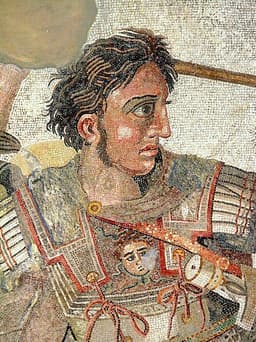
Marduk-zakir-shumi I
Emperor · Ancient
44.9Total

Napoleon Bonaparte
General · Modern
70.9Total
Basic Information
Born
-855
1769
Died
-819
1821
Era
Ancient
Modern
Nationality
Babylon
France
Occupation
Emperor
General
Civilization
Middle Eastern
Western
Score Comparison
Military (10%)
46.7
94.0
Political (20%)
39.4
72.0
Influence (20%)
45.5
40.0
Legacy (20%)
36.7
80.0
Leadership (15%)
58.8
78.0
Strategy (15%)
50.0
90.0
TOTAL
44.9
70.9
Marduk-zakir-shumi I — Complete Timeline
851 BC
Alliance with Shalmaneser IIIPolitical Action◆ Major
Marduk-zakir-shumi I formed an alliance with the Assyrian king Shalmaneser III. This alliance helped Marduk-zakir-shumi suppress a rebellion by his brother and secured Assyrian support for Babylonian rule, marking a period of cooperation between the two powers.
Assyrian AllianceRebellion SuppressionDiplomacy
Impact: regionalconstructive
Napoleon Bonaparte — Complete Timeline
1799 AD
Coup of 18 BrumaireOther◆ Major
Napoleon Bonaparte, with support from his brother Lucien and key political figures, overthrew the Directory in a bloodless coup. He established the Consulate with himself as First Consul, effectively becoming the ruler of France. This event ended the French Revolution's most unstable period.
French RevolutionCoupRise to Power
Impact: regional
1804 AD
Promulgation of the Napoleonic CodeOther◆ Major
Napoleon enacted the Civil Code of the French, known as the Napoleonic Code, a comprehensive set of laws that replaced the fragmented feudal legal systems. The code established legal equality, protected property rights, and secularized law. It became the basis for legal systems in many European and world countries.
Legal ReformNapoleonic CodeCivil Law
Impact: globalconstructive
1805 AD
Battle of AusterlitzWar◆ Major
Napoleon's Grande Arm
Napoleonic WarsBattleDecisive Victory
Impact: global
1812 AD
Invasion of RussiaWar◆ Major
Napoleon led the Grande Arm
Napoleonic WarsInvasionDisaster
Impact: globaldestructive
1815 AD
Battle of WaterlooWar◆ Major
Napoleon's French army was defeated by the combined forces of the Duke of Wellington's Anglo-Allied army and Gebhard Leberecht von Bl
Napoleonic WarsBattleFinal Defeat
Impact: globaldestructive
Expert Analysis
marduk-zakir-shumi-i-vs-napoleon-bonaparte
# The Emperor and the King: Two Paths to Power in Ancient and Modern Worlds
On a June morning in 1815, Napoleon Bonaparte stood on a muddy field near Waterloo, watching his Imperial Guard march into the jaws of death. Less than three thousand miles away, nearly twenty-six centuries earlier, a Babylonian king named Marduk-zakir-shumi I had faced a very different kind of crossroads—not a battlefield, but a diplomatic chamber where he sealed an alliance with a powerful Assyrian monarch. Two rulers, separated by millennia, yet both grappling with the eternal question of how to hold power in a world of empires. What drove one to conquer, the other to negotiate? And why did their fates diverge so dramatically?
Origins
Napoleon Bonaparte was born in 1769 on the Mediterranean island of Corsica, a place that had only recently become French. His family was minor nobility, but their world was one of volcanic politics and shifting loyalties. Corsica’s rugged mountains and fierce independence shaped a boy who would later claim that “imagination rules the world.” The French Revolution of 1789 tore open a society that had been frozen for centuries, and young Napoleon, a gifted artillery officer, rode the chaos like a surfer catching a wave.
Marduk-zakir-shumi I came from a very different world. Babylon in the 9th century BC was an ancient city-state, a repository of law, astronomy, and literature that had already seen empires rise and fall. His name means “Marduk has established the righteous seed,” invoking the chief god of Babylon. He inherited a throne that rested not on revolutionary fervor but on divine mandate and centuries of tradition. Where Napoleon’s era was one of rapid change, Marduk-zakir-shumi’s was one of careful preservation amid the shadow of Assyrian power.
Rise to Power
Napoleon’s ascent was meteoric. In 1793, at age twenty-four, he drove British forces from Toulon and was promoted to brigadier general. By 1796, he commanded the French army in Italy, where his lightning campaigns shattered Austrian dominance. Each victory was a stepping stone: the Egyptian campaign of 1798, the coup of 18 Brumaire in 1799 that made him First Consul, and finally his coronation as Emperor in 1804. He was a self-made emperor, a man who told his soldiers that “every French soldier carries a marshal’s baton in his knapsack.”
Marduk-zakir-shumi I took power around 855 BC, inheriting a Babylon that was old but not weak. His rise was not through conquest but through legitimacy. The key turning point came in 851 BC, when he faced a rebellion from his own brother, Marduk-bel-usati. In a move that defined his reign, Marduk-zakir-shumi turned not to Babylonian armies alone but to an external ally: Shalmaneser III of Assyria. The Assyrian king, a formidable warrior, marched south and crushed the rebellion. This was not a path of glory but of survival.
Leadership & Governance
Napoleon governed through sheer force of will and organizational genius. He reformed French law with the Napoleonic Code, establishing principles of meritocracy, property rights, and secular administration that still shape legal systems across Europe and beyond. His military genius was breathtaking: he fought more than sixty battles and lost only seven, with victories like Austerlitz in 1805 becoming textbooks in the art of war. Yet his political wisdom was brittle. He centralized power obsessively, appointed family members to thrones, and treated Europe as a chessboard to be dominated.
Marduk-zakir-shumi I ruled differently. His alliance with Shalmaneser III was recorded on a famous stone monument, the Black Obelisk, which shows the Assyrian king receiving tribute from various vassals—but notably, Marduk-zakir-shumi is depicted as an equal, not a subordinate. This was the art of the possible: a weaker king preserving his kingdom’s independence through diplomacy rather than war. His military score of 44.5 and political score of 43.5 reflect a ruler who chose stability over conquest. He was a steward, not a conqueror.
Triumph & Tragedy
Napoleon’s greatest moment was Austerlitz, where he destroyed a combined Russian and Austrian army in December 1805, a victory so complete that it ended the Third Coalition. His most devastating failure was the invasion of Russia in 1812. He marched with over 600,000 men; fewer than 100,000 returned. The Grand Army was shattered, and from that point, his empire crumbled. Exiled to Elba, he escaped for a final hundred days, only to meet his end at Waterloo in June 1815. He died in 1821 on the remote island of Saint Helena, a prisoner of the British.
Marduk-zakir-shumi I’s triumph was quieter but no less significant: he held Babylon together during a dangerous era. His tragedy was that we know so little about him. The historical record is fragmentary—clay tablets and stone carvings that hint at a reign of careful diplomacy. He died around 819 BC, and after him, Babylon’s independence would slowly fade under Assyrian and then Chaldean domination. His legacy score of 48.6 reflects a ruler remembered not for conquest but for survival.
Character & Destiny
Napoleon was driven by an insatiable hunger for glory. “I am not a man, but a thing,” he once said, “I have no heart.” His personality—arrogant, brilliant, relentless—shaped every decision. He believed he could bend history to his will, and for a time, he did. But that same ambition led him to overreach. His character was his destiny: he could not stop, because stopping meant admitting he was mortal.
Marduk-zakir-shumi I was a different kind of man—if we can judge from his actions. He understood that power is not always about winning battles. Sometimes, it is about knowing when to bow. He allied with a stronger king to preserve his own throne. He chose survival over glory. His strategy score of 52.1 suggests a competent but cautious commander. He was a realist in a world of realists.
Legacy
Napoleon’s legacy is immense and contradictory. He is remembered as a military genius who spread the ideals of the French Revolution across Europe, yet also as a tyrant who caused millions of deaths. The Napoleonic Code remains a foundation of civil law. His name is synonymous with ambition and tragedy. His total score of 82.4 reflects a figure who reshaped the world.
Marduk-zakir-shumi I is almost forgotten. His name appears in Assyrian annals and Babylonian king lists, a footnote in the long history of Mesopotamia. Yet his legacy is also real: he preserved Babylon for another generation, allowing its culture to survive. He reminds us that not all leaders need to conquer to matter.
Conclusion
Standing at Waterloo, Napoleon watched his dreams dissolve into mud and smoke. Standing in Babylon, Marduk-zakir-shumi I watched an Assyrian army march away, his kingdom intact. Both men faced the same fundamental challenge: how to hold power in a dangerous world. One chose conquest, the other compromise. One built an empire that collapsed, the other preserved a kingdom that endured. History remembers the conqueror but was shaped by both. Perhaps the deepest lesson is that greatness is not always measured in battles won or lands seized. Sometimes, it is measured in the quiet act of survival.
Rankings
🥇
Napoleon BonaparteLeader
Mil: 94.0Pol: 72.0Inf: 40.0
70.9
🥈
Marduk-zakir-shumi I
Mil: 46.7Pol: 39.4Inf: 45.5
44.9
+26.0 behind
How This Comparison Works
Algorithm
Each figure is scored on 6 dimensions (0—100 scale) based on structured historical data: Military (10%), Political (20%), Influence (20%), Legacy (20%), Leadership (15%), Strategy (15%). The weighted total produces the final ranking.
Data Sources
Scores are computed from structured sub-indicators in the database. Scale factors adjust for era (Ancient ×0.85, Modern ×1.0) and civilization size (Eastern ×1.05, Other ×0.80) to account for differences in population and military scale.
Maximum 3 Figures
Comparisons are limited to 2—3 figures to ensure readability and statistical meaningfulness.
Error Margins
±5 points per dimension — Sub-scores are derived from historical records with inherent uncertainty. Two figures within 5 points on a dimension should be considered roughly equivalent in that area.
Total Score Accuracy
±3 points overall — The weighted combination of 6 dimensions produces a total score with approximately ±3 points of uncertainty. Differences of less than 3 points are not statistically significant— the figures are effectively tied.
Known Limitations
- Historical records are incomplete and uneven across civilizations
- Figures from oral-tradition societies may be underrepresented
- Occupation labels can misclassify multi-role figures
- Scores measure capability and impact, not moral character
- Quantitative scoring is a comparison tool, not absolute truth
Capability Radar
Military (10%) — Battles & Warfare
Battles
30
95
Win Rate
35
90
Expansion
20
95
Political (20%) — Governance & Reform
Reform
20
95
Diplomacy
60
80
Economy
25
85
Influence (20%) — Cultural & Global Reach
Cultural
20
85
Global
10
90
Legacy (20%) — Historical Impact
Historical
25
95
Longevity
15
90
Leadership (15%) — Power & Stability
Tenure
40
85
Stability
35
70
Strategy (15%) — Tactics & Innovation
Strategy
30
95
Tactics
25
98
Reform
15
92
Similar Comparisons
Comments & Discussion
NapoleonTheHype6/17/2026
Let's be real: comparing Napoleon to some obscure Babylonian king is like comparing a tsar to a village mayor. Napoleon reshaped Europe's legal codes, military tactics, and national borders—his shadow still falls on modern France. Marduk-zakir-shumi I? Guy’s famous for signing a treaty with Assyria, basically saying "please don't invade me." One built an empire, the other paid tribute. This "comparison" is a history buff's desperate attempt to seem deep. Next you'll compare Churchill to a Sumeri
Marduk档案学家6/17/2026
拿破仑粉别激动,但巴比伦的马杜克-扎基尔-舒米一世在权力智慧上赢麻了。他面对亚述帝国,用外交而非战争维持了巴比伦的独立和繁荣,而拿破仑在莫斯科和滑铁卢葬送了四十万法军。历史不是只看谁的地图大,而是看谁更懂权力的边界。拿破仑的滑铁卢是悲剧,马杜克的外交是教科书级别的生存艺术。
MetricGazer6/17/2026
Statistically, this is an absurd mismatch. Napoleon commanded armies of 600,000 across a continent, fought over 60 battles, and fell after 20 years of dominance. Marduk-zakir-shumi I? We have maybe two inscriptions and a boundary stone. His total known historical footprint is smaller than a single footnote in Napoleon's memoirs. Calling this a "comparison" is like comparing a megafauna fossil to a bacteria—you can do it, but it tells you nothing about scale or impact.
青铜日月6/17/2026
作为古代史爱好者,我站马杜克。巴比伦当时是文明灯塔——天文记录、法典传统、史诗传承,而拿破仑的法国呢?靠大炮和饥饿征服欧洲。马杜克用一份条约保住了巴比伦的学术和文化命脉,比拿破仑的《民法典》更持久。后者最后被流放,前者死后巴比伦继续辉煌两百年。谁的遗产更硬核?你选。
DevilInDetail6/17/2026
The core difference is sustainable power. Napoleon's empire collapsed within a decade because he obsessed over personal glory and tactical brilliance, ignoring logistics and diplomacy. Marduk-zakir-shumi I chose a treaty with Shalmaneser III—a strategic sacrifice of pride for long-term survival. Napoleon couldn't stomach that humility. Waterloo wasn't bad luck; it was the predictable climax of a man who mistook charisma for strategy. Give me the Babylonian pragmatist over the Corsican gambler an