Loading...
Maria Theresa vs Qin Shi Huang
Qin Shi Huang leads by 17.2 pts · 2 figures compared
…

Maria Theresa
Emperor · Modern
68.0Total
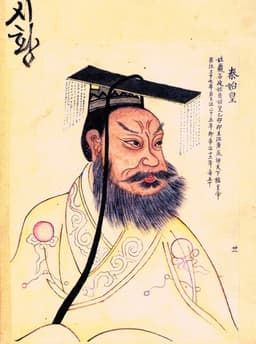
Qin Shi Huang
Emperor · Ancient
85.2Total
Basic Information
Born
1717
-259
Died
1780
-210
Era
Modern
Ancient
Nationality
Austria
China
Occupation
Emperor
Emperor
Civilization
Western
Eastern
Score Comparison
Military (10%)
50.0
80.0
Political (20%)
78.0
90.0
Influence (20%)
82.0
85.0
Legacy (20%)
55.0
90.0
Leadership (15%)
80.0
78.0
Strategy (15%)
50.0
82.0
TOTAL
68.0
85.2
Maria Theresa — Complete Timeline
1713 AD
Pragmatic Sanction of 1713Political Action◆ Major
Maria Theresa's father, Emperor Charles VI, issued the Pragmatic Sanction to ensure Habsburg lands would pass intact to his daughter. This document became the legal basis for her succession and triggered the War of the Austrian Succession.
SuccessionHabsburg DynastyLegal Reform
Impact: regionalconstructive
1740 AD
War of the Austrian SuccessionWar
Upon Maria Theresa's accession, Frederick II of Prussia invaded Silesia, sparking a European war. Despite losing Silesia in the Treaty of Aix-la-Chapelle (1748), she retained the Habsburg throne and secured her dynasty's survival.
WarSuccessionPrussia
Impact: global
1749 AD
Theresian ReformsReform◆ Major
Maria Theresa initiated comprehensive administrative, fiscal, and military reforms in Austria. She centralized government, created a standing army, and improved tax collection, strengthening the Habsburg state after the losses of the war.
AdministrationMilitary ReformCentralization
Impact: nationalconstructive
1756 AD
Diplomatic RevolutionPolitical Action◆ Major
Maria Theresa orchestrated the reversal of traditional alliances, allying Austria with France and Russia against Prussia. This diplomatic shift led to the Seven Years' War, though Austria failed to recover Silesia.
DiplomacyAllianceSeven Years' War
Impact: global
1774 AD
Education ReformReform◆ Major
Maria Theresa introduced compulsory primary education for all children in the Habsburg monarchy. The General School Ordinance established state-run schools, increasing literacy and reducing Church control over education.
EducationSocial ReformEnlightenment
Impact: nationalprogressive
Qin Shi Huang — Complete Timeline
246 BC
Construction of the Mausoleum and Terracotta ArmyOther◆ Major
Qin Shi Huang commissioned a vast mausoleum complex near Xi'an, guarded by thousands of life-sized terracotta soldiers, horses, and chariots. The project employed hundreds of thousands of workers and reflected his obsession with immortality and imperial power.
Impact: global
230 BC
Conquest of the Six Warring StatesWar
From 230 to 221 BCE, Ying Zheng led the Qin state in a series of campaigns that conquered the Han, Zhao, Wei, Chu, Yan, and Qi states. This unified China under a single ruler for the first time, ending the Warring States period.
Impact: global
221 BC
Standardization of Writing, Currency, and MeasurementsReform◆ Major
Qin Shi Huang ordered the standardization of Chinese script, currency, and weights and measures across the unified empire. This facilitated administration, trade, and cultural integration, laying a foundation for future dynasties.
Impact: globalconstructive
Proclamation of the Qin DynastyPolitical Action
After conquering the last independent state, Ying Zheng declared himself Shi Huangdi (First Emperor), founding the Qin Dynasty. He adopted a new title to signify his supreme authority and initiated centralized imperial rule.
Impact: global
214 BC
Initiation of the Great Wall ConstructionOther◆ Major
Qin Shi Huang ordered the connection and extension of existing northern fortifications to create a unified defensive wall against nomadic Xiongnu raids. This project involved massive conscripted labor and became the precursor to the later Great Wall.
Impact: regional
213 BC
Burning of Books and Burying of ScholarsPolitical Action◆ Major
On the advice of Li Si, Qin Shi Huang ordered the burning of historical records and philosophical texts not aligned with Legalist doctrine. He also had 460 Confucian scholars buried alive to suppress dissent and consolidate ideological control.
Impact: nationaldestructive
Expert Analysis
maria-theresa-vs-qin-shi-huang
# The Iron Hand and the Velvet Glove
In 221 BC, a warlord in the Yellow River valley declared himself *Shi Huangdi*—the First Emperor—and set about erasing every trace of the six kingdoms he had conquered. He standardized the axle lengths of every cart, the strokes of every written character, the weight of every coin. Fourteen hundred miles to the west, in 1740, a young woman inherited a patchwork of Habsburg lands that her father had promised would remain intact, only to watch Prussian troops seize her richest province within months. She responded not by burning books, but by rewriting the rules of statecraft. Both Qin Shi Huang and Maria Theresa unified and transformed their realms. But one ruled through annihilation, the other through negotiation—and the difference tells us everything about the worlds they inhabited and the legacies they left behind.
Origins
Qin Shi Huang was born in 259 BC, in an age when China was splintered into seven warring states. His father was a king of Qin, a western frontier state that had long been considered semi-barbarian by the more cultured central kingdoms. The boy grew up in a court where survival meant ruthlessness: his own mother was involved in a conspiracy against him, and his early years were shadowed by the threat of assassination. The philosophy that shaped him was Legalism—a doctrine that held that human nature was inherently selfish and could only be controlled through strict laws and harsh punishments. It was a worldview forged in constant war.
Maria Theresa was born in 1717, in a Vienna that had just survived the Ottoman siege and was now the heart of a Baroque empire. Her father, Emperor Charles VI, had no male heir, so he spent decades securing the Pragmatic Sanction of 1713—a diplomatic agreement meant to guarantee that his daughter could inherit all Habsburg lands intact. Maria Theresa was educated in the arts, religion, and languages, but not in military strategy or state finance. She was expected to be a wife and mother, not a sovereign. When she ascended the throne at twenty-three, she was pregnant with her third child and had never attended a council meeting. Her world assumed that women could not rule.
Rise to Power
Qin Shi Huang’s path was one of total conquest. From 230 to 221 BC, he led his armies in a series of campaigns that systematically crushed the Han, Zhao, Wei, Chu, Yan, and Qi states. He did not negotiate; he annihilated. He destroyed the walls of conquered cities, disarmed their soldiers, and forcibly relocated their aristocratic families to his capital at Xianyang. When the last king surrendered, Ying Zheng did not become king of a larger China—he became something new entirely. He invented a title, *Shi Huangdi*, and claimed that his dynasty would last ten thousand generations.
Maria Theresa’s rise was forced upon her by death. When her father died in 1740, the Pragmatic Sanction collapsed almost immediately. Frederick II of Prussia invaded Silesia, a wealthy Habsburg province, and within weeks the War of the Austrian Succession had engulfed Europe. Maria Theresa had no army worth the name, no treasury, and no allies. Her own ministers doubted her. She went to the Hungarian Diet in Pressburg, held her infant son in her arms, and pleaded for troops—in Latin, because she did not yet speak Hungarian well. The nobles drew their swords and swore to die for their queen. She saved her throne through sheer force of personality.
Leadership & Governance
Qin Shi Huang governed by standardization and terror. He ordered that writing, currency, and measurements be unified across the empire—a reform that would endure for two millennia. He built roads and canals to bind his realm together. But he also burned books that did not conform to Legalist orthodoxy and buried alive scholars who criticized his rule. He believed that the past had to be erased for the future to begin. His Great Wall was not a single structure but a series of existing walls linked and extended, built by hundreds of thousands of conscripted laborers, many of whom died in the work. He ruled by fear, and fear worked—until it did not.
Maria Theresa governed by reform and pragmatism. She centralized the Habsburg administration, created a standing army, and reformed the tax system so that nobles and clergy could no longer evade their obligations. She introduced compulsory primary education in 1774, believing that an educated populace was a loyal one. She did not abolish serfdom—her son Joseph II would attempt that later—but she limited the power of landlords over peasants. She also orchestrated the Diplomatic Revolution of 1756, allying Austria with its ancient enemies France and Russia to isolate Prussia. She lost Silesia permanently, but she ensured that Austria survived as a great power. She ruled by persuasion and patience, and it worked—for her lifetime.
Triumph & Tragedy
Qin Shi Huang’s greatest triumph was the unification itself—a project so audacious that it reshaped the entire Chinese world. His greatest tragedy was the fragility of his creation. He became obsessed with immortality, sending expeditions to find the elixir of life and consuming mercury pills that probably hastened his death. When he died in 210 BC, his dynasty collapsed within four years. His mausoleum, guarded by thousands of life-sized terracotta soldiers, was hidden for two thousand years—a monument to his ambition and his failure.
Maria Theresa’s greatest triumph was survival. She inherited a bankrupt, disorganized, and endangered realm and turned it into a modern state. Her greatest tragedy was the Seven Years’ War (1756–1763), in which she failed to recapture Silesia despite a vast coalition. She never forgave Frederick the Great, and she never forgot. But she lived to see her children married into the thrones of France, Naples, and the Holy Roman Empire. She died in 1780, the matriarch of Europe.
Character & Destiny
Qin Shi Huang was paranoid, ruthless, and visionary. He trusted no one, not even his own advisers. He believed that history began with him. That belief was both his strength and his undoing: it allowed him to imagine a unified China, but it also prevented him from building institutions that could outlast him. He left no successor capable of ruling, no system of succession, no shared loyalty beyond fear.
Maria Theresa was resilient, pragmatic, and maternal. She trusted her ministers, even when they failed her. She believed that her dynasty was sacred, but she also believed that it had to adapt. She wrote letters to her children filled with political advice and personal affection. She understood that power had to be shared, not hoarded. She left behind a reformed state, a loyal bureaucracy, and a dynasty that would rule for another century.
Legacy
Qin Shi Huang’s legacy is paradoxical. The dynasty he founded lasted only fifteen years, but the empire he created—unified, standardized, and centralized—became the template for every Chinese dynasty that followed. The name “China” itself may derive from “Qin.” His terracotta army is one of the wonders of the world. But he is also remembered as a tyrant who burned books and buried scholars. In Chinese history, he is both the First Emperor and the ultimate cautionary tale.
Maria Theresa’s legacy is more modest but more concrete. She did not create a new world; she saved an old one. Her reforms modernized Austria, her education system laid the groundwork for later progress, and her diplomatic skills kept the Habsburg monarchy alive during its darkest hour. She is remembered as a mother, a reformer, and a survivor—not a conqueror, but a ruler who understood that the art of governance is the art of the possible.
Conclusion
Standing before the terracotta army in Xi’an, one feels the weight of absolute power—the ambition to command not only the living but the dead. Standing in the Schönbrunn Palace in Vienna, one feels the warmth of a different kind of rule—the patience to persuade, the wisdom to reform, the courage to endure. Qin Shi Huang and Maria Theresa both faced the fundamental challenge of governance: how to hold a diverse realm together. One answered with fire and iron, the other with ink and diplomacy. Their methods were products of their times, but their outcomes were products of their characters. The First Emperor built an empire that outlasted his dynasty. The Habsburg Empress preserved a dynasty that outlasted her empire. Both succeeded. Both failed. And their stories remind us that there is no single path to power—only the choices we make when we get there.
Rankings
🥇
Qin Shi HuangLeader
Mil: 80.0Pol: 90.0Inf: 85.0
85.2
🥈
Maria Theresa
Mil: 50.0Pol: 78.0Inf: 82.0
68.0
+17.2 behind
How This Comparison Works
Algorithm
Each figure is scored on 6 dimensions (0—100 scale) based on structured historical data: Military (10%), Political (20%), Influence (20%), Legacy (20%), Leadership (15%), Strategy (15%). The weighted total produces the final ranking.
Data Sources
Scores are computed from structured sub-indicators in the database. Scale factors adjust for era (Ancient ×0.85, Modern ×1.0) and civilization size (Eastern ×1.05, Other ×0.80) to account for differences in population and military scale.
Maximum 3 Figures
Comparisons are limited to 2—3 figures to ensure readability and statistical meaningfulness.
Error Margins
±5 points per dimension — Sub-scores are derived from historical records with inherent uncertainty. Two figures within 5 points on a dimension should be considered roughly equivalent in that area.
Total Score Accuracy
±3 points overall — The weighted combination of 6 dimensions produces a total score with approximately ±3 points of uncertainty. Differences of less than 3 points are not statistically significant— the figures are effectively tied.
Known Limitations
- Historical records are incomplete and uneven across civilizations
- Figures from oral-tradition societies may be underrepresented
- Occupation labels can misclassify multi-role figures
- Scores measure capability and impact, not moral character
- Quantitative scoring is a comparison tool, not absolute truth
Capability Radar
Military (10%) — Battles & Warfare
Battles
65
85
Win Rate
55
90
Expansion
40
90
Political (20%) — Governance & Reform
Reform
95
95
Diplomacy
80
75
Economy
90
90
Influence (20%) — Cultural & Global Reach
Cultural
70
95
Global
70
85
Legacy (20%) — Historical Impact
Historical
80
95
Longevity
75
95
Leadership (15%) — Power & Stability
Tenure
85
70
Stability
70
65
Strategy (15%) — Tactics & Innovation
Strategy
60
85
Tactics
50
80
Reform
75
95
Similar Comparisons
Comments & Discussion
QINSError4046/17/2026
You can't seriously compare a Warring States conqueror with an enlightened absolutist. Qin burned books and buried scholars alive because he feared knowledge could undermine his artificial unity. Maria Theresa reformed tax systems and established public education. One annihilated the past to build his monument; the other built institutions to secure her dynasty's future. Qin's empire collapsed within four years of his death. Maria Theresa's reforms shaped Central Europe for centuries. The compar
龙甲书生6/17/2026
法家 vs 哈布斯堡?这根本不是同一个级别的较量。秦始皇用严刑峻法统一六国,书同文车同轨,开创了两千年的帝国范式。玛利亚·特蕾莎只是勉强保住了父辈的遗产,靠生儿育女和外交联姻维持统治。她连西里西亚都守不住,打不过腓特烈大帝。想想看,一个是缔造文明框架的奠基人,一个只是危机管理大师,有什么好比的?历史评分不是靠母性光辉来打的。
RoteKaiserin6/17/2026
评论里都在吹特蕾莎不杀人、搞改革,可别忘了她的“伏尔泰门”上有多少穷人还是饿死的。她的垦荒政策倒是给了贵族更多土地,而不是农民。秦始皇修长城、建驰道,那才叫国家意志的体现。再说了,刘邦建立汉朝后基本上沿袭了秦制——证明秦的框架是有效的。特蕾莎的御座王朝呢?1918年就灰飞烟灭了。谁笑到最后?
ReformOrDie6/17/2026
Let's be real—Maria Theresa's "reforms" were desperate improvisation. She created conscription, standardized taxation, centralized bureaucracy—sound familiar? That's Qin Shi Huang's playbook adapted for 18th-century Europe. The difference is cosmetic: Qin used iron law and forced labor, Maria Theresa used administrative coercion and religious toleration as instruments of state power. Both understood that unity requires crushing regional autonomy. Give me the Legalist who admits he's building an