Loading...
Mark Carney vs Napoleon Bonaparte
Napoleon Bonaparte leads by 25.4 pts · 2 figures compared
…
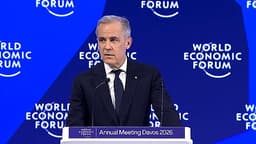
Mark Carney
Politician · Modern
45.5Total

Napoleon Bonaparte
General · Modern
70.9Total
Basic Information
Born
1965
1769
Died
—
1821
Era
Modern
Modern
Nationality
Canada
France
Occupation
Politician
General
Civilization
Western
Western
Score Comparison
Military (10%)
50.0
94.0
Political (20%)
48.0
72.0
Influence (20%)
50.2
40.0
Legacy (20%)
36.7
80.0
Leadership (15%)
48.4
78.0
Strategy (15%)
42.9
90.0
TOTAL
45.5
70.9
Mark Carney — Complete Timeline
2008 AD
Appointed Governor of the Bank of CanadaPolitical Action◆ Major
Carney was appointed as the 8th Governor of the Bank of Canada, taking office during the global financial crisis. He led the bank's response, including cutting interest rates to historic lows and implementing unconventional monetary policies to stabilize the Canadian economy.
Canadian PoliticsMonetary PolicyFinancial Crisis
Impact: nationalconstructive
2013 AD
Appointed Governor of the Bank of EnglandPolitical Action◆ Major
Carney became the 120th Governor of the Bank of England, the first non-British citizen to hold the post. He oversaw the bank's response to the aftermath of the financial crisis and the Brexit referendum, including forward guidance and quantitative easing.
UK PoliticsMonetary PolicyFinancial Crisis
Impact: globalconstructive
2016 AD
Led the Bank of England's Response to BrexitPolitical Action◆ Major
Following the Brexit referendum, Carney led the Bank of England's immediate response, cutting interest rates and launching a new round of quantitative easing to support the UK economy. His actions were credited with preventing a financial panic.
UK PoliticsMonetary PolicyBrexit
Impact: globalconstructive
2019 AD
Appointed UN Special Envoy for Climate Action and FinancePolitical Action◆ Major
Carney was appointed as the UN Special Envoy for Climate Action and Finance, focusing on mobilizing private finance for the transition to a net-zero economy. He advocated for climate-related financial disclosures and green investment.
Climate ChangeFinanceUN
Impact: globalconstructive
2025 AD
Elected Leader of the Liberal Party of CanadaPolitical Action◆ Major
Carney was elected as the leader of the Liberal Party of Canada, succeeding Justin Trudeau. His election marked a shift from central banking to political leadership, with a focus on economic and climate policy.
Canadian PoliticsLeadershipElection
Impact: nationalconstructive
Napoleon Bonaparte — Complete Timeline
1799 AD
Coup of 18 BrumaireOther◆ Major
Napoleon Bonaparte, with support from his brother Lucien and key political figures, overthrew the Directory in a bloodless coup. He established the Consulate with himself as First Consul, effectively becoming the ruler of France. This event ended the French Revolution's most unstable period.
French RevolutionCoupRise to Power
Impact: regional
1804 AD
Promulgation of the Napoleonic CodeOther◆ Major
Napoleon enacted the Civil Code of the French, known as the Napoleonic Code, a comprehensive set of laws that replaced the fragmented feudal legal systems. The code established legal equality, protected property rights, and secularized law. It became the basis for legal systems in many European and world countries.
Legal ReformNapoleonic CodeCivil Law
Impact: globalconstructive
1805 AD
Battle of AusterlitzWar◆ Major
Napoleon's Grande Arm
Napoleonic WarsBattleDecisive Victory
Impact: global
1812 AD
Invasion of RussiaWar◆ Major
Napoleon led the Grande Arm
Napoleonic WarsInvasionDisaster
Impact: globaldestructive
1815 AD
Battle of WaterlooWar◆ Major
Napoleon's French army was defeated by the combined forces of the Duke of Wellington's Anglo-Allied army and Gebhard Leberecht von Bl
Napoleonic WarsBattleFinal Defeat
Impact: globaldestructive
Expert Analysis
mark-carney-vs-napoleon-bonaparte
# The Emperor and the Banker: Two Paths to Power in an Age of Crisis
In the winter of 1815, Napoleon Bonaparte stood on the field of Waterloo, watching his imperial dreams dissolve into mud and blood. Two centuries later, in the spring of 2025, Mark Carney stood before a podium in Ottawa, accepting the leadership of Canada's Liberal Party. One man commanded armies that redrew the map of Europe; the other commanded interest rates that steadied the global economy. What could possibly connect a Corsican artillery officer who crowned himself emperor and a Canadian economist who became the first non-Briton to run the Bank of England? The answer lies not in what they achieved, but in how they understood the nature of power itself.
Origins
Napoleon Bonaparte was born in 1769 on the island of Corsica, a year after France purchased the territory from Genoa. His family was minor nobility, but poor—the kind of poverty that breeds ambition like a fever. He studied at French military academies, where his accent marked him as an outsider and his intellect marked him as dangerous. The French Revolution, which erupted when he was twenty, shattered the old order and created a vacuum that a brilliant young officer could fill. Napoleon was forged in chaos, and chaos became his native language.
Mark Carney was born in 1965 in Fort Smith, Northwest Territories, a remote town of a few thousand people. His father was a high school principal, his mother a teacher. He studied economics at Harvard and Oxford, then spent thirteen years at Goldman Sachs before entering public service. Where Napoleon learned to read battlefields, Carney learned to read balance sheets. The financial crisis of 2008, which struck just as he became Governor of the Bank of Canada, was his revolution. But Carney's revolution required no guillotines—only press releases and policy statements.
Rise to Power
Napoleon's ascent was meteoric and violent. In 1793, at age twenty-four, he drove British forces from the port of Toulon, earning promotion to brigadier general. In 1795, he defended the revolutionary government from royalist insurgents with a "whiff of grapeshot"—cannon fire into the streets of Paris. By 1796, he commanded the Army of Italy, where his lightning campaigns forced Austria to sue for peace. In 1799, he seized power in a coup d'état, becoming First Consul. Five years later, he crowned himself Emperor of the French. Each step was a gamble, each victory a foundation for the next risk.
Carney's rise was quieter but no less remarkable. In 2008, at age forty-three, he became Governor of the Bank of Canada, the youngest in its history. He steered Canada through the global financial crisis with such skill that in 2013, he was appointed Governor of the Bank of England—the first foreigner in the institution's 319-year history. When Britain voted to leave the European Union in 2016, Carney acted within hours, cutting interest rates and launching emergency measures. In 2019, he became the UN Special Envoy for Climate Action and Finance. And in 2025, he entered electoral politics, winning the leadership of the Liberal Party and becoming Prime Minister. Where Napoleon conquered nations, Carney conquered institutions.
Leadership & Governance
Napoleon ruled through sheer force of will. He reorganized France into departments, centralized the bureaucracy, and created the Napoleonic Code, which established legal equality and protected property rights. He built roads, canals, and schools. But his governance was inseparable from war: he demanded resources for his armies, imposed conscription, and suppressed dissent. His military genius was undeniable—his 94.0 military score reflects a mind that could calculate troop movements like a chess grandmaster. Yet his political score of 75.0 suggests a leader who never fully mastered the art of peace.
Carney governed through persuasion and credibility. At the Bank of England, he managed inflation, regulated banks, and guided monetary policy through Brexit's uncertainty. His leadership score of 78.8 reflects a consensus-builder who could calm markets with a single speech. His strategy score of 35.3, however, reveals a fundamental difference: Carney did not command; he influenced. He could not order a bank to lend more money—he could only lower interest rates and hope. Napoleon could order a regiment to charge into cannon fire, and they would obey. Carney's power was the power of trust, and trust is fragile.
Triumph & Tragedy
Napoleon's greatest triumph was the Battle of Austerlitz in 1805, where he crushed the combined armies of Russia and Austria. His greatest tragedy was the invasion of Russia in 1812, where 600,000 men marched east and fewer than 100,000 returned. He was exiled to Elba, escaped, and raised another army—only to be defeated at Waterloo. His ambition was his engine and his anchor.
Carney's greatest triumph may be his handling of Brexit's immediate aftermath, when he prevented a financial panic. His greatest tragedy is not yet written—he became Prime Minister in 2025, and his legacy remains uncertain. But his career suggests a different kind of tragedy: the tragedy of the technocrat. He mastered systems, but systems cannot love him. Napoleon was adored by his soldiers, hated by his enemies, and remembered by history. Carney is respected, but respect is not devotion.
Character & Destiny
Napoleon was driven by an insatiable hunger for glory. "Impossible," he once said, "is a word to be found only in the dictionary of fools." He believed that history was something to be seized, not endured. His character shaped his decisions: he trusted his genius, distrusted his rivals, and never knew when to stop. His total score of 82.4 reflects a man who achieved almost everything and lost almost everything.
Carney is driven by a different impulse: the desire to manage risk. He is calm, methodical, and cautious. His total score of 57.4 is not a measure of failure but of a different scale of ambition. Napoleon measured his life in battles and empires; Carney measures his in basis points and policy frameworks. One sought to dominate history; the other seeks to stabilize it.
Legacy
Napoleon's legacy is carved in stone and law. The Napoleonic Code influences legal systems across Europe and the Americas. His military tactics are still studied in war colleges. He is remembered as a tyrant and a reformer, a genius and a madman. His influence score of 82.0 reflects a man who changed the world, for better and worse.
Carney's legacy is still forming. He helped prevent a depression in 2008 and a financial collapse in 2016. He pushed central banks to consider climate change. As Prime Minister, he may yet shape Canada's future. But his influence score of 69.3 suggests a quieter mark. He will be remembered not as a conqueror but as a steward—a man who held the wheel during storms and kept the ship afloat.
Conclusion
Two men, two centuries, two kinds of power. Napoleon believed that history was made by force; Carney believes it is made by systems. Napoleon conquered Europe; Carney conquered the world's central banks. One ended his life in exile on a remote island; the other began his political career at age sixty. The difference is not merely one of talent or opportunity—it is a difference in how they understood the human condition. Napoleon thought the world could be remade by will. Carney thinks it can be managed by expertise. Perhaps both are right. Perhaps both are wrong. But their stories remind us that power wears many faces, and history has room for emperors and bankers alike.
Rankings
🥇
Napoleon BonaparteLeader
Mil: 94.0Pol: 72.0Inf: 40.0
70.9
🥈
Mark Carney
Mil: 50.0Pol: 48.0Inf: 50.2
45.5
+25.4 behind
How This Comparison Works
Algorithm
Each figure is scored on 6 dimensions (0—100 scale) based on structured historical data: Military (10%), Political (20%), Influence (20%), Legacy (20%), Leadership (15%), Strategy (15%). The weighted total produces the final ranking.
Data Sources
Scores are computed from structured sub-indicators in the database. Scale factors adjust for era (Ancient ×0.85, Modern ×1.0) and civilization size (Eastern ×1.05, Other ×0.80) to account for differences in population and military scale.
Maximum 3 Figures
Comparisons are limited to 2—3 figures to ensure readability and statistical meaningfulness.
Error Margins
±5 points per dimension — Sub-scores are derived from historical records with inherent uncertainty. Two figures within 5 points on a dimension should be considered roughly equivalent in that area.
Total Score Accuracy
±3 points overall — The weighted combination of 6 dimensions produces a total score with approximately ±3 points of uncertainty. Differences of less than 3 points are not statistically significant— the figures are effectively tied.
Known Limitations
- Historical records are incomplete and uneven across civilizations
- Figures from oral-tradition societies may be underrepresented
- Occupation labels can misclassify multi-role figures
- Scores measure capability and impact, not moral character
- Quantitative scoring is a comparison tool, not absolute truth
Capability Radar
Military (10%) — Battles & Warfare
Battles
29
95
Win Rate
31
90
Expansion
35
95
Political (20%) — Governance & Reform
Reform
20
95
Diplomacy
30
80
Economy
70
85
Influence (20%) — Cultural & Global Reach
Cultural
10
85
Global
30
90
Legacy (20%) — Historical Impact
Historical
10
95
Longevity
10
90
Leadership (15%) — Power & Stability
Tenure
10
85
Stability
30
70
Strategy (15%) — Tactics & Innovation
Strategy
40
95
Tactics
43
98
Reform
41
92
Similar Comparisons
Comments & Discussion
No comments yet. Be the first to share your thoughts!