Loading...
Martti Ahtisaari vs Napoleon Bonaparte
Napoleon Bonaparte leads by 12.0 pts · 2 figures compared
…
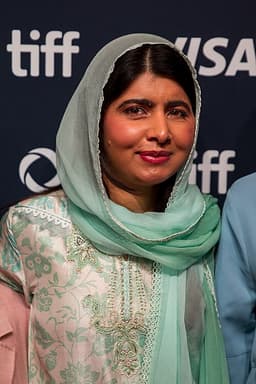
Martti Ahtisaari
Politician · Modern
58.9Total

Napoleon Bonaparte
General · Modern
70.9Total
Basic Information
Born
1937
1769
Died
—
1821
Era
Modern
Modern
Nationality
Finland
France
Occupation
Politician
General
Civilization
Western
Western
Score Comparison
Military (10%)
49.1
94.0
Political (20%)
70.0
72.0
Influence (20%)
58.3
40.0
Legacy (20%)
52.0
80.0
Leadership (15%)
78.0
78.0
Strategy (15%)
42.5
90.0
TOTAL
58.9
70.9
Martti Ahtisaari — Complete Timeline
1994 AD
Election as President of FinlandPolitical Action◆ Major
Martti Ahtisaari was elected President of Finland, serving a six-year term. His presidency focused on Finland's EU membership, foreign policy, and conflict resolution, establishing him as a global peacemaker.
Finnish PresidencyForeign Policy
Impact: nationalconstructive
2005 AD
Mediation of the Kosovo Status ProcessPolitical Action
Ahtisaari was appointed UN Special Envoy for the Kosovo status process. He led negotiations between Serbia and Kosovo, ultimately proposing a plan for supervised independence, which led to Kosovo's declaration of independence in 2008.
KosovoUN DiplomacyConflict Resolution
Impact: regionalconstructive
Mediation of the Aceh Peace ProcessPolitical Action◆ Major
Ahtisaari mediated peace negotiations between the Indonesian government and the Free Aceh Movement (GAM). The talks resulted in the Helsinki Accords, ending a 29-year conflict in Aceh province.
Aceh PeaceConflict ResolutionIndonesia
Impact: regionalconstructive
2008 AD
Awarding of the Nobel Peace PrizeCultural◆ Major
Martti Ahtisaari was awarded the Nobel Peace Prize for his efforts to resolve international conflicts, including in Kosovo, Namibia, Aceh, and Northern Ireland. The prize recognized his decades of peace mediation work.
Nobel Peace PrizePeace MediationDiplomacy
Impact: globalconstructive
Napoleon Bonaparte — Complete Timeline
1799 AD
Coup of 18 BrumaireOther◆ Major
Napoleon Bonaparte, with support from his brother Lucien and key political figures, overthrew the Directory in a bloodless coup. He established the Consulate with himself as First Consul, effectively becoming the ruler of France. This event ended the French Revolution's most unstable period.
French RevolutionCoupRise to Power
Impact: regional
1804 AD
Promulgation of the Napoleonic CodeOther◆ Major
Napoleon enacted the Civil Code of the French, known as the Napoleonic Code, a comprehensive set of laws that replaced the fragmented feudal legal systems. The code established legal equality, protected property rights, and secularized law. It became the basis for legal systems in many European and world countries.
Legal ReformNapoleonic CodeCivil Law
Impact: globalconstructive
1805 AD
Battle of AusterlitzWar◆ Major
Napoleon's Grande Arm
Napoleonic WarsBattleDecisive Victory
Impact: global
1812 AD
Invasion of RussiaWar◆ Major
Napoleon led the Grande Arm
Napoleonic WarsInvasionDisaster
Impact: globaldestructive
1815 AD
Battle of WaterlooWar◆ Major
Napoleon's French army was defeated by the combined forces of the Duke of Wellington's Anglo-Allied army and Gebhard Leberecht von Bl
Napoleonic WarsBattleFinal Defeat
Impact: globaldestructive
Expert Analysis
martti-ahtisaari-vs-napoleon-bonaparte
# The Conqueror and the Peacemaker
In the winter of 1807, Napoleon Bonaparte stood atop a hill in East Prussia, watching his Grande Armée crush the Russian forces at the Battle of Friedland. Cannons roared, cavalry charged, and an empire was being forged in blood and fire. Nearly two centuries later, in the summer of 2005, Martti Ahtisaari sat in a quiet room in Helsinki, coaxing rebels and government officials to lay down their weapons in Aceh, Indonesia. No cannons, no cavalry—only words, patience, and the quiet weight of a Nobel Peace Prize yet to come. What could these two men, separated by time and temperament, possibly have in common? Everything, and nothing.
Origins
Napoleon Bonaparte was born in 1769 on the island of Corsica, a Mediterranean backwater that had just been annexed by France. His family was minor nobility, poor and proud. Young Napoleon was a solitary, ambitious boy who devoured books on military history and classical strategy. He entered the military academy at Brienne at age nine, mocked by his wealthier classmates for his accent and small stature. That resentment, that hunger to prove himself, never left him. He was a product of the French Revolution—a world where old hierarchies crumbled and a man of talent could rise, or die trying.
Martti Ahtisaari was born in 1937 in Viipuri, Finland, a city that would soon be swallowed by the Soviet Union in the Winter War. His family fled as refugees, losing everything. He grew up in a small apartment in Oulu, the son of a soldier turned engineer. While Napoleon learned to command armies, Ahtisaari learned to navigate loss. He became a teacher, then a diplomat—a man who built bridges because he had seen what happened when they burned. His era was not one of empire but of Cold War tensions, decolonization, and fragile peace processes. Two men, two centuries, two very different worlds.
Rise to Power
Napoleon’s ascent was meteoric. At 24, he recaptured Toulon from British forces with a daring artillery plan. At 26, he suppressed a royalist uprising in Paris with a "whiff of grapeshot." By 30, he was First Consul of France, having seized power in the coup of 18 Brumaire in 1799. Every step was a gamble, a calculated risk. He did not wait for opportunity; he created it. His genius lay in speed, surprise, and the ruthless application of force.
Ahtisaari’s rise was slower, quieter. He joined the Finnish Foreign Ministry in 1965, serving in Tanzania and later as ambassador to the United Nations. In 1994, he was elected President of Finland—a largely ceremonial role, but one he used to push Finland into the European Union. His real power, however, emerged after his presidency. In 2005, at age 68, he was appointed UN Special Envoy for Kosovo and simultaneously invited to mediate the Aceh conflict. Unlike Napoleon, he did not seize power; he was invited to wield influence. His tools were not cannons but credibility, patience, and an unshakable belief that even the bloodiest war could end at a negotiating table.
Leadership & Governance
Napoleon ruled with iron will and brilliant organization. He centralized the French state, created the Napoleonic Code—a legal framework that influenced much of Europe—and reformed education, finance, and infrastructure. On the battlefield, he was a master of maneuver, winning stunning victories at Austerlitz (1805) and Jena (1806). But his governance was a double-edged sword: he suppressed dissent, censored the press, and crowned himself Emperor in 1804. His political score of 75.0 reflects a leader who was effective but autocratic. His military score of 94.0 speaks for itself.
Ahtisaari’s leadership was the opposite. He had no army, no empire. His power came from trust. In Aceh, he shuttled between the Indonesian government and the Free Aceh Movement (GAM), mediating for eight months until a peace deal was signed in August 2005. In Kosovo, he led the status process from 2005 to 2007, ultimately proposing supervised independence—a plan that would later form the basis for Kosovo’s 2008 declaration. His leadership score of 82.6 shows a man who led not by command but by persuasion. He did not impose solutions; he made people want to agree.
Triumph & Tragedy
Napoleon’s greatest triumph was Austerlitz, where he destroyed a combined Austrian and Russian army in a single day. His greatest tragedy was the invasion of Russia in 1812. He marched 600,000 men into the snow; fewer than 100,000 returned. The disaster shattered his invincible image and led to his first abdication in 1814. He returned for the Hundred Days in 1815, only to be crushed at Waterloo. He died in exile on Saint Helena in 1821, a prisoner of the British.
Ahtisaari’s triumph was the Nobel Peace Prize in 2008, awarded for his work in Namibia, Kosovo, and Aceh. His tragedy was more subtle: the Kosovo status process remained unresolved for years after his mediation, with Serbia refusing to accept independence. He never saw the final peace he worked for, but he planted seeds that others would water. He died in 2023 at age 86, respected but not celebrated like a conqueror.
Character & Destiny
Napoleon was driven by ambition, ego, and a belief in his own destiny. "Impossible is a word to be found only in the dictionary of fools," he said. That confidence built an empire—and destroyed it. He could not stop, could not compromise, could not share power. His character was his fate.
Ahtisaari was driven by empathy, patience, and a quiet stubbornness. "Peace is a matter of will," he said. He understood that lasting peace requires listening, not winning. His character allowed him to succeed where generals failed—not by conquering territory, but by disarming hearts.
Legacy
Napoleon left a divided legacy. He is remembered as a military genius, a reformer, and a tyrant. The Napoleonic Code survives, but so do the millions of dead from his wars. His legacy score of 78.0 reflects this ambiguity.
Ahtisaari’s legacy is quieter but perhaps more profound. The Aceh peace deal held; the province remains stable. Kosovo exists as a state partly because of his work. He proved that diplomacy, not war, can resolve the world’s most intractable conflicts. His legacy score of 75.0 understates his impact, for his victories left no graves.
Conclusion
Two men, two paths. Napoleon sought to change the world through force; Ahtisaari sought to change it through patience. One conquered Europe in a decade; the other spent a lifetime building peace in corners of the world most had forgotten. History remembers the conqueror, but it is the peacemaker who leaves the world whole. Perhaps the lesson is not that one was right and the other wrong, but that the world needs both—the fire that destroys old orders and the water that nurtures new ones. The question for us is which we choose to follow.
Rankings
🥇
Napoleon BonaparteLeader
Mil: 94.0Pol: 72.0Inf: 40.0
70.9
🥈
Martti Ahtisaari
Mil: 49.1Pol: 70.0Inf: 58.3
58.9
+12.0 behind
How This Comparison Works
Algorithm
Each figure is scored on 6 dimensions (0—100 scale) based on structured historical data: Military (10%), Political (20%), Influence (20%), Legacy (20%), Leadership (15%), Strategy (15%). The weighted total produces the final ranking.
Data Sources
Scores are computed from structured sub-indicators in the database. Scale factors adjust for era (Ancient ×0.85, Modern ×1.0) and civilization size (Eastern ×1.05, Other ×0.80) to account for differences in population and military scale.
Maximum 3 Figures
Comparisons are limited to 2—3 figures to ensure readability and statistical meaningfulness.
Error Margins
±5 points per dimension — Sub-scores are derived from historical records with inherent uncertainty. Two figures within 5 points on a dimension should be considered roughly equivalent in that area.
Total Score Accuracy
±3 points overall — The weighted combination of 6 dimensions produces a total score with approximately ±3 points of uncertainty. Differences of less than 3 points are not statistically significant— the figures are effectively tied.
Known Limitations
- Historical records are incomplete and uneven across civilizations
- Figures from oral-tradition societies may be underrepresented
- Occupation labels can misclassify multi-role figures
- Scores measure capability and impact, not moral character
- Quantitative scoring is a comparison tool, not absolute truth
Capability Radar
Military (10%) — Battles & Warfare
Battles
31
95
Win Rate
30
90
Expansion
36
95
Political (20%) — Governance & Reform
Reform
70
95
Diplomacy
95
80
Economy
50
85
Influence (20%) — Cultural & Global Reach
Cultural
40
85
Global
80
90
Legacy (20%) — Historical Impact
Historical
75
95
Longevity
60
90
Leadership (15%) — Power & Stability
Tenure
60
85
Stability
80
70
Strategy (15%) — Tactics & Innovation
Strategy
40
95
Tactics
42
98
Reform
41
92
Similar Comparisons
Comments & Discussion
The Iron Pen6/17/2026
Comparing these two is like weighing a sledgehammer against a scalpel. Napoleon reshaped Europe through sheer force at Austerlitz and Jena, leaving a million dead and a legend. But Ahtisaari? He ended 30 years of war in Aceh without a single shot fired. Give me the Finn who blinked last in a negotiation any day. Peace isn't passive—it's the harder battlefield.
冰雪战略家6/17/2026
拿破仑在滑铁卢用尽了运气,但Ahtisaari在科索沃展示了真正的实力。2005年,他在赫尔辛基用一场“沉默外交”说服了印尼政府和自由亚齐运动签署协议,结束了三万人的死亡。拿破仑只会用炮火回应,而Ahtisaari证明了:不流血也能拆解帝国。历史终将站在调解者这边,而非征服者。