Loading...
This comparison has not been analyzed yet.
One-time AI generation (~1 minute). Scores and timeline are already available below.
Mary II of England vs Sri Vikrama Rajasinha
Mary II of England leads by 4.3 pts · 2 figures compared
…
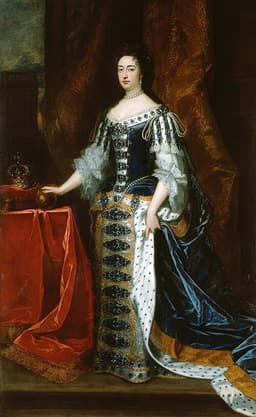
Mary II of England
Emperor · Modern
50.9Total
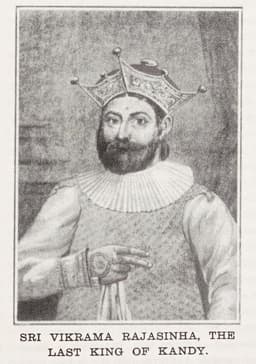
Sri Vikrama Rajasinha
Emperor · Modern
46.6Total
Basic Information
Born
1662
1798
Died
1694
1815
Era
Modern
Modern
Nationality
England
Sri Lanka
Occupation
Emperor
Emperor
Civilization
Western
Indian
Score Comparison
Military (10%)
13.0
50.0
Political (20%)
68.0
32.2
Influence (20%)
52.5
51.0
Legacy (20%)
43.3
43.3
Leadership (15%)
65.0
58.8
Strategy (15%)
57.4
43.7
TOTAL
50.9
46.6
Mary II of England — Complete Timeline
1688 AD
Glorious RevolutionPolitical Action
Mary II accepted the invitation from English parliamentarians to replace her father James II. She and her husband William of Orange invaded England with a Dutch fleet, forcing James II to flee. This bloodless transfer of power established parliamentary sovereignty over the monarchy.
Glorious RevolutionConstitutional ChangeDynastic Shift
Impact: nationalconstructive
1689 AD
Joint Coronation with William IIIPolitical Action◆ Major
Mary II was crowned joint sovereign with her husband William III at Westminster Abbey. She accepted the Bill of Rights, which limited royal powers and affirmed parliamentary authority. This coronation formalized the new constitutional arrangement.
CoronationConstitutional MonarchyBill of Rights
Impact: nationalconstructive
1690 AD
Regency During William's AbsencePolitical Action
Mary II served as regent while William III campaigned in Ireland against James II's forces. She effectively governed England, managing the Treasury and military logistics. Her regency demonstrated her administrative competence and maintained stability.
RegencyGovernanceStability
Impact: nationalconstructive
1694 AD
Death from SmallpoxOther◆ Major
Mary II died of smallpox at Kensington Palace at age 32. Her death deeply affected William III and the nation. She was buried in Westminster Abbey. Her early death ended her joint reign and left William as sole monarch.
DeathSmallpoxMonarchy
Impact: nationaltragic
Sri Vikrama Rajasinha — Complete Timeline
1798 AD
Accession to the Kandyan ThronePolitical Action◆ Major
Sri Vikrama Rajasinha became the last king of the Kandyan Kingdom at age 18, succeeding his uncle Rajadhi Rajasinha. His reign was marked by internal factionalism and growing British influence in the coastal regions of Ceylon.
SuccessionKandyan KingdomMonarchy
Impact: national
1811 AD
Execution of PilimatalawePolitical Action◆ Major
Sri Vikrama Rajasinha executed his chief minister Pilimatalawe, who had conspired with the British. This act intensified internal dissent and alienated powerful Kandyan nobles, weakening the kingdom's unity.
Political PurgeInternal ConflictNoble Rebellion
Impact: nationaldestructive
1815 AD
Kandyan Wars: British InvasionWar
British forces invaded the Kandyan Kingdom in January 1815. Sri Vikrama Rajasinha's army was defeated due to internal betrayal by Kandyan nobles who signed the Kandyan Convention with the British, ending the kingdom's independence.
British ConquestEnd of KingdomColonialism
Impact: nationaltragic
Deposition and ExilePolitical Action◆ Major
Sri Vikrama Rajasinha was deposed by the British and exiled to Vellore, India, along with his family. This marked the end of the Nayakkar dynasty and the Kandyan Kingdom, as Ceylon became a unified British colony.
ExileEnd of MonarchyBritish Rule
Impact: nationaltragic
This comparison has not been analyzed yet.
One-time AI generation (~1 minute). Scores and timeline are already available below.
Rankings
🥇
Mary II of EnglandLeader
Mil: 13.0Pol: 68.0Inf: 52.5
50.9
🥈
Sri Vikrama Rajasinha
Mil: 50.0Pol: 32.2Inf: 51.0
46.6
+4.3 behind
How This Comparison Works
Algorithm
Each figure is scored on 6 dimensions (0—100 scale) based on structured historical data: Military (10%), Political (20%), Influence (20%), Legacy (20%), Leadership (15%), Strategy (15%). The weighted total produces the final ranking.
Data Sources
Scores are computed from structured sub-indicators in the database. Scale factors adjust for era (Ancient ×0.85, Modern ×1.0) and civilization size (Eastern ×1.05, Other ×0.80) to account for differences in population and military scale.
Maximum 3 Figures
Comparisons are limited to 2—3 figures to ensure readability and statistical meaningfulness.
Error Margins
±5 points per dimension — Sub-scores are derived from historical records with inherent uncertainty. Two figures within 5 points on a dimension should be considered roughly equivalent in that area.
Total Score Accuracy
±3 points overall — The weighted combination of 6 dimensions produces a total score with approximately ±3 points of uncertainty. Differences of less than 3 points are not statistically significant— the figures are effectively tied.
Known Limitations
- Historical records are incomplete and uneven across civilizations
- Figures from oral-tradition societies may be underrepresented
- Occupation labels can misclassify multi-role figures
- Scores measure capability and impact, not moral character
- Quantitative scoring is a comparison tool, not absolute truth
Capability Radar
Military (10%) — Battles & Warfare
Battles
38
25
Win Rate
39
20
Expansion
42
10
Political (20%) — Governance & Reform
Reform
45
20
Diplomacy
40
25
Economy
35
20
Influence (20%) — Cultural & Global Reach
Cultural
30
30
Global
25
15
Legacy (20%) — Historical Impact
Historical
40
35
Longevity
30
25
Leadership (15%) — Power & Stability
Tenure
30
40
Stability
50
15
Strategy (15%) — Tactics & Innovation
Strategy
44
25
Tactics
50
30
Reform
51
15
Similar Comparisons
Comments & Discussion
No comments yet. Be the first to share your thoughts!