Loading...
This comparison has not been analyzed yet.
One-time AI generation (~1 minute). Scores and timeline are already available below.
Mary Queen of Scots vs Sekonyela
Mary Queen of Scots leads by 1.6 pts · 2 figures compared
…
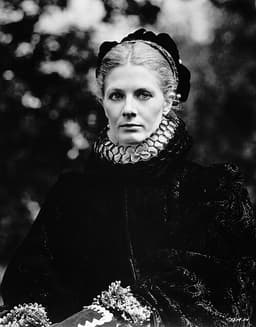
Mary Queen of Scots
Emperor · Modern
46.5Total

Sekonyela
Emperor · Modern
44.9Total
Basic Information
Born
1542
1804
Died
1587
1856
Era
Modern
Modern
Nationality
Scotland
Sotho
Occupation
Emperor
Emperor
Civilization
Western
Other
Score Comparison
Military (10%)
48.6
50.0
Political (20%)
29.3
32.2
Influence (20%)
55.7
49.4
Legacy (20%)
45.8
39.2
Leadership (15%)
41.5
58.8
Strategy (15%)
56.1
41.0
TOTAL
46.5
44.9
Mary Queen of Scots — Complete Timeline
1543 AD
Coronation as Queen of ScotsPolitical Action◆ Major
Mary was crowned Queen of Scots at Stirling Castle at nine months old, following the death of her father James V. The coronation was overseen by regents, and Scotland was governed by a series of regents during her minority.
CoronationRegencyMinority
Impact: national
1558 AD
Marriage to Francis II of FrancePolitical Action◆ Major
Mary married Francis, Dauphin of France, at Notre Dame Cathedral in Paris. The marriage strengthened the Auld Alliance and made Mary queen consort of France when Francis became king in 1559. Francis died in 1560, ending Mary's French reign.
MarriageAuld AllianceFrance
Impact: national
1561 AD
Return to ScotlandPolitical Action◆ Major
Mary returned to Scotland after the death of her husband Francis II. She arrived in Leith and began her personal rule in a country deeply divided by the Protestant Reformation. She faced challenges from Protestant nobles and the English queen Elizabeth I.
ReturnReformationRule
Impact: national
1566 AD
Murder of David RizzioPolitical Action◆ Major
Mary's private secretary David Rizzio was murdered in her presence at Holyrood Palace by a group of nobles led by her husband Lord Darnley. The murder was motivated by jealousy and political intrigue, and it deepened the rift between Mary and Darnley.
MurderIntrigueDarnley
Impact: nationaltragic
1567 AD
Abdication and ImprisonmentPolitical Action
Mary was forced to abdicate the Scottish throne in favor of her infant son James VI after her defeat at the Battle of Carberry Hill. She was imprisoned in Loch Leven Castle and later escaped, but was defeated again and fled to England.
AbdicationImprisonmentFlight
Impact: nationaltragic
1587 AD
Execution by Elizabeth IPolitical Action
Mary was executed at Fotheringhay Castle after being found guilty of involvement in the Babington Plot to assassinate Elizabeth I. Her execution ended 19 years of captivity in England and removed a Catholic claimant to the English throne.
ExecutionPlotCatholic Claimant
Impact: globaltragic
Sekonyela — Complete Timeline
1830 AD
Conflict with Moshoeshoe IWar◆ Major
Sekonyela led the Tlokwa in a series of wars against Moshoeshoe I's Basotho. The conflict was over land and cattle, with Sekonyela's forces raiding Basotho settlements. The wars weakened both groups and allowed Boer expansion.
BasothoTlokwaWarfare
Impact: regionaldestructive
1840 AD
Conflict with BoersWar
Sekonyela engaged in conflicts with Boer trekkers who were encroaching on Tlokwa lands. The Boers, with superior firearms, defeated his forces and seized territory, contributing to Tlokwa decline.
Boer ExpansionTlokwaLand Conflict
Impact: regionaltragic
1853 AD
Loss of Stronghold to MoshoeshoeWar◆ Major
Moshoeshoe's forces captured Sekonyela's mountain stronghold, forcing the Tlokwa chief to flee. This defeat ended Sekonyela's power and led to the absorption of many Tlokwa into the Basotho nation.
BasothoDefeatTlokwa
Impact: regionaltragic
This comparison has not been analyzed yet.
One-time AI generation (~1 minute). Scores and timeline are already available below.
Rankings
🥇
Mary Queen of ScotsLeader
Mil: 48.6Pol: 29.3Inf: 55.7
46.5
🥈
Sekonyela
Mil: 50.0Pol: 32.2Inf: 49.4
44.9
+1.6 behind
How This Comparison Works
Algorithm
Each figure is scored on 6 dimensions (0—100 scale) based on structured historical data: Military (10%), Political (20%), Influence (20%), Legacy (20%), Leadership (15%), Strategy (15%). The weighted total produces the final ranking.
Data Sources
Scores are computed from structured sub-indicators in the database. Scale factors adjust for era (Ancient ×0.85, Modern ×1.0) and civilization size (Eastern ×1.05, Other ×0.80) to account for differences in population and military scale.
Maximum 3 Figures
Comparisons are limited to 2—3 figures to ensure readability and statistical meaningfulness.
Error Margins
±5 points per dimension — Sub-scores are derived from historical records with inherent uncertainty. Two figures within 5 points on a dimension should be considered roughly equivalent in that area.
Total Score Accuracy
±3 points overall — The weighted combination of 6 dimensions produces a total score with approximately ±3 points of uncertainty. Differences of less than 3 points are not statistically significant— the figures are effectively tied.
Known Limitations
- Historical records are incomplete and uneven across civilizations
- Figures from oral-tradition societies may be underrepresented
- Occupation labels can misclassify multi-role figures
- Scores measure capability and impact, not moral character
- Quantitative scoring is a comparison tool, not absolute truth
Capability Radar
Military (10%) — Battles & Warfare
Battles
22
25
Win Rate
24
20
Expansion
32
20
Political (20%) — Governance & Reform
Reform
15
15
Diplomacy
30
20
Economy
10
15
Influence (20%) — Cultural & Global Reach
Cultural
40
25
Global
35
10
Legacy (20%) — Historical Impact
Historical
45
25
Longevity
40
20
Leadership (15%) — Power & Stability
Tenure
25
35
Stability
5
20
Strategy (15%) — Tactics & Innovation
Strategy
32
25
Tactics
37
30
Reform
40
10
Similar Comparisons
Comments & Discussion
No comments yet. Be the first to share your thoughts!