Loading...
Masayoshi Ohira vs Tui Atua Tupua Tamasese Efi
Tui Atua Tupua Tamasese Efi leads by 5.2 pts · 2 figures compared
…
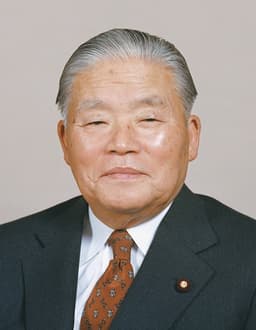
Masayoshi Ohira
Politician · Modern
49.8Total

Tui Atua Tupua Tamasese Efi
Politician · Modern
55.0Total
Basic Information
Born
1910
1938
Died
1980
—
Era
Modern
Modern
Nationality
Japan
Samoa
Occupation
Politician
Politician
Civilization
Eastern
Other
Score Comparison
Military (10%)
14.6
50.0
Political (20%)
59.3
62.7
Influence (20%)
56.4
55.7
Legacy (20%)
45.0
45.8
Leadership (15%)
72.0
72.0
Strategy (15%)
33.1
44.4
TOTAL
49.8
55.0
Masayoshi Ohira — Complete Timeline
1978 AD
Appointed Prime Minister of JapanPolitical Action◆ Major
Masayoshi Ohira became Prime Minister of Japan on December 7, 1978, succeeding Takeo Fukuda. His election followed a close LDP presidential race. Ohira's government focused on economic management and foreign policy, including strengthening ties with the United States.
Prime MinisterLDPJapan
Impact: national
1979 AD
Hosted the 5th G7 Summit in TokyoPolitical Action◆ Major
Ohira hosted the 5th G7 Summit in Tokyo from June 28-29, 1979. The summit addressed the global oil crisis, inflation, and energy policy. Ohira played a key role in coordinating Western responses to the second oil shock following the Iranian Revolution.
G7 SummitDiplomacyOil Crisis
Impact: global
1980 AD
Died in OfficeOther◆ Major
Ohira died of a heart attack on June 12, 1980, while in office as Prime Minister. His death occurred during a general election campaign, triggering a sympathy vote that led to a landslide victory for the LDP. He was the first Japanese prime minister to die in office since 1945.
Death in OfficeLDPJapan
Impact: nationaltragic
Tui Atua Tupua Tamasese Efi — Complete Timeline
1976 AD
Served as Prime Minister of SamoaPolitical Action◆ Major
Tui Atua Tupua Tamasese Efi served as Prime Minister of Samoa from 1976 to 1982. He led the country during a period of political development and economic challenges, focusing on Samoan cultural values.
SamoaGovernmentLeadership
Impact: national
1980 AD
Advocated for the protection of Samoan customary land tenurePolitical Action
Throughout his political career, Tui Atua Tupua Tamasese Efi advocated for the preservation of the Samoan customary land tenure system (fa'amatai). He opposed full privatization of land, arguing it would undermine Samoan social structure.
SamoaLand RightsTradition
Impact: nationalconstructive
2000 AD
Published scholarly works on Samoan culture and traditionCultural
Tui Atua Tupua Tamasese Efi published numerous academic papers and books on Samoan indigenous knowledge, philosophy, and customary law. His work has been influential in Pacific studies and the preservation of Samoan cultural heritage.
SamoaScholarshipCulture
Impact: regionalconstructive
2007 AD
Elected as Head of State of SamoaPolitical Action◆ Major
Tui Atua Tupua Tamasese Efi was elected as the O le Ao o le Malo (Head of State) of Samoa by the Legislative Assembly on 16 June 2007. He succeeded Malietoa Tanumafili II and served until 2017.
SamoaHead of StateElection
Impact: national
Expert Analysis
Origins
Masayoshi Ohira was born on March 12, 1910, in the rural village of Murotsu, Kagawa Prefecture, Japan. His father was a farmer and village headman, giving Ohira a modest upbringing. He studied at Hitotsubashi University, graduating in 1936 with a degree in economics. His early career included work at the Ministry of Finance, where he developed expertise in fiscal policy.
Tui Atua Tupua Tamasese Efi was born on March 1, 1938, in Samoa, into a high-ranking chiefly family. He is the son of Tupua Tamasese Meaʻole, a co-signer of Samoa's independence constitution. He was educated at St. Joseph's College in Samoa and later at Victoria University of Wellington, New Zealand, where he studied law and history. His upbringing steeped him in both Western education and Samoan customary traditions.
Rise to Power
Ohira entered politics in 1952, winning a seat in the House of Representatives for the Liberal Party. He quickly rose through ranks, serving as Minister of Foreign Affairs under Prime Minister Kakuei Tanaka from 1972 to 1974. His key turning point came in 1978 when he defeated Takeo Fukuda in the Liberal Democratic Party (LDP) presidential election, becoming Prime Minister on December 7, 1978. Ohira's rise was marked by his reputation as a consensus-builder within factional LDP politics.
Tui Atua Tupua Tamasese Efi entered politics in the 1970s, serving as a member of parliament. He became Prime Minister of Samoa in 1976, leading the country until 1982. His leadership came during a period of political consolidation after independence in 1962. He later served as Head of State (O le Ao o le Malo) from 2007 to 2017, elected by the Legislative Assembly. His rise was facilitated by his chiefly lineage and his reputation as a scholar-politician.
Leadership & Governance
Ohira's leadership was characterized by cautious fiscal conservatism and international diplomacy. He hosted the 5th G7 Summit in Tokyo in June 1979, addressing the oil crisis and global inflation. Domestically, he advocated for administrative reform but faced challenges from within the LDP. His governance style was deliberative, often seeking consensus, which sometimes led to indecision. Ohira's political score of 59.3 reflects his effectiveness within Japan's complex party system.
Tui Atua Tupua Tamasese Efi's leadership blended traditional Samoan values with modern governance. As Prime Minister, he focused on economic development while preserving the fa'amatai (chiefly system) and customary land tenure. As Head of State, he performed ceremonial duties but also used his position to advocate for indigenous rights. His leadership score of 72.0 mirrors Ohira's, indicating similar effectiveness in their respective contexts.
Triumph & Tragedy
Ohira's greatest triumph was successfully hosting the G7 Summit, enhancing Japan's international standing. His tragedy was dying in office on June 12, 1980, during a general election campaign, which plunged the LDP into crisis. His sudden death from a heart attack ended his initiatives prematurely, leaving his administrative reforms incomplete.
Tui Atua Tupua Tamasese Efi's triumph lies in his scholarly contributions, including publications on Samoan culture and customary law, which have influenced academia and policy. His tragedy is that his political reforms, particularly regarding land tenure, faced resistance and were not fully realized. His advocacy for customary land rights clashed with modernization pressures.
Character & Destiny
Ohira was known as a reserved, intellectual politician who prioritized stability. His cautious nature sometimes frustrated allies, but his integrity earned respect. His destiny was cut short by death, preventing him from fully shaping Japan's trajectory. Historical assessments note his role in managing factional politics but criticize his lack of bold reforms.
Tui Atua Tupua Tamasese Efi is characterized as a thoughtful, principled leader deeply connected to Samoan traditions. His dual role as politician and scholar gave him a unique perspective, but his adherence to custom sometimes slowed change. His destiny was to serve as a bridge between tradition and modernity, though his impact was limited by Samoa's small scale.
Legacy
Ohira's legacy in Japan is modest; he is remembered as a competent but unremarkable prime minister. His death in office led to a sympathy vote that gave the LDP a landslide victory, indirectly shaping Japanese politics. His score of 45.0 in legacy reflects his limited enduring influence.
Tui Atua Tupua Tamasese Efi's legacy is more substantial in Samoa and among scholars of Pacific studies. His writings on fa'amatai and customary law have become foundational texts. His legacy score of 45.8 is slightly higher than Ohira's, indicating a broader intellectual impact.
Conclusion
While Ohira scored 49.8 overall and Tui Atua Tupua Tamasese Efi scored 55.0, the gap is narrow. However, Tui Atua Tupua Tamasese Efi's impact is more diverse: he served as both Prime Minister and Head of State, and his scholarly work continues to influence Pacific studies. Ohira's influence was confined to Japan and a brief term. Therefore, Tui Atua Tupua Tamasese Efi had greater impact due to his dual legacy in governance and academia, despite operating on a smaller stage.
Rankings
🥇
Tui Atua Tupua Tamasese EfiLeader
Mil: 50.0Pol: 62.7Inf: 55.7
55.0
🥈
Masayoshi Ohira
Mil: 14.6Pol: 59.3Inf: 56.4
49.8
+5.2 behind
How This Comparison Works
Algorithm
Each figure is scored on 6 dimensions (0—100 scale) based on structured historical data: Military (10%), Political (20%), Influence (20%), Legacy (20%), Leadership (15%), Strategy (15%). The weighted total produces the final ranking.
Data Sources
Scores are computed from structured sub-indicators in the database. Scale factors adjust for era (Ancient ×0.85, Modern ×1.0) and civilization size (Eastern ×1.05, Other ×0.80) to account for differences in population and military scale.
Maximum 3 Figures
Comparisons are limited to 2—3 figures to ensure readability and statistical meaningfulness.
Error Margins
±5 points per dimension — Sub-scores are derived from historical records with inherent uncertainty. Two figures within 5 points on a dimension should be considered roughly equivalent in that area.
Total Score Accuracy
±3 points overall — The weighted combination of 6 dimensions produces a total score with approximately ±3 points of uncertainty. Differences of less than 3 points are not statistically significant— the figures are effectively tied.
Known Limitations
- Historical records are incomplete and uneven across civilizations
- Figures from oral-tradition societies may be underrepresented
- Occupation labels can misclassify multi-role figures
- Scores measure capability and impact, not moral character
- Quantitative scoring is a comparison tool, not absolute truth
Capability Radar
Military (10%) — Battles & Warfare
Battles
13
23
Win Rate
19
26
Expansion
18
30
Political (20%) — Governance & Reform
Reform
65
55
Diplomacy
70
65
Economy
75
50
Influence (20%) — Cultural & Global Reach
Cultural
30
45
Global
40
30
Legacy (20%) — Historical Impact
Historical
40
40
Longevity
30
35
Leadership (15%) — Power & Stability
Tenure
60
60
Stability
60
60
Strategy (15%) — Tactics & Innovation
Strategy
24
31
Tactics
27
31
Reform
28
37
Similar Comparisons
Comments & Discussion
No comments yet. Be the first to share your thoughts!