Loading...
Edward the Confessor vs Stephen III of Moldavia
Stephen III of Moldavia leads by 13.2 pts · 2 figures compared
…
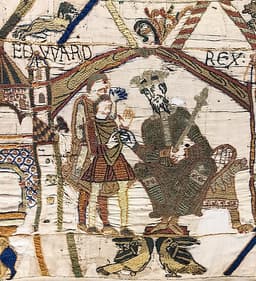
Edward the Confessor
Emperor · Medieval
50.2Total
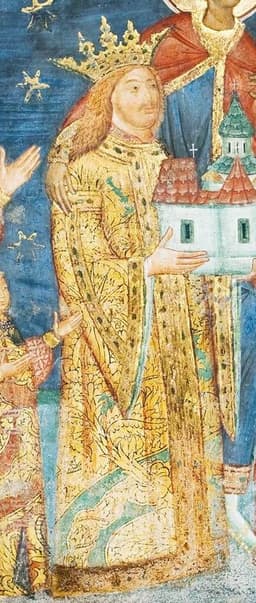
Stephen III of Moldavia
Emperor · Medieval
63.4Total
Basic Information
Born
1003
1433
Died
1066
1504
Era
Medieval
Medieval
Nationality
England
Moldavia
Occupation
Emperor
Emperor
Civilization
Western
Western
Score Comparison
Military (10%)
20.0
67.5
Political (20%)
45.1
72.0
Influence (20%)
57.2
55.0
Legacy (20%)
52.0
55.0
Leadership (15%)
64.0
79.8
Strategy (15%)
45.0
63.8
TOTAL
50.2
63.4
Edward the Confessor — Complete Timeline
1043 AD
Coronation of Edward the ConfessorPolitical Action◆ Major
Edward was crowned king of England at Winchester Cathedral on April 3, 1043. His reign marked the restoration of the Anglo-Saxon monarchy after 27 years of Danish rule.
CoronationRestorationAnglo-Saxon
Impact: nationalconstructive
1045 AD
Construction of Westminster AbbeyCultural◆ Major
Edward began rebuilding Westminster Abbey in the Norman Romanesque style. The abbey was consecrated in 1065, just before his death, and became the coronation church of English monarchs.
ArchitectureReligionLegacy
Impact: nationalconstructive
1051 AD
Conflict with Godwin of WessexPolitical Action◆ Major
Edward exiled Earl Godwin and his sons after a dispute over the treatment of Norman favorites. Godwin returned with a fleet in 1052, forcing Edward to restore their lands and power.
ExilePower StruggleGodwin
Impact: nationaldestructive
Promise of Throne to William of NormandyPolitical Action◆ Major
Edward allegedly promised the English throne to his cousin William, Duke of Normandy, during a visit by William to England. This promise later became the basis for William's claim to the throne.
SuccessionNorman ClaimPromise
Impact: regional
1066 AD
Death of Edward the ConfessorPolitical Action
Edward died on January 5, 1066, at Westminster. His death without a clear heir triggered a succession crisis, leading to the Norman Conquest of England later that year.
DeathSuccession CrisisNorman Conquest
Impact: globaltragic
Stephen III of Moldavia — Complete Timeline
1475 AD
Battle of VasluiWar◆ Major
Stephen III defeated a large Ottoman army under Had
BattleOttoman-Moldavian WarMilitary Victory
Impact: regionalconstructive
1476 AD
Battle of Valea AlbăWar◆ Major
Stephen III was defeated by the Ottoman army led by Sultan Mehmed II at Valea Alb
BattleOttoman InvasionDefeat
Impact: regionaltragic
1488 AD
Built the Voroneț MonasteryCultural◆ Major
Stephen III commissioned the construction of the Vorone
MonasteryArchitectureUNESCO
Impact: regionalconstructive
1499 AD
Signed the Treaty of Suceava with PolandPolitical Action◆ Major
Stephen III signed a treaty with King John I Albert of Poland at Suceava, establishing an alliance against the Ottoman Empire and the Teutonic Knights. The treaty secured Moldavia's western border and provided for mutual military assistance.
TreatyAlliancePoland-Moldavia Relations
Impact: regionalconstructive
Expert Analysis
Origins
Edward the Confessor was born around 1003 in Islip, Oxfordshire, the son of King Æthelred the Unready and Emma of Normandy. His early life was shaped by the Danish invasions of England; after his father's death, Edward spent 25 years in exile in Normandy, under the protection of Norman dukes. This period deeply influenced his cultural and religious outlook, making him more Norman than Anglo-Saxon in many ways. In contrast, Stephen III of Moldavia was born in 1433 in Borzești, the son of Bogdan II of Moldavia. His early years were marked by the political turmoil of the Moldavian principality, which was caught between the powerful Kingdom of Poland and the expanding Ottoman Empire. Stephen's father was assassinated when he was young, and he grew up in a court rife with betrayal and conflict, shaping his pragmatic and resolute character.
Rise to Power
Edward's path to the throne was circuitous. After the death of Harthacnut in 1042, Edward was invited back to England and crowned king at Winchester Cathedral on April 3, 1043. His reign initially relied on the support of Earl Godwin of Wessex, but Edward sought to strengthen his own position by promoting Norman favorites, leading to a power struggle. In 1051, Edward exiled Godwin and his sons, but they returned with a fleet in 1052, forcing Edward to restore their lands and influence. This conflict eroded Edward's authority, and he became increasingly pious, focusing on religious projects. Stephen III's rise was more direct: after the death of his uncle Petru Aron in 1457, Stephen claimed the throne with the support of the boyars and the Wallachian voivode Vlad III Drăculea. He was crowned in 1457 and immediately faced threats from Hungary and Poland, but he skillfully navigated alliances, securing recognition from Poland in 1459 and later from Hungary. By the 1460s, Stephen had consolidated power and turned his attention to the Ottoman threat.
Leadership & Governance
Edward's leadership style was passive and religiously focused. He delegated much of the governance to powerful earls like Godwin and later Harold Godwinson. His major governance act was the construction of Westminster Abbey, consecrated in 1065, which became the coronation church. He issued few laws and did not expand the royal demesne. In contrast, Stephen III was an active military leader and administrator. He reformed the Moldavian army, introduced a system of fortifications, and centralized tax collection. His military score of 67.5 reflects his battlefield successes, while his political score of 72.0 indicates his diplomatic acumen. Stephen balanced relations with Poland, Hungary, and the Ottomans, even marrying his daughter to a Russian prince. He also promoted the Orthodox Church, building monasteries like Voroneț (with its famous frescoes) and supporting the arts.
Triumph & Tragedy
Edward's greatest triumph was the completion of Westminster Abbey, which remains a symbol of English monarchy. His greatest failure was his inability to secure a clear succession, leading to the Norman Conquest. His alleged promise of the throne to William of Normandy and his deathbed designation of Harold Godwinson created a crisis. Stephen's greatest triumph was the Battle of Vaslui in 1475, where he defeated a larger Ottoman army using tactics like feigned retreat and swampy terrain. His total score of 63.4 reflects this success. However, his tragedy came the following year at the Battle of Valea Albă, where Sultan Mehmed II personally led a massive force that defeated Stephen, forcing him to accept Ottoman suzerainty. Despite this, Stephen maintained Moldavian autonomy and was later recognized as a defender of Christianity.
Character & Destiny
Edward was deeply religious, earning the epithet 'Confessor' for his piety. He was known for his gentle nature and visions, but also for bouts of anger, as seen in his exile of Godwin. His character led him to prioritize spiritual matters over political consolidation, which ultimately weakened the Anglo-Saxon monarchy. Stephen was pragmatic and determined, with a reputation for justice and severity. His leadership score of 79.8 indicates his ability to inspire loyalty. He was canonized by the Romanian Orthodox Church for his defense of the faith. His destiny was to fight a losing battle against Ottoman expansion, but his resistance delayed Ottoman advances into Eastern Europe.
Legacy
Edward's legacy is paradoxical: he built Westminster Abbey, but his death directly caused the Norman Conquest, which transformed English society. His cult as a saint persisted until the Reformation. Stephen's legacy is more positive: he is a national hero in Romania, celebrated for his military victories and cultural patronage. Voroneț Monastery is a UNESCO World Heritage site. His resistance against the Ottomans inspired later generations. In terms of scores, Stephen's total of 63.4 exceeds Edward's 50.2, with significant advantages in military (67.5 vs 20.0) and leadership (79.8 vs 64.0). Edward's influence score of 57.2 is slightly higher than Stephen's 55.0, but his political score of 45.1 is much lower.
Conclusion
Stephen III of Moldavia had a greater impact as a military leader and defender of his realm. Edward the Confessor's reign was a prelude to disaster, while Stephen actively shaped the fate of his nation. With a total score of 63.4 against Edward's 50.2, and a clear advantage in leadership and military prowess, Stephen stands as the more effective ruler. His legacy of resistance and cultural achievement outweighs Edward's unintended role in the Norman Conquest. While Edward's religious devotion was sincere, it did not translate into strong governance. Therefore, Stephen III of Moldavia is the superior figure in this comparison.
Rankings
🥇
Stephen III of MoldaviaLeader
Mil: 67.5Pol: 72.0Inf: 55.0
63.4
🥈
Edward the Confessor
Mil: 20.0Pol: 45.1Inf: 57.2
50.2
+13.2 behind
How This Comparison Works
Algorithm
Each figure is scored on 6 dimensions (0—100 scale) based on structured historical data: Military (10%), Political (20%), Influence (20%), Legacy (20%), Leadership (15%), Strategy (15%). The weighted total produces the final ranking.
Data Sources
Scores are computed from structured sub-indicators in the database. Scale factors adjust for era (Ancient ×0.85, Modern ×1.0) and civilization size (Eastern ×1.05, Other ×0.80) to account for differences in population and military scale.
Maximum 3 Figures
Comparisons are limited to 2—3 figures to ensure readability and statistical meaningfulness.
Error Margins
±5 points per dimension — Sub-scores are derived from historical records with inherent uncertainty. Two figures within 5 points on a dimension should be considered roughly equivalent in that area.
Total Score Accuracy
±3 points overall — The weighted combination of 6 dimensions produces a total score with approximately ±3 points of uncertainty. Differences of less than 3 points are not statistically significant— the figures are effectively tied.
Known Limitations
- Historical records are incomplete and uneven across civilizations
- Figures from oral-tradition societies may be underrepresented
- Occupation labels can misclassify multi-role figures
- Scores measure capability and impact, not moral character
- Quantitative scoring is a comparison tool, not absolute truth
Capability Radar
Military (10%) — Battles & Warfare
Battles
5
65
Win Rate
5
70
Expansion
5
55
Political (20%) — Governance & Reform
Reform
40
65
Diplomacy
45
75
Economy
40
60
Influence (20%) — Cultural & Global Reach
Cultural
30
65
Global
55
55
Legacy (20%) — Historical Impact
Historical
70
70
Longevity
60
60
Leadership (15%) — Power & Stability
Tenure
60
80
Stability
35
70
Strategy (15%) — Tactics & Innovation
Strategy
5
72
Tactics
5
75
Reform
5
60
Similar Comparisons
Comments & Discussion
No comments yet. Be the first to share your thoughts!