Loading...
Mayawati vs Napoleon Bonaparte
Napoleon Bonaparte leads by 16.3 pts · 2 figures compared
…
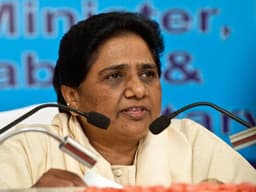
Mayawati
Politician · Modern
54.6Total

Napoleon Bonaparte
General · Modern
70.9Total
Basic Information
Born
1956
1769
Died
—
1821
Era
Modern
Modern
Nationality
India
France
Occupation
Politician
General
Civilization
Indian
Western
Score Comparison
Military (10%)
35.8
94.0
Political (20%)
68.0
72.0
Influence (20%)
59.0
40.0
Legacy (20%)
48.3
80.0
Leadership (15%)
53.2
78.0
Strategy (15%)
60.0
90.0
TOTAL
54.6
70.9
Mayawati — Complete Timeline
1984 AD
Founded Bahujan Samaj Party (BSP)Political Action◆ Major
Mayawati co-founded the Bahujan Samaj Party with Kanshi Ram to represent Dalits, Adivasis, and other backward classes. The party aimed to challenge upper-caste dominance in Indian politics. This became the vehicle for her political career.
Party FormationDalit PoliticsBSP
Impact: nationalconstructive
1995 AD
First Dalit woman Chief Minister of Uttar PradeshPolitical Action◆ Major
Mayawati became Chief Minister of Uttar Pradesh for the first time with outside support from the BJP. She was the first Dalit woman to hold the office. Her tenure lasted only 139 days but marked a historic milestone for Dalit representation.
Chief MinisterDalitUttar Pradesh
Impact: nationalconstructive
2003 AD
Corruption allegations in Taj Corridor casePolitical Action
Mayawati was accused of corruption in the Taj Heritage Corridor project, which involved alleged misuse of funds for a development project near the Taj Mahal. The Supreme Court criticized her government. The case damaged her reputation but she was not convicted.
CorruptionTaj MahalControversy
Impact: nationaldestructive
2007 AD
Completed full term as Chief Minister (2007-2012)Political Action◆ Major
Mayawati led the BSP to a decisive victory in the 2007 Uttar Pradesh election, winning 206 seats. She served a full five-year term as chief minister, the first Dalit leader to do so. Her government focused on infrastructure and welfare schemes.
Chief MinisterUttar PradeshBSP
Impact: regionalconstructive
Installed statues of Dalit icons in LucknowCultural
Mayawati's government erected large statues of B.R. Ambedkar, Kanshi Ram, and herself in Lucknow's parks and intersections. The project cost hundreds of crores and was criticized as a waste of public funds. It symbolized Dalit assertion but drew accusations of a personality cult.
StatuesDalit IconographyLucknow
Impact: regional
Napoleon Bonaparte — Complete Timeline
1799 AD
Coup of 18 BrumaireOther◆ Major
Napoleon Bonaparte, with support from his brother Lucien and key political figures, overthrew the Directory in a bloodless coup. He established the Consulate with himself as First Consul, effectively becoming the ruler of France. This event ended the French Revolution's most unstable period.
French RevolutionCoupRise to Power
Impact: regional
1804 AD
Promulgation of the Napoleonic CodeOther◆ Major
Napoleon enacted the Civil Code of the French, known as the Napoleonic Code, a comprehensive set of laws that replaced the fragmented feudal legal systems. The code established legal equality, protected property rights, and secularized law. It became the basis for legal systems in many European and world countries.
Legal ReformNapoleonic CodeCivil Law
Impact: globalconstructive
1805 AD
Battle of AusterlitzWar◆ Major
Napoleon's Grande Arm
Napoleonic WarsBattleDecisive Victory
Impact: global
1812 AD
Invasion of RussiaWar◆ Major
Napoleon led the Grande Arm
Napoleonic WarsInvasionDisaster
Impact: globaldestructive
1815 AD
Battle of WaterlooWar◆ Major
Napoleon's French army was defeated by the combined forces of the Duke of Wellington's Anglo-Allied army and Gebhard Leberecht von Bl
Napoleonic WarsBattleFinal Defeat
Impact: globaldestructive
Expert Analysis
mayawati-vs-napoleon-bonaparte
# The Emperor and the Dalit Queen
On a sweltering June morning in 2007, Mayawati stood before a sea of brown faces in Lucknow, her hand raised in triumph. She had just become the first Dalit woman to complete a full term as Chief Minister of Uttar Pradesh, India’s most populous state, governing 200 million people. Nearly two centuries earlier and half a world away, Napoleon Bonaparte had crowned himself Emperor of the French in Notre-Dame Cathedral, his hand resting on the sword of Charlemagne. One ruled through the ballot box, the other through the cannon’s mouth. Both rose from obscurity to command nations. Yet their paths, their methods, and their endings could not have been more different. What explains the chasm between a conqueror who reshaped Europe and a politician who lifted a caste? The answer lies not in their shared ambition, but in the worlds they sought to master.
Origins
Napoleon was born in 1769 on Corsica, a rocky island recently annexed by France. His family was minor nobility, poor but proud. He spoke French with an Italian accent, a mark of outsider status that never fully left him. The French Revolution erupted when he was twenty, tearing down a monarchy and opening careers to talent. For a young artillery officer with nothing but his wits and his hunger, it was a door that swung wide. Mayawati, born in 1956 in Delhi, came from a different kind of margin. Her father was a low-level government clerk, her mother a housewife. They were Dalits—formerly called “untouchables”—a community condemned for millennia to the dirtiest work, barred from temples, wells, and schools. Where Napoleon inherited a revolution, Mayawati inherited a wound. The Frenchman’s era was a storm that shattered old hierarchies; the Indian woman’s was a slow, grinding struggle against a social order that had calcified for three thousand years.
Rise to Power
Napoleon’s ascent was meteoric. By 1793, at just twenty-four, he recaptured Toulon from British forces, earning promotion to brigadier general. In 1796, he took command of an army in Italy and, in a series of lightning campaigns, crushed Austrian forces. He was thirty when he became First Consul of France in 1799, thirty-five when he crowned himself Emperor in 1804. Each victory fed the next, a chain of conquests that stretched from Madrid to Moscow. Mayawati’s rise was slower, more patient. In 1984, she co-founded the Bahujan Samaj Party with Kanshi Ram, a veteran Dalit organizer. For a decade, she built a base among the poorest, the most despised, the ones who cleaned latrines and handled dead animals. In 1995, she became Chief Minister for the first time—but only with outside support from the BJP, a party that represented upper-caste Hindus. She was a queen without a kingdom, dependent on rivals. Napoleon took power by force; Mayawati took it by negotiation, by alliance, by waiting.
Leadership & Governance
Napoleon governed with a pen as sharp as his sword. He codified French law into the Napoleonic Code, ending feudal privileges, protecting property, and establishing secular education. He built roads, canals, and a centralized bureaucracy that outlasted his empire. But his military genius—scoring 94 on strategy—was his defining trait. He fought more than sixty battles and lost only seven, each defeat a masterpiece of overreach. Austerlitz in 1805 was his greatest triumph; Waterloo in 1815, his final tragedy. Mayawati governed through the machinery of democracy. Her score of 71 on political acumen reflects her skill in coalition-building, but her governance was marked by controversy. In 2003, she faced corruption allegations in the Taj Heritage Corridor project, accused of diverting funds meant for a tourist development near the Taj Mahal. Her answer to exclusion was not conquest but symbolism: in 2007, she erected massive statues of Dalit icons—B.R. Ambedkar, Kanshi Ram, and herself—across Lucknow. Critics called it a cult of personality; supporters called it a declaration that Dalits had finally arrived.
Triumph & Tragedy
Napoleon’s greatest moment was Austerlitz, where he destroyed a larger Russian and Austrian army with a feigned retreat that remains a textbook maneuver. His worst was the invasion of Russia in 1812, where 600,000 men marched east and fewer than 100,000 returned. He died in exile on Saint Helena in 1821, alone on a rock in the South Atlantic. Mayawati’s triumph came in 2007, when her BSP won 206 seats in Uttar Pradesh’s assembly, a landslide that gave her a full five-year term—the first Dalit-led government to achieve that. Her tragedy was not defeat in battle but the slow erosion of her movement. The BSP never won power nationally, and after her term ended, her party’s influence waned. She remains alive, still active, still fighting—but her revolution, like Napoleon’s, has not yet fulfilled its promise.
Character & Destiny
Napoleon was possessed by an insatiable hunger for glory. “Impossible is a word to be found only in the dictionary of fools,” he once said. He believed he could remake the world by sheer will, and for a decade, he nearly did. But that same will drove him to overreach, to invade Russia, to refuse peace when it was offered. His character was his fate: brilliant, restless, and ultimately self-destructive. Mayawati’s character is more opaque, more calculating. She has no famous quotes about glory; her words are about dignity, about rights, about the long march of the oppressed. She built statues, not armies. Her destiny was not to conquer but to represent—to stand as proof that a Dalit woman could rule over the land that once called her untouchable. Napoleon’s tragedy was that he could not stop; Mayawati’s is that she may never fully arrive.
Legacy
Napoleon’s legacy is written in law codes, national borders, and the very concept of modern warfare. His influence score of 82 reflects a man who reshaped Europe’s political map. He is remembered as both a tyrant and a reformer, a figure of awe and caution. Mayawati’s legacy is narrower but no less profound. Her legacy score of 65 understates her impact on Indian politics: she proved that Dalits could govern, not just be governed. Her statues in Lucknow stand as silent sentinels, marking a shift in consciousness that no invasion could achieve. Napoleon changed how nations fight; Mayawati changed how Indians see.
Conclusion
One man conquered an empire; one woman built a movement. Napoleon’s path was vertical, a ladder of battlefields and thrones; Mayawati’s was horizontal, a slow expansion of rights and recognition. The French emperor died in exile, remembered for what he destroyed and what he built. The Dalit chief minister lives on, still fighting a war that has no single battle. Their differences are not just personal; they are historical. Napoleon rode the wave of a revolution that had already broken the old world. Mayawati had to break a world that had never been truly broken. In the end, both sought power to remake their societies—but one used the sword, and the other used the ballot. The sword broke; the ballot endures.
Rankings
🥇
Napoleon BonaparteLeader
Mil: 94.0Pol: 72.0Inf: 40.0
70.9
🥈
Mayawati
Mil: 35.8Pol: 68.0Inf: 59.0
54.6
+16.3 behind
How This Comparison Works
Algorithm
Each figure is scored on 6 dimensions (0—100 scale) based on structured historical data: Military (10%), Political (20%), Influence (20%), Legacy (20%), Leadership (15%), Strategy (15%). The weighted total produces the final ranking.
Data Sources
Scores are computed from structured sub-indicators in the database. Scale factors adjust for era (Ancient ×0.85, Modern ×1.0) and civilization size (Eastern ×1.05, Other ×0.80) to account for differences in population and military scale.
Maximum 3 Figures
Comparisons are limited to 2—3 figures to ensure readability and statistical meaningfulness.
Error Margins
±5 points per dimension — Sub-scores are derived from historical records with inherent uncertainty. Two figures within 5 points on a dimension should be considered roughly equivalent in that area.
Total Score Accuracy
±3 points overall — The weighted combination of 6 dimensions produces a total score with approximately ±3 points of uncertainty. Differences of less than 3 points are not statistically significant— the figures are effectively tied.
Known Limitations
- Historical records are incomplete and uneven across civilizations
- Figures from oral-tradition societies may be underrepresented
- Occupation labels can misclassify multi-role figures
- Scores measure capability and impact, not moral character
- Quantitative scoring is a comparison tool, not absolute truth
Capability Radar
Military (10%) — Battles & Warfare
Battles
43
95
Win Rate
48
90
Expansion
51
95
Political (20%) — Governance & Reform
Reform
55
95
Diplomacy
50
80
Economy
40
85
Influence (20%) — Cultural & Global Reach
Cultural
55
85
Global
30
90
Legacy (20%) — Historical Impact
Historical
50
95
Longevity
40
90
Leadership (15%) — Power & Stability
Tenure
65
85
Stability
35
70
Strategy (15%) — Tactics & Innovation
Strategy
55
95
Tactics
53
98
Reform
59
92
Similar Comparisons
Comments & Discussion
THE BRONZE AND BALLOT BOX6/17/2026
Napoleon rewrote the map of Europe with the sword; Mayawati rewrote the power structure of India with the vote. He conquered nations; she conquered a system. The real comparison isn't about who was greater—it's about what legacy lasts. One man's empire crumbled in a generation, while her Dalit identity politics reshaped the world's largest democracy for decades. That's the difference between a shooting star and a tectonic shift.
数据拆解师6/17/2026
比较拿破仑和玛雅瓦蒂就像比较核弹和疫苗——都是改变世界的发明,但用途完全不同。拿破仑指挥过60万大军入侵俄国,玛雅瓦蒂赢得过206个议席的选举胜利。一个是军事动员的顶峰,一个是民主动员的奇迹。数据不会说谎:拿破仑的帝国存活了不到20年;玛雅瓦蒂的政治影响力,从2007年至今仍在发酵。短跑冠军和马拉松选手,怎么比?
THE REVOLUTION'S TWO DOORS6/17/2026
Here's what the comparison misses: both were products of revolution's chaos. Napoleon seized the opportunity when France's aristocracy collapsed; Mayawati rose when India's caste hierarchy was legally dismantled. The real question isn't who was more ambitious—both were sharks in a feeding frenzy. It's about constraints. Napoleon could march armies across borders; Mayawati had to navigate coalition politics, caste arithmetic, and a constitution. One conquered with cannons, the other with legislat
阶级视角师6/17/2026
有人说拿破仑更伟大,因为他改变了欧洲的版图。但我要问:谁的改变更触及人的根本尊严?拿破仑带去了拿破仑法典,却不忘复辟奴隶制;玛雅瓦蒂修菩萨像、建纪念园区,虽然争议不断,但她让一个被踩在脚下三千年的群体第一次看见权力长什么样。这不是美化个人,这是承认:有些推翻,比征服更难。
THE LAST LAUGH6/17/2026
Let's be honest: Mayawati probably sleeps better at night. Napoleon died in exile on a godforsaken Atlantic island, stripped of everything, betrayed by his marshals. Mayawati? She's still pulling strings in Indian politics, has a real estate empire, and her statues stand taller than any in Corsica. The comparison isn't about methods or ideals—it's about who played the long game better. One gambled on military glory and lost; the other gambled on political machinery and won. Game theory, not glor