Loading...
Merenre Nemtyemsaf II vs Napoleon Bonaparte
Napoleon Bonaparte leads by 17.2 pts · 2 figures compared
…
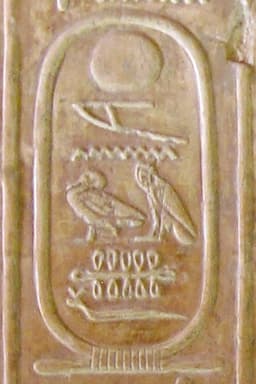
Merenre Nemtyemsaf II
Emperor · Ancient
53.7Total

Napoleon Bonaparte
General · Modern
70.9Total
Basic Information
Born
-2170
1769
Died
-2169
1821
Era
Ancient
Modern
Nationality
Old Kingdom Egypt
France
Occupation
Emperor
General
Civilization
Middle Eastern
Western
Score Comparison
Military (10%)
47.8
94.0
Political (20%)
68.0
72.0
Influence (20%)
56.4
40.0
Legacy (20%)
38.5
80.0
Leadership (15%)
64.0
78.0
Strategy (15%)
53.5
90.0
TOTAL
53.7
70.9
Merenre Nemtyemsaf II — Complete Timeline
2170 BC
Accession to the thronePolitical Action◆ Major
Merenre Nemtyemsaf II became pharaoh after the death of Pepi II, inheriting a fragmented and weakened Old Kingdom. His reign lasted only about one year, reflecting the instability of the period.
AccessionOld KingdomDynasty VI
Impact: national
2169 BC
End of reign and deathPolitical Action◆ Major
Merenre Nemtyemsaf II died after a brief reign of approximately one year. His death marked the end of the 6th Dynasty's direct male line and contributed to the collapse of the Old Kingdom, leading to the First Intermediate Period.
DeathDynasty EndFirst Intermediate Period
Impact: nationaltragic
Napoleon Bonaparte — Complete Timeline
1799 AD
Coup of 18 BrumaireOther◆ Major
Napoleon Bonaparte, with support from his brother Lucien and key political figures, overthrew the Directory in a bloodless coup. He established the Consulate with himself as First Consul, effectively becoming the ruler of France. This event ended the French Revolution's most unstable period.
French RevolutionCoupRise to Power
Impact: regional
1804 AD
Promulgation of the Napoleonic CodeOther◆ Major
Napoleon enacted the Civil Code of the French, known as the Napoleonic Code, a comprehensive set of laws that replaced the fragmented feudal legal systems. The code established legal equality, protected property rights, and secularized law. It became the basis for legal systems in many European and world countries.
Legal ReformNapoleonic CodeCivil Law
Impact: globalconstructive
1805 AD
Battle of AusterlitzWar◆ Major
Napoleon's Grande Arm
Napoleonic WarsBattleDecisive Victory
Impact: global
1812 AD
Invasion of RussiaWar◆ Major
Napoleon led the Grande Arm
Napoleonic WarsInvasionDisaster
Impact: globaldestructive
1815 AD
Battle of WaterlooWar◆ Major
Napoleon's French army was defeated by the combined forces of the Duke of Wellington's Anglo-Allied army and Gebhard Leberecht von Bl
Napoleonic WarsBattleFinal Defeat
Impact: globaldestructive
Expert Analysis
merenre-nemtyemsaf-ii-vs-napoleon-bonaparte
# The Emperor and the Echo: Napoleon and the Forgotten Pharaoh
On a June morning in 1815, Napoleon Bonaparte stood on a muddy field near Waterloo, watching his Imperial Guard march into the cannon fire that would end an era. Nearly four thousand years earlier, on the banks of the Nile, a young pharaoh named Merenre Nemtyemsaf II mounted a throne that was already crumbling beneath him. One man changed the world and was consumed by his own ambition; the other barely left a mark on history, a ghost king whose entire reign lasted less time than Napoleon’s final campaign. What separates a colossus from a cipher? The answer lies not in destiny, but in the raw material of character and circumstance.
Origins
Napoleon was born in 1769 on the island of Corsica, a place of fierce independence and Mediterranean sun. His family were minor nobility, but his father’s death left them struggling. Yet the French Revolution, that great upheaval, cracked open a door that had been locked for centuries. A boy who spoke French with an Italian accent could rise—if he had the nerve. Napoleon had nerve in abundance. He devoured history and military treatises, and by the age of twenty-four he was already a brigadier general, his mind a forge of ambition and calculation.
Merenre Nemtyemsaf II inherited something far older and far more brittle. He was born into the Sixth Dynasty of Egypt’s Old Kingdom, a civilization that had built the pyramids and ruled the Nile for a thousand years. But by 2170 BC, that world was dying. The pharaoh’s power had been drained by overmighty nobles, by drought, by the slow decay of central authority. Merenre’s father, Pepi II, had reigned for an astonishing ninety-four years—far too long. By the time the old king finally died, the kingdom was a hollow shell. Merenre Nemtyemsaf II became pharaoh at a moment when the title still carried divine weight, but the hands that held the scepter were already trembling.
Rise to Power
Napoleon’s ascent was a masterpiece of opportunity seized. He first proved himself at the Siege of Toulon in 1793, where his artillery tactics drove the British from the harbor. From there he rose through the chaos of the Directory, a corrupt regime that needed a sword to defend it. In 1796, at just twenty-six, he took command of the French army in Italy and stunned Europe with a campaign of breathtaking speed and daring. He did not merely win battles—he redefined them. By 1799, he had returned from Egypt, overthrown the Directory in a coup, and made himself First Consul. He was thirty years old.
Merenre Nemtyemsaf II’s rise was not a rise at all, but a fall into power. He became pharaoh in 2170 BC after his father’s death, inheriting a throne that had lost its luster. There was no coup, no campaign, no stroke of genius—only a young man placed on a seat that was already cracking. The records are silent on whether he wanted the crown or dreaded it. What we know is that he took it, and that the weight of a dying civilization pressed down on his shoulders from the first day.
Leadership & Governance
Napoleon governed with the same ferocity he brought to battle. He reformed France’s legal system into the Napoleonic Code, a rational framework that abolished feudal privileges and established equality before the law. He centralized the state, created the Bank of France, and built a network of lycées to train future elites. His military genius was staggering—he won sixty of his seventy battles, using speed, deception, and the massed power of artillery to shatter his enemies. Yet his political wisdom was flawed. He crowned himself emperor in 1804, a move that betrayed the revolutionary principles he once championed. He placed his brothers on thrones across Europe, creating a family empire that bred resentment. He could conquer, but he could not build loyalty.
Merenre Nemtyemsaf II ruled for approximately one year. There is no code, no reform, no campaign. His governance, if it can be called that, was a desperate holding action. The Old Kingdom’s bureaucracy was collapsing; the granaries were empty; the provincial governors were becoming warlords. He likely tried to maintain the ancient rituals, to perform the ceremonies that kept the cosmic order intact. But the machinery of state was rusted beyond repair. He was not a bad ruler—he was a ruler with nothing left to rule.
Triumph & Tragedy
Napoleon’s greatest moment was likely Austerlitz in 1805, where he crushed the combined armies of Russia and Austria in a single day. The sun rose over the battlefield, and Napoleon called it “the sun of Austerlitz,” a symbol of his invincibility. His tragedy was the invasion of Russia in 1812. He marched with 600,000 men into the vastness of winter, and fewer than 100,000 returned. The Grand Army dissolved in snow and starvation. He was exiled to Elba, returned for one hundred days, and then broken at Waterloo. The man who had conquered Europe died on a remote Atlantic island, abandoned by all but a handful of loyalists.
Merenre Nemtyemsaf II had no Austerlitz. His triumph, if it can be called that, was simply holding the throne for a year in a kingdom that was disintegrating. His tragedy was that his death in 2169 BC marked the end of the Sixth Dynasty and the beginning of the First Intermediate Period—a dark age of chaos and famine. He was not a tragic hero; he was a footnote, a name on a fragment of papyrus. His entire reign was less a life than an ending.
Character & Destiny
Napoleon was driven by an insatiable hunger for glory. “Impossible,” he once said, “is a word to be found only in the dictionary of fools.” He believed he could bend history to his will, and for a time he did. But his arrogance blinded him. He could not share power, could not compromise, could not stop. His character shaped his destiny as a sculptor shapes clay—he was the artist of his own rise and the architect of his fall.
Merenre Nemtyemsaf II, by contrast, was a prisoner of fate. He was born into a dynasty that had exhausted itself. His character is unknowable—we have no letters, no speeches, no accounts of his personality. But we can guess that he was a young man handed a burden he could not bear. He did not shape his destiny; his destiny crushed him.
Legacy
Napoleon’s legacy is everywhere. The Napoleonic Code influences legal systems from Louisiana to Japan. His campaigns are studied in military academies worldwide. He reshaped nationalism, warfare, and the very idea of the modern state. He is remembered as both a liberator and a tyrant, a genius and a megalomaniac. His score of 82.4 reflects a man who changed the world, for better and worse.
Merenre Nemtyemsaf II’s legacy is almost nothing. He is a name in a king list, a shadow on a wall. His score of 48.9 is not a judgment on his abilities—it is a measure of his obscurity. He left no monuments, no reforms, no stories. He is remembered only because the Egyptians kept records, and because historians are stubborn enough to dig through the dust.
Conclusion
Standing at Waterloo, Napoleon said to his generals, “This is the last battle of the war, and it will be the greatest.” He was wrong. The battle was lost, and the war was over. Standing on the banks of the Nile, Merenre Nemtyemsaf II likely said nothing that survived. He was the last echo of a great song, fading into silence. One man burned too bright and was consumed; the other never burned at all. Perhaps the difference between them is not talent or fortune, but the simple, terrible luck of being born at the right moment—or the wrong one.
Rankings
🥇
Napoleon BonaparteLeader
Mil: 94.0Pol: 72.0Inf: 40.0
70.9
🥈
Merenre Nemtyemsaf II
Mil: 47.8Pol: 68.0Inf: 56.4
53.7
+17.2 behind
How This Comparison Works
Algorithm
Each figure is scored on 6 dimensions (0—100 scale) based on structured historical data: Military (10%), Political (20%), Influence (20%), Legacy (20%), Leadership (15%), Strategy (15%). The weighted total produces the final ranking.
Data Sources
Scores are computed from structured sub-indicators in the database. Scale factors adjust for era (Ancient ×0.85, Modern ×1.0) and civilization size (Eastern ×1.05, Other ×0.80) to account for differences in population and military scale.
Maximum 3 Figures
Comparisons are limited to 2—3 figures to ensure readability and statistical meaningfulness.
Error Margins
±5 points per dimension — Sub-scores are derived from historical records with inherent uncertainty. Two figures within 5 points on a dimension should be considered roughly equivalent in that area.
Total Score Accuracy
±3 points overall — The weighted combination of 6 dimensions produces a total score with approximately ±3 points of uncertainty. Differences of less than 3 points are not statistically significant— the figures are effectively tied.
Known Limitations
- Historical records are incomplete and uneven across civilizations
- Figures from oral-tradition societies may be underrepresented
- Occupation labels can misclassify multi-role figures
- Scores measure capability and impact, not moral character
- Quantitative scoring is a comparison tool, not absolute truth
Capability Radar
Military (10%) — Battles & Warfare
Battles
40
95
Win Rate
43
90
Expansion
47
95
Political (20%) — Governance & Reform
Reform
0
95
Diplomacy
0
80
Economy
0
85
Influence (20%) — Cultural & Global Reach
Cultural
0
85
Global
0
90
Legacy (20%) — Historical Impact
Historical
1
95
Longevity
0
90
Leadership (15%) — Power & Stability
Tenure
1
85
Stability
1
70
Strategy (15%) — Tactics & Innovation
Strategy
49
95
Tactics
52
98
Reform
52
92
Similar Comparisons
Comments & Discussion
**尼罗河之影**6/17/2026
拿皇在滑铁卢豪赌帝国命运,而梅伦雷二世连赌桌都没上过。历史学家争辩拿破仑的百日王朝是史诗还是闹剧,可这法老连百日王朝都没有——他的统治像尼罗河上的涟漪,转瞬即逝。关键不在长短,而在于你让世界记住了什么。一个用炮火写就帝国,另一个被时间吞噬得如此彻底,连金字塔都不屑为他刻字。
**WaterlooWonk**6/17/2026
This comparison is laughably uneven. Napoleon commanded over 500,000 men at his peak and fought sixty major battles. Merenre's name barely survived on a single alabaster vessel and a damaged Turin papyrus. You're comparing a full symphony to a single, out-of-tune note. Napoleon crushed the Austrians at Austerlitz; this pharaoh probably got crushed by a food shortage. Let's stop pretending obscurity equals depth.
**考古锤**6/17/2026
真正的历史从来不靠名气投票。拿破仑的辉煌建立在无数无名士兵的尸骨上,而梅伦雷二世的沉默恰恰是古埃及王权从神坛坠落的见证。第六王朝的崩溃不是因为他无能,而是干旱、饥荒和地方分权这些结构性灾难。拿一个现代暴发户去嘲笑一个古老文明的末代君王,这叫史盲。
**EmpireEcho**6/17/2026
Here's the irony: Napoleon wanted to be seen as a pharaoh. He brought 167 savants to Egypt, studied the Rosetta Stone, posed with his hand in his waistcoat like a Roman emperor. But Merenre Nemtyemsaf II didn't need to pretend. He was born into a divine kingship that had ruled for a millennium. Napoleon's legitimacy was built on bayonets; Merenre's was woven into the fabric of the Nile itself. Who's really the more fragile ruler?
**地壳之眼**6/17/2026
拿拿破仑跟一个被史料抛弃的法老比,是历史暴力。拿破仑的辉煌有十万份档案背书,而梅伦雷二世的存在全靠几块碎陶片和一截残碑来证明。这不是比较,是削足适履。要么承认我们对法老一无所知,要么闭嘴。历史不是奥运会,不需要把每个倒霉蛋都拉来跟冠军赛跑。