Loading...
This comparison has not been analyzed yet.
One-time AI generation (~1 minute). Scores and timeline are already available below.
Michael VIII Palaiologos vs Yusuf ibn Tashfin
Yusuf ibn Tashfin leads by 10.4 pts · 2 figures compared
…
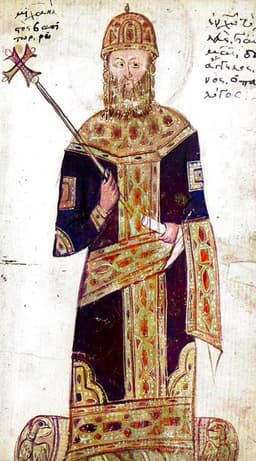
Michael VIII Palaiologos
Emperor · Medieval
52.8Total
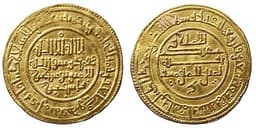
Yusuf ibn Tashfin
Emperor · Medieval
63.2Total
Basic Information
Born
1223
1061
Died
1282
1106
Era
Medieval
Medieval
Nationality
Byzantine Empire
Almoravid Empire
Occupation
Emperor
Emperor
Civilization
Western
Middle Eastern
Score Comparison
Military (10%)
70.0
77.2
Political (20%)
45.0
60.0
Influence (20%)
55.0
57.7
Legacy (20%)
55.0
55.0
Leadership (15%)
40.0
78.0
Strategy (15%)
55.0
65.9
TOTAL
52.8
63.2
Michael VIII Palaiologos — Complete Timeline
1261 AD
Recapture of Constantinople from the Latin EmpireWar
Michael VIII Palaiologos's general Alexios Strategopoulos led a surprise attack that recaptured Constantinople from the Latin Empire without a major battle. The city was restored as the Byzantine capital, ending 57 years of Latin rule and re-establishing the Byzantine Empire.
ReconquestFourth CrusadeConstantinople
Impact: globalconstructive
Coronation as Byzantine emperor in Hagia SophiaPolitical Action◆ Major
Michael VIII was crowned emperor in Hagia Sophia in Constantinople, legitimizing his rule as the restorer of the Byzantine Empire. The coronation was a major symbolic event, reaffirming the continuity of the Roman imperial tradition in the East.
CoronationRestorationHagia Sophia
Impact: nationalconstructive
1262 AD
Restoration of the Byzantine navy and fortificationsReform
Michael VIII rebuilt the Byzantine navy, which had been neglected under the Nicaean emperors, and strengthened the fortifications of Constantinople. These measures improved the empire's defensive capabilities and allowed for limited naval campaigns in the Aegean.
Military ReformNavyFortifications
Impact: nationalconstructive
1274 AD
Union of the Churches at the Second Council of LyonPolitical Action◆ Major
Michael VIII agreed to the Union of the Churches at the Second Council of Lyon, recognizing papal supremacy in exchange for Western support against the Angevin threat. The union was deeply unpopular in Byzantium and caused religious strife, but it temporarily prevented a crusade against Constantinople.
Church UnionPapacyReligious Controversy
Impact: regional
1281 AD
Defeat of the Angevin invasion at the Siege of BeratWar◆ Major
Michael VIII's forces defeated an Angevin army besieging Berat in Albania, capturing the Angevin commander. The victory ended Charles of Anjou's plans to invade Constantinople and restored Byzantine control over parts of the Balkans.
Angevin WarsMilitary VictoryBalkans
Impact: regional
Yusuf ibn Tashfin — Complete Timeline
1070 AD
Unification of the MaghrebWar◆ Major
Yusuf ibn Tashfin conquered the remaining Berber kingdoms in the Maghreb, including the Zenata and the Barghawata. He unified the region under Almoravid rule, creating a vast empire stretching from Senegal to Algeria.
Almoravid EmpireMaghrebUnification
Impact: regionalconstructive
Foundation of MarrakechCultural◆ Major
Yusuf ibn Tashfin founded the city of Marrakech, which became the capital of the Almoravid Empire. The city grew into a major cultural and commercial center, serving as a hub for trans-Saharan trade.
Almoravid EmpireMarrakechFoundation
Impact: regionalconstructive
1080 AD
Reform of Islamic LawReform◆ Major
Yusuf ibn Tashfin enforced a strict Maliki interpretation of Islamic law across his empire. He suppressed non-orthodox practices and promoted religious scholars, strengthening the role of Islam in governance and society.
Almoravid EmpireIslamic LawReform
Impact: regional
1086 AD
Battle of Sagrajas (Zallaqa)War
Yusuf ibn Tashfin led the Almoravid army to victory over the Christian forces of King Alfonso VI of Le
Almoravid EmpireReconquistaBattle
Impact: regional
1090 AD
Annexation of Al-AndalusPolitical Action◆ Major
Yusuf ibn Tashfin annexed the Taifa kingdoms of Al-Andalus, incorporating them into the Almoravid Empire. He deposed the Muslim rulers who had failed to resist the Christian advance, establishing direct Almoravid control over the Iberian Peninsula.
Almoravid EmpireAl-AndalusAnnexation
Impact: regional
This comparison has not been analyzed yet.
One-time AI generation (~1 minute). Scores and timeline are already available below.
Rankings
🥇
Yusuf ibn TashfinLeader
Mil: 77.2Pol: 60.0Inf: 57.7
63.2
🥈
Michael VIII Palaiologos
Mil: 70.0Pol: 45.0Inf: 55.0
52.8
+10.4 behind
How This Comparison Works
Algorithm
Each figure is scored on 6 dimensions (0—100 scale) based on structured historical data: Military (10%), Political (20%), Influence (20%), Legacy (20%), Leadership (15%), Strategy (15%). The weighted total produces the final ranking.
Data Sources
Scores are computed from structured sub-indicators in the database. Scale factors adjust for era (Ancient ×0.85, Modern ×1.0) and civilization size (Eastern ×1.05, Other ×0.80) to account for differences in population and military scale.
Maximum 3 Figures
Comparisons are limited to 2—3 figures to ensure readability and statistical meaningfulness.
Error Margins
±5 points per dimension — Sub-scores are derived from historical records with inherent uncertainty. Two figures within 5 points on a dimension should be considered roughly equivalent in that area.
Total Score Accuracy
±3 points overall — The weighted combination of 6 dimensions produces a total score with approximately ±3 points of uncertainty. Differences of less than 3 points are not statistically significant— the figures are effectively tied.
Known Limitations
- Historical records are incomplete and uneven across civilizations
- Figures from oral-tradition societies may be underrepresented
- Occupation labels can misclassify multi-role figures
- Scores measure capability and impact, not moral character
- Quantitative scoring is a comparison tool, not absolute truth
Capability Radar
Military (10%) — Battles & Warfare
Battles
65
75
Win Rate
60
80
Expansion
50
82
Political (20%) — Governance & Reform
Reform
60
70
Diplomacy
80
72
Economy
55
68
Influence (20%) — Cultural & Global Reach
Cultural
60
60
Global
55
62
Legacy (20%) — Historical Impact
Historical
75
72
Longevity
65
65
Leadership (15%) — Power & Stability
Tenure
70
85
Stability
45
74
Strategy (15%) — Tactics & Innovation
Strategy
75
78
Tactics
70
70
Reform
55
65
Similar Comparisons
Comments & Discussion
No comments yet. Be the first to share your thoughts!