Loading...
Mikhail Barclay de Tolly vs Qin Shi Huang
Qin Shi Huang leads by 22.1 pts · 2 figures compared
…

Mikhail Barclay de Tolly
General · Modern
63.1Total
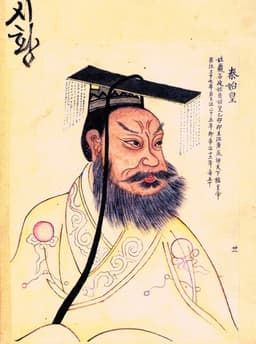
Qin Shi Huang
Emperor · Ancient
85.2Total
Basic Information
Born
1761
-259
Died
1818
-210
Era
Modern
Ancient
Nationality
Russia
China
Occupation
General
Emperor
Civilization
Western
Eastern
Score Comparison
Military (10%)
70.0
80.0
Political (20%)
72.0
90.0
Influence (20%)
56.7
85.0
Legacy (20%)
55.0
90.0
Leadership (15%)
68.0
78.0
Strategy (15%)
72.0
82.0
TOTAL
63.1
85.2
Mikhail Barclay de Tolly — Complete Timeline
1810 AD
Appointed Minister of WarPolitical Action◆ Major
Barclay de Tolly was appointed Russian Minister of War by Tsar Alexander I. He implemented military reforms, including the creation of a general staff and improved training, preparing the army for the impending war with Napoleon.
Military ReformNapoleonic WarsAdministration
Impact: nationalconstructive
1812 AD
Scorched Earth Retreat (1812)War
As commander of the 1st Western Army, Barclay de Tolly ordered a strategic retreat into Russia, implementing a scorched earth policy to deny Napoleon supplies. This controversial decision preserved the Russian army but led to his removal from command due to public pressure.
Napoleonic WarsStrategic RetreatScorched Earth
Impact: global
Battle of BorodinoWar◆ Major
Barclay de Tolly commanded the Russian right wing and center at the Battle of Borodino. He personally led troops into battle, having three horses killed under him. His forces held their positions against French assaults, but the battle was a tactical draw.
Napoleonic WarsBattleCommand
Impact: national
1813 AD
Battle of LeipzigWar◆ Major
Barclay de Tolly commanded the Russian forces at the Battle of Leipzig, the largest battle of the Napoleonic Wars. His troops played a key role in the Allied victory that forced Napoleon to retreat across the Rhine.
Napoleonic WarsCoalition VictoryBattle
Impact: globalconstructive
1814 AD
Capture of Paris (1814)War◆ Major
Barclay de Tolly led the Russian contingent in the Allied capture of Paris. The fall of Paris led to Napoleon's abdication and the end of the War of the Sixth Coalition.
Napoleonic WarsCapture of ParisCoalition
Impact: globalconstructive
Qin Shi Huang — Complete Timeline
246 BC
Construction of the Mausoleum and Terracotta ArmyOther◆ Major
Qin Shi Huang commissioned a vast mausoleum complex near Xi'an, guarded by thousands of life-sized terracotta soldiers, horses, and chariots. The project employed hundreds of thousands of workers and reflected his obsession with immortality and imperial power.
Impact: global
230 BC
Conquest of the Six Warring StatesWar
From 230 to 221 BCE, Ying Zheng led the Qin state in a series of campaigns that conquered the Han, Zhao, Wei, Chu, Yan, and Qi states. This unified China under a single ruler for the first time, ending the Warring States period.
Impact: global
221 BC
Standardization of Writing, Currency, and MeasurementsReform◆ Major
Qin Shi Huang ordered the standardization of Chinese script, currency, and weights and measures across the unified empire. This facilitated administration, trade, and cultural integration, laying a foundation for future dynasties.
Impact: globalconstructive
Proclamation of the Qin DynastyPolitical Action
After conquering the last independent state, Ying Zheng declared himself Shi Huangdi (First Emperor), founding the Qin Dynasty. He adopted a new title to signify his supreme authority and initiated centralized imperial rule.
Impact: global
214 BC
Initiation of the Great Wall ConstructionOther◆ Major
Qin Shi Huang ordered the connection and extension of existing northern fortifications to create a unified defensive wall against nomadic Xiongnu raids. This project involved massive conscripted labor and became the precursor to the later Great Wall.
Impact: regional
213 BC
Burning of Books and Burying of ScholarsPolitical Action◆ Major
On the advice of Li Si, Qin Shi Huang ordered the burning of historical records and philosophical texts not aligned with Legalist doctrine. He also had 460 Confucian scholars buried alive to suppress dissent and consolidate ideological control.
Impact: nationaldestructive
Expert Analysis
mikhail-barclay-de-tolly-vs-qin-shi-huang
# The Emperor Who Built and the General Who Burned
In the winter of 213 BC, somewhere in the vastness of northern China, a man who called himself the First Emperor ordered the burning of books. A thousand miles and two thousand years away, in the summer of 1812, a Scots-Russian general named Mikhail Barclay de Tolly ordered the burning of fields. Both men were hated for their decisions. Both believed they were saving something greater than themselves. One succeeded so completely that his name became synonymous with tyranny. The other succeeded so quietly that history nearly forgot him. What separates a visionary from a scapegoat? The answer lies not in their ambitions, but in their timing, their enemies, and their willingness to be misunderstood.
Origins
Qin Shi Huang was born in 259 BC as Ying Zheng, a prince of the Qin state during the chaotic Warring States period. His childhood was spent in a world of constant warfare, where seven kingdoms bled each other dry for supremacy. He learned early that power was a weapon, not a privilege. His mother's political intrigues and his father's early death forced him to seize control of his own court by the age of twenty-two. He grew up believing that order had to be imposed, not negotiated.
Mikhail Barclay de Tolly was born in 1761 into a Scottish family that had settled in the Baltic provinces of the Russian Empire. His father was a minor nobleman, his mother a peasant. He entered the Russian army as a teenager and spent decades fighting the Ottomans, the Poles, and the Swedes. He was not born to rule; he was born to serve. And he served with a patience that bordered on invisibility. While Qin Shi Huang learned that the world could be conquered, Barclay de Tolly learned that it could only be endured.
Rise to Power
Ying Zheng's path was swift and brutal. Between 230 and 221 BC, he led the Qin army in a series of campaigns that crushed the Han, Zhao, Wei, Chu, Yan, and Qi states. At the age of thirty-eight, he declared himself Shi Huangdi—the First Emperor—and founded the Qin Dynasty. He did not inherit a throne; he built one from the bones of his enemies.
Barclay de Tolly's rise was far more gradual. In 1810, Tsar Alexander I appointed him Minister of War, a position that required administrative skill rather than battlefield glory. He reformed the Russian army's supply system and training methods, but he had never commanded a major campaign. When Napoleon invaded Russia in 1812 with the largest army Europe had ever seen, Barclay de Tolly was given command of the First Western Army. He was not the hero Russia wanted. He was the general it needed.
Leadership & Governance
Qin Shi Huang ruled by decree. He standardized writing, currency, and measurements across his empire, creating the first unified Chinese state. He ordered the construction of a massive mausoleum guarded by thousands of life-sized terracotta soldiers, a project that consumed the labor of hundreds of thousands of workers. He connected and extended northern fortifications into what would become the Great Wall. But he also burned books and buried scholars alive, believing that history itself must be rewritten to serve his dynasty. His governance was a paradox: he unified a civilization through terror.
Barclay de Tolly governed through retreat. As Napoleon's Grande Armée pushed deeper into Russia, Barclay ordered his troops to fall back, burning crops and villages as they went. His own officers accused him of cowardice. The Russian nobility called him a traitor. Tsar Alexander I received letters demanding his dismissal. Yet Barclay de Tolly understood something that his critics did not: Napoleon could not be defeated in a single battle. He had to be drawn into the vast emptiness of Russia, starved, frozen, and broken by distance. The scorched earth retreat of 1812 was not a failure of strategy. It was a strategy of failure—deliberate, calculated, and agonizing.
Triumph & Tragedy
Qin Shi Huang's greatest triumph was the unification of China. His greatest tragedy was that he could not hold it. When he died in 210 BC, his empire collapsed within four years. The standardization he imposed survived, but the dynasty he built did not. His tomb, still unopened, remains a monument to his ambition and his isolation.
Barclay de Tolly's greatest triumph came after his greatest humiliation. Dismissed from command before the Battle of Borodino in September 1812, he nonetheless fought bravely, personally leading troops into the fray. His successor, Kutuzov, adopted the same retreat strategy that Barclay had pioneered. In 1813, Barclay returned to command the Russian forces at the Battle of Leipzig, the largest battle of the Napoleonic Wars. In 1814, he led the Russian contingent into Paris. He saw the enemy's capital fall because he had been willing to let his own country burn.
Character & Destiny
Qin Shi Huang was a man who believed he could control time itself. He sought immortality through alchemy, built a tomb to last forever, and tried to erase the past. His character was shaped by absolute power and absolute fear. He trusted no one, not even his own ministers. His destiny was to become a symbol of tyranny, a warning against the marriage of vision and cruelty.
Barclay de Tolly was a man who accepted that he would be forgotten. He did not seek glory. He did not write memoirs. He did not defend his reputation. When the Russian army entered Paris, he was the quiet figure at the head of the column, a foreigner in a foreign land, leading a nation that had once called him a traitor. His character was shaped by endurance and humility. His destiny was to be remembered only by historians, and even then, as a footnote to Kutuzov's legend.
Legacy
Qin Shi Huang's legacy is carved into the earth. The Great Wall, the Terracotta Army, the standardized script—these are visible, tangible, undeniable. He is remembered as the First Emperor, the founder of China's imperial tradition, a figure of both awe and horror. His influence score of 82 and legacy score of 85 reflect a man who changed the world, for better and worse.
Barclay de Tolly's legacy is invisible. He left no monuments, no walls, no dynasties. His legacy score of 55 is a testament to how easily history forgets the men who win by losing. Yet without his scorched earth retreat, Napoleon might have conquered Russia. Without his patience, the coalition that finally defeated the Emperor might have collapsed. He saved an empire by sacrificing his reputation.
Conclusion
In the end, both men faced the same question: what are you willing to destroy in order to preserve? Qin Shi Huang burned books and buried scholars to protect his vision of order. Barclay de Tolly burned fields and abandoned cities to protect his vision of survival. One created a civilization. One saved a nation. The difference is not in their methods, but in what they were willing to become. The First Emperor became a tyrant. The Scots-Russian general became a ghost. And history, as always, prefers the tyrant who builds to the ghost who retreats.
Rankings
🥇
Qin Shi HuangLeader
Mil: 80.0Pol: 90.0Inf: 85.0
85.2
🥈
Mikhail Barclay de Tolly
Mil: 70.0Pol: 72.0Inf: 56.7
63.1
+22.1 behind
How This Comparison Works
Algorithm
Each figure is scored on 6 dimensions (0—100 scale) based on structured historical data: Military (10%), Political (20%), Influence (20%), Legacy (20%), Leadership (15%), Strategy (15%). The weighted total produces the final ranking.
Data Sources
Scores are computed from structured sub-indicators in the database. Scale factors adjust for era (Ancient ×0.85, Modern ×1.0) and civilization size (Eastern ×1.05, Other ×0.80) to account for differences in population and military scale.
Maximum 3 Figures
Comparisons are limited to 2—3 figures to ensure readability and statistical meaningfulness.
Error Margins
±5 points per dimension — Sub-scores are derived from historical records with inherent uncertainty. Two figures within 5 points on a dimension should be considered roughly equivalent in that area.
Total Score Accuracy
±3 points overall — The weighted combination of 6 dimensions produces a total score with approximately ±3 points of uncertainty. Differences of less than 3 points are not statistically significant— the figures are effectively tied.
Known Limitations
- Historical records are incomplete and uneven across civilizations
- Figures from oral-tradition societies may be underrepresented
- Occupation labels can misclassify multi-role figures
- Scores measure capability and impact, not moral character
- Quantitative scoring is a comparison tool, not absolute truth
Capability Radar
Military (10%) — Battles & Warfare
Battles
75
85
Win Rate
60
90
Expansion
30
90
Political (20%) — Governance & Reform
Reform
70
95
Diplomacy
65
75
Economy
55
90
Influence (20%) — Cultural & Global Reach
Cultural
40
95
Global
55
85
Legacy (20%) — Historical Impact
Historical
70
95
Longevity
65
95
Leadership (15%) — Power & Stability
Tenure
60
70
Stability
60
65
Strategy (15%) — Tactics & Innovation
Strategy
90
85
Tactics
85
80
Reform
80
95
Similar Comparisons
Comments & Discussion
Fire-Starter General6/17/2026
Barclay de Tolly was the original "scorched earth" pragmatist, and he deserves more credit than he gets. While Qin Shi Huang destroyed ideas to centralize power, Barclay burned grain to starve Napoleon's Grande Armée. The Russians called him a traitor for retreating—but that strategy worked. Qin's book burning was cultural genocide; Barclay's field burning was military genius. One erased memory, the other saved a nation. History remembers the tyrant over the tactician, and that's a damn shame.
长城下的灰烬6/17/2026
秦始皇烧书是为了统一思想,巴克莱烧粮是为了饿死拿破仑。一个烧的是文字,一个烧的是未来。说真的,巴克莱的策略救了俄罗斯,但被贬为懦夫;秦始皇的大业却传颂两千年。谁更狠?秦始皇更彻底。他把整个文化体系烧了再重建,而巴克莱只是烧了个季节的收成。一个改变文明,一个改变战局。别混为一谈。
Data Grinder6/17/2026
Forget the romanticized narratives—let's look at numbers. Barclay's scorched earth policy directly contributed to Napoleon's loss of 400,000+ troops in 1812. That's a 90% attrition rate from an army of 450,000. Qin Shi Huang's book burning affected maybe 0.1% of China's population at the time. By pure casualty impact, Barclay wins in scale. But Qin's centralized standardization—weights, measures, script—shaped East Asia for 2,000 years. Barclay saved a country in one brutal year. Qin built a civ
标准史观粉碎机6/17/2026
别拿巴克莱和秦始皇比,根本没可比性。巴克莱只是个职业军官,听从沙皇命令干活;秦始皇可是亲手终结了五百年的战国乱世,统一了文字、货币、度量衡。你说巴克莱聪明?他烧了半个俄罗斯的粮草,沙俄贵族差点把他绞死。秦始皇烧书被骂两千年,但他的秦制影响东亚至今。巴克莱被遗忘是有原因的——他只是个战术棋子,秦始皇是时代的缔造者。高低立判。
Classics Scholar6/17/2026
Qin's book burning gets all the outrage, but Plato argued for book censorship in *The Republic* centuries earlier. The First Emperor was enacting a pragmatic policy of ideological consolidation during a fragile unification. Barclay's field burning had more immediate consequence—26 million acres of Russian farmland scorched. Both men faced impossible choices. Qin chose control via knowledge destruction; Barclay chose survival via resource denial. Neither was gentle. Both were products of their ti
迷雾中的真相6/17/2026
说巴克莱是英雄的人,多半没读过1812年的俄国农民日记。他们饿死的