Loading...
Mokjong of Goryeo vs Napoleon Bonaparte
Napoleon Bonaparte leads by 34.7 pts · 2 figures compared
…
Mokjong of Goryeo
Emperor · Medieval
36.2Total

Napoleon Bonaparte
General · Modern
70.9Total
Basic Information
Born
980
1769
Died
1009
1821
Era
Medieval
Modern
Nationality
Korea
France
Occupation
Emperor
General
Civilization
Eastern
Western
Score Comparison
Military (10%)
20.0
94.0
Political (20%)
26.4
72.0
Influence (20%)
46.3
40.0
Legacy (20%)
35.8
80.0
Leadership (15%)
34.6
78.0
Strategy (15%)
45.0
90.0
TOTAL
36.2
70.9
Mokjong of Goryeo — Complete Timeline
1009 AD
Overthrow by Gang JoPolitical Action◆ Major
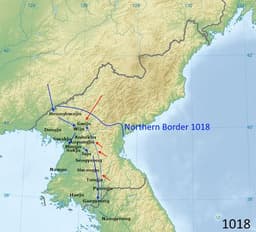
King Mokjong was deposed and killed in a coup led by the general Gang Jo. The coup was triggered by a power struggle between the king and his mother, Queen Dowager Cheonchu, and resulted in Gang Jo placing Hyeonjong on the throne, altering the Goryeo succession.
CoupAssassinationGoryeo
Impact: nationaldestructive
Napoleon Bonaparte — Complete Timeline
1799 AD
Coup of 18 BrumaireOther◆ Major
Napoleon Bonaparte, with support from his brother Lucien and key political figures, overthrew the Directory in a bloodless coup. He established the Consulate with himself as First Consul, effectively becoming the ruler of France. This event ended the French Revolution's most unstable period.
French RevolutionCoupRise to Power
Impact: regional
1804 AD
Promulgation of the Napoleonic CodeOther◆ Major
Napoleon enacted the Civil Code of the French, known as the Napoleonic Code, a comprehensive set of laws that replaced the fragmented feudal legal systems. The code established legal equality, protected property rights, and secularized law. It became the basis for legal systems in many European and world countries.
Legal ReformNapoleonic CodeCivil Law
Impact: globalconstructive
1805 AD
Battle of AusterlitzWar◆ Major
Napoleon's Grande Arm
Napoleonic WarsBattleDecisive Victory
Impact: global
1812 AD
Invasion of RussiaWar◆ Major
Napoleon led the Grande Arm
Napoleonic WarsInvasionDisaster
Impact: globaldestructive
1815 AD
Battle of WaterlooWar◆ Major
Napoleon's French army was defeated by the combined forces of the Duke of Wellington's Anglo-Allied army and Gebhard Leberecht von Bl
Napoleonic WarsBattleFinal Defeat
Impact: globaldestructive
Expert Analysis
mokjong-of-goryeo-vs-napoleon-bonaparte
# The Emperor and the General: Two Paths to Power, Two Destinies
On a June morning in 1815, Napoleon Bonaparte stood on a muddy field near Waterloo, watching his Imperial Guard march into the jaws of death. He had conquered Europe, rewritten laws, and crowned himself emperor. Twenty years earlier, he had been a penniless Corsican artillery officer. Across the world and eight centuries before, another young ruler faced his own Waterloo—not on a battlefield, but in a palace courtyard. King Mokjong of Goryeo, barely twenty-nine years old, heard the clatter of hooves and the shouts of soldiers loyal to a general he had trusted. Within hours, both men would see their worlds collapse. One would go into exile, writing memoirs and plotting a return. The other would die, his body left unburied, his name nearly erased from history. What made the difference between the emperor who still haunts our imagination and the king who has become a footnote?
Origins
Napoleon was born in 1769 on Corsica, an island that had just become French. His family was minor nobility, poor enough to feel the sting of poverty but well-connected enough to send him to military school. There, the awkward boy with the Italian accent was mocked by French aristocrats. The humiliation forged something in him—a hunger for recognition, a cold fury that would later burn across Europe. He read voraciously, studied artillery, and watched the French Revolution tear apart the old order. The world was being remade, and he intended to be its architect.
Mokjong of Goryeo was born in 980 into a very different world—a Korean kingdom where power flowed through bloodlines, Confucian rituals, and the delicate balance of aristocratic families. His father died when he was young, and his mother, Queen Heonae, ruled as regent. She was brilliant, ambitious, and deeply resented by the noble clans. Mokjong grew up in a palace where every smile hid a dagger, where loyalty was a currency that could be forged or stolen. He was not trained for war; he was trained to preside over ceremonies, to recite classical texts, to be a symbol. The sword was for lesser men.
Rise to Power
Napoleon’s rise was a masterpiece of timing and audacity. In 1793, at just twenty-four, he drove the British out of Toulon with a brilliant artillery plan. By 1796, he was commanding the Army of Italy, turning starving, mutinous soldiers into a conquering force. He won battles not by overwhelming numbers but by speed, deception, and the willingness to risk everything. His men adored him because he shared their rations, remembered their names, and promised them glory. When he returned to France in 1799, the government was crumbling. In the coup of 18 Brumaire, he seized power not by killing his rivals but by outmaneuvering them. He understood that in revolutionary France, legitimacy came from success, not birth.
Mokjong’s path was entirely different. He became king in 997 at seventeen, inheriting a throne that his mother had held together through sheer will. His rise was not an achievement but an accident of birth. The real power lay with the aristocratic factions—the families who controlled the armies and the tax revenues. Mokjong tried to rule, but every decision was a negotiation. He appointed officials, but they answered to their clans. He tried to assert royal authority, but the machinery of the state was rusted by corruption. His mother’s death in 998 left him isolated, a young man surrounded by wolves who smiled and called him Your Majesty.
Leadership & Governance
As emperor, Napoleon was a force of nature. He reorganized France into departments, created the Bank of France, and established the Napoleonic Code—a legal system that still shapes much of the world. He believed in merit, not birth; his marshals were men who had risen from the ranks. He worked eighteen-hour days, dictated letters to multiple secretaries simultaneously, and demanded absolute loyalty. His military genius was staggering: at Austerlitz in 1805, he destroyed a larger Russian-Austrian army by feigning weakness, then striking at the center like a thunderbolt. He understood that war was not just about tactics but about morale, logistics, and the psychology of his enemies.
Mokjong governed a kingdom that resisted change. He tried to centralize power, but the aristocratic families saw every reform as a threat. He lacked an army loyal to him personally; the soldiers answered to local lords. He had no Napoleonic Code, no grand vision—only the desperate hope of keeping his throne. He relied on officials like Gang Jo, a general who seemed loyal but was building his own network. Mokjong’s governance was not about conquering Europe but about surviving tomorrow. He failed because he had no tools to succeed—no standing army, no bureaucratic machine, no ideology that could inspire men to die for him.
Triumph & Tragedy
Napoleon’s greatest triumph was the Empire itself. By 1810, he controlled most of Europe, from Spain to Poland. He married an Austrian princess, allied with the tsar, and placed his brothers on thrones. His tragedy was hubris—the invasion of Russia in 1812. He marched six hundred thousand men into the snow and returned with fewer than a hundred thousand. He could not stop, could not compromise. Even after exile to Elba, he escaped and raised another army, only to be crushed at Waterloo. His tragedy was that he could not accept limits.
Mokjong’s triumph was simply surviving nine years on a throne that wanted him dead. His tragedy came in 1009, when Gang Jo, the general he had trusted to defend him, turned his army against the palace. The coup was brutal and swift. Mokjong was captured, deposed, and killed. His body was thrown into a ditch. For centuries, his reign was remembered as a warning—a lesson in what happens when a ruler is too weak to command.
Character & Destiny
Napoleon’s character was a paradox: a genius who could inspire devotion and a tyrant who could not tolerate dissent. He believed he was destiny’s chosen instrument, and that belief gave him the courage to attempt the impossible. But it also blinded him. He could not see that his enemies would never accept his domination, that the Spanish guerrillas would bleed his armies, that the Russian winter was not a problem to be solved by logistics. His character drove him to greatness and then to ruin.
Mokjong’s character was shaped by his circumstances. He was not a coward—he tried to rule, tried to resist. But he was a product of a system that rewarded caution, not audacity. He could not be Napoleon because the world he lived in had no room for Napoleons. In Goryeo, power was inherited, not seized; legitimacy came from blood, not achievement. Mokjong’s tragedy was that he was born into a role that required him to be a lion, but he had been raised to be a lamb.
Legacy
Napoleon’s legacy is monumental. The Napoleonic Code, the modern French state, the metric system, the very idea of a meritocratic military—these survive. He is remembered as a genius, a tyrant, a liberator, a conqueror. His name is synonymous with ambition and downfall. Statues of him stand in Paris, his tomb at Les Invalides draws millions, and his battles are studied in every military academy.
Mokjong’s legacy is almost invisible. He is a name in a history book, a cautionary tale for Korean scholars. His death led to a period of military rule that lasted for decades. The Goryeo dynasty would survive for another four centuries, but his brief reign was forgotten, overshadowed by the generals who came after him. He left no code, no monument, no legend.
Conclusion
The difference between Napoleon and Mokjong is not simply a matter of talent or ambition. It is a question of context. Napoleon was born into a world that was breaking apart, where a man of ability could remake himself and his society. Mokjong was born into a world that was rigid, where blood and tradition bound every hand. One man had the tools to build an empire; the other had only a throne that others wanted. In the end, Napoleon’s tragedy was that he could not stop reaching for more. Mokjong’s tragedy was that he could not even hold what he had. Both were prisoners of their time, but one found a door and the other found a cage.
Rankings
🥇
Napoleon BonaparteLeader
Mil: 94.0Pol: 72.0Inf: 40.0
70.9
🥈
Mokjong of Goryeo
Mil: 20.0Pol: 26.4Inf: 46.3
36.2
+34.7 behind
How This Comparison Works
Algorithm
Each figure is scored on 6 dimensions (0—100 scale) based on structured historical data: Military (10%), Political (20%), Influence (20%), Legacy (20%), Leadership (15%), Strategy (15%). The weighted total produces the final ranking.
Data Sources
Scores are computed from structured sub-indicators in the database. Scale factors adjust for era (Ancient ×0.85, Modern ×1.0) and civilization size (Eastern ×1.05, Other ×0.80) to account for differences in population and military scale.
Maximum 3 Figures
Comparisons are limited to 2—3 figures to ensure readability and statistical meaningfulness.
Error Margins
±5 points per dimension — Sub-scores are derived from historical records with inherent uncertainty. Two figures within 5 points on a dimension should be considered roughly equivalent in that area.
Total Score Accuracy
±3 points overall — The weighted combination of 6 dimensions produces a total score with approximately ±3 points of uncertainty. Differences of less than 3 points are not statistically significant— the figures are effectively tied.
Known Limitations
- Historical records are incomplete and uneven across civilizations
- Figures from oral-tradition societies may be underrepresented
- Occupation labels can misclassify multi-role figures
- Scores measure capability and impact, not moral character
- Quantitative scoring is a comparison tool, not absolute truth
Capability Radar
Military (10%) — Battles & Warfare
Battles
5
95
Win Rate
5
90
Expansion
5
95
Political (20%) — Governance & Reform
Reform
20
95
Diplomacy
20
80
Economy
20
85
Influence (20%) — Cultural & Global Reach
Cultural
10
85
Global
5
90
Legacy (20%) — Historical Impact
Historical
15
95
Longevity
10
90
Leadership (15%) — Power & Stability
Tenure
30
85
Stability
10
70
Strategy (15%) — Tactics & Innovation
Strategy
5
95
Tactics
5
98
Reform
5
92
Similar Comparisons
Comments & Discussion
**柴刀史官 (ChaiDao Scribe)**6/17/2026
拿皇靠野心和火炮打天下,高丽穆宗却连亲妈都管不住。你跟我说他俩能比?一个是改写欧洲法典的军事天才,一个是被武将政变弄死在宫里的昏君。穆宗但凡有拿破仑十分之一的狠劲,也不至于死后连块碑都留不下。历史记住了帝国的征服者,谁会在意一个被抹去名字的王?
**Artillery Man**6/17/2026
Map this: Napoleon lost at Waterloo because Grouchy didn't march to the guns. Mokjong lost because his own queen conspired with the rebel general. One was betrayed by a marshall’s bad judgement; the other by his wife's knife in the back. That’s the difference between a military collapse and a total, intimate implosion of a dynasty. Give me the muddy field over the poisoned banquet any day.
**数据铁匠**6/17/2026
比数据,拿破仑执政14年,直接指挥超过60场战役,统治人口近5000万。高丽穆宗在位12年,最知名的事件就是被金致阳政变杀死,连准确死亡时间都是靠史书推测的。一个是世界史的主角,一个是东亚史的脚注。拿两人并列,就像拿珠穆朗玛和土丘比高度。不否认穆宗有悲剧色彩,但层次差太远。
**Numismatic Nerd**6/17/2026
Forget the battle stats. Look at the coinage legacy: Napoleon minted the gold 20 Franc coin, found from Warsaw to Madrid. It’s a tangible empire. Mokjong’s Goryeo minted iron coins with no imperial portrait, purely local. The emperor stamped his face on Europe's pockets; the king is a footnote in a numismatic catalog that collectors skip. One created a currency of power; the other is just a relic of a forgotten dynasty.
**Revisionist Brush**6/17/2026
别急着把拿破仑捧成神。穆宗的死是韩国史里常被忽略的政治清洗样本——他不是无能,而是试图削弱武将被反噬。拿翁搞大陆封锁被英俄联合绞杀,跟穆宗搞中央集权被门阀联手推翻,本质都是对抗系统却输给系统。一个输在欧洲棋盘,一个输在东亚内卷。只看结果骂穆宗是窝囊废,那你也该嘲笑圣赫勒拿岛的胖子。