Loading...
Mongke Khan vs Napoleon Bonaparte
Napoleon Bonaparte leads by 1.4 pts · 2 figures compared
…
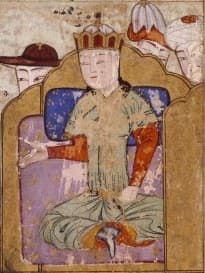
Mongke Khan
Emperor · Medieval
69.5Total

Napoleon Bonaparte
General · Modern
70.9Total
Basic Information
Born
1209
1769
Died
1259
1821
Era
Medieval
Modern
Nationality
Mongol Empire
France
Occupation
Emperor
General
Civilization
Eastern
Western
Score Comparison
Military (10%)
85.0
94.0
Political (20%)
59.3
72.0
Influence (20%)
68.0
40.0
Legacy (20%)
72.0
80.0
Leadership (15%)
68.0
78.0
Strategy (15%)
69.1
90.0
TOTAL
69.5
70.9
Mongke Khan — Complete Timeline
1251 AD
Election as Great KhanPolitical Action
Möngke was elected as the fourth Great Khan of the Mongol Empire with the support of Batu and his family, ending a period of regency after Güyük's death. His election was contested by the Ögedeid and Chagataid families, leading to purges.
SuccessionMongol EmpirePurge
Impact: global
1252 AD
Conquest of the Song Dynasty (Southern China)War◆ Major
Möngke launched a massive campaign against the Southern Song dynasty, personally leading the western army while his brother Kublai attacked from the north. The campaign stalled at Diaoyu Fortress, where Möngke died, but it set the stage for Kublai's later conquest.
Mongol ConquestSong DynastyChina
Impact: global
Purge of the Ögedeid and Chagataid FamiliesPolitical Action◆ Major
Möngke ordered a systematic purge of the Ögedeid and Chagataid princes and their supporters, accusing them of plotting against him. Hundreds of nobles were executed, consolidating Möngke's power and centralizing the empire under the Toluid line.
PurgeMongol EmpireToluid Consolidation
Impact: globaldestructive
1253 AD
Invasion of the Middle East (Hulagu's Campaign)War◆ Major
Möngke ordered his brother Hulagu to lead a massive Mongol army into the Middle East to conquer the Abbasid Caliphate and the Ismaili fortresses. This campaign resulted in the destruction of Baghdad in 1258 and the establishment of the Ilkhanate.
Mongol ConquestMiddle EastBaghdad
Impact: globaldestructive
1259 AD
Death at Diaoyu FortressWar
Möngke died during the siege of Diaoyu Fortress in Sichuan, possibly from dysentery or a battle wound. His death triggered a succession crisis that led to the division of the Mongol Empire into four khanates.
DeathMongol EmpireSuccession Crisis
Impact: globaltragic
Napoleon Bonaparte — Complete Timeline
1799 AD
Coup of 18 BrumaireOther◆ Major
Napoleon Bonaparte, with support from his brother Lucien and key political figures, overthrew the Directory in a bloodless coup. He established the Consulate with himself as First Consul, effectively becoming the ruler of France. This event ended the French Revolution's most unstable period.
French RevolutionCoupRise to Power
Impact: regional
1804 AD
Promulgation of the Napoleonic CodeOther◆ Major
Napoleon enacted the Civil Code of the French, known as the Napoleonic Code, a comprehensive set of laws that replaced the fragmented feudal legal systems. The code established legal equality, protected property rights, and secularized law. It became the basis for legal systems in many European and world countries.
Legal ReformNapoleonic CodeCivil Law
Impact: globalconstructive
1805 AD
Battle of AusterlitzWar◆ Major
Napoleon's Grande Arm
Napoleonic WarsBattleDecisive Victory
Impact: global
1812 AD
Invasion of RussiaWar◆ Major
Napoleon led the Grande Arm
Napoleonic WarsInvasionDisaster
Impact: globaldestructive
1815 AD
Battle of WaterlooWar◆ Major
Napoleon's French army was defeated by the combined forces of the Duke of Wellington's Anglo-Allied army and Gebhard Leberecht von Bl
Napoleonic WarsBattleFinal Defeat
Impact: globaldestructive
Expert Analysis
mongke-khan-vs-napoleon-bonaparte
# The Conqueror's Mirror: Napoleon and Möngke Khan
In the summer of 1815, Napoleon Bonaparte stood on a muddy field near Waterloo, watching his Imperial Guard crumble under British fire. Six centuries earlier, in the autumn of 1259, Möngke Khan lay dying before the walls of Diaoyu Fortress in Sichuan, his vast conquests suddenly frozen by a single arrow or a bout of dysentery. Both men commanded armies that reshaped the world. Both died with their ambitions unfulfilled. Yet one forged a legacy that still echoes in law courts and constitutions, while the other remains a footnote in the story of a dynasty that collapsed within a generation. Why such different outcomes for two men who both conquered on a staggering scale?
Origins
Napoleon Bonaparte was born in 1769 on the island of Corsica, a place that had only become French the year before. His family was minor nobility, poor and resentful of French rule. He spoke Italian at home and learned French at school, where classmates mocked his accent. This outsider's hunger—the need to prove himself to a world that had not welcomed him—never left him. He read Plutarch's lives of Roman heroes by candlelight and dreamed of glory.
Möngke Khan was born in 1209 into the golden family of the Mongol Empire. His grandfather was Genghis Khan himself. He grew up not in palaces but on horseback, learning to ride before he could walk, to shoot a bow before he could hold a sword. The steppe was his classroom, and the lesson was simple: the world existed to be conquered. While Napoleon had to claw his way upward, Möngke was born with a blood claim to the largest empire the world had ever seen.
Rise to Power
Napoleon's path was a staircase he built himself. He graduated from military school in 1785, commissioned as a second lieutenant of artillery. The French Revolution, which began when he was twenty, shattered the old order and created opportunities for ambitious young men. In 1793, at the siege of Toulon, he devised the plan that drove the British from the port. He was promoted to brigadier general at twenty-four. By 1796, he commanded the Army of Italy, where his lightning campaigns stunned Europe. In 1799, he seized power in a coup. He was thirty.
Möngke's rise was bloodier and more political. After Genghis Khan's death in 1227, the empire fractured into competing factions. Möngke's father Tolui died young, and power passed to the Ögedeid line. For years, Möngke waited, building alliances, biding his time. In 1251, with the crucial support of his cousin Batu, he was elected Great Khan. He immediately ordered a purge of the Ögedeid and Chagataid princes, executing dozens of rivals. "I have cleansed the empire of traitors," he reportedly said. Napoleon seized power from the top; Möngke had to dig his rivals out from the roots.
Leadership & Governance
Napoleon governed with a pen as sharp as his sword. The Napoleonic Code of 1804 standardized French law, abolished feudal privileges, and enshrined equality before the law. He created the Bank of France, reformed education, and built roads and canals. He made peace with the Catholic Church through the Concordat of 1801. His political genius lay in institutionalizing his revolution—making it irreversible. "My true glory is not my forty victories," he later said on Saint Helena. "Waterloo will erase the memory of them. But what nothing will erase is my Civil Code."
Möngke governed differently. He was an administrator of rare skill, standardizing taxation across his empire, establishing a unified postal system, and patronizing scholars of all religions. He ordered his brother Hulagu to march on Baghdad, and in 1258, the Abbasid Caliphate fell—the greatest single blow to Islamic civilization until the modern era. But Möngke's governance was built on conquest, not consent. His empire was held together by fear and loyalty to his person. When he died, there was no code, no institution, no constitution—only a succession crisis.
Triumph & Tragedy
Napoleon's greatest triumph was Austerlitz in 1805, where he destroyed a larger Russian and Austrian army in a single day. "I have fought sixty battles," he said, "and learned nothing I did not know at Austerlitz." His greatest tragedy was the invasion of Russia in 1812. He marched with 600,000 men; fewer than 100,000 returned. The disaster broke his aura of invincibility.
Möngke's greatest triumph was the conquest of the Song Dynasty's northern frontier, which he personally led. His greatest tragedy was his death at Diaoyu Fortress in 1259. He had conquered everything from Korea to the Caspian Sea, but he died besieging a single Chinese fortress. His death triggered a succession crisis that pulled Hulagu back from the gates of Cairo and saved the Mamluks. The Mongol Empire never again expanded.
Character & Destiny
Napoleon was driven by an insatiable hunger for recognition. "What a novel my life has been!" he once exclaimed. He was brilliant, charismatic, and ruthless. He could charm men into loyalty and inspire them to die for him. But he could also be petty, paranoid, and arrogant. He divorced Josephine for a Habsburg princess, then exiled her. He placed his brothers on thrones, then fought with them. His character was a paradox: a revolutionary who made himself emperor, a democrat who restored monarchy.
Möngke was colder, more calculating. He did not need to prove himself; he already knew his worth. He was a traditional Mongol khan: fierce in battle, generous to loyal followers, merciless to enemies. He did not seek glory but order. "The world is not large enough for two masters," he is said to have declared. His character was monolithic, without Napoleon's contradictions. This made him a more stable ruler but a less memorable one.
Legacy
Napoleon's legacy is woven into the fabric of modern Europe. The Napoleonic Code influenced civil law across continents. He abolished the Holy Roman Empire, consolidated Germany, and awakened nationalism. His military tactics are still studied. He is remembered as both a tyrant and a reformer, a conqueror and a lawgiver. His name is a shorthand for ambition itself.
Möngke's legacy is quieter. He completed the Mongol conquest of Persia and began the conquest of China, but his empire shattered within a decade of his death. He is remembered primarily as a link between Genghis and Kublai, a bridge rather than a destination. His scores in military, political, and strategic ability are high—82, 82, and 82—but his legacy score is only 68. He conquered, but he did not build.
Conclusion
Why did Napoleon endure while Möngke faded? The answer lies not in their conquests but in their creations. Napoleon fought for himself, but he built for posterity—laws, institutions, a vision of meritocracy. Möngke fought for his family, for the Mongol tradition of conquest, and when he died, his empire died with him. Napoleon's tragedy was that he could not stop conquering; Möngke's was that he never learned to do anything else. In the end, the conqueror who builds a code outlasts the conqueror who builds only an empire. The walls of Diaoyu Fortress still stand. The Napoleonic Code still governs.
Rankings
🥇
Napoleon BonaparteLeader
Mil: 94.0Pol: 72.0Inf: 40.0
70.9
🥈
Mongke Khan
Mil: 85.0Pol: 59.3Inf: 68.0
69.5
+1.4 behind
How This Comparison Works
Algorithm
Each figure is scored on 6 dimensions (0—100 scale) based on structured historical data: Military (10%), Political (20%), Influence (20%), Legacy (20%), Leadership (15%), Strategy (15%). The weighted total produces the final ranking.
Data Sources
Scores are computed from structured sub-indicators in the database. Scale factors adjust for era (Ancient ×0.85, Modern ×1.0) and civilization size (Eastern ×1.05, Other ×0.80) to account for differences in population and military scale.
Maximum 3 Figures
Comparisons are limited to 2—3 figures to ensure readability and statistical meaningfulness.
Error Margins
±5 points per dimension — Sub-scores are derived from historical records with inherent uncertainty. Two figures within 5 points on a dimension should be considered roughly equivalent in that area.
Total Score Accuracy
±3 points overall — The weighted combination of 6 dimensions produces a total score with approximately ±3 points of uncertainty. Differences of less than 3 points are not statistically significant— the figures are effectively tied.
Known Limitations
- Historical records are incomplete and uneven across civilizations
- Figures from oral-tradition societies may be underrepresented
- Occupation labels can misclassify multi-role figures
- Scores measure capability and impact, not moral character
- Quantitative scoring is a comparison tool, not absolute truth
Capability Radar
Military (10%) — Battles & Warfare
Battles
85
95
Win Rate
80
90
Expansion
90
95
Political (20%) — Governance & Reform
Reform
75
95
Diplomacy
70
80
Economy
80
85
Influence (20%) — Cultural & Global Reach
Cultural
60
85
Global
80
90
Legacy (20%) — Historical Impact
Historical
75
95
Longevity
65
90
Leadership (15%) — Power & Stability
Tenure
60
85
Stability
65
70
Strategy (15%) — Tactics & Innovation
Strategy
85
95
Tactics
75
98
Reform
70
92
Similar Comparisons
Comments & Discussion
No comments yet. Be the first to share your thoughts!