Loading...
Mullah Baradar vs Napoleon Bonaparte
Napoleon Bonaparte leads by 19.9 pts · 2 figures compared
…
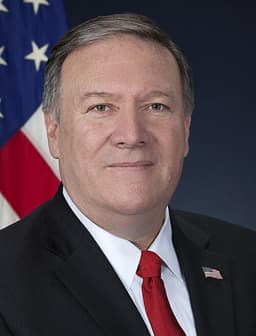
Mullah Baradar
Politician · Modern
51.0Total

Napoleon Bonaparte
General · Modern
70.9Total
Basic Information
Born
1968
1769
Died
—
1821
Era
Modern
Modern
Nationality
Afghanistan
France
Occupation
Politician
General
Civilization
Middle Eastern
Western
Score Comparison
Military (10%)
38.3
94.0
Political (20%)
45.1
72.0
Influence (20%)
58.0
40.0
Legacy (20%)
46.7
80.0
Leadership (15%)
58.8
78.0
Strategy (15%)
53.8
90.0
TOTAL
51.0
70.9
Mullah Baradar — Complete Timeline
1994 AD
Co-founded the TalibanPolitical Action◆ Major
Mullah Baradar, alongside Mullah Omar, co-founded the Taliban movement in Kandahar, Afghanistan. The group emerged from madrassas and aimed to impose a strict interpretation of Islamic law, eventually capturing Kabul in 1996.
TalibanAfghanistanIslamic Movement
Impact: regionaldestructive
2020 AD
Doha Peace AgreementPolitical Action◆ Major
Baradar, as head of the Taliban's political office in Doha, signed the agreement with the United States. The deal outlined the withdrawal of US troops from Afghanistan in exchange for Taliban security guarantees and a commitment to peace talks with the Afghan government.
Peace AgreementUS-TalibanAfghanistan
Impact: global
2021 AD
Taliban Takeover of KabulWar◆ Major
Following the US withdrawal, Baradar led the Taliban's rapid military offensive that culminated in the capture of Kabul on August 15, 2021. The takeover ended the Islamic Republic of Afghanistan and restored Taliban rule.
TalibanAfghanistanTakeover
Impact: globaldestructive
Napoleon Bonaparte — Complete Timeline
1799 AD
Coup of 18 BrumaireOther◆ Major
Napoleon Bonaparte, with support from his brother Lucien and key political figures, overthrew the Directory in a bloodless coup. He established the Consulate with himself as First Consul, effectively becoming the ruler of France. This event ended the French Revolution's most unstable period.
French RevolutionCoupRise to Power
Impact: regional
1804 AD
Promulgation of the Napoleonic CodeOther◆ Major
Napoleon enacted the Civil Code of the French, known as the Napoleonic Code, a comprehensive set of laws that replaced the fragmented feudal legal systems. The code established legal equality, protected property rights, and secularized law. It became the basis for legal systems in many European and world countries.
Legal ReformNapoleonic CodeCivil Law
Impact: globalconstructive
1805 AD
Battle of AusterlitzWar◆ Major
Napoleon's Grande Arm
Napoleonic WarsBattleDecisive Victory
Impact: global
1812 AD
Invasion of RussiaWar◆ Major
Napoleon led the Grande Arm
Napoleonic WarsInvasionDisaster
Impact: globaldestructive
1815 AD
Battle of WaterlooWar◆ Major
Napoleon's French army was defeated by the combined forces of the Duke of Wellington's Anglo-Allied army and Gebhard Leberecht von Bl
Napoleonic WarsBattleFinal Defeat
Impact: globaldestructive
Expert Analysis
mullah-baradar-vs-napoleon-bonaparte
# The Emperor and the Emir
On a June morning in 1815, Napoleon Bonaparte stood on a muddy field near Waterloo, watching his Imperial Guard march into cannon fire. He was forty-five years old, already a legend, and about to lose everything. On an August afternoon in 2021, Mullah Abdul Ghani Baradar walked into the presidential palace in Kabul, a city his forces had just seized without a fight. He was fifty-three, little known outside intelligence circles, and about to inherit a country. One fell from the heights of empire; the other rose from the shadows of war. What separates these two men—both warriors, both rulers, both products of their turbulent times—is not merely the centuries between them, but the very nature of power itself.
Origins
Napoleon was born in 1769 on Corsica, an island that had only recently become French. His family was minor nobility, but his education was revolutionary. At the military academy of Brienne, he was mocked for his accent and small stature—a boy from the periphery who learned to fight twice as hard. The French Revolution, which erupted when he was twenty, shattered the old order and opened paths that birth alone could never have granted. His era was one of rising nationalism, scientific progress, and the belief that a single man could reshape society through reason and will.
Mullah Baradar was born in 1968 in the village of Weetmak, in Afghanistan’s Uruzgan province. His family were farmers, and his world was defined by tribal codes, Islamic scholarship, and the grinding poverty of a land that had known war for generations. The Soviet invasion of 1979, when Baradar was eleven, turned his childhood into a battlefield. He joined the mujahideen, learned to fight in the mountains, and lost a brother to the war. His era was one of foreign occupation, fractured loyalties, and the conviction that only a purified faith could save his people from chaos.
Two men, two worlds. Napoleon’s revolution promised progress; Baradar’s promised restoration.
Rise to Power
Napoleon rose through talent. By 1793, at twenty-four, he had recaptured Toulon from royalist rebels, earning a promotion to brigadier general. In 1796, he took command of the ragged Army of Italy and turned it into a conquering force, winning battles at Lodi and Arcola with a speed that stunned Europe. Each victory was a stepping stone. By 1799, he had overthrown the Directory in a coup and made himself First Consul. By 1804, he crowned himself Emperor. His path was linear, dramatic, and built on personal brilliance.
Baradar rose through loyalty. He met Mullah Omar in the 1980s, fighting the Soviets, and the two became brothers-in-arms and brothers-in-law. When Omar founded the Taliban in 1994, Baradar was at his side, a quiet but indispensable organizer. He did not seek the spotlight; he built the movement from the ground up, mediating disputes, raising funds, commanding forces. When the Taliban fell in 2001, Baradar fled to Pakistan and spent nearly a decade as a fugitive, captured in 2010 and imprisoned until 2018. His rise was not a single ascent but a long cycle of loss and return.
Leadership & Governance
Napoleon ruled with a code. The Napoleonic Code, enacted in 1804, standardized French law, abolished feudal privileges, and enshrined equality before the law—at least for men. He reformed education, built roads, and centralized the state. He was a master of propaganda, using art and newspapers to craft his image as a man of destiny. On the battlefield, he was ruthless and brilliant, winning Austerlitz in 1805 by luring his enemies into a trap and crushing them at the moment of their greatest confidence. His strategy was about speed, deception, and the decisive blow.
Baradar rules with a network. The Taliban’s governance is not a code but a consensus—a web of tribal elders, religious scholars, and military commanders. Baradar, as Deputy Prime Minister, must navigate factions that include hardliners who want to enforce strict Sharia and pragmatists who seek international recognition. He cannot command like Napoleon; he must persuade. His military strategy is not about pitched battles but about patience: waiting for foreign armies to tire, exploiting local grievances, and absorbing territory without a fight. In 2021, the Taliban took Kabul without a single major battle—a victory of attrition, not annihilation.
Napoleon’s strength was his ability to impose order; Baradar’s is his ability to hold chaos together.
Triumph & Tragedy
Napoleon’s greatest triumph was Austerlitz, where he destroyed a combined Russian and Austrian army and forced the Holy Roman Empire to dissolve. His greatest tragedy was the invasion of Russia in 1812, where he marched 600,000 men into a frozen graveyard and returned with fewer than 100,000. He never recovered. Waterloo, in 1815, was the final act—a battle he might have won if not for rain, Prussian reinforcements, and his own miscalculations. He died in exile on Saint Helena, a prisoner of the British.
Baradar’s greatest triumph was the Doha Peace Agreement of 2020, which he negotiated with the United States, securing a withdrawal of foreign troops and a path to power. His greatest tragedy may still be unfolding. The Taliban’s return in 2021 brought not peace but isolation: sanctions, frozen assets, and a humanitarian crisis. Baradar, once celebrated as a pragmatist, now presides over a government that denies education to girls and faces a collapsing economy. His victory is hollow.
Character & Destiny
Napoleon was driven by ambition. “Impossible,” he once said, “is a word to be found only in the dictionary of fools.” He believed in his own genius, and that belief carried him to Moscow and back. But it also blinded him. He could not stop, could not compromise, could not share power. His personality was his destiny: a man who conquered the world but could not govern it.
Baradar is driven by purpose. “We are not fighting for power,” he told a reporter in 2020, “but for our religion.” He is described as patient, calculating, and unassuming—a man who does not seek glory but responsibility. His personality fits his destiny: a man who built a movement that outlasted empires but cannot yet build a state.
Legacy
Napoleon’s legacy is written in stone. The Napoleonic Code influences legal systems from France to Brazil. His campaigns are studied in every military academy. He is remembered as a genius and a tyrant, a liberator and a conqueror—a figure so vast that he seems to belong to myth.
Baradar’s legacy is unwritten. He is known to few outside Afghanistan, and his name may fade if the Taliban fails. But he represents something new: a leader who defeated a superpower not by winning battles but by outlasting them. History will judge whether he used that victory to build or to destroy.
Conclusion
Napoleon and Baradar are mirrors of two different ages. Napoleon’s world was one of clear lines—victory and defeat, empire and exile. Baradar’s world is one of blurred edges—war and peace, power and poverty, faith and survival. One sought to reshape the world in his image; the other seeks to preserve a world from being erased. Both succeeded. Both failed. And in the end, both remind us that leadership is not about the size of the stage but about the depth of the conviction that drives you onto it.
Rankings
🥇
Napoleon BonaparteLeader
Mil: 94.0Pol: 72.0Inf: 40.0
70.9
🥈
Mullah Baradar
Mil: 38.3Pol: 45.1Inf: 58.0
51.0
+19.9 behind
How This Comparison Works
Algorithm
Each figure is scored on 6 dimensions (0—100 scale) based on structured historical data: Military (10%), Political (20%), Influence (20%), Legacy (20%), Leadership (15%), Strategy (15%). The weighted total produces the final ranking.
Data Sources
Scores are computed from structured sub-indicators in the database. Scale factors adjust for era (Ancient ×0.85, Modern ×1.0) and civilization size (Eastern ×1.05, Other ×0.80) to account for differences in population and military scale.
Maximum 3 Figures
Comparisons are limited to 2—3 figures to ensure readability and statistical meaningfulness.
Error Margins
±5 points per dimension — Sub-scores are derived from historical records with inherent uncertainty. Two figures within 5 points on a dimension should be considered roughly equivalent in that area.
Total Score Accuracy
±3 points overall — The weighted combination of 6 dimensions produces a total score with approximately ±3 points of uncertainty. Differences of less than 3 points are not statistically significant— the figures are effectively tied.
Known Limitations
- Historical records are incomplete and uneven across civilizations
- Figures from oral-tradition societies may be underrepresented
- Occupation labels can misclassify multi-role figures
- Scores measure capability and impact, not moral character
- Quantitative scoring is a comparison tool, not absolute truth
Capability Radar
Military (10%) — Battles & Warfare
Battles
5
95
Win Rate
5
90
Expansion
10
95
Political (20%) — Governance & Reform
Reform
30
95
Diplomacy
60
80
Economy
20
85
Influence (20%) — Cultural & Global Reach
Cultural
40
85
Global
50
90
Legacy (20%) — Historical Impact
Historical
50
95
Longevity
30
90
Leadership (15%) — Power & Stability
Tenure
40
85
Stability
15
70
Strategy (15%) — Tactics & Innovation
Strategy
15
95
Tactics
10
98
Reform
10
92
Similar Comparisons
Comments & Discussion
WaterlooArchivist6/17/2026
The real difference isn't ambition but institutional legacy. Napoleon codified law, built schools, and created a meritocracy that outlasted him. Baradar inherits a failed state with no civil service, no unifying ideology beyond resistance to occupation. One built the scaffolding of modern France; the other leads a victor's coalition that's already fracturing. The Taliban's shadowy Doha office couldn't even produce a coherent budget. Napoleon's ghost haunts Europe's legal systems; Baradar's will
拿破仑火炮手6/17/2026
拿破仑输在了滑铁卢当天的炮兵指挥上。他的霊銃太湿了,炮弹陷入泥里,没能打散威灵顿的方阵。而巴拉达尔呢?他连一门像样的野战炮都没有,却靠着无人机和谈判桌攻下了喀布尔。一个是用燧发枪和战马打仗的前工业时代将军,另一个是用网络和募捐箱打信息战的游击领袖。别比了,两场不同维度的战争。真要打,拿破仑的骑兵连巴拉达尔的摩托车都追不上。
DataSkeptic996/17/2026
Let's compare apples to nuclear warheads. Napoleon commanded over 600,000 men at his peak and fought battles with 100,000+ casualties. Baradar's "army" was maybe 60,000 fighters with 1990s Kalashnikovs against a government that collapsed like a card house. The Taliban took Kabul with zero pitched battles because the Afghan army evaporated. Napoleon conquered Europe through decisive engagements; Baradar won through attrition and political deals. These aren't parallel careers—one was a traditional
古典学批评家6/17/2026
拿波拿巴和巴拉达尔唯一的共同点是名字里都有个"巴"字。拿破仑打的是启蒙运动后期的国家战争,有炮兵学校,有军衔体系,有《拿破仑法典》。巴拉达尔打的是后殖民时代的部落内战,靠的是经文学校和毒品经济。一个在金字塔前说"四十个世纪注视着你们",一个在清真寺里说"这是真主的胜利"。两个人的权力合法性完全不同源,拿欧洲标准量阿富汗,就像用秤砣称云朵。