Loading...
Muslim ibn Aqil vs Napoleon Bonaparte
Napoleon Bonaparte leads by 32.3 pts · 2 figures compared
…
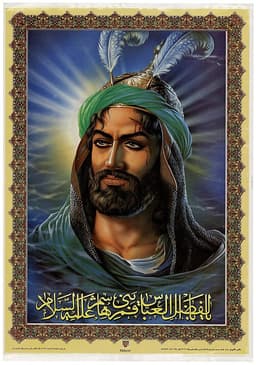
Muslim ibn Aqil
General · Ancient
38.6Total

Napoleon Bonaparte
General · Modern
70.9Total
Basic Information
Born
-632
1769
Died
—
1821
Era
Ancient
Modern
Nationality
Rashidun Caliphate
France
Occupation
General
General
Civilization
Middle Eastern
Western
Score Comparison
Military (10%)
40.0
94.0
Political (20%)
29.3
72.0
Influence (20%)
47.9
40.0
Legacy (20%)
40.8
80.0
Leadership (15%)
30.0
78.0
Strategy (15%)
35.0
90.0
TOTAL
38.6
70.9
Muslim ibn Aqil — Complete Timeline
680 AD
Sent as Envoy to KufaPolitical Action◆ Major
Muslim ibn Aqil was sent by Husayn ibn Ali to Kufa to assess support for a revolt against the Umayyad caliph Yazid I. He received pledges of allegiance from thousands of Kufans, reporting back to Husayn that conditions were favorable.
EnvoyKufaHusayn
Impact: regional
Betrayed and Captured in KufaPolitical Action◆ Major
After the Umayyad governor Ubayd Allah ibn Ziyad arrived in Kufa, he suppressed the pro-Alid movement. Muslim ibn Aqil was betrayed, captured, and executed, becoming the first martyr of the Battle of Karbala.
MartyrdomKufaUmayyad Repression
Impact: regionaltragic
Napoleon Bonaparte — Complete Timeline
1799 AD
Coup of 18 BrumaireOther◆ Major
Napoleon Bonaparte, with support from his brother Lucien and key political figures, overthrew the Directory in a bloodless coup. He established the Consulate with himself as First Consul, effectively becoming the ruler of France. This event ended the French Revolution's most unstable period.
French RevolutionCoupRise to Power
Impact: regional
1804 AD
Promulgation of the Napoleonic CodeOther◆ Major
Napoleon enacted the Civil Code of the French, known as the Napoleonic Code, a comprehensive set of laws that replaced the fragmented feudal legal systems. The code established legal equality, protected property rights, and secularized law. It became the basis for legal systems in many European and world countries.
Legal ReformNapoleonic CodeCivil Law
Impact: globalconstructive
1805 AD
Battle of AusterlitzWar◆ Major
Napoleon's Grande Arm
Napoleonic WarsBattleDecisive Victory
Impact: global
1812 AD
Invasion of RussiaWar◆ Major
Napoleon led the Grande Arm
Napoleonic WarsInvasionDisaster
Impact: globaldestructive
1815 AD
Battle of WaterlooWar◆ Major
Napoleon's French army was defeated by the combined forces of the Duke of Wellington's Anglo-Allied army and Gebhard Leberecht von Bl
Napoleonic WarsBattleFinal Defeat
Impact: globaldestructive
Expert Analysis
muslim-ibn-aqil-vs-napoleon-bonaparte
# The General and the Martyr: Two Paths to Destiny
On a June morning in 1815, Napoleon Bonaparte stood before his army near a small Belgian village called Waterloo. He was forty-five years old, master of Europe for a decade, and about to gamble everything on a single battle. One hundred and thirty-five years earlier, in the dusty streets of Kufa, a man named Muslim ibn Aqil watched the same sun rise over a city that had promised him everything and was about to give him nothing but death. Both men were generals. Both trusted their cause. But the distance between them was not merely centuries and continents—it was the difference between building an empire and dying for a principle.
Origins
Napoleon Bonaparte was born in 1769 on the island of Corsica, a place that had only recently become French. His family was minor nobility, poor enough to feel the sting of hunger but proud enough to dream of greatness. The France of his youth was a powder keg—the old monarchy crumbling, the Enlightenment reshaping minds, and revolution waiting just around the corner. Young Napoleon devoured history and military tactics, studied artillery, and watched the Revolution tear apart the world he was born into. He learned early that a man with talent could rise where birth alone could not carry him.
Muslim ibn Aqil was born into a different world entirely. The year was 632, the very year the Prophet Muhammad died. He was a member of the Hashimite clan, the family of the Prophet himself. His cousin was Husayn ibn Ali, grandson of Muhammad. This was not a world of rising through merit—it was a world of bloodlines, honor, and sacred obligation. The early Islamic community was still raw from the murder of Ali, the Prophet's son-in-law, and the betrayal of Hasan, Ali's son. Muslim grew up knowing that his family carried not just political weight but divine trust.
Rise to Power
Napoleon’s rise was a masterpiece of timing and audacity. At twenty-four, he drove the British out of Toulon. At twenty-six, he crushed a royalist uprising in Paris with what he called “a whiff of grapeshot.” By thirty, he was leading armies across Italy, winning battles against Austrian forces that outnumbered him, and forcing treaties that made him a national hero. The Directory, France’s corrupt ruling body, sent him to Egypt to get him out of the way—but he turned that exile into a legend, winning the Battle of the Pyramids in 1798 and marching his army through deserts that broke lesser men. In 1799, he returned to a France desperate for order, overthrew the government in a coup, and made himself First Consul. By 1804, he was Emperor.
Muslim ibn Aqil’s rise was quieter, more tragic. He was not seeking power. In 680, when Husayn decided to challenge the Umayyad caliph Yazid I—a man widely seen as corrupt and impious—Husayn needed a messenger. The people of Kufa, a city in modern Iraq, had written countless letters begging Husayn to come lead them against Yazid’s tyranny. Muslim was chosen to go first, to test the waters. He was a soldier, a loyal cousin, a man of faith. He arrived in Kufa to find thousands of supporters ready to fight. For weeks, he organized the resistance. But the Umayyads were ruthless. Governor Ubayd Allah ibn Ziyad arrived with money and threats, and the support melted like snow in the desert.
Leadership & Governance
Napoleon ruled with a combination of iron will and visionary reform. He reorganized French law into the Napoleonic Code, which abolished feudal privileges, protected property rights, and established secular legal principles that still influence half the world’s legal systems today. He built schools, roads, and a centralized bureaucracy. He made peace with the Catholic Church while keeping it under state control. His military genius was staggering—he perfected the use of artillery, the rapid movement of troops, and the concentration of force at a decisive point. At Austerlitz in 1805, he destroyed a combined Russian and Austrian army with a trap so elegant that military academies still study it.
Muslim ibn Aqil never governed anything. His leadership was of a different kind—moral rather than administrative. In Kufa, when the city turned against him, he had a choice. He could have fled, saved himself, returned to Husayn and said the cause was lost. Instead, he stayed. He fought alone in the streets, wounded, exhausted, until he was captured. His leadership was in the example he set: that loyalty to truth is worth more than life itself.
Triumph & Tragedy
Napoleon’s greatest triumph was also the seed of his tragedy. After Austerlitz, he redrew the map of Europe. He placed his brothers on thrones. He married an Austrian princess. He seemed invincible. But in 1812, he invaded Russia with 600,000 men. The Russians refused to fight a decisive battle, retreating into the endless winter. By the time Napoleon limped back to France, he had lost nearly his entire army. His enemies smelled blood. In 1813, at Leipzig, the “Battle of Nations,” he was defeated. He was exiled to Elba, escaped, returned to France for a hundred days, and then met his final defeat at Waterloo in 1815. He died in exile on Saint Helena, alone, abandoned by the world he had conquered.
Muslim ibn Aqil’s tragedy was shorter and more absolute. After his capture in Kufa, he was taken to the roof of the governor’s palace and thrown to his death. His body was mutilated, his head sent to Damascus as a trophy. He became the first martyr of Karbala—the first to die for Husayn’s cause. Husayn himself would follow weeks later, surrounded and butchered on the plains of Karbala with his family. But Muslim’s death had already sealed the tragedy: it showed that the people of Kufa could not be trusted, that the Umayyads would stop at nothing, and that the path of principle led only to slaughter.
Character & Destiny
Napoleon was driven by ambition, but also by a genuine belief in merit and order. He once said, “Impossible is a word to be found only in the dictionary of fools.” He trusted his own genius above all else, and that confidence lifted him to heights few have reached. But it also blinded him. He could not stop. He could not compromise. He invaded Spain, alienated Russia, and fought on too many fronts at once. His character was his destiny: a man who could not rest until the world bowed to him, and who therefore could never keep what he won.
Muslim ibn Aqil was driven by loyalty. He was not a genius, not a visionary, not a conqueror. He was a man who believed in his cousin, in his family, in the rightness of the Prophet’s household. He went to Kufa knowing the risk. He stayed when others fled. His character was also his destiny: a man who could not betray his cause, and who therefore could only die for it.
Legacy
Napoleon’s legacy is written in the laws of Europe, the borders of nations, and the textbooks of military history. He is remembered as both a liberator and a tyrant, a man who spread the ideals of the French Revolution at the point of a bayonet. His name is synonymous with ambition and genius. He scored 94 in military ability, 75 in political skill, and 82 in overall influence—a titan of the modern age.
Muslim ibn Aqil’s legacy is written in the hearts of millions of Shia Muslims. Every year, during the mourning of Muharram, his name is spoken alongside Husayn’s. He is remembered not for what he conquered but for what he sacrificed. His scores—33 in military, 44 in politics, 64 in influence—tell a story of a man who was not great by the world’s standards, but whose death became a foundation stone for one of the world’s great religious traditions.
Conclusion
One built an empire. One died in a dusty street. One changed the map of Europe. One changed the soul of a faith. Napoleon and Muslim ibn Aqil lived in different centuries, different civilizations, different worlds. But both faced the same question: what are you willing to give for what you believe? Napoleon gave everything and lost it all, but his name still echoes across the centuries. Muslim gave everything and lost it all, too—but his name echoes in prayers, not in battles. Perhaps the deepest difference is not in what they achieved, but in what they were trying to achieve. Napoleon wanted to remake the world. Muslim ibn Aqil only wanted to be faithful to it. And sometimes, history remembers the faithful more gently than it remembers the great.
Rankings
🥇
Napoleon BonaparteLeader
Mil: 94.0Pol: 72.0Inf: 40.0
70.9
🥈
Muslim ibn Aqil
Mil: 40.0Pol: 29.3Inf: 47.9
38.6
+32.3 behind
How This Comparison Works
Algorithm
Each figure is scored on 6 dimensions (0—100 scale) based on structured historical data: Military (10%), Political (20%), Influence (20%), Legacy (20%), Leadership (15%), Strategy (15%). The weighted total produces the final ranking.
Data Sources
Scores are computed from structured sub-indicators in the database. Scale factors adjust for era (Ancient ×0.85, Modern ×1.0) and civilization size (Eastern ×1.05, Other ×0.80) to account for differences in population and military scale.
Maximum 3 Figures
Comparisons are limited to 2—3 figures to ensure readability and statistical meaningfulness.
Error Margins
±5 points per dimension — Sub-scores are derived from historical records with inherent uncertainty. Two figures within 5 points on a dimension should be considered roughly equivalent in that area.
Total Score Accuracy
±3 points overall — The weighted combination of 6 dimensions produces a total score with approximately ±3 points of uncertainty. Differences of less than 3 points are not statistically significant— the figures are effectively tied.
Known Limitations
- Historical records are incomplete and uneven across civilizations
- Figures from oral-tradition societies may be underrepresented
- Occupation labels can misclassify multi-role figures
- Scores measure capability and impact, not moral character
- Quantitative scoring is a comparison tool, not absolute truth
Capability Radar
Military (10%) — Battles & Warfare
Battles
5
95
Win Rate
5
90
Expansion
0
95
Political (20%) — Governance & Reform
Reform
0
95
Diplomacy
15
80
Economy
0
85
Influence (20%) — Cultural & Global Reach
Cultural
20
85
Global
15
90
Legacy (20%) — Historical Impact
Historical
30
95
Longevity
25
90
Leadership (15%) — Power & Stability
Tenure
10
85
Stability
0
70
Strategy (15%) — Tactics & Innovation
Strategy
10
95
Tactics
10
98
Reform
0
92
Similar Comparisons
Comments & Discussion
青史刀笔吏6/17/2026
拿破仑在1796年意大利战役中用25天打赢六场,活捉四万奥军;伊本·阿基勒连库法城门都没摸到就被交出去。别扯什么信仰伟大,七百人能守住巴格达吗?史书写明乌贝杜拉·本·齐亚德用五千人压死,他连巷战都没组织过。要么是军事盲,要么是殉道狂,选一个吧。
The Cannon's Shadow6/17/2026
Comparing them is like contrasting a hurricane with a candle. Napoleon engineered the Continental System to blockade Britain, ran the Grande Armée like a death machine across 3,000 miles—all for temporal glory. Ibn Aqil had neither an empire nor a strategy; he sacrificed himself because his cousin Husayn asked. One changed borders, the other changed souls. Different scales entirely. I'd rather study the man who mobilized nations than the one who died in a dust pit.
江南史话6/17/2026
拿破仑在圣赫勒拿岛写回忆录时还想着翻盘,伊本·阿基勒被叛徒绑上驴背游街时连遗言都是祝福。这俩人根本不在一个维度:一个用法典和火炮改写世界,一个用鲜血浇灌什叶派信仰。你要问我谁更懂权力?拿破仑让兄弟当国王,伊本·阿基勒连自己的命都没保住。战争是政治的延伸,他不是将军,是祭品。
Hidden Passages6/17/2026
Ignore the mirror-image framing. Ibn Aqil wrote letters to Husayn begging for support; Napoleon dismissed his own generals' advice at Waterloo. One failed through hope, the other through hubris. Yet revisionists call both "tragic." Real tragedy? Ibn Aqil's mission was to prepare Kufa for Husayn's arrival—he couldn't even secure his own host network. Napoleon couldn't delegate to Ney, the "bravest of the brave." Flawed execution, not destiny.
Chronicler55716/17/2026
Napoleon won over 70 battles but lost at Waterloo because Grouchy ignored cannon fire at Wavre. Ibn Aqil? Led 12,000 Kufans to desert him. Objectively, Napoleon's logistical train feeds 200,000 men across Europe while Ibn Aqil can't hold a city for a week. One's a tactical genius, the other's a symbolic failure. Don't romanticize martyrdom—results matter.