Loading...
Mutara III Rudahigwa vs Sultan Qaboos of Oman
Sultan Qaboos of Oman leads by 8.4 pts · 2 figures compared
…

Mutara III Rudahigwa
Emperor · Modern
46.3Total
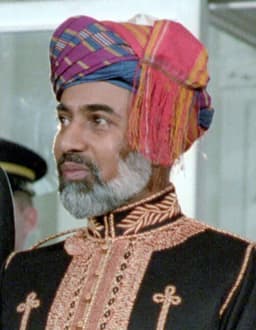
Sultan Qaboos of Oman
Emperor · Modern
54.7Total
Basic Information
Born
1911
1940
Died
1959
—
Era
Modern
Modern
Nationality
Rwanda
Oman
Occupation
Emperor
Emperor
Civilization
Other
Middle Eastern
Score Comparison
Military (10%)
20.0
14.9
Political (20%)
45.0
72.0
Influence (20%)
53.3
61.0
Legacy (20%)
43.3
47.5
Leadership (15%)
53.2
72.0
Strategy (15%)
54.3
45.0
TOTAL
46.3
54.7
Mutara III Rudahigwa — Complete Timeline
1943 AD
Conversion to ChristianityCultural◆ Major
Mutara III Rudahigwa converted to Roman Catholicism, becoming the first Rwandan mwami to embrace Christianity. He was baptized by White Fathers missionaries, aligning the monarchy with the Catholic Church and Belgian colonial interests.
ReligionRwandaConversion
Impact: national
1954 AD
Abolition of the ubuhake systemReform◆ Major
Mutara III Rudahigwa abolished the ubuhake cattle clientage system, a key institution of Tutsi dominance. This reform, supported by Belgian authorities, aimed to reduce social inequalities but also weakened the traditional power structure.
Social ReformRwandaAbolition
Impact: nationalprogressive
1957 AD
Support for Hutu political emancipationPolitical Action◆ Major
Mutara III Rudahigwa supported the Hutu Manifesto, a document calling for Hutu political rights and an end to Tutsi monopoly on power. This action signaled a shift in royal policy but failed to prevent rising ethnic tensions.
Political ReformRwandaEthnic Relations
Impact: nationalprogressive
1959 AD
Death under mysterious circumstancesOther◆ Major
Mutara III Rudahigwa died suddenly in Usumbura, Burundi, after receiving an injection from a Belgian doctor. His death sparked rumors of assassination and contributed to the Rwandan Revolution, leading to the end of the monarchy.
DeathRwandaRevolution
Impact: nationaltragic
Sultan Qaboos of Oman — Complete Timeline
1970 AD
Modernization and Infrastructure DevelopmentReform◆ Major
Qaboos used oil revenues to build modern infrastructure: roads, schools, hospitals, and ports. He also established a modern government, including a cabinet and a consultative council, transforming Oman from a feudal state.
DevelopmentInfrastructureEducation
Impact: nationalconstructive
Accession as Sultan of OmanPolitical Action
Qaboos bin Said overthrew his father, Sultan Said bin Taimur, in a bloodless coup with British support. He became Sultan and immediately began modernizing Oman, ending its isolation.
CoupModernizationOman
Impact: national
1975 AD
End of the Dhofar RebellionWar◆ Major
Qaboos successfully ended the Dhofar Rebellion, a Marxist insurgency in southern Oman, through a combination of military force and development programs. This secured his rule and unified the country.
Civil WarDhofarCounterinsurgency
Impact: national
1980 AD
Oman's Neutral Foreign PolicyPolitical Action◆ Major
Qaboos established Oman as a neutral mediator in regional conflicts, maintaining diplomatic ties with both Iran and the West. This policy allowed Oman to host secret talks between the US and Iran.
DiplomacyNeutralityMediation
Impact: regionalconstructive
2020 AD
Death Without HeirOther◆ Major
Qaboos died on January 10, 2020, without a direct heir. He had named his successor, Haitham bin Tariq, in a sealed letter, ensuring a smooth transition. His death marked the end of a 50-year reign.
DeathSuccessionEnd of Era
Impact: nationaltragic
Expert Analysis
Origins
Mutara III Rudahigwa was born in 1911 in Nyanza, Rwanda, as the son of King Yuhi V Musinga. He was educated by Catholic missionaries and became the first Rwandan mwami to convert to Roman Catholicism in 1931, a move that shaped his reign. His early life was marked by the Belgian colonial administration's increasing influence.
Sultan Qaboos bin Said was born on November 18, 1940, in Salalah, Oman, to Sultan Said bin Taimur and a Dhofari mother. He was educated privately in Salalah, then sent to a British military academy at Sandhurst in 1960. He later served in the British Army and studied local government in England, gaining exposure to modern governance.
Rise to Power
Mutara III ascended the throne in 1931 after his father was deposed by Belgian authorities for resisting colonial rule. His rise was orchestrated by the Belgians, who saw him as a compliant leader. In 1943, he was officially recognized as mwami under Belgian supervision. His power was limited by colonial oversight, but he used his position to advocate for reforms.
Sultan Qaboos came to power in July 1970 through a bloodless coup d'état against his father, Sultan Said bin Taimur, who had isolated Oman from the world. With British support, Qaboos seized control and immediately began modernizing the country. His accession marked a turning point from a feudal, isolated state to a modern nation.
Leadership & Governance
Mutara III ruled as a constitutional monarch under Belgian administration. He abolished the ubuhake system in 1954, a feudal cattle clientage system that entrenched Tutsi dominance, aiming to reduce social tensions. He also supported the Hutu Manifesto in 1957, which demanded political rights for the Hutu majority. However, his reforms were limited by Belgian interests and growing ethnic polarization. His governance score of 53.2 reflects his moderate but constrained leadership.
Sultan Qaboos ruled as an absolute monarch but used oil revenues to transform Oman. He established a modern government, built infrastructure (roads, schools, hospitals, ports), and implemented a neutral foreign policy. He ended the Dhofar Rebellion (1970-1975) through military force and development programs. His leadership score of 72.0 highlights his decisive and effective governance, though he maintained authoritarian control.
Triumph & Tragedy
Mutara III's triumphs include his conversion to Christianity, which aligned Rwanda with European powers, and the abolition of ubuhake, which aimed to reduce inequality. His support for Hutu political emancipation was a progressive step but also contributed to ethnic tensions. His tragedy was his mysterious death in 1959 after a Belgian doctor's injection, sparking rumors of assassination and leading to the Rwandan Revolution that ended the monarchy. His total score of 46.3 reflects his limited impact.
Sultan Qaboos's triumphs are numerous: ending the Dhofar Rebellion, modernizing Oman, and establishing it as a neutral mediator in Middle Eastern conflicts. He also ensured a smooth succession by naming his successor in a sealed letter. His tragedy is his lack of an heir, which could have caused instability, and his authoritarian rule suppressed political dissent. His total score of 54.7 reflects his substantial but not flawless legacy.
Character & Destiny
Mutara III was a reformist but cautious leader, navigating between Belgian colonial demands and Rwandan traditions. His conversion and reforms were genuine but also politically motivated. His death, possibly by poisoning, ended his progressive agenda and triggered the monarchy's fall. His character shaped a destiny of incomplete transformation.
Sultan Qaboos was a visionary modernizer with a pragmatic and determined personality. He overthrew his father to bring change, then skillfully used oil wealth to develop Oman while maintaining stability. His secretive nature and lack of heir were flaws, but his long reign (50 years) allowed sustained progress. His character drove Oman's transformation from isolation to regional influence.
Legacy
Mutara III is remembered as the last mwami of Rwanda, a ruler who tried to modernize but was overtaken by ethnic conflict. His reforms, though limited, laid groundwork for later changes, but his death marked the end of the monarchy. His legacy score of 43.3 reflects his modest enduring impact.
Sultan Qaboos is revered as the father of modern Oman. His infrastructure, education, and healthcare systems endure, and his neutral foreign policy continues. He left a stable succession mechanism. His legacy score of 47.5 indicates a lasting but not transformative global impact, mainly regional.
Conclusion
Sultan Qaboos had greater impact than Mutara III Rudahigwa. Qaboos's total score of 54.7 vs 46.3 reflects his more effective leadership and lasting modernization of Oman. While Mutara III attempted reforms in a colonial context, Qaboos transformed a feudal state into a modern nation with lasting institutions. Qaboos's influence on Oman's development and regional diplomacy surpasses Mutara's limited legacy in Rwandan history.
Rankings
🥇
Sultan Qaboos of OmanLeader
Mil: 14.9Pol: 72.0Inf: 61.0
54.7
🥈
Mutara III Rudahigwa
Mil: 20.0Pol: 45.0Inf: 53.3
46.3
+8.4 behind
How This Comparison Works
Algorithm
Each figure is scored on 6 dimensions (0—100 scale) based on structured historical data: Military (10%), Political (20%), Influence (20%), Legacy (20%), Leadership (15%), Strategy (15%). The weighted total produces the final ranking.
Data Sources
Scores are computed from structured sub-indicators in the database. Scale factors adjust for era (Ancient ×0.85, Modern ×1.0) and civilization size (Eastern ×1.05, Other ×0.80) to account for differences in population and military scale.
Maximum 3 Figures
Comparisons are limited to 2—3 figures to ensure readability and statistical meaningfulness.
Error Margins
±5 points per dimension — Sub-scores are derived from historical records with inherent uncertainty. Two figures within 5 points on a dimension should be considered roughly equivalent in that area.
Total Score Accuracy
±3 points overall — The weighted combination of 6 dimensions produces a total score with approximately ±3 points of uncertainty. Differences of less than 3 points are not statistically significant— the figures are effectively tied.
Known Limitations
- Historical records are incomplete and uneven across civilizations
- Figures from oral-tradition societies may be underrepresented
- Occupation labels can misclassify multi-role figures
- Scores measure capability and impact, not moral character
- Quantitative scoring is a comparison tool, not absolute truth
Capability Radar
Military (10%) — Battles & Warfare
Battles
5
5
Win Rate
5
5
Expansion
5
10
Political (20%) — Governance & Reform
Reform
55
85
Diplomacy
60
80
Economy
50
80
Influence (20%) — Cultural & Global Reach
Cultural
40
50
Global
20
55
Legacy (20%) — Historical Impact
Historical
40
55
Longevity
30
40
Leadership (15%) — Power & Stability
Tenure
60
95
Stability
40
85
Strategy (15%) — Tactics & Innovation
Strategy
5
15
Tactics
5
10
Reform
5
60
Similar Comparisons
Comments & Discussion
No comments yet. Be the first to share your thoughts!