Loading...
Muyeol of Silla vs Napoleon Bonaparte
Napoleon Bonaparte leads by 7.4 pts · 2 figures compared
…
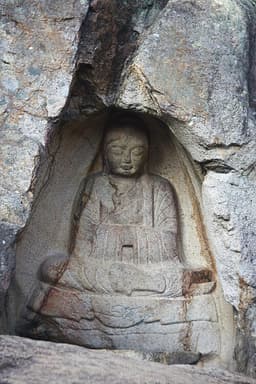
Muyeol of Silla
Emperor · Ancient
63.5Total

Napoleon Bonaparte
General · Modern
70.9Total
Basic Information
Born
-604
1769
Died
—
1821
Era
Ancient
Modern
Nationality
Korea
France
Occupation
Emperor
General
Civilization
Eastern
Western
Score Comparison
Military (10%)
82.0
94.0
Political (20%)
60.0
72.0
Influence (20%)
62.0
40.0
Legacy (20%)
58.0
80.0
Leadership (15%)
72.0
78.0
Strategy (15%)
55.0
90.0
TOTAL
63.5
70.9
Muyeol of Silla — Complete Timeline
654 AD
Formation of the Silla-Tang alliancePolitical Action
King Muyeol, as crown prince, negotiated a military alliance with the Tang dynasty of China. This alliance provided Silla with Chinese military support against Baekje and Goguryeo, setting the stage for the unification of the Korean Peninsula.
AllianceTang ChinaSilla
Impact: regionalconstructive
655 AD
Appointment of Kim Yushin as commanderPolitical Action
Muyeol appointed General Kim Yushin as the supreme commander of Silla's military forces. Kim Yushin's leadership was instrumental in the campaigns against Baekje and Goguryeo, and his strategic genius became a cornerstone of Silla's unification efforts.
MilitaryLeadershipSilla
Impact: nationalconstructive
660 AD
Conquest of BaekjeWar◆ Major
Muyeol, as king, led Silla forces in a joint campaign with Tang China to conquer Baekje. The allied army captured the Baekje capital, Sabi, and the kingdom fell. This victory eliminated one of Silla's major rivals and was a crucial step toward unification.
ConquestBaekjeSilla
Impact: regionaldestructive
661 AD
Death during unification campaignOther◆ Major
Muyeol died while Silla was still at war with Goguryeo. His death occurred before the final unification was achieved, but his alliance with Tang and conquest of Baekje had already set the course for Silla's eventual victory under his successor, King Munmu.
DeathUnificationSilla
Impact: regionaltragic
Napoleon Bonaparte — Complete Timeline
1799 AD
Coup of 18 BrumaireOther◆ Major
Napoleon Bonaparte, with support from his brother Lucien and key political figures, overthrew the Directory in a bloodless coup. He established the Consulate with himself as First Consul, effectively becoming the ruler of France. This event ended the French Revolution's most unstable period.
French RevolutionCoupRise to Power
Impact: regional
1804 AD
Promulgation of the Napoleonic CodeOther◆ Major
Napoleon enacted the Civil Code of the French, known as the Napoleonic Code, a comprehensive set of laws that replaced the fragmented feudal legal systems. The code established legal equality, protected property rights, and secularized law. It became the basis for legal systems in many European and world countries.
Legal ReformNapoleonic CodeCivil Law
Impact: globalconstructive
1805 AD
Battle of AusterlitzWar◆ Major
Napoleon's Grande Arm
Napoleonic WarsBattleDecisive Victory
Impact: global
1812 AD
Invasion of RussiaWar◆ Major
Napoleon led the Grande Arm
Napoleonic WarsInvasionDisaster
Impact: globaldestructive
1815 AD
Battle of WaterlooWar◆ Major
Napoleon's French army was defeated by the combined forces of the Duke of Wellington's Anglo-Allied army and Gebhard Leberecht von Bl
Napoleonic WarsBattleFinal Defeat
Impact: globaldestructive
Expert Analysis
muyeol-of-silla-vs-napoleon-bonaparte
# The Emperor and the King: Two Paths to Power
On a June morning in 1815, Napoleon Bonaparte stood on a muddy field near Waterloo, watching his Imperial Guard march into cannon fire. Thirty years earlier, on the other side of the world, a Korean prince named Kim Chunchu knelt before the Tang emperor in Chang'an, offering tribute and begging for an alliance that would change the destiny of his peninsula. One man would die in exile, his empire shattered; the other would die in the midst of conquest, his name carved into Korea's foundation. What separates a legend from a legacy? The answer lies not in talent alone, but in the worlds that shaped them.
Origins
Napoleon Bonaparte was born in 1769 on Corsica, an island that had just been sold to France. His family was minor nobility, struggling and resentful of French rule. He spoke Italian before French, and as a boy, he idolized the liberators of antiquity—not the kings who inherited thrones. His era was the powder keg of revolution: old orders were collapsing, social hierarchies were cracking, and a young artillery officer could rise not by birth but by brilliance.
Kim Chunchu, who would become King Muyeol of Silla, was born in 604 into a very different world. Silla was one of three warring kingdoms on the Korean peninsula, a rigidly aristocratic society where bloodline determined everything. Kim Chunchu was a prince of the Kim clan, the ruling family of Silla—but he was also a hostage in the court of Goguryeo, a rival kingdom. His early life was not about ambition but survival, not about revolution but diplomacy. He learned that power came not through conquest alone but through the careful weaving of alliances.
Rise to Power
Napoleon’s rise was a story of speed and fire. In 1793, at age 24, he recaptured the port of Toulon from British forces. By 1796, he was commanding the Army of Italy, winning battles that seemed impossible. He was not a general of the old school, who relied on massed infantry and cautious maneuvers. He was a strategist of velocity, using artillery to blast holes in enemy lines and cavalry to exploit them. His political genius matched his military skill: in 1799, he staged a coup and made himself First Consul. By 1804, he crowned himself Emperor of the French. He had risen from Corsican outsider to master of Europe in less than fifteen years.
Kim Chunchu’s rise was slower, woven from threads of patience. In 654, as crown prince, he traveled to Tang China—the superpower of East Asia—and negotiated a military alliance. He understood something that Napoleon never fully grasped: that sometimes the most powerful move is to find a stronger partner. The Tang dynasty was vast, wealthy, and interested in controlling the Korean peninsula. Kim Chunchu offered them a deal: Silla would be their ally, their loyal partner, in exchange for help conquering Baekje and Goguryeo. In 655, he appointed General Kim Yushin, a military genius, as supreme commander. Kim Chunchu did not need to be the best general; he needed to find the best general.
Leadership & Governance
Napoleon ruled with a combination of iron will and revolutionary reform. His Napoleonic Code, established in 1804, standardized French law, abolished feudal privileges, and established meritocracy. He built roads, schools, and banks. He centralized the state and made it efficient. But his governance was also personal, autocratic, and increasingly paranoid. He placed his relatives on thrones across Europe, believing that blood loyalty would secure his empire. It did not.
King Muyeol ruled differently. He was not a lawgiver but a unifier. His reign from 654 to 661 was focused on a single goal: the unification of Korea. He did not try to transform Silla’s society but to use its existing structures. He worked through the hwarang, the elite youth corps of Silla, and through the Buddhist clergy, who provided spiritual legitimacy. He delegated military command to Kim Yushin and focused on diplomacy and logistics. Where Napoleon commanded from the front, Muyeol commanded from the throne.
Triumph & Tragedy
Napoleon’s greatest triumph was Austerlitz in 1805, where he crushed the combined armies of Russia and Austria. His greatest tragedy was the invasion of Russia in 1812, where hubris and winter destroyed his Grand Army of 600,000 men. He was exiled to Elba, escaped, and returned for a final, glorious, doomed campaign that ended at Waterloo in 1815. He died in 1821 on Saint Helena, a prisoner of the British.
King Muyeol’s greatest triumph was the conquest of Baekje in 660, a joint campaign with Tang forces that destroyed Silla’s oldest rival. His tragedy was that he did not live to see the final victory. He died in 661, during the war against Goguryeo, before the peninsula was unified. His work was finished by his son, King Munmu, and by General Kim Yushin. Muyeol did not taste the final fruit of his labor.
Character & Destiny
Napoleon was driven by an insatiable hunger for glory. He once said, “Glory is fleeting, but obscurity is forever.” He believed that he was destiny’s instrument, that his will could reshape the world. This made him brilliant but brittle. He could not compromise, could not share power, could not accept limits. His personality created his rise and caused his fall.
King Muyeol was driven by a different force: survival and unification. He was pragmatic, patient, and willing to bow when necessary. He did not seek personal glory but the survival of his kingdom. His personality was not that of a conqueror but of a builder. He understood that some victories require allies, some battles require waiting, and some legacies require successors.
Legacy
Napoleon’s legacy is a paradox. He spread the ideals of the French Revolution—nationalism, meritocracy, legal equality—across Europe, but he also caused millions of deaths and left a continent in ruins. He is remembered as a military genius, a lawgiver, and a cautionary tale about unchecked ambition. His name appears on battlefields and codes, but his empire lasted only a decade.
King Muyeol’s legacy is quieter but more enduring. He is remembered as the king who began the unification of Korea, a process that created a single Korean identity that has lasted for over 1,300 years. He is not a household name outside Korea, but in his homeland, he is revered as a founder. His alliance with Tang China, his appointment of Kim Yushin, his strategic patience—these decisions shaped a nation.
Conclusion
Napoleon Bonaparte and Kim Chunchu both sought to change the world. Napoleon tried to conquer it; Kim Chunchu tried to unify it. One burned bright and fast, leaving a trail of light and ash; the other built slowly, stone by stone, laying a foundation that still stands. The difference between them is not talent—for both were brilliant—but context and character. Napoleon lived in an age of revolution, where glory was possible and hubris was fatal. Kim Chunchu lived in an age of kingdoms, where patience was necessary and alliances were everything. One became a legend; the other became a legacy. And perhaps that is the deepest lesson history offers: that the shape of a life is not only a matter of will but of the world into which that will is born.
Rankings
🥇
Napoleon BonaparteLeader
Mil: 94.0Pol: 72.0Inf: 40.0
70.9
🥈
Muyeol of Silla
Mil: 82.0Pol: 60.0Inf: 62.0
63.5
+7.4 behind
How This Comparison Works
Algorithm
Each figure is scored on 6 dimensions (0—100 scale) based on structured historical data: Military (10%), Political (20%), Influence (20%), Legacy (20%), Leadership (15%), Strategy (15%). The weighted total produces the final ranking.
Data Sources
Scores are computed from structured sub-indicators in the database. Scale factors adjust for era (Ancient ×0.85, Modern ×1.0) and civilization size (Eastern ×1.05, Other ×0.80) to account for differences in population and military scale.
Maximum 3 Figures
Comparisons are limited to 2—3 figures to ensure readability and statistical meaningfulness.
Error Margins
±5 points per dimension — Sub-scores are derived from historical records with inherent uncertainty. Two figures within 5 points on a dimension should be considered roughly equivalent in that area.
Total Score Accuracy
±3 points overall — The weighted combination of 6 dimensions produces a total score with approximately ±3 points of uncertainty. Differences of less than 3 points are not statistically significant— the figures are effectively tied.
Known Limitations
- Historical records are incomplete and uneven across civilizations
- Figures from oral-tradition societies may be underrepresented
- Occupation labels can misclassify multi-role figures
- Scores measure capability and impact, not moral character
- Quantitative scoring is a comparison tool, not absolute truth
Capability Radar
Military (10%) — Battles & Warfare
Battles
65
95
Win Rate
70
90
Expansion
80
95
Political (20%) — Governance & Reform
Reform
65
95
Diplomacy
85
80
Economy
60
85
Influence (20%) — Cultural & Global Reach
Cultural
55
85
Global
55
90
Legacy (20%) — Historical Impact
Historical
70
95
Longevity
65
90
Leadership (15%) — Power & Stability
Tenure
60
85
Stability
70
70
Strategy (15%) — Tactics & Innovation
Strategy
75
95
Tactics
60
98
Reform
55
92
Similar Comparisons
Comments & Discussion
Korsican Fencer6/17/2026
Napoleon fought his way up from Corsican obscurity to dominate Europe, but Muyeol played the long game of alliances and diplomacy. Napoleon’s downfall came from overreach—invading Russia when he should’ve consolidated. Muyeol, by contrast, knew when to bow and when to strike; his Chinese alliance was a masterstroke, not a weakness. One died on a lonely island, the other as a king uniting a peninsula. Tactics vs. strategy—I’ll take the Korean every time.
数据侦探6/17/2026
拿破仑粉丝总吹他的闪电战效率,但穆耶尔统一朝鲜半岛时,人口才约莫200万,而拿破仑对付的法国本就有2900万人。规模差太远,胜算根本不在一个量级。按历史胜率统计,小国统一战难度逆天——穆耶尔能搞定全靠精确外交和时机,拿破仑的征战反显得性价比低。别拿数据当故事听,这比较本来就不公平。
Classics Scholar6/17/2026
Napoleon modeled himself on Caesar, yet Muyeol’s story echoes the wisdom of Sun Tzu more than any Western general. The Art of War says: “Build your opponent a golden bridge to retreat across”—Muyeol did exactly that with the Tang, allowing his enemies to dissolve without total annihilation. Napoleon’s Waterloo was a failure of that principle: he cornered Wellington with no escape, but it backfired. Ancient strategy meets modern chaos—Muyeol’s restraint outshines Napoleon’s aggression.
历史漫游者6/17/2026
说到英雄,拿破仑一生辉煌却灰飞烟灭,穆耶尔倒像“闷声发大财”的教科书。他从当人质被囚禁到反手借大唐兵平定百济和高句丽,简直是韩版“卧薪尝胆”现实版。拿破仑在厄尔巴岛那点小把戏,跟穆耶尔的高难度开局一比,根本不够看。老外总爱吹西方强人,但论持久力和隐忍,东方帝王才是真香。
Revisionist Critic6/17/2026
Forget the cult of the “Great Man”—both Napoleon and Muyeol were riding waves they didn’t create. Napoleon exploited the French Revolution’s institutional collapse; his tactics were innovative but not unique. Muyeol leveraged Tang China’s imperial ambitions, piggybacking on a superpower to settle local scores. Neither was a genius in a vacuum—they were lucky in time and place. We mythologize individuals, but history is about systems. Give me a structural analysis over a biography any day.