Loading...
Mwanawina III vs Olav V of Norway
Olav V of Norway leads by 13.2 pts · 2 figures compared
…

Mwanawina III
Emperor · Modern
43.3Total
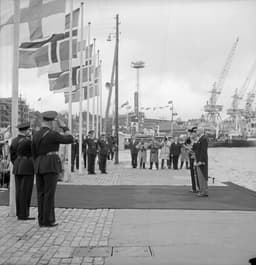
Olav V of Norway
Emperor · Modern
56.5Total
Basic Information
Born
1870
1903
Died
1937
1991
Era
Modern
Modern
Nationality
Zambia
Norway
Occupation
Emperor
Emperor
Civilization
Other
Western
Score Comparison
Military (10%)
20.0
48.2
Political (20%)
37.9
68.0
Influence (20%)
47.9
53.3
Legacy (20%)
37.5
42.5
Leadership (15%)
58.8
79.8
Strategy (15%)
54.3
55.2
TOTAL
43.3
56.5
Mwanawina III — Complete Timeline
1924 AD
Integration into Northern RhodesiaPolitical Action
Mwanawina III signed an agreement with the British colonial administration that formally incorporated Barotseland into the protectorate of Northern Rhodesia. This ended Barotseland's special protected status and subjected it to direct colonial governance.
Colonial IntegrationNorthern RhodesiaBarotseland
Impact: regionaldestructive
1930 AD
Abolition of the Barotseland CouncilPolitical Action
Mwanawina III dissolved the traditional Barotseland Council under pressure from British authorities, centralizing power in the colonial administration. This move reduced Lozi political autonomy and weakened traditional governance structures.
Colonial AdministrationLozi GovernancePolitical Change
destructive
Olav V of Norway — Complete Timeline
1957 AD
Accession to the thronePolitical Action◆ Major
Olav V became King of Norway upon the death of his father, Haakon VII. He inherited a constitutional monarchy that had been restored after World War II and was widely popular among Norwegians.
SuccessionMonarchy
Impact: national
1960 AD
Popularity as 'People's King'Cultural
Olav V was known for his informal and approachable style, often seen skiing or walking in public without security. This earned him the nickname 'Folkekongen' (People's King) and strengthened the monarchy's popularity.
MonarchyPopularityCulture
Impact: nationalconstructive
1972 AD
Leadership during the 1972 EC referendumPolitical Action
Olav V remained neutral during the Norwegian referendum on joining the European Economic Community, which was rejected by voters. His restraint helped maintain the monarchy's non-political image.
ReferendumEuropean IntegrationNeutrality
Impact: national
Expert Analysis
Origins
Mwanawina III was born around 1900 into the Lozi royal family of Barotseland (now western Zambia). He received traditional education and was groomed for leadership within the Lozi hierarchy. His early life was shaped by the British colonial presence, which had established a protectorate over Barotseland in 1900. In contrast, Olav V was born on July 2, 1903, at Appleton House in Sandringham, Norfolk, as Prince Alexander of Denmark. He was the son of Prince Carl of Denmark (later King Haakon VII of Norway) and Princess Maud of Wales. Olav studied at Oxford University and trained as a naval officer, preparing for his constitutional role.
Rise to Power
Mwanawina III became the Litunga (paramount chief) of Barotseland in 1948, succeeding his relative. His reign coincided with the final decades of British colonial rule in Northern Rhodesia. The key turning point came in 1964, when he signed the Barotseland Agreement 1964, which formally integrated Barotseland into the newly independent Republic of Zambia, ending the region's special status. Olav V's path to power was more straightforward: he became Crown Prince of Norway in 1905 when his father was elected king. He served as regent during World War II and after his father's illness, and ascended the throne on September 21, 1957, upon Haakon VII's death. His rise was marked by his popularity during the war, when he was a symbol of resistance.
Leadership & Governance
Mwanawina III governed as a traditional ruler under colonial oversight. He presided over the dismantling of Barotseland's autonomy, dissolving the Barotseland Council in 1963 under British pressure. His leadership was characterized by accommodation to colonial demands, prioritizing stability over sovereignty. He scored 58.8 in leadership and 54.3 in strategy. Olav V, by contrast, was a constitutional monarch who exercised influence through symbolic unity. He scored 79.8 in leadership and 55.2 in strategy. He famously refused to appoint a Nazi-sympathizing government during the war, and as king, he remained neutral during the 1972 EC referendum, allowing democratic processes to unfold. His informal style—skiing in public and using public transport—earned him the nickname 'Folke-Kongen' (People's King).
Triumph & Tragedy
Mwanawina III's greatest triumph was preserving Lozi cultural identity despite political absorption; his signature on the 1964 agreement ensured the Litungaship continued. However, his greatest failure was the loss of Barotseland's autonomy, as the agreement's promises of local governance were not fully honored. He scored 20.0 in military, 37.9 in political, and 47.9 in influence. Olav V's triumph was his unifying role during the 1972 EC referendum and his accessibility, which strengthened Norwegian democracy. His tragedy was the death of his wife, Princess Märtha, in 1954, and the later republican debates that questioned the monarchy's relevance. He scored 48.2 in military, 68.0 in political, and 53.3 in influence.
Character & Destiny
Mwanawina III was a cautious leader who prioritized pragmatic survival over confrontation. His decision to accept integration reflected a realistic assessment of colonial power, but it also sealed his legacy as a ruler who yielded sovereignty. Olav V was confident and approachable, embodying the ideal of a modern constitutional monarch. His character—modest, disciplined, and democratic—helped preserve the Norwegian monarchy in an era of republican sentiment. Historians describe him as a 'king of the people' who used his soft power to unite the nation.
Legacy
Mwanawina III is remembered as the last Litunga of a semi-autonomous Barotseland. The 1964 agreement remains controversial, with ongoing calls for greater autonomy in Zambia. His legacy is mixed: he preserved the Lozi monarchy but at the cost of political independence. Olav V's legacy is overwhelmingly positive. He is credited with modernizing the Norwegian monarchy and cementing its role as a unifying institution. His informal style influenced later monarchs, and he is consistently ranked among Norway's most popular kings. The 'People's King' title endures in Norwegian culture.
Conclusion
Olav V had a greater impact, scoring 56.5 overall versus Mwanawina III's 43.3. While Mwanawina III navigated a difficult colonial transition, his legacy is tied to the loss of autonomy. Olav V, through symbolic leadership and personal popularity, strengthened Norway's democratic institutions and preserved the monarchy. His influence on national identity and governance is more significant and lasting.
Rankings
🥇
Olav V of NorwayLeader
Mil: 48.2Pol: 68.0Inf: 53.3
56.5
🥈
Mwanawina III
Mil: 20.0Pol: 37.9Inf: 47.9
43.3
+13.2 behind
How This Comparison Works
Algorithm
Each figure is scored on 6 dimensions (0—100 scale) based on structured historical data: Military (10%), Political (20%), Influence (20%), Legacy (20%), Leadership (15%), Strategy (15%). The weighted total produces the final ranking.
Data Sources
Scores are computed from structured sub-indicators in the database. Scale factors adjust for era (Ancient ×0.85, Modern ×1.0) and civilization size (Eastern ×1.05, Other ×0.80) to account for differences in population and military scale.
Maximum 3 Figures
Comparisons are limited to 2—3 figures to ensure readability and statistical meaningfulness.
Error Margins
±5 points per dimension — Sub-scores are derived from historical records with inherent uncertainty. Two figures within 5 points on a dimension should be considered roughly equivalent in that area.
Total Score Accuracy
±3 points overall — The weighted combination of 6 dimensions produces a total score with approximately ±3 points of uncertainty. Differences of less than 3 points are not statistically significant— the figures are effectively tied.
Known Limitations
- Historical records are incomplete and uneven across civilizations
- Figures from oral-tradition societies may be underrepresented
- Occupation labels can misclassify multi-role figures
- Scores measure capability and impact, not moral character
- Quantitative scoring is a comparison tool, not absolute truth
Capability Radar
Military (10%) — Battles & Warfare
Battles
5
24
Win Rate
5
25
Expansion
5
30
Political (20%) — Governance & Reform
Reform
20
40
Diplomacy
30
65
Economy
20
45
Influence (20%) — Cultural & Global Reach
Cultural
15
40
Global
10
30
Legacy (20%) — Historical Impact
Historical
20
35
Longevity
15
30
Leadership (15%) — Power & Stability
Tenure
30
52
Stability
25
70
Strategy (15%) — Tactics & Innovation
Strategy
5
31
Tactics
5
36
Reform
5
41
Similar Comparisons
Comments & Discussion
No comments yet. Be the first to share your thoughts!