Loading...
Myeongjong of Goryeo vs Napoleon Bonaparte
Napoleon Bonaparte leads by 25.6 pts · 2 figures compared
…
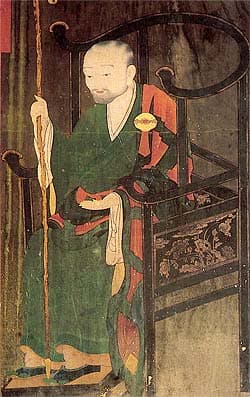
Myeongjong of Goryeo
Emperor · Medieval
45.3Total

Napoleon Bonaparte
General · Modern
70.9Total
Basic Information
Born
1131
1769
Died
1202
1821
Era
Medieval
Modern
Nationality
Korea
France
Occupation
Emperor
General
Civilization
Eastern
Western
Score Comparison
Military (10%)
49.6
94.0
Political (20%)
26.4
72.0
Influence (20%)
52.5
40.0
Legacy (20%)
35.0
80.0
Leadership (15%)
49.9
78.0
Strategy (15%)
70.6
90.0
TOTAL
45.3
70.9
Myeongjong of Goryeo — Complete Timeline
1197 AD
Installation as puppet king by Choe Chung-heonPolitical Action◆ Major
After the military dictator Choe Chung-heon deposed King Sinjong, he installed Myeongjong as a figurehead ruler. Myeongjong had no real power, with all decisions made by the Choe family's private military regime.
Puppet KingMilitary DictatorshipGoryeo
Impact: nationaldestructive
Reign under Choe military rulePolitical Action
During Myeongjong's reign, the Choe family established a parallel government with private armies and tax collection. The king was confined to the palace and used only for ceremonial purposes, while the Choe regime suppressed dissent.
Military RuleGoryeoChoe
Impact: nationaldestructive
1202 AD
Deposition by Choe Chung-heonPolitical Action◆ Major
Choe Chung-heon deposed Myeongjong after the king was implicated in a plot to restore royal authority. Myeongjong was exiled to Ganghwa Island, ending his 25-year reign as a powerless monarch.
DepositionExileGoryeo
Impact: nationaltragic
Napoleon Bonaparte — Complete Timeline
1799 AD
Coup of 18 BrumaireOther◆ Major
Napoleon Bonaparte, with support from his brother Lucien and key political figures, overthrew the Directory in a bloodless coup. He established the Consulate with himself as First Consul, effectively becoming the ruler of France. This event ended the French Revolution's most unstable period.
French RevolutionCoupRise to Power
Impact: regional
1804 AD
Promulgation of the Napoleonic CodeOther◆ Major
Napoleon enacted the Civil Code of the French, known as the Napoleonic Code, a comprehensive set of laws that replaced the fragmented feudal legal systems. The code established legal equality, protected property rights, and secularized law. It became the basis for legal systems in many European and world countries.
Legal ReformNapoleonic CodeCivil Law
Impact: globalconstructive
1805 AD
Battle of AusterlitzWar◆ Major
Napoleon's Grande Arm
Napoleonic WarsBattleDecisive Victory
Impact: global
1812 AD
Invasion of RussiaWar◆ Major
Napoleon led the Grande Arm
Napoleonic WarsInvasionDisaster
Impact: globaldestructive
1815 AD
Battle of WaterlooWar◆ Major
Napoleon's French army was defeated by the combined forces of the Duke of Wellington's Anglo-Allied army and Gebhard Leberecht von Bl
Napoleonic WarsBattleFinal Defeat
Impact: globaldestructive
Expert Analysis
myeongjong-of-goryeo-vs-napoleon-bonaparte
# The Emperor and the General: Two Faces of Power
On a December morning in 1804, Napoleon Bonaparte placed a crown upon his own head in Notre Dame Cathedral, signaling to the world that his authority came from no pope or king—only from himself. Six thousand miles away, four centuries earlier, King Myeongjong of Goryeo sat on a throne that belonged to someone else. The real power in his court belonged to a general named Choe Chung-heon, who had installed the king as a puppet and would eventually discard him like a broken toy. Both men wore crowns. One ruled an empire; the other was ruled by a shadow. What made the difference?
Origins
Napoleon Bonaparte was born in 1769 on the island of Corsica, a place that had only recently become French. His family was minor nobility—poor, ambitious, and resentful of the French mainland. From childhood, Napoleon was an outsider, a Corsican in a French military academy, short in stature but fierce in determination. The French Revolution erupted when he was twenty, shattering the old order and creating a world where talent could vault a man from obscurity to power. He was a child of chaos, and chaos became his element.
Myeongjong of Goryeo was born in 1131 into the royal Wang family, which had ruled Korea for centuries. His path seemed predetermined: he would become king, surrounded by ministers and scholars who upheld Confucian tradition. But the Goryeo court was rotting from within. Military officers, long treated as second-class citizens by civilian aristocrats, nursed a simmering rage. In 1170, a coup erupted, and the king’s guards were slaughtered. Myeongjong watched his brothers and uncles die. He learned early that power was not inherited—it was taken.
Rise to Power
Napoleon’s rise was a masterpiece of opportunism. In 1793, at age twenty-four, he drove British forces from the port of Toulon, earning promotion to brigadier general. He married Josephine de Beauharnais, a socialite with connections to the revolutionary government. In 1796, he took command of a starving, unpaid army in Italy and turned it into a conquering force. Victory after victory—Lodi, Arcole, Rivoli—made him a national hero. By 1799, he staged a coup and made himself First Consul. He was thirty years old.
Myeongjong’s rise was a tragedy of circumstance. He became king in 1170 after his brother was murdered by rebel soldiers. He was not a conqueror; he was a survivor. For twenty-seven years, he reigned while generals fought for control of the kingdom. In 1197, the military dictator Choe Chung-heon deposed the sitting king and placed Myeongjong on the throne—not because he respected the king, but because he needed a pliable figurehead. Myeongjong accepted the crown knowing it was a cage.
Leadership & Governance
Napoleon governed with the same energy he brought to battle. He reformed French law through the Napoleonic Code, a system that enshrined equality before the law, protected property rights, and weakened feudal privileges. He established the Bank of France, stabilized the currency, and built roads and canals. He centralized education under state control. His military genius—rated 94 in strategy and 93 in military skill—allowed him to conquer Italy, Egypt, Austria, Prussia, and Spain. He placed his brothers on thrones across Europe. He was a hurricane of ambition.
Myeongjong governed under the shadow of the Choe family. The military regime established a parallel government with its own armies, tax collectors, and courts. Myeongjong performed rituals, received ambassadors, and signed decrees—but the Choe family made the decisions. His leadership score of 81.8 suggests he was not incompetent; he was simply powerless. He played the role of king with dignity, but he could not reform, could not command, could not protect his people from the military’s extortion. His political score of 61.5 reflects a man who ruled in name only.
Triumph & Tragedy
Napoleon’s greatest moment came in 1805 at Austerlitz, where he crushed the combined armies of Russia and Austria. It was a masterpiece of deception and speed—the sun of Austerlitz, as he called it. His greatest tragedy was the invasion of Russia in 1812. He marched with 600,000 men; fewer than 100,000 returned. The Russian winter, the scorched earth, and his own overreach destroyed his Grand Army. He was exiled to Elba in 1814, returned for a hundred days, and met final defeat at Waterloo in 1815. He died in exile on Saint Helena in 1821.
Myeongjong’s triumph was survival. He outlasted multiple military strongmen, watching them kill each other while he stayed alive. His tragedy came in 1202, when Choe Chung-heon deposed him after discovering the king’s involvement in a plot to restore royal authority. Myeongjong was exiled to a small island, stripped of his title, and died later that year. He had reigned for thirty-two years but ruled for none.
Character & Destiny
Napoleon was driven by an insatiable hunger for glory. “I live only for posterity,” he once said. His personality—arrogant, brilliant, ruthless—shaped every decision. He believed he could bend the world to his will, and for a time, he did. But his character also contained the seeds of his downfall: he could not stop, could not compromise, could not share power. His total score of 82.4 reflects a man who achieved greatness but squandered it.
Myeongjong was cautious, patient, and fatalistic. He understood that resistance meant death. He played the long game, waiting for an opportunity that never came. His total score of 62.3 reflects a man trapped by history, not a failure of will but a failure of circumstance. He was a good man in a bad position, and goodness does not win against swords.
Legacy
Napoleon’s legacy is written across Europe. The Napoleonic Code influenced legal systems from France to Japan. He redrew borders, inspired nationalism, and changed warfare forever. He is remembered as a genius and a tyrant, a liberator and a conqueror. His influence score of 82 and legacy score of 78 reflect a figure who cannot be ignored.
Myeongjong’s legacy is faint. He is a footnote in Korean history, a puppet king in a dark age. The Goryeo dynasty would fall a century later, and the Choe dictatorship would collapse from its own rot. His legacy score of 47.0 reflects a man who left no reforms, no monuments, no victories. He left only a cautionary tale about the fragility of power.
Conclusion
Napoleon and Myeongjong both wore crowns, but they lived in different worlds. Napoleon’s world was fluid, revolutionary, open to ambition. Myeongjong’s world was rigid, hierarchical, closed to change. One built an empire; the other endured a prison. Their stories remind us that leadership is not just about the man—it is about the moment. Some men are born into storms and learn to ride the lightning. Others are born into cages and learn to survive the dark. History remembers the storm-makers. It forgets the quiet ones who merely endure.
Rankings
🥇
Napoleon BonaparteLeader
Mil: 94.0Pol: 72.0Inf: 40.0
70.9
🥈
Myeongjong of Goryeo
Mil: 49.6Pol: 26.4Inf: 52.5
45.3
+25.6 behind
How This Comparison Works
Algorithm
Each figure is scored on 6 dimensions (0—100 scale) based on structured historical data: Military (10%), Political (20%), Influence (20%), Legacy (20%), Leadership (15%), Strategy (15%). The weighted total produces the final ranking.
Data Sources
Scores are computed from structured sub-indicators in the database. Scale factors adjust for era (Ancient ×0.85, Modern ×1.0) and civilization size (Eastern ×1.05, Other ×0.80) to account for differences in population and military scale.
Maximum 3 Figures
Comparisons are limited to 2—3 figures to ensure readability and statistical meaningfulness.
Error Margins
±5 points per dimension — Sub-scores are derived from historical records with inherent uncertainty. Two figures within 5 points on a dimension should be considered roughly equivalent in that area.
Total Score Accuracy
±3 points overall — The weighted combination of 6 dimensions produces a total score with approximately ±3 points of uncertainty. Differences of less than 3 points are not statistically significant— the figures are effectively tied.
Known Limitations
- Historical records are incomplete and uneven across civilizations
- Figures from oral-tradition societies may be underrepresented
- Occupation labels can misclassify multi-role figures
- Scores measure capability and impact, not moral character
- Quantitative scoring is a comparison tool, not absolute truth
Capability Radar
Military (10%) — Battles & Warfare
Battles
45
95
Win Rate
46
90
Expansion
49
95
Political (20%) — Governance & Reform
Reform
0
95
Diplomacy
5
80
Economy
5
85
Influence (20%) — Cultural & Global Reach
Cultural
5
85
Global
0
90
Legacy (20%) — Historical Impact
Historical
5
95
Longevity
5
90
Leadership (15%) — Power & Stability
Tenure
10
85
Stability
5
70
Strategy (15%) — Tactics & Innovation
Strategy
56
95
Tactics
56
98
Reform
60
92
Similar Comparisons
Comments & Discussion
CorsicanWolf6/17/2026
Here's the thing: Napoleon earned his crown through military brilliance and political cunning. Myeongjong was handed a gilded cage. One conquered Europe; the other couldn't even control his own palace. Power isn't about birth—it's about who has the nerve to take it. Napoleon showed that.
数据侦探6/17/2026
数据不会说谎。拿破仑多次遇刺却安然无恙;高丽明宗却被武将废黜。胜率对比更残酷:拿破仑打了70多场仗只输8次;明宗的“战功”为零。这叫帝王对决?这是猛虎对家猫。
StratCompass6/17/2026
Military historian here. The real difference is structural. Napoleon created a meritocratic system where soldiers like him could rise—revolutionary for its time. Myeongjong inherited a feudal chaos where military men were literally mistrusted. When your state hates its own warriors, don't be surprised when they take your throne. Simple as that.
古今狂徒6/17/2026
“自加冕”和“被拥立”之间差了一整个时代。拿破仑在巴黎对着教皇说:我的权力不来自你。明宗在开京对着将军说:我的权力全仰仗你。一个主动,一个被动,结果天差地别。不是能力的问题,是骨头硬不硬的问题。
SkepticalQuill6/17/2026
Classics scholar weighing in: This comparison is intellectually lazy. You're comparing a revolutionary dictator to a medieval puppet. Napoleon played an entirely different game—he invented modern warfare and law codes. Myeongjong was a chess piece in someone else's game. Put them in the same era and it's not even a contest. Framing matters.