Loading...
Nabis vs Napoleon Bonaparte
Napoleon Bonaparte leads by 24.6 pts · 2 figures compared
…
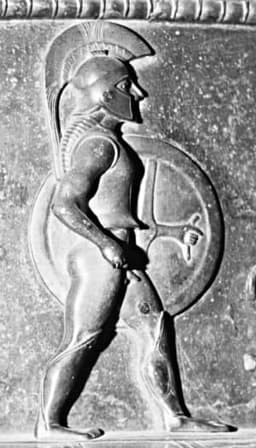
Nabis
Emperor · Ancient
46.3Total

Napoleon Bonaparte
General · Modern
70.9Total
Basic Information
Born
-240
1769
Died
-192
1821
Era
Ancient
Modern
Nationality
Sparta
France
Occupation
Emperor
General
Civilization
Western
Western
Score Comparison
Military (10%)
38.3
94.0
Political (20%)
48.0
72.0
Influence (20%)
47.9
40.0
Legacy (20%)
40.0
80.0
Leadership (15%)
48.4
78.0
Strategy (15%)
60.0
90.0
TOTAL
46.3
70.9
Nabis — Complete Timeline
207 BC
Social Revolution in SpartaReform
Nabis seized power and implemented radical social reforms. He redistributed land, cancelled debts, freed helots, and granted citizenship to many non-Spartans. He also recruited mercenaries and built a navy, challenging the traditional Spartan social order.
Spartan ReformSocial RevolutionLand Redistribution
Impact: nationalprogressive
204 BC
War with the Achaean LeagueWar◆ Major
Nabis fought a series of wars against the Achaean League under Philopoemen. He initially had success, capturing the city of Messene, but was eventually defeated. The wars drained Spartan resources and led to further Roman involvement.
Achaean LeagueWarPeloponnese
Impact: regional
195 BC
Roman-Spartan WarWar◆ Major
Nabis was attacked by a Roman-led coalition under Titus Quinctius Flamininus, including the Achaean League and Pergamon. He was defeated and forced to surrender, losing control of Lacedaemon and his fleet. Sparta became a Roman ally.
Roman InterventionWarDefeat
Impact: regionaltragic
192 BC
AssassinationPolitical Action◆ Major
Nabis was assassinated by Aetolian mercenaries who had been sent to aid him. The assassination was part of a broader Aetolian plot to destabilize the Peloponnese. His death marked the end of the last independent Spartan king.
AssassinationAetolian LeagueEnd of Sparta
Impact: nationaltragic
Napoleon Bonaparte — Complete Timeline
1799 AD
Coup of 18 BrumaireOther◆ Major
Napoleon Bonaparte, with support from his brother Lucien and key political figures, overthrew the Directory in a bloodless coup. He established the Consulate with himself as First Consul, effectively becoming the ruler of France. This event ended the French Revolution's most unstable period.
French RevolutionCoupRise to Power
Impact: regional
1804 AD
Promulgation of the Napoleonic CodeOther◆ Major
Napoleon enacted the Civil Code of the French, known as the Napoleonic Code, a comprehensive set of laws that replaced the fragmented feudal legal systems. The code established legal equality, protected property rights, and secularized law. It became the basis for legal systems in many European and world countries.
Legal ReformNapoleonic CodeCivil Law
Impact: globalconstructive
1805 AD
Battle of AusterlitzWar◆ Major
Napoleon's Grande Arm
Napoleonic WarsBattleDecisive Victory
Impact: global
1812 AD
Invasion of RussiaWar◆ Major
Napoleon led the Grande Arm
Napoleonic WarsInvasionDisaster
Impact: globaldestructive
1815 AD
Battle of WaterlooWar◆ Major
Napoleon's French army was defeated by the combined forces of the Duke of Wellington's Anglo-Allied army and Gebhard Leberecht von Bl
Napoleonic WarsBattleFinal Defeat
Impact: globaldestructive
Expert Analysis
nabis-vs-napoleon-bonaparte
# The Two Faces of Power
On a June morning in 1815, Napoleon Bonaparte watched his dreams dissolve into the muddy fields of Waterloo, his Grande Armée shattered by the Duke of Wellington’s disciplined ranks. Nearly two thousand years earlier, another ruler faced his own reckoning: Nabis, the last king of Sparta, cornered by Roman legions and Greek allies, would meet his end not on a battlefield but at the hands of mercenaries he had trusted. Both men fought against the tide of history—one reshaping Europe, the other clinging to a fading world—yet their outcomes could not have been more different. What drove Napoleon to conquer an empire, and Nabis to defend a dying city-state? The answer lies not in their ambitions, but in the eras that forged them.
Origins
Napoleon was born in 1769 on the island of Corsica, a place recently annexed by France, into a minor noble family. The son of a lawyer, he grew up amid the ferment of the Enlightenment, where ideas of reason, law, and national glory were reshaping Europe. His education at French military academies drilled into him the tactics of artillery and the logic of centralized command—tools perfectly suited to the chaos of the French Revolution. By contrast, Nabis emerged from the crucible of ancient Sparta around 240 BC, a kingdom already in decline. Sparta’s golden age of Leonidas and the Persian Wars was centuries past; its rigid social system, built on a warrior elite and helot slaves, had rotted from within. Nabis was not a king by birth but a usurper, seizing power in 207 BC amid a crisis of inequality and foreign pressure. Where Napoleon breathed the air of revolution and possibility, Nabis inhaled the dust of a world that had already ended.
Rise to Power
Napoleon’s ascent was a masterpiece of opportunity seized. The French Revolution had decimated the old officer class, and by 1795, at age twenty-six, he crushed a royalist uprising in Paris with a “whiff of grapeshot,” earning the notice of the Directory. His Italian campaign of 1796-1797 turned him into a national hero, a general who could win battles and dictate peace terms. Each victory—Arcole, Rivoli, the Pyramids—propelled him higher until he crowned himself emperor in 1804. Nabis’s path was narrower. He climbed to power in Sparta by exploiting the rage of the poor, promising to redistribute land and cancel debts. His social revolution in 207 BC freed helots—the enslaved majority—and granted them citizenship, a radical act that terrified the Greek elite. But his rise was not a march across continents; it was a desperate gambit within a single city, a rebellion against the past rather than a conquest of the future.
Leadership & Governance
As a ruler, Napoleon was a titan of reform. He codified French law with the Napoleonic Code, standardizing justice and abolishing feudal privileges. He built schools, established the Bank of France, and promoted merit over birth. His military genius—scored at 94 for strategy—lay in speed, concentration, and the use of artillery to shatter enemy lines. He governed with a blend of charisma and iron will, inspiring loyalty while crushing dissent. Nabis, by contrast, ruled through fear and necessity. His military score of 40.5 reflects a king who fought not to expand but to survive. He waged war against the Achaean League in 204 BC, capturing cities like Argos, but his victories were always provisional. His reforms—freeing helots, redistributing land—were acts of desperation, not vision. Where Napoleon built a state that outlasted his reign, Nabis could only tear down the old Sparta without creating a new one.
Triumph & Tragedy
Napoleon’s greatest moment came at Austerlitz in 1805, where he annihilated a combined Russian and Austrian army, cementing his mastery of Europe. His tragedy was the invasion of Russia in 1812, where winter and distance consumed his Grand Armée of 600,000 men, leaving him broken. He returned, fought on, but Waterloo in 1815 sealed his fate—exile to Saint Helena, a prison in the Atlantic. Nabis’s triumph was his survival against the Roman-led coalition of 195 BC. For a time, he held Sparta together, defying the great powers. But his tragedy was his end: in 192 BC, Aetolian mercenaries, sent to aid him, turned on him and assassinated him. His kingdom died with him, absorbed by the Achaean League and Rome.
Character & Destiny
Napoleon was driven by an insatiable ambition, a belief that he could bend history to his will. “Impossible is a word to be found only in the dictionary of fools,” he said. His military score of 94 and political score of 75 show a man who excelled at conquest but stumbled in diplomacy, alienating allies and overreaching. Nabis was a pragmatist of a different sort—a revolutionary who knew his world was ending. His leadership score of 41.9 suggests a ruler who inspired fear, not love, and whose reforms alienated the powerful without securing the weak. Napoleon’s destiny was shaped by the forces of modernity—nationalism, bureaucracy, mass armies—that he himself unleashed. Nabis’s destiny was shaped by the forces of antiquity—Roman power and Greek factionalism—that he could never overcome.
Legacy
Napoleon left a shadow that still falls across Europe. His Napoleonic Code influenced legal systems from France to Japan. His wars redrew borders and awakened nationalism. He is remembered as a genius of war and a flawed emperor, his tomb in Paris a pilgrimage site. Nabis is a footnote, the last king of a fallen city. His legacy score of 55.8 reflects a man remembered chiefly by historians, a symbol of failed reform in a world that had no room for Sparta. Napoleon’s influence score of 82 speaks to his enduring grip on the imagination; Nabis’s 67.3 is the ghost of a lost cause.
Conclusion
The comparison of Napoleon and Nabis is not about good versus evil, but about scale and time. Napoleon rode the wave of a new era, his ambition matched by the resources of a great nation. Nabis tried to reverse the tide of history with the tools of a dying city. One built an empire; the other defended a home. In the end, both fell—but Napoleon’s fall echoed across centuries, while Nabis’s was muffled by the dust of a world that had already forgotten Sparta. Their stories remind us that leadership is not just about will, but about the age you are born into—and whether you can ride its currents or are swept away by them.
Rankings
🥇
Napoleon BonaparteLeader
Mil: 94.0Pol: 72.0Inf: 40.0
70.9
🥈
Nabis
Mil: 38.3Pol: 48.0Inf: 47.9
46.3
+24.6 behind
How This Comparison Works
Algorithm
Each figure is scored on 6 dimensions (0—100 scale) based on structured historical data: Military (10%), Political (20%), Influence (20%), Legacy (20%), Leadership (15%), Strategy (15%). The weighted total produces the final ranking.
Data Sources
Scores are computed from structured sub-indicators in the database. Scale factors adjust for era (Ancient ×0.85, Modern ×1.0) and civilization size (Eastern ×1.05, Other ×0.80) to account for differences in population and military scale.
Maximum 3 Figures
Comparisons are limited to 2—3 figures to ensure readability and statistical meaningfulness.
Error Margins
±5 points per dimension — Sub-scores are derived from historical records with inherent uncertainty. Two figures within 5 points on a dimension should be considered roughly equivalent in that area.
Total Score Accuracy
±3 points overall — The weighted combination of 6 dimensions produces a total score with approximately ±3 points of uncertainty. Differences of less than 3 points are not statistically significant— the figures are effectively tied.
Known Limitations
- Historical records are incomplete and uneven across civilizations
- Figures from oral-tradition societies may be underrepresented
- Occupation labels can misclassify multi-role figures
- Scores measure capability and impact, not moral character
- Quantitative scoring is a comparison tool, not absolute truth
Capability Radar
Military (10%) — Battles & Warfare
Battles
30
95
Win Rate
35
90
Expansion
25
95
Political (20%) — Governance & Reform
Reform
60
95
Diplomacy
30
80
Economy
45
85
Influence (20%) — Cultural & Global Reach
Cultural
30
85
Global
15
90
Legacy (20%) — Historical Impact
Historical
35
95
Longevity
25
90
Leadership (15%) — Power & Stability
Tenure
40
85
Stability
20
70
Strategy (15%) — Tactics & Innovation
Strategy
35
95
Tactics
40
98
Reform
50
92
Similar Comparisons
Comments & Discussion
No comments yet. Be the first to share your thoughts!