Loading...
Aurelian vs Sun Quan
Sun Quan leads by 1.4 pts · 2 figures compared
…

Aurelian
Emperor · Ancient
63.0Total
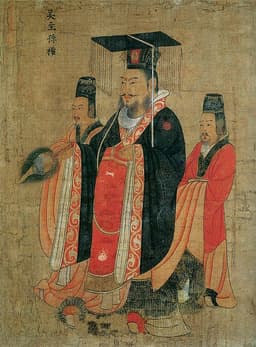
Sun Quan
Emperor · Ancient
64.4Total
Basic Information
Born
214
182
Died
275
252
Era
Ancient
Ancient
Nationality
Roman Empire
China
Occupation
Emperor
Emperor
Civilization
Western
Eastern
Score Comparison
Military (10%)
78.0
67.3
Political (20%)
72.0
65.0
Influence (20%)
56.7
59.0
Legacy (20%)
55.0
58.0
Leadership (15%)
62.0
80.0
Strategy (15%)
72.0
66.3
TOTAL
63.0
64.4
Aurelian — Complete Timeline
271 AD
Defeat of the Juthungi and AlamanniWar◆ Major
Aurelian defeated the Juthungi and Alamanni tribes who had invaded Italy, driving them back across the Danube. He also abandoned the province of Dacia, resettling its population south of the Danube to create a more defensible frontier.
Barbarian InvasionDefenseDacia
Impact: regional
Construction of the Aurelian WallsOther◆ Major
Aurelian ordered the construction of a massive defensive wall around Rome, the Aurelian Walls, to protect the city from barbarian invasions. The walls were 19 kilometers long and remained in use for centuries.
FortificationRomeDefense
Impact: nationalconstructive
274 AD
Reunification of the Roman EmpireWar
Aurelian defeated the Gallic Empire under Tetricus I at the Battle of Ch
ReunificationGallic EmpirePalmyrene Empire
Impact: globalconstructive
Monetary ReformReform
Aurelian reformed the Roman currency, introducing a new silver coin (the antoninianus) with a higher silver content to combat inflation. He also attempted to stabilize prices and improve the economy, though with limited long-term success.
CurrencyReformEconomy
Impact: nationalconstructive
275 AD
Assassination of AurelianPolitical Action◆ Major
Aurelian was assassinated by his own officers while on campaign against the Sassanid Empire, due to a conspiracy involving a secretary who feared punishment. His death cut short his plans for further reforms and campaigns.
AssassinationConspiracyEnd of Reign
Impact: globaltragic
Sun Quan — Complete Timeline
208 AD
Battle of Red CliffsWar
Sun Quan allied with Liu Bei to defeat Cao Cao's invasion at Red Cliffs. Zhou Yu commanded Sun Quan's fleet, using fire ships to destroy Cao Cao's larger navy. This victory preserved Sun Quan's independence and established the tripartite division of China.
Three KingdomsNaval battleAlliance
Impact: regional
213 AD
Battle of RuxuWar◆ Major
Cao Cao launched a naval invasion against Sun Quan's fortress at Ruxu. Sun Quan personally led a small reconnaissance force that was surrounded, but he broke out. The battle ended in a stalemate, with Cao Cao withdrawing, securing Sun Quan's control of the Yangtze.
Three KingdomsBattleDefense
Impact: regional
222 AD
Proclamation of Eastern WuPolitical Action◆ Major
Sun Quan declared himself Emperor of Wu, establishing the Eastern Wu dynasty. This formalized the Three Kingdoms period, with Wu controlling the Yangtze River basin. Sun Quan's reign lasted until 252, making him the longest-ruling of the three founding emperors.
Three KingdomsDynasty foundingImperial proclamation
Impact: regionalconstructive
Expert Analysis
Origins
Aurelian was born around 214 AD in Sirmium (modern Serbia) to a peasant family, though some sources suggest his father was a tenant farmer. He rose through the Roman military ranks, serving under emperors like Gallienus and Claudius Gothicus. His early career is marked by successful campaigns against the Goths and other barbarian tribes, which earned him a reputation as a capable commander.
Sun Quan was born in 182 AD in modern Zhejiang, China, to a military family. His father Sun Jian was a general under the Han dynasty, and his brother Sun Ce founded the original Wu state. After Sun Ce's death in 200 AD, Sun Quan inherited control of the Jiangdong region at age 18. He was educated in both military and civil affairs, relying on advisors like Zhang Zhao and Zhou Yu.
Rise to Power
Aurelian's rise accelerated under Emperor Claudius Gothicus, who appointed him as commander of the cavalry. After Claudius died in 270 AD, Aurelian was proclaimed emperor by the legions in Pannonia. He immediately faced multiple crises: barbarian invasions, a secessionist Gallic Empire, and the Palmyrene Empire under Zenobia. His first major campaign was against the Juthungi and Alamanni tribes, whom he defeated in Italy in 270-271 AD. He then turned east, defeating Zenobia at the Battles of Immae and Emesa in 272 AD, recapturing the lost eastern provinces. In 274 AD, he defeated Tetricus I at the Battle of Châlons, reuniting the Roman Empire. His military score of 78.0 reflects his rapid and decisive campaigns.
Sun Quan's rise was more gradual. After inheriting Jiangdong, he consolidated power by suppressing local rebellions and defeating rival warlords like Huang Zu. His pivotal moment came at the Battle of Red Cliffs in 208 AD, where his alliance with Liu Bei defeated Cao Cao's invasion. Sun Quan's commander Zhou Yu used fire ships to destroy Cao Cao's fleet, securing Sun's control over the Yangtze River region. In 222 AD, after the Battle of Xiaoting, Sun Quan declared himself Emperor of Wu, formalizing the Three Kingdoms period. His political score of 65.0 reflects his ability to navigate alliances and internal politics.
Leadership & Governance
Aurelian's leadership was autocratic and military-focused. He reformed the Roman currency, introducing a new silver coin with higher silver content to combat inflation, but his economic measures had limited success. He also constructed the Aurelian Walls around Rome, a massive fortification project that demonstrated his focus on defense. His governance style was harsh; he executed corrupt officials and suppressed revolts ruthlessly. However, his reign lasted only five years (270-275 AD), limiting his administrative impact.
Sun Quan's leadership was more conciliatory and bureaucratic. He established a stable civil administration in Wu, promoting agriculture and trade. He relied on a council of advisors and delegated military commands to generals like Lu Xun. Sun Quan also expanded Wu's navy, controlling the Yangtze River and coastal regions. His leadership score of 80.0 reflects his ability to maintain stability over 52 years of rule. However, his later years were marred by succession disputes and purges of officials.
Triumph & Tragedy
Aurelian's greatest triumph was reuniting the Roman Empire in just five years, earning the title "Restitutor Orbis" (Restorer of the World). He defeated the Gallic and Palmyrene empires without destroying them, integrating their leaders into Roman society. His construction of the Aurelian Walls protected Rome for centuries. His tragedy was his assassination in 275 AD by his own officers, due to a conspiracy involving a secretary who feared punishment. This cut short his plans for a campaign against the Sassanid Empire.
Sun Quan's triumph was founding the Eastern Wu dynasty, which lasted from 222 to 280 AD. He successfully defended his realm against Cao Cao and later Wei, and expanded Wu's territory into modern Vietnam. His tragedy was his failure to secure a stable succession; after his death, Wu fell into internal conflict and was eventually conquered by the Jin dynasty in 280 AD. His military score of 67.3 reflects his defensive successes but lack of major offensive conquests.
Character & Destiny
Aurelian was known for his energy and discipline, but also cruelty. He was called "hand to the sword" for his swift justice. His decisive actions reunited the empire, but his harshness created enemies. His assassination was a direct result of his fear-based rule.
Sun Quan was pragmatic and patient, often deferring to his capable advisors. He was known for his calm demeanor and strategic thinking. However, his later paranoia led to the deaths of loyal officials, weakening the state. His long reign provided stability, but his failure to groom a strong successor doomed his dynasty.
Legacy
Aurelian's legacy is the reunification of the Roman Empire, which allowed subsequent emperors like Diocletian and Constantine to reform the state. His walls remained a symbol of Roman defense. However, his economic reforms were temporary, and his assassination prevented long-term consolidation. His influence score of 56.7 reflects his short reign.
Sun Quan's legacy is the establishment of the Three Kingdoms system, which shaped Chinese history for centuries. Wu's naval developments influenced later Chinese dynasties. His reign is romanticized in Chinese literature like the Romance of the Three Kingdoms. His legacy score of 58.0 is higher than Aurelian's 55.0, reflecting the cultural impact.
Conclusion
Aurelian had a greater immediate impact by saving the Roman Empire from collapse, but his reign was too short to secure lasting change. Sun Quan built a stable state that lasted 58 years and influenced Chinese culture deeply. While Aurelian's military achievements (score 78.0) surpass Sun Quan's (67.3), Sun Quan's leadership score (80.0) and longevity gave him a higher overall score (64.4 vs 63.0). In terms of lasting impact, Sun Quan's legacy is more enduring due to the cultural and historical significance of the Three Kingdoms period. Therefore, Sun Quan had a greater overall impact.
Rankings
🥇
Sun QuanLeader
Mil: 67.3Pol: 65.0Inf: 59.0
64.4
🥈
Aurelian
Mil: 78.0Pol: 72.0Inf: 56.7
63.0
+1.4 behind
How This Comparison Works
Algorithm
Each figure is scored on 6 dimensions (0—100 scale) based on structured historical data: Military (10%), Political (20%), Influence (20%), Legacy (20%), Leadership (15%), Strategy (15%). The weighted total produces the final ranking.
Data Sources
Scores are computed from structured sub-indicators in the database. Scale factors adjust for era (Ancient ×0.85, Modern ×1.0) and civilization size (Eastern ×1.05, Other ×0.80) to account for differences in population and military scale.
Maximum 3 Figures
Comparisons are limited to 2—3 figures to ensure readability and statistical meaningfulness.
Error Margins
±5 points per dimension — Sub-scores are derived from historical records with inherent uncertainty. Two figures within 5 points on a dimension should be considered roughly equivalent in that area.
Total Score Accuracy
±3 points overall — The weighted combination of 6 dimensions produces a total score with approximately ±3 points of uncertainty. Differences of less than 3 points are not statistically significant— the figures are effectively tied.
Known Limitations
- Historical records are incomplete and uneven across civilizations
- Figures from oral-tradition societies may be underrepresented
- Occupation labels can misclassify multi-role figures
- Scores measure capability and impact, not moral character
- Quantitative scoring is a comparison tool, not absolute truth
Capability Radar
Military (10%) — Battles & Warfare
Battles
85
70
Win Rate
90
65
Expansion
75
70
Political (20%) — Governance & Reform
Reform
80
65
Diplomacy
70
80
Economy
75
75
Influence (20%) — Cultural & Global Reach
Cultural
60
65
Global
65
60
Legacy (20%) — Historical Impact
Historical
80
75
Longevity
70
70
Leadership (15%) — Power & Stability
Tenure
60
85
Stability
65
70
Strategy (15%) — Tactics & Innovation
Strategy
90
80
Tactics
85
75
Reform
80
60
Similar Comparisons
Comments & Discussion
No comments yet. Be the first to share your thoughts!