Loading...
Naresuan vs Qin Shi Huang
Qin Shi Huang leads by 20.4 pts · 2 figures compared
…

Naresuan
Emperor · Modern
64.8Total
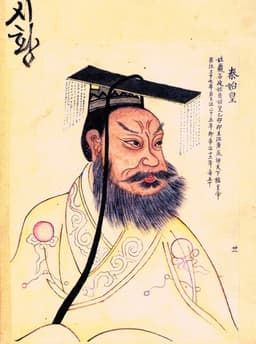
Qin Shi Huang
Emperor · Ancient
85.2Total
Basic Information
Born
1555
-259
Died
1605
-210
Era
Modern
Ancient
Nationality
Thailand
China
Occupation
Emperor
Emperor
Civilization
Eastern
Eastern
Score Comparison
Military (10%)
72.0
80.0
Political (20%)
78.0
90.0
Influence (20%)
56.7
85.0
Legacy (20%)
52.0
90.0
Leadership (15%)
78.0
78.0
Strategy (15%)
70.0
82.0
TOTAL
64.8
85.2
Naresuan — Complete Timeline
1584 AD
Declaration of Independence from BurmaPolitical Action◆ Major
Prince Naresuan declared Ayutthaya's independence from the Toungoo dynasty of Burma, refusing to be a vassal state. This act triggered a series of wars between Ayutthaya and Burma.
IndependenceBurmese WarAyutthaya
Impact: regional
1590 AD
Reforms of the Ayutthaya MilitaryReform
King Naresuan reorganized the Ayutthaya military, introducing new tactics and training methods. He also expanded the use of firearms and elephants in warfare, making the army more effective.
Military ReformAyutthayaWarfare
Impact: nationalconstructive
1592 AD
Battle of Don ChediWar
King Naresuan of Ayutthaya defeated the Burmese crown prince in single combat on elephant back at Don Chedi. This victory secured Ayutthaya's independence from Burmese suzerainty and is celebrated as a national triumph.
Burmese WarElephant BattleThai Independence
Impact: national
1599 AD
Capture of PeguWar◆ Major
King Naresuan led an Ayutthaya army to capture the Burmese capital of Pegu. This victory temporarily weakened the Toungoo dynasty and expanded Ayutthaya's influence into Burmese territory.
Burmese WarPeguAyutthaya Expansion
Impact: regional
Qin Shi Huang — Complete Timeline
246 BC
Construction of the Mausoleum and Terracotta ArmyOther◆ Major
Qin Shi Huang commissioned a vast mausoleum complex near Xi'an, guarded by thousands of life-sized terracotta soldiers, horses, and chariots. The project employed hundreds of thousands of workers and reflected his obsession with immortality and imperial power.
Impact: global
230 BC
Conquest of the Six Warring StatesWar
From 230 to 221 BCE, Ying Zheng led the Qin state in a series of campaigns that conquered the Han, Zhao, Wei, Chu, Yan, and Qi states. This unified China under a single ruler for the first time, ending the Warring States period.
Impact: global
221 BC
Standardization of Writing, Currency, and MeasurementsReform◆ Major
Qin Shi Huang ordered the standardization of Chinese script, currency, and weights and measures across the unified empire. This facilitated administration, trade, and cultural integration, laying a foundation for future dynasties.
Impact: globalconstructive
Proclamation of the Qin DynastyPolitical Action
After conquering the last independent state, Ying Zheng declared himself Shi Huangdi (First Emperor), founding the Qin Dynasty. He adopted a new title to signify his supreme authority and initiated centralized imperial rule.
Impact: global
214 BC
Initiation of the Great Wall ConstructionOther◆ Major
Qin Shi Huang ordered the connection and extension of existing northern fortifications to create a unified defensive wall against nomadic Xiongnu raids. This project involved massive conscripted labor and became the precursor to the later Great Wall.
Impact: regional
213 BC
Burning of Books and Burying of ScholarsPolitical Action◆ Major
On the advice of Li Si, Qin Shi Huang ordered the burning of historical records and philosophical texts not aligned with Legalist doctrine. He also had 460 Confucian scholars buried alive to suppress dissent and consolidate ideological control.
Impact: nationaldestructive
Expert Analysis
naresuan-vs-qin-shi-huang
### The First Emperor and the Black Prince of Siam
In the year 210 BC, on a vast plain in northern China, a colossal underground army of terracotta stood silent guard over a tomb that had swallowed an empire’s soul. Nearly eighteen centuries later, in 1592, on a dusty battlefield in what is now Thailand, a Siamese king atop a war elephant dueled a Burmese prince to the death, turning the tide of a war for national survival. Qin Shi Huang and Naresuan: one unified a fractured world with iron and ink, the other shattered a foreign yoke with a single, thundering charge. Both were warriors, both were kings, yet their paths diverged into radically different legacies. One created an imperial template that would last two millennia; the other forged a nation’s defiant identity. What drove these two Eastern rulers to such different ends?
### Origins
Qin Shi Huang, born Ying Zheng in 259 BC, was the product of a brutal, competitive age. The Warring States period had torn China apart for centuries; his own father, a Qin prince, had been a hostage in a rival state. This childhood of instability and political chess taught young Zheng that trust was a luxury and power the only currency. He inherited a kingdom already hardened by Legalist philosophy—a ruthless doctrine that valued order over morality, the state over the individual. His world was one of total war, where victory meant annihilation and defeat meant extinction.
Naresuan, born in 1555, emerged from a different crucible: the humiliation of vassalage. As a child, he was taken hostage by the Burmese Toungoo Empire, raised in their court, trained in their martial arts. He learned their language, their tactics, their weaknesses. His early life was a living lesson in subjugation—and a slow-burning fuse. Where Qin Shi Huang inherited a machine for conquest, Naresuan inherited a nation that had lost its will to fight. He would have to teach it to roar.
### Rise to Power
Ying Zheng’s rise was methodical and terrifying. At thirteen, he became king of Qin; by twenty-two, he had purged his regent and begun a campaign of annihilation. From 230 to 221 BC, his armies rolled over the six rival states like a tide of bronze and iron. He did not negotiate, he did not compromise—he conquered. When the last king surrendered, Ying Zheng renamed himself *Shi Huangdi*, the First Emperor, erasing the old order and declaring a new age.
Naresuan’s ascent was more personal, almost cinematic. In 1584, he declared Ayutthaya’s independence, a move that sparked a decades-long war. His defining moment came eight years later at the Battle of Don Chedi, where he challenged the Burmese crown prince to single combat on elephant back. The clash of tusks and lances became legend: Naresuan’s spear found its mark, and the Burmese prince fell. That single stroke broke the enemy’s morale and sealed Siam’s freedom. Where Qin Shi Huang conquered through armies, Naresuan conquered through a symbol—a king willing to risk everything in a duel.
### Leadership & Governance
Qin Shi Huang governed as he conquered: with absolute, systematized control. He standardized writing, currency, and measurements across his new empire, binding a thousand local cultures into one bureaucratic machine. He connected the northern walls into the Great Wall, a monument to his vision and his paranoia. But his methods were brutal. In 213 BC, he ordered the burning of all books not approved by the state and the burying alive of scholars who resisted. His Legalist philosophy saw no room for dissent; the empire was a perfect, silent clockwork, and anyone who jammed the gears was crushed.
Naresuan’s governance was more pragmatic and personal. He reformed the Ayutthaya military, introducing new tactics and training, but his rule was about inspiration as much as administration. He led from the front, sharing the soldier’s mud and blood. His court was less a bureaucracy than a war camp. Where Qin Shi Huang built walls to keep the world out, Naresuan built an army to keep the world at bay. His policy was not standardization but liberation—freeing Siam from foreign domination and forging a national identity around the throne.
### Triumph & Tragedy
Qin Shi Huang’s greatest triumph was also his greatest tragedy. He unified China—a feat that would define world history—but his obsession with immortality consumed him. He sent expeditions for the elixir of life, built a vast mausoleum guarded by the Terracotta Army, and died in 210 BC at the age of forty-nine, possibly from mercury poisoning from his own immortality pills. Within three years, his dynasty collapsed, his Legalist tyranny sparking rebellion. The empire he built survived, but his name became synonymous with tyranny.
Naresuan’s triumph was the capture of Pegu, the Burmese capital, in 1599. It was a moment of total revenge, a vassal who had become a conqueror. Yet his tragedy was that this victory was fleeting. The Burmese recovered, and the war dragged on. Naresuan died in 1605 on a campaign, still fighting. He did not build an eternal empire; he built a breathing nation. His victory was not in stone but in spirit.
### Character & Destiny
Qin Shi Huang was a man of iron will and paranoid genius. He trusted no one, not even his own sons. His personality was the engine of his ambition and the source of his downfall—he could not delegate, could not compromise, could not imagine a future beyond his own life. Naresuan, by contrast, was a man of flash and steel. He was a warrior-king in the truest sense, more Achilles than Augustus. His character was forged in captivity and honed in battle; he led by example, not decree. Where Qin Shi Huang’s destiny was to build a machine that outlasted him, Naresuan’s was to light a fire that never went out.
### Legacy
Qin Shi Huang’s legacy is the blueprint of China itself. The Great Wall, the standardized script, the bureaucratic structure—all bear his stamp. He is remembered as a tyrant and a founder, the man who made China possible. Naresuan’s legacy is more intimate but equally profound. He is the Black Prince of Siam, the king who rode an elephant into legend. Every Thai schoolchild knows his name; his statue stands in Ayutthaya, a reminder that freedom is won, not given. His legacy is not an empire but an identity.
### Conclusion
Standing before the terracotta warriors, one feels the weight of a man who tried to freeze time. Standing before the statue of Naresuan on his war elephant, one feels the heat of a moment when history turned on a single spear. One emperor built a world; the other saved a people. Both were warriors, both were kings, but their differences speak to the deepest questions of power: Is it better to build an eternal machine or to light an eternal flame? Qin Shi Huang’s answer was stone and law. Naresuan’s was blood and freedom. History has remembered both, but it has loved only one.
Rankings
🥇
Qin Shi HuangLeader
Mil: 80.0Pol: 90.0Inf: 85.0
85.2
🥈
Naresuan
Mil: 72.0Pol: 78.0Inf: 56.7
64.8
+20.4 behind
How This Comparison Works
Algorithm
Each figure is scored on 6 dimensions (0—100 scale) based on structured historical data: Military (10%), Political (20%), Influence (20%), Legacy (20%), Leadership (15%), Strategy (15%). The weighted total produces the final ranking.
Data Sources
Scores are computed from structured sub-indicators in the database. Scale factors adjust for era (Ancient ×0.85, Modern ×1.0) and civilization size (Eastern ×1.05, Other ×0.80) to account for differences in population and military scale.
Maximum 3 Figures
Comparisons are limited to 2—3 figures to ensure readability and statistical meaningfulness.
Error Margins
±5 points per dimension — Sub-scores are derived from historical records with inherent uncertainty. Two figures within 5 points on a dimension should be considered roughly equivalent in that area.
Total Score Accuracy
±3 points overall — The weighted combination of 6 dimensions produces a total score with approximately ±3 points of uncertainty. Differences of less than 3 points are not statistically significant— the figures are effectively tied.
Known Limitations
- Historical records are incomplete and uneven across civilizations
- Figures from oral-tradition societies may be underrepresented
- Occupation labels can misclassify multi-role figures
- Scores measure capability and impact, not moral character
- Quantitative scoring is a comparison tool, not absolute truth
Capability Radar
Military (10%) — Battles & Warfare
Battles
85
85
Win Rate
90
90
Expansion
75
90
Political (20%) — Governance & Reform
Reform
70
95
Diplomacy
80
75
Economy
65
90
Influence (20%) — Cultural & Global Reach
Cultural
70
95
Global
55
85
Legacy (20%) — Historical Impact
Historical
75
95
Longevity
65
95
Leadership (15%) — Power & Stability
Tenure
75
70
Stability
70
65
Strategy (15%) — Tactics & Innovation
Strategy
80
85
Tactics
85
80
Reform
70
95
Similar Comparisons
Comments & Discussion
QIN'S IRON FIST6/17/2026
Qin Shi Huang wasn't just a conqueror—he was the ultimate system builder. Standardizing writing, weights, and roads across warring states wasn't mere bureaucracy; it was a technological leap that made unified China possible. Naresuan's elephant charge won a battle, but Qin's standardization won a civilization. Sorry, Siamese fanboys, but single combats don't build empires that last two millennia.
TERRACOTTA SKEPTIC6/17/2026
Let's pump the brakes on the Qin mystique, shall we? Yes, the terracotta army is impressive, but it's also a monument to tyranny—thousands of laborers worked themselves to death for one man's ego. Meanwhile, Naresuan freed his people from Burmese occupation and established Ayutthaya's golden age. Which legacy would you rather have: a dusty museum exhibit or a living national identity? Give me the elephant king any day.
SIAMESE REVISIONIST6/17/2026
历史书把秦始皇捧上天,但查一下数字就知道——秦朝统一后不到十五年就崩溃了,而纳黎宣大帝建立的暹罗延续了四百年。秦始皇焚书坑儒,纳黎宣扩建佛寺。一个靠恐怖统治,一个靠民心凝聚。你说谁才是真正的伟大?我要选那位在象背上为自由而战的国王,而不是躲在长城后面的暴君。
经典学书生6/17/2026
别被"统一"这个词骗了。秦始皇的统一是用铁血压迫完成的,他废除封建制,统一文字,但这等于摧毁了战国时期多元文化的繁荣。反观纳黎宣,他驱逐缅甸势力后,允许各城邦保留自治和传统文化。真正的伟大不是消灭差异,而是保护多样性。从文化角度看,亚洲应该感谢的是那位暹罗王子,而非秦朝皇帝。
HISTORY BUFF'S HOT TAKE6/17/2026
Comparing these two is like comparing a bulldozer to a scalpel. Qin Shi Huang was a brutal engineer who leveled centuries of diverse cultures into one grey mass—impressive GDP growth, but at what cost? Naresuan was a precise military genius who used guerrilla tactics and psychological warfare, not just mass conscription. One built the Great Wall; the other rebuilt a kingdom's soul. I know which side I'd rather be on in a boarding action.