Loading...
This comparison has not been analyzed yet.
One-time AI generation (~1 minute). Scores and timeline are already available below.
Nissanka Malla vs Vijayalaya Chola
Vijayalaya Chola leads by 12.4 pts · 2 figures compared
…

Nissanka Malla
Emperor · Medieval
41.8Total
Vijayalaya Chola
Emperor · Medieval
54.2Total
Basic Information
Born
1187
820
Died
1196
870
Era
Medieval
Medieval
Nationality
Sri Lanka
India
Occupation
Emperor
Emperor
Civilization
Indian
Indian
Score Comparison
Military (10%)
20.0
45.0
Political (20%)
35.1
40.8
Influence (20%)
48.6
58.0
Legacy (20%)
38.3
54.0
Leadership (15%)
55.3
64.0
Strategy (15%)
45.0
60.0
TOTAL
41.8
54.2
Nissanka Malla — Complete Timeline
1187 AD
Claim of Pure Buddhist LineagePolitical Action
Upon ascending the throne, Nissanka Malla claimed to be a pure Buddhist king, despite his Kalinga (Indian) origin. He emphasized his adherence to Buddhist principles and sought to legitimize his rule.
LegitimacyBuddhismPropaganda
Impact: national
1190 AD
Construction of Nissanka Latha MandapayaCultural
Nissanka Malla built the Nissanka Latha Mandapaya in Polonnaruwa, a unique stone structure with a lotus-shaped roof. It was used for reciting Buddhist scriptures.
ArchitectureBuddhismCultural Heritage
constructive
1192 AD
Construction of HatadageCultural
Nissanka Malla built the Hatadage, a relic house in Polonnaruwa, to house the Tooth Relic of the Buddha. The structure was built in a single day, according to inscriptions.
ArchitectureBuddhismRelic
constructive
1193 AD
Inscription of Gal PotaCultural
Nissanka Malla commissioned the Gal Pota (Stone Book) inscription at Polonnaruwa. The inscription, carved on a large stone slab, details his reign, achievements, and claims to be a pure Buddhist king.
InscriptionPropagandaHistory
Vijayalaya Chola — Complete Timeline
820 AD
Foundation of the Imperial Chola DynastyPolitical Action◆ Major
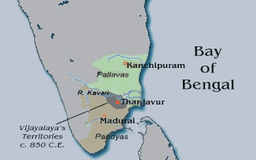
Vijayalaya Chola established the Imperial Chola dynasty, reviving the ancient Chola lineage after centuries of obscurity. He consolidated control over the Kaveri delta region, laying the foundation for the Chola Empire's future expansion.
Impact: regionalconstructive
850 AD
Capture of Thanjavur from the MutharaiyarWar◆ Major
Vijayalaya Chola captured the city of Thanjavur from the Mutharaiyar chieftains, who were vassals of the Pallavas. This victory established the Chola kingdom as an independent power and made Thanjavur the new Chola capital.
Impact: regionalconstructive
860 AD
Construction of the Vijayalaya Choleswaram TempleCultural
Vijayalaya Chola built the Vijayalaya Choleswaram temple at Narthamalai, a rock-cut temple dedicated to Shiva. This temple is one of the earliest Chola architectural monuments, reflecting the transition from Pallava to Chola styles.
constructive
This comparison has not been analyzed yet.
One-time AI generation (~1 minute). Scores and timeline are already available below.
Rankings
🥇
Vijayalaya CholaLeader
Mil: 45.0Pol: 40.8Inf: 58.0
54.2
🥈
Nissanka Malla
Mil: 20.0Pol: 35.1Inf: 48.6
41.8
+12.4 behind
How This Comparison Works
Algorithm
Each figure is scored on 6 dimensions (0—100 scale) based on structured historical data: Military (10%), Political (20%), Influence (20%), Legacy (20%), Leadership (15%), Strategy (15%). The weighted total produces the final ranking.
Data Sources
Scores are computed from structured sub-indicators in the database. Scale factors adjust for era (Ancient ×0.85, Modern ×1.0) and civilization size (Eastern ×1.05, Other ×0.80) to account for differences in population and military scale.
Maximum 3 Figures
Comparisons are limited to 2—3 figures to ensure readability and statistical meaningfulness.
Error Margins
±5 points per dimension — Sub-scores are derived from historical records with inherent uncertainty. Two figures within 5 points on a dimension should be considered roughly equivalent in that area.
Total Score Accuracy
±3 points overall — The weighted combination of 6 dimensions produces a total score with approximately ±3 points of uncertainty. Differences of less than 3 points are not statistically significant— the figures are effectively tied.
Known Limitations
- Historical records are incomplete and uneven across civilizations
- Figures from oral-tradition societies may be underrepresented
- Occupation labels can misclassify multi-role figures
- Scores measure capability and impact, not moral character
- Quantitative scoring is a comparison tool, not absolute truth
Capability Radar
Military (10%) — Battles & Warfare
Battles
5
45
Win Rate
5
50
Expansion
5
55
Political (20%) — Governance & Reform
Reform
30
35
Diplomacy
30
40
Economy
30
35
Influence (20%) — Cultural & Global Reach
Cultural
20
40
Global
10
30
Legacy (20%) — Historical Impact
Historical
20
55
Longevity
10
50
Leadership (15%) — Power & Stability
Tenure
40
50
Stability
30
45
Strategy (15%) — Tactics & Innovation
Strategy
5
45
Tactics
5
40
Reform
5
30
Similar Comparisons
Comments & Discussion
No comments yet. Be the first to share your thoughts!