Loading...
Nur ad-Din vs Sonni Ali
Nur ad-Din leads by 5.0 pts · 2 figures compared
…
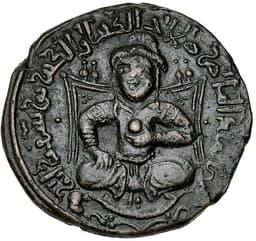
Nur ad-Din
Emperor · Medieval
68.3Total

Sonni Ali
Emperor · Medieval
63.3Total
Basic Information
Born
1118
1440
Died
1174
1492
Era
Medieval
Medieval
Nationality
Zengid dynasty
Songhai Empire
Occupation
Emperor
Emperor
Civilization
Middle Eastern
Other
Score Comparison
Military (10%)
78.0
76.0
Political (20%)
62.7
62.7
Influence (20%)
56.7
60.0
Legacy (20%)
72.0
54.0
Leadership (15%)
79.8
72.0
Strategy (15%)
69.1
70.0
TOTAL
68.3
63.3
Nur ad-Din — Complete Timeline
1149 AD
Battle of InabWar◆ Major
Nur ad-Din defeated the Crusader Principality of Antioch at the Battle of Inab. Prince Raymond of Antioch was killed, and the victory weakened Crusader control in northern Syria, marking a turning point in the Muslim counter-crusade.
BattleCrusadesAntioch
Impact: regional
1150 AD
Promotion of Sunni OrthodoxyCultural◆ Major
Nur ad-Din built numerous madrasas, mosques, and hospitals across Syria, promoting Sunni Islam and countering Shi'a influence. His patronage of religious institutions strengthened the Sunni identity of his realm and laid the ideological foundation for jihad against the Crusaders.
Sunni RevivalMadrasaJihad
Impact: regionalconstructive
1154 AD
Unification of SyriaWar◆ Major
Nur ad-Din captured Damascus from the Burid dynasty, uniting Syria under his rule. This consolidation created a powerful Muslim state that could effectively confront the Crusader states in the Levant.
ConquestSyriaUnification
Impact: regional
1164 AD
Siege of HarimWar
Nur ad-Din captured the fortress of Harim from the Crusaders after a prolonged siege. This victory further reduced Crusader territory in Syria and demonstrated Nur ad-Din's military persistence.
SiegeCrusadesFortress
1169 AD
Mentorship of SaladinPolitical Action◆ Major
Nur ad-Din sent his general Shirkuh, accompanied by his nephew Saladin, to Egypt to intervene in Fatimid politics. After Shirkuh's death, Saladin became vizier of Egypt, eventually breaking from Nur ad-Din's control, but the campaign laid the groundwork for Saladin's later successes.
SaladinEgyptFatimids
Impact: regional
Sonni Ali — Complete Timeline
1468 AD
Conquest of the Mali EmpireWar◆ Major
Sonni Ali led the Songhai army to capture Timbuktu from the Mali Empire, ending Mali's control over the city. This victory marked the beginning of Songhai's rise as the dominant power in the western Sahel.
Songhai EmpireMali EmpireConquestTimbuktu
Impact: regional
1473 AD
Conquest of DjennéWar◆ Major
Sonni Ali besieged and captured the wealthy trading city of Djenn
Songhai EmpireDjennéConquestTrade
Impact: regional
1480 AD
Campaigns against the MossiWar
Sonni Ali launched military campaigns against the Mossi states to the south, defending Songhai's borders and expanding its influence. These campaigns secured the empire's southern frontier and demonstrated his military prowess.
Songhai EmpireMossiMilitary Campaign
Impact: regional
Expert Analysis
Origins
Nur ad-Din (1118–1174) was born into the Zengid dynasty, a Turkish atabegate in northern Syria. His father, Zengi, was the governor of Mosul and Aleppo, known for capturing Edessa from the Crusaders. Nur ad-Din received a traditional Islamic education, studying the Quran, hadith, and fiqh. He was groomed for leadership from a young age, accompanying his father on campaigns. His early exposure to the complexities of Crusader-Muslim conflicts and internal dynastic struggles shaped his worldview.
Sonni Ali (c. 1464–1492) was born into the Sonni dynasty, the ruling family of the Songhai Empire in West Africa. The Songhai had long been a vassal of the Mali Empire, but by Ali's time, Mali's power was waning. Little is known about his early life, but he likely received military training and education in the traditions of the Songhai court. His rise occurred during a period of political fragmentation, with the Mali Empire in decline and the Songhai poised to assert dominance.
Rise to Power
Nur ad-Din became atabeg of Aleppo in 1146 after his father's assassination. He immediately faced threats from the Crusaders and rival Muslim rulers. His first major success was the capture of Edessa in 1146, but he is best known for unifying Syria. In 1154, he peacefully took control of Damascus after a siege, integrating it into his domain. This unification was a turning point, creating a strong Muslim state that could confront the Crusaders. He also expanded into Egypt, sending Shirkuh and Saladin in 1169 to intervene in Fatimid politics, which eventually led to Saladin's rise.
Sonni Ali ascended the Songhai throne around 1464, inheriting a small kingdom along the Niger River. He immediately embarked on a series of conquests. In 1468, he captured Timbuktu from the Mali Empire, a major trade and intellectual center. This victory marked the beginning of Songhai expansion. His most notable conquest was the capture of Djenné in 1473 after a seven-month siege. Djenné was a wealthy trading city, and its fall brought the trans-Saharan trade routes under Songhai control. Ali also campaigned against the Mossi states to the south, securing his borders.
Leadership & Governance
Nur ad-Din was a devout Sunni Muslim who promoted religious orthodoxy. He built numerous madrasas, mosques, and hospitals across Syria, including the famous Bimaristan al-Nuri in Damascus. He also fostered a unified Islamic identity to counter Crusader and Shi'a influences. His governance was characterized by justice and piety; he was known for his personal humility and adherence to Islamic law. He centralized administration, improved infrastructure, and supported trade. His leadership style was consultative, relying on advisors like Saladin.
Sonni Ali was a pragmatic ruler who maintained traditional Songhai beliefs while nominally Muslim. He was known for his military prowess and harsh treatment of enemies. He used a combination of cavalry and riverine forces to control the Niger River. His governance was less concerned with religious orthodoxy; he persecuted Muslim scholars in Timbuktu who opposed him. He expanded the Songhai bureaucracy, appointing governors to conquered regions. He also promoted trade by securing routes and standardizing weights and measures.
Triumph & Tragedy
Nur ad-Din's greatest triumph was unifying Syria and laying the groundwork for the eventual Muslim reconquest of Jerusalem. He defeated the Crusaders at the Battle of Inab in 1149, killing Prince Raymond of Antioch. His patronage of education and religion left a lasting cultural legacy. However, his later years were marred by conflict with Saladin, who increasingly acted independently in Egypt. Nur ad-Din was preparing to march on Egypt when he died in 1174, possibly from illness, leaving his empire incomplete.
Sonni Ali's greatest triumph was the rapid expansion of the Songhai Empire, making it the largest in West African history. He captured Timbuktu and Djenné, controlling key trade routes. However, his reign was also marked by brutality. He destroyed crops and enslaved populations who resisted. His failure to integrate conquered peoples led to instability after his death. He also alienated Muslim elites, which contributed to the success of his successor, Askia Muhammad, who overthrew Ali's son.
Character & Destiny
Nur ad-Din was patient, strategic, and pious. He focused on long-term goals, such as uniting Muslim forces and promoting Sunni Islam. His character was shaped by his father's legacy and the Crusader threat. He was a capable administrator and military commander, scoring 78.0 in military and 79.8 in leadership. His political score of 62.7 reflects his inability to fully control Saladin. His strategy score of 69.1 shows his careful planning.
Sonni Ali was aggressive, pragmatic, and ruthless. He was a brilliant military tactician, with a military score of 76.0 and strategy score of 70.0. His leadership score of 72.0 reflects his ability to inspire loyalty among his troops. However, his political score of 62.7 indicates his failure to build a stable administration. His influence score of 60.0 and legacy score of 54.0 are lower than Nur ad-Din's, as his empire collapsed soon after his death.
Legacy
Nur ad-Din's legacy is profound. He unified Syria, strengthened Sunni Islam, and mentored Saladin, who would later recapture Jerusalem. His institutions, like the Nuri Hospital, served as models for later Islamic states. He is remembered as a just and pious ruler. His total score of 68.3 reflects his balanced achievements.
Sonni Ali's legacy is more mixed. He built the Songhai Empire, but his harsh rule and lack of religious legitimacy led to a swift overthrow by Askia Muhammad. The empire reached its peak under Askia, but Ali's conquests provided the foundation. He is remembered as a great warrior but a flawed administrator. His total score of 63.3 is lower than Nur ad-Din's.
Conclusion
Nur ad-Din had greater long-term impact. His unification of Syria and support of Saladin directly led to the weakening of Crusader states and the eventual recapture of Jerusalem. His promotion of Sunni Islam shaped the religious landscape of the Middle East. Sonni Ali's empire was impressive but short-lived; his lack of administrative and religious consolidation meant his achievements were overshadowed by his successor. While Sonni Ali scored higher in military and strategy, Nur ad-Din's scores in leadership, legacy, and influence were higher. The total score gap of 5.0 points reflects this: Nur ad-Din's legacy endured, while Sonni Ali's empire fragmented. Thus, Nur ad-Din is the more impactful figure in history.
Rankings
🥇
Nur ad-DinLeader
Mil: 78.0Pol: 62.7Inf: 56.7
68.3
🥈
Sonni Ali
Mil: 76.0Pol: 62.7Inf: 60.0
63.3
+5.0 behind
How This Comparison Works
Algorithm
Each figure is scored on 6 dimensions (0—100 scale) based on structured historical data: Military (10%), Political (20%), Influence (20%), Legacy (20%), Leadership (15%), Strategy (15%). The weighted total produces the final ranking.
Data Sources
Scores are computed from structured sub-indicators in the database. Scale factors adjust for era (Ancient ×0.85, Modern ×1.0) and civilization size (Eastern ×1.05, Other ×0.80) to account for differences in population and military scale.
Maximum 3 Figures
Comparisons are limited to 2—3 figures to ensure readability and statistical meaningfulness.
Error Margins
±5 points per dimension — Sub-scores are derived from historical records with inherent uncertainty. Two figures within 5 points on a dimension should be considered roughly equivalent in that area.
Total Score Accuracy
±3 points overall — The weighted combination of 6 dimensions produces a total score with approximately ±3 points of uncertainty. Differences of less than 3 points are not statistically significant— the figures are effectively tied.
Known Limitations
- Historical records are incomplete and uneven across civilizations
- Figures from oral-tradition societies may be underrepresented
- Occupation labels can misclassify multi-role figures
- Scores measure capability and impact, not moral character
- Quantitative scoring is a comparison tool, not absolute truth
Capability Radar
Military (10%) — Battles & Warfare
Battles
75
75
Win Rate
80
80
Expansion
80
85
Political (20%) — Governance & Reform
Reform
85
65
Diplomacy
90
60
Economy
75
60
Influence (20%) — Cultural & Global Reach
Cultural
65
55
Global
60
45
Legacy (20%) — Historical Impact
Historical
80
65
Longevity
70
50
Leadership (15%) — Power & Stability
Tenure
80
75
Stability
70
55
Strategy (15%) — Tactics & Innovation
Strategy
85
80
Tactics
70
85
Reform
75
70
Similar Comparisons
Comments & Discussion
No comments yet. Be the first to share your thoughts!