Loading...
Oduduwa vs Taejo of Joseon
Taejo of Joseon leads by 10.7 pts · 2 figures compared
…
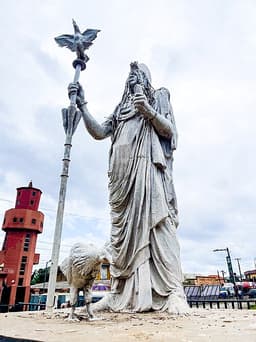
Oduduwa
Emperor · Medieval
59.7Total
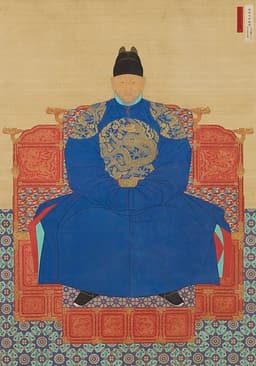
Taejo of Joseon
Emperor · Medieval
70.4Total
Basic Information
Born
950
1335
Died
1020
1408
Era
Medieval
Medieval
Nationality
Ife
Korea
Occupation
Emperor
Emperor
Civilization
Other
Eastern
Score Comparison
Military (10%)
50.0
74.7
Political (20%)
46.6
65.0
Influence (20%)
68.0
65.0
Legacy (20%)
68.0
80.0
Leadership (15%)
67.0
72.0
Strategy (15%)
36.8
61.2
TOTAL
59.7
70.4
Oduduwa — Complete Timeline
1000 AD
Foundation of the Yoruba civilization at Ile-IfeCultural
According to Yoruba oral tradition, Oduduwa descended from heaven at Ile-Ife and founded the Yoruba civilization. He is credited with establishing the first Yoruba kingdom and the sacred city of Ile-Ife, which became the spiritual and cultural heartland of the Yoruba people.
Impact: regionalconstructive
1010 AD
Establishment of the Yoruba royal dynastiesPolitical Action◆ Major
Oduduwa is said to have sent his sons and grandsons to found the various Yoruba kingdoms, including Oyo, Benin, and Ketu. This act established the royal lineages that ruled these states for centuries, creating a network of related kingdoms under the spiritual authority of the Ooni of Ife.
Impact: regionalconstructive
Taejo of Joseon — Complete Timeline
1380 AD
Battle of HwangsanWar
General Yi Seong-gye defeated a Japanese pirate (wokou) force at Hwangsan. This victory enhanced his military reputation and demonstrated his capability as a commander.
WokouGoryeo Military
1388 AD
Wihwado RetreatPolitical Action
General Yi Seong-gye, ordered to invade the Ming dynasty's Liaodong region, turned his army back at Wihwado Island. This act of defiance against the Goryeo court led to a coup that eventually brought him to power.
CoupGoryeo-Ming RelationsPower Shift
Impact: national
1391 AD
Land Reform and the Gwajeon LawReform◆ Major
Taejo implemented the Gwajeon Law, a land reform that redistributed land from the old Goryeo aristocracy to his supporters and the state. This weakened the old elite and strengthened the new Joseon ruling class.
Land ReformSocial ChangeJoseon
Impact: nationalconstructive
1392 AD
Founding of the Joseon DynastyPolitical Action
Yi Seong-gye deposed the last Goryeo king and founded the Joseon dynasty, with its capital at Hanyang (modern Seoul). He established a new ruling class based on Confucian ideology, replacing the Buddhist-influenced Goryeo system.
Joseon DynastyConfucianismKorean History
Impact: regionalconstructive
1394 AD
Promulgation of the Gyeongguk DaejeonReform◆ Major
Taejo of Joseon ordered the compilation of the Gyeongguk Daejeon, a comprehensive legal code that established the administrative and social structure of the Joseon dynasty. This code remained in effect for centuries.
Legal CodeGovernanceConfucianism
Impact: nationalconstructive
Expert Analysis
Taejo of Joseon vs Oduduwa
### The Founder’s Dilemma: Why Yi Seong-gye Built a Dynasty and Oduduwa Built a World
On a summer day in 1388, a Korean general named Yi Seong-gye stood on a riverbank at Wihwado Island, facing an impossible choice. Behind him lay the crumbling Goryeo court, demanding he invade China. Ahead lay the might of the Ming dynasty, a military campaign that looked like suicide. He turned his army around. That act of defiance did not just save his soldiers—it shattered a kingdom. Two centuries earlier and six thousand miles away, another founder faced a different kind of turning point. Oduduwa, according to Yoruba tradition, descended from the sky at Ile-Ife, carrying a handful of earth and a chicken with claws that scratched the land into being. One man chose retreat; the other chose revelation. Both founded civilizations. But the worlds they built could not have been more different.
**Origins**
Yi Seong-gye was born in 1335 into a world of war. The Goryeo dynasty, which had ruled Korea for nearly five centuries, was collapsing under Mongol influence, internal corruption, and relentless pirate raids. Yi grew up in the northeastern frontier, a region where survival depended on martial skill and political cunning. His father was a minor official, but Yi’s own talents—archery, horsemanship, an instinct for the battlefield—marked him early. He was a product of his time: pragmatic, ruthless, and deeply aware that power in a dying kingdom belonged to those who could seize it.
Oduduwa belongs to a different kind of history. Born around 950, he is not a figure of documents but of myth. In Yoruba oral tradition, he is the son of the supreme god Olodumare, sent from heaven to create land where there was only water. His name means “the one who created the world.” Where Yi Seong-gye emerged from the chaos of human politics, Oduduwa emerged from the chaos of creation itself. His origins are not biographical but cosmological. He did not inherit a kingdom; he invented the idea of kingship.
**Rise to Power**
Yi Seong-gye rose through violence, but not aimless violence. In 1380, at the Battle of Hwangsan, he crushed a Japanese pirate (wokou) force so thoroughly that his reputation as a general became legendary. The victory was not just military—it was political. In a court desperate for stability, Yi became the man who could deliver it. Yet he was no mere soldier. The Wihwado Retreat of 1388 was his masterstroke: by refusing to invade Ming China, he exposed the Goryeo court’s folly while positioning himself as the defender of Korean autonomy. Four years later, in 1392, he deposed the last Goryeo king and founded the Joseon dynasty.
Oduduwa’s rise is recorded not in battle chronicles but in sacred chants. According to the Ife corpus, he descended from heaven carrying a palm nut, a rooster, and a lump of earth. At Ile-Ife, he released the rooster, which scratched the earth into the first dry land. Then he planted the palm nut, and from it grew a tree that became the first palace. His power was not seized but bestowed. He did not defeat an enemy; he created a world. His sons and grandsons were then sent to found the great kingdoms of the Yoruba—Oyo, Benin, Ketu—each a branch of his divine lineage.
**Leadership & Governance**
Taejo of Joseon ruled as a reformer, not a prophet. In 1391, he implemented the Gwajeon Law, a sweeping land reform that redistributed estates from the old Goryeo aristocracy to his loyal supporters. It was a blunt instrument of state-building: break the old elite, reward the new. In 1394, he ordered the compilation of the Gyeongguk Daejeon, a comprehensive legal code that would govern Joseon for centuries. He moved the capital to Hanyang (modern Seoul), a city designed according to Confucian principles of harmony. His leadership was institutional, bureaucratic, and relentlessly practical. He built a state that could outlast him.
Oduduwa’s governance was symbolic and spiritual. He did not write laws or redistribute land; he established the principle that Yoruba kings (the Obas) were divine descendants of a single progenitor. Ile-Ife became not a political capital in the modern sense but a sacred center—the navel of the world. His sons did not administer a centralized bureaucracy; they founded independent kingdoms that shared a common myth of origin. Oduduwa’s legacy was not a constitution but a cosmology. Every Yoruba king, from the Oyo Empire to the Benin Kingdom, could trace his legitimacy back to that first descent from heaven.
**Triumph & Tragedy**
Yi Seong-gye’s greatest triumph was the founding of Joseon itself—a dynasty that would last 505 years. But his tragedy was intimate. He named his son Yi Bang-won as crown prince, but the prince’s ambition led to a bloody purge of rivals, including the murder of his own brothers. Taejo abdicated in 1398, heartbroken by the violence that his own creation had unleashed. He died in 1408, a founder who had watched his family tear itself apart.
Oduduwa’s triumph is the endurance of the Yoruba civilization itself—a culture that survived centuries of war, the transatlantic slave trade, and colonialism. His tragedy is that we know almost nothing of his human life. He is a face without a biography, a name without a date. The man may have been real, but he has been absorbed into myth. His triumph is also his erasure.
**Character & Destiny**
Yi Seong-gye was a strategist. Every major decision—the retreat at Wihwado, the land reform, the legal code—was calculated. He understood that power in a Confucian state required not just swords but institutions, not just victory but legitimacy. His destiny was shaped by his ability to see the political landscape and move pieces across it.
Oduduwa was a symbol. His character is not recorded because his character was not the point. He was the vessel for a founding story, the embodiment of a people’s origin. His destiny was to be remembered, not as a man with flaws and fears, but as the first king, the father of kings. Where Yi Seong-gye’s personality drove events, Oduduwa’s personality was the event.
**Legacy**
Taejo of Joseon is remembered in textbooks, monuments, and the streets of Seoul. His legal code, his land reforms, his capital city—these are tangible. His legacy is measurable: a dynasty, a bureaucracy, a Confucian state that shaped Korean identity for half a millennium. He is a historical figure, debated and analyzed.
Oduduwa is remembered in ritual, in the sacred groves of Ile-Ife, in the coronation ceremonies of Yoruba kings. His legacy is not a document but a living tradition. Every Oba who wears the crown of beads is, in a very real sense, wearing Oduduwa’s crown. He is not a historical figure to be analyzed; he is a spiritual ancestor to be honored.
**Conclusion**
One founder turned his army around; the other descended from the sky. Yi Seong-gye built a state; Oduduwa built a civilization. One left a constitution; the other left a cosmology. In the end, the difference between them is not a matter of achievement but of memory. Taejo of Joseon is history. Oduduwa is myth. And perhaps the deepest question their stories ask us is this: Which kind of founder lasts longer—the one who writes laws, or the one who writes the story of creation?
Rankings
🥇
Taejo of JoseonLeader
Mil: 74.7Pol: 65.0Inf: 65.0
70.4
🥈
Oduduwa
Mil: 50.0Pol: 46.6Inf: 68.0
59.7
+10.7 behind
How This Comparison Works
Algorithm
Each figure is scored on 6 dimensions (0—100 scale) based on structured historical data: Military (10%), Political (20%), Influence (20%), Legacy (20%), Leadership (15%), Strategy (15%). The weighted total produces the final ranking.
Data Sources
Scores are computed from structured sub-indicators in the database. Scale factors adjust for era (Ancient ×0.85, Modern ×1.0) and civilization size (Eastern ×1.05, Other ×0.80) to account for differences in population and military scale.
Maximum 3 Figures
Comparisons are limited to 2—3 figures to ensure readability and statistical meaningfulness.
Error Margins
±5 points per dimension — Sub-scores are derived from historical records with inherent uncertainty. Two figures within 5 points on a dimension should be considered roughly equivalent in that area.
Total Score Accuracy
±3 points overall — The weighted combination of 6 dimensions produces a total score with approximately ±3 points of uncertainty. Differences of less than 3 points are not statistically significant— the figures are effectively tied.
Known Limitations
- Historical records are incomplete and uneven across civilizations
- Figures from oral-tradition societies may be underrepresented
- Occupation labels can misclassify multi-role figures
- Scores measure capability and impact, not moral character
- Quantitative scoring is a comparison tool, not absolute truth
Capability Radar
Military (10%) — Battles & Warfare
Battles
10
75
Win Rate
10
80
Expansion
30
65
Political (20%) — Governance & Reform
Reform
50
85
Diplomacy
40
70
Economy
40
65
Influence (20%) — Cultural & Global Reach
Cultural
80
80
Global
70
60
Legacy (20%) — Historical Impact
Historical
80
85
Longevity
80
80
Leadership (15%) — Power & Stability
Tenure
40
70
Stability
50
75
Strategy (15%) — Tactics & Innovation
Strategy
10
75
Tactics
10
70
Reform
10
60
Similar Comparisons
Comments & Discussion
神木之影6/16/2026
作为古典学研究者,我必须指出:拿一个14世纪的朝鲜将军和一个半神话的约鲁巴始祖比,本身就像拿《左传》比《奥杜·伊法》——文体、语境、目的完全不同。奥杜杜瓦的传说承载的是宇宙起源的象征,而李成桂的史书满满是权力斗争。你要比,就该拿李成桂对比图塔或孙坚,而不是一个来自天堂的祖先。这比较是知识的错配。
铁血双面人6/16/2026
历史发烧友吐槽:说李成桂是“pragmatic builder”太客气了。他儿子李芳远杀了两个弟弟才坐稳王位,这儒家伦理的脸往哪搁?比奥杜杜瓦的和平奠基,韩国建国简直血雨腥风。但说实话,我宁愿信血淋淋的史书,也不信天上掉下来的神鸡。真实比美重要。
Historian3106/16/2026
Data skeptic here: the core problem is asymmetric evidence. We have *Veritable Records of the Joseon Dynasty*—decades of daily court logs for Yi Seong-gye’s reign. For Oduduwa? Oral traditions transcribed centuries later, likely reshaped by colonial and Christian filters. One is history; the other is historiography disguised as history. That imbalance makes this comparison more about the limits of our sources than about the founders themselves.
Chronicler34166/16/2026
Military historian here: Yi Seong-gye’s Wihwado retreat is the most underrated strategic pivot in East Asian history. He didn’t just avoid Ming annihilation—he saved a Korean army for domestic conquest. Oduduwa’s chicken-scratching creation myth is lovely poetry, but it’s no Sunzi. One general turned back to seize power; the other deity sculpted sand. Give me a man who calculates logistics over mystical fowl any day.