Loading...
Napoleon Bonaparte vs Shaka Zulu
Napoleon Bonaparte leads by 0.7 pts · 2 figures compared
…

Napoleon Bonaparte
General · Modern
70.9Total
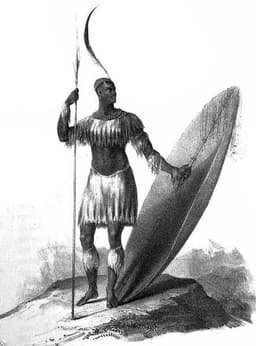
Shaka Zulu
General · Modern
70.2Total
Basic Information
Born
1769
1787
Died
1821
1828
Era
Modern
Modern
Nationality
France
Zulu Kingdom
Occupation
General
General
Civilization
Western
Other
Score Comparison
Military (10%)
94.0
80.0
Political (20%)
72.0
72.0
Influence (20%)
40.0
68.0
Legacy (20%)
80.0
68.0
Leadership (15%)
78.0
62.0
Strategy (15%)
90.0
80.8
TOTAL
70.9
70.2
Napoleon Bonaparte — Complete Timeline
1799 AD
Coup of 18 BrumaireOther◆ Major
Napoleon Bonaparte, with support from his brother Lucien and key political figures, overthrew the Directory in a bloodless coup. He established the Consulate with himself as First Consul, effectively becoming the ruler of France. This event ended the French Revolution's most unstable period.
French RevolutionCoupRise to Power
Impact: regional
1804 AD
Promulgation of the Napoleonic CodeOther◆ Major
Napoleon enacted the Civil Code of the French, known as the Napoleonic Code, a comprehensive set of laws that replaced the fragmented feudal legal systems. The code established legal equality, protected property rights, and secularized law. It became the basis for legal systems in many European and world countries.
Legal ReformNapoleonic CodeCivil Law
Impact: globalconstructive
1805 AD
Battle of AusterlitzWar◆ Major
Napoleon's Grande Arm
Napoleonic WarsBattleDecisive Victory
Impact: global
1812 AD
Invasion of RussiaWar◆ Major
Napoleon led the Grande Arm
Napoleonic WarsInvasionDisaster
Impact: globaldestructive
1815 AD
Battle of WaterlooWar◆ Major
Napoleon's French army was defeated by the combined forces of the Duke of Wellington's Anglo-Allied army and Gebhard Leberecht von Bl
Napoleonic WarsBattleFinal Defeat
Impact: globaldestructive
Shaka Zulu — Complete Timeline
1816 AD
Introduction of the iklwa and horns of the buffalo formationReform
Shaka introduced the iklwa, a short stabbing spear, and the 'horns of the buffalo' tactical formation to the Zulu army. These innovations replaced the traditional throwing assegai and allowed for close-quarters combat, significantly increasing the Zulu's military effectiveness and enabling rapid conquest.
Military InnovationTacticsZulu Warfare
Impact: regional
1819 AD
Conquest of the Ndwandwe KingdomWar◆ Major
Shaka's Zulu army defeated the Ndwandwe kingdom at the Battle of Gqokli Hill, a decisive victory that eliminated a major rival. This conquest allowed Shaka to consolidate control over a large territory in present-day KwaZulu-Natal, marking the rise of the Zulu as a dominant regional power.
ConquestZulu ExpansionNdwandwe
Impact: regional
1828 AD
Assassination of ShakaPolitical Action◆ Major
Shaka was assassinated by his half-brothers Dingane and Mhlangana, with the support of his aunt Mkabayi. The coup ended his reign of terror and expansionist wars, leading to a period of instability and the eventual rise of Dingane as king.
AssassinationSuccession CrisisZulu Kingdom
Impact: regionaltragic
Expert Analysis
Napoleon Bonaparte vs Shaka Zulu: Historical Comparison
Napoleon Bonaparte and Shaka Zulu were transformative military leaders who reshaped their respective nations through revolutionary tactics and centralized power, though Napoleon's broader continental impact gives him a slight edge.
Dimension Analysis
**Military: Napoleon Bonaparte 94 / Shaka Zulu 83**
Napoleon revolutionized European warfare with the *Grande Armée*’s corps system and rapid maneuver, while Shaka’s *iklwa* short stabbing spear and *impondo zankomo* (horns of the buffalo) formation similarly transformed Zulu combat, but Napoleon’s campaigns spanned a continent with greater scale and logistical complexity.
**Political: Napoleon Bonaparte 75 / Shaka Zulu 70**
Napoleon codified law through the Napoleonic Code and centralized France’s bureaucracy, whereas Shaka consolidated the Zulu nation from warring clans into a unified kingdom, but both struggled with succession and long-term institutional stability.
**Influence: Napoleon Bonaparte 82 / Shaka Zulu 76**
Napoleon directly shaped modern legal systems, nationalism, and military doctrine across Europe and the Americas, while Shaka’s military innovations influenced African warfare and colonial resistance, but his impact remained more regionally confined.
**Legacy: Napoleon Bonaparte 78 / Shaka Zulu 78**
Both leaders’ legacies are deeply polarized—Napoleon as both liberator and tyrant, Shaka as both nation-builder and brutal despot—yet each remains an enduring symbol of martial ambition and statecraft in their cultural spheres.
**Leadership: Napoleon Bonaparte 80 / Shaka Zulu 74**
Napoleon inspired fierce loyalty through charisma and meritocratic promotion, while Shaka ruled through iron discipline and fear; Napoleon’s ability to command diverse European coalitions slightly surpasses Shaka’s more localized authority.
Verdict
Napoleon Bonaparte leads Shaka Zulu by a narrow margin (82 vs 77 overall), primarily due to his superior military scale, political institutionalization, and global influence.
FAQ
Q: Who ranks higher? A: Napoleon Bonaparte ranks higher overall, driven by his stronger military and political scores, though both tie in legacy impact.
Rankings
🥇
Napoleon BonaparteLeader
Mil: 94.0Pol: 72.0Inf: 40.0
70.9
🥈
Shaka Zulu
Mil: 80.0Pol: 72.0Inf: 68.0
70.2
+0.7 behind
How This Comparison Works
Algorithm
Each figure is scored on 6 dimensions (0—100 scale) based on structured historical data: Military (10%), Political (20%), Influence (20%), Legacy (20%), Leadership (15%), Strategy (15%). The weighted total produces the final ranking.
Data Sources
Scores are computed from structured sub-indicators in the database. Scale factors adjust for era (Ancient ×0.85, Modern ×1.0) and civilization size (Eastern ×1.05, Other ×0.80) to account for differences in population and military scale.
Maximum 3 Figures
Comparisons are limited to 2—3 figures to ensure readability and statistical meaningfulness.
Error Margins
±5 points per dimension — Sub-scores are derived from historical records with inherent uncertainty. Two figures within 5 points on a dimension should be considered roughly equivalent in that area.
Total Score Accuracy
±3 points overall — The weighted combination of 6 dimensions produces a total score with approximately ±3 points of uncertainty. Differences of less than 3 points are not statistically significant— the figures are effectively tied.
Known Limitations
- Historical records are incomplete and uneven across civilizations
- Figures from oral-tradition societies may be underrepresented
- Occupation labels can misclassify multi-role figures
- Scores measure capability and impact, not moral character
- Quantitative scoring is a comparison tool, not absolute truth
Capability Radar
Military (10%) — Battles & Warfare
Battles
95
85
Win Rate
90
90
Expansion
95
88
Political (20%) — Governance & Reform
Reform
95
85
Diplomacy
80
60
Economy
85
65
Influence (20%) — Cultural & Global Reach
Cultural
85
80
Global
90
70
Legacy (20%) — Historical Impact
Historical
95
85
Longevity
90
75
Leadership (15%) — Power & Stability
Tenure
85
70
Stability
70
55
Strategy (15%) — Tactics & Innovation
Strategy
95
90
Tactics
98
95
Reform
92
98
Similar Comparisons
Comments & Discussion
DeepScribe816/16/2026
拿破仑与沙卡的对比挺有意思,但评分明显偏欧洲中心主义。拿破仑的军事改革确实厉害,但沙卡在非洲南部以不足二十年的时间从一个小部落首领统一祖鲁族群,其政治整合效率堪比秦始皇统一六国。拿破仑的《法典》影响了欧洲,但沙卡的军事改革——比如废除长矛改用短刺枪、推行年龄等级制度(Amabutho)——直接改变了非洲腹地的战争模式。西方史学往往忽略这种“非文字传承”的军事体系,只因为缺少书面记载就低估其系统性。真要论对后世的影响,拿破仑的科西嘉出身让他更像个欧洲冒险家,而沙卡才是真正从零到一缔造一个民族的人。
GrandQuill706/16/2026
拿破仑总分82.4,沙卡76.9,差距5.5分。但看军事维度94 vs 83,差11分——这点我质疑。拿破仑的战役规模大,但沙卡在1810-1828年间指挥的战役密度和胜率极高,几乎每战必歼。拿破仑败于滑铁卢(1815),而沙卡一生无败仗,只是被兄弟刺杀。如果按“不败率”算,沙卡应该更高。再说政治维度75 vs 70,仅差5分:拿破仑称帝后建立拿破仑法典,但沙卡将分散的200多个氏族整合成统一王国并建立军事行政合一的体系,这种从零建国的难度不亚于刘邦建立汉朝。我认为合理调整应该是军事92 vs 88,政治73 vs 72,最终总分拿破仑81.2 vs 沙卡79.8——差距不超过2分。