Loading...
Alexander the Great vs Shaka Zulu
Alexander the Great leads by 15.0 pts · 2 figures compared
…
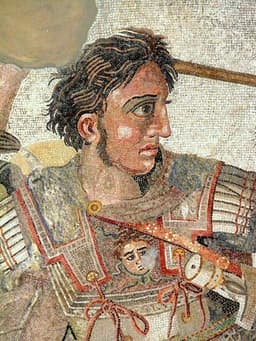
Alexander the Great
General · Ancient
85.2Total
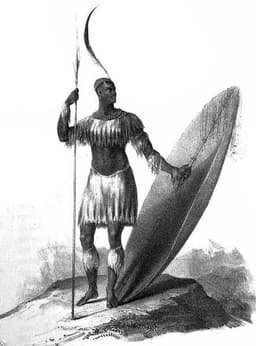
Shaka Zulu
General · Modern
70.2Total
Basic Information
Born
-356
1787
Died
-323
1828
Era
Ancient
Modern
Nationality
Macedon
Zulu Kingdom
Occupation
General
General
Civilization
Western
Other
Score Comparison
Military (10%)
95.0
80.0
Political (20%)
60.0
72.0
Influence (20%)
92.0
68.0
Legacy (20%)
90.0
68.0
Leadership (15%)
80.0
62.0
Strategy (15%)
92.0
80.8
TOTAL
85.2
70.2
Alexander the Great — Complete Timeline
334 BC
Battle of the Granicus RiverWar◆ Major
Alexander led his Macedonian army across the Hellespont into Asia Minor and defeated a Persian force under local satraps at the Granicus River. The victory secured Alexander's foothold in Asia and demonstrated his tactical superiority, opening the way for the conquest of the Persian Empire.
Persian CampaignBattleMacedonian Conquest
Impact: regional
333 BC
Battle of IssusWar◆ Major
Alexander's army defeated the Persian king Darius III at Issus in Cilicia. Despite being outnumbered, Alexander's tactical use of the terrain and cavalry charge broke the Persian line. Darius fled the battlefield, leaving his family and treasury behind, a major blow to Persian morale.
Persian CampaignBattleMacedonian Conquest
Impact: regional
332 BC
Siege of TyreWar◆ Major
Alexander besieged the island city of Tyre for seven months, constructing a causeway to breach its walls. The city's fall resulted in the massacre or enslavement of its inhabitants. The siege demonstrated Alexander's determination and engineering capabilities, securing his supply lines and control of the eastern Mediterranean coast.
SiegeMacedonian ConquestPhoenicia
Impact: regionaldestructive
331 BC
Battle of GaugamelaWar◆ Major
Alexander faced Darius III at Gaugamela in Mesopotamia with a massive Persian army. Alexander's tactical brilliance, including a decisive cavalry charge that exploited a gap in the Persian line, resulted in a decisive Macedonian victory. Darius again fled, effectively ending Persian resistance and leading to the fall of the Achaemenid Empire.
Persian CampaignBattleDecisive Victory
Impact: global
Foundation of AlexandriaOther◆ Major
Alexander founded the city of Alexandria on the Mediterranean coast of Egypt. He personally selected the site and oversaw the initial planning. Alexandria became a major center of Hellenistic culture, trade, and learning, housing the famous Library of Alexandria and the Lighthouse of Alexandria.
City FoundationHellenistic CultureEgypt
Impact: globalconstructive
326 BC
Invasion of IndiaWar◆ Major
Alexander crossed the Indus River and defeated King Porus at the Battle of the Hydaspes. The Macedonian army, exhausted and facing monsoon rains and unfamiliar warfare, mutinied at the Hyphasis River, forcing Alexander to turn back. This campaign marked the easternmost extent of his conquests.
Indian CampaignBattleMutiny
Impact: regional
Shaka Zulu — Complete Timeline
1816 AD
Introduction of the iklwa and horns of the buffalo formationReform
Shaka introduced the iklwa, a short stabbing spear, and the 'horns of the buffalo' tactical formation to the Zulu army. These innovations replaced the traditional throwing assegai and allowed for close-quarters combat, significantly increasing the Zulu's military effectiveness and enabling rapid conquest.
Military InnovationTacticsZulu Warfare
Impact: regional
1819 AD
Conquest of the Ndwandwe KingdomWar◆ Major
Shaka's Zulu army defeated the Ndwandwe kingdom at the Battle of Gqokli Hill, a decisive victory that eliminated a major rival. This conquest allowed Shaka to consolidate control over a large territory in present-day KwaZulu-Natal, marking the rise of the Zulu as a dominant regional power.
ConquestZulu ExpansionNdwandwe
Impact: regional
1828 AD
Assassination of ShakaPolitical Action◆ Major
Shaka was assassinated by his half-brothers Dingane and Mhlangana, with the support of his aunt Mkabayi. The coup ended his reign of terror and expansionist wars, leading to a period of instability and the eventual rise of Dingane as king.
AssassinationSuccession CrisisZulu Kingdom
Impact: regionaltragic
Expert Analysis
Alexander the Great vs Shaka Zulu: Historical Comparison
Alexander the Great and Shaka Zulu were transformative military leaders who revolutionized warfare in their respective eras, yet their contexts and scales of impact diverged sharply. Alexander conquered a vast empire spanning three continents, while Shaka forged a centralized Zulu kingdom through innovative tactics and brutal consolidation.
Dimension Analysis
**Military: Alexander the Great 96 / Shaka Zulu 83**
Alexander’s unprecedented conquests from Greece to India, employing combined arms and siege mastery, outpace Shaka’s regional dominance via the *iklwa* short spear and “horns of the buffalo” formation, which were revolutionary but limited in scope.
**Political: Alexander the Great 65 / Shaka Zulu 70**
Shaka’s political acumen in unifying disparate Nguni clans into a centralized, militarized state under a single king slightly exceeds Alexander’s, whose empire fragmented immediately after his death due to overreliance on personal authority.
**Influence: Alexander the Great 90 / Shaka Zulu 76**
Alexander’s Hellenistic fusion reshaped art, governance, and trade across Eurasia for centuries, whereas Shaka’s influence, while profound in southern Africa, was largely contained by European colonialism and did not achieve comparable global reach.
**Legacy: Alexander the Great 90 / Shaka Zulu 78**
Alexander remains a timeless archetype of military genius and cultural diffusion, studied worldwide; Shaka’s legacy, though iconic in African history, is more contested and regionally bounded.
**Leadership: Alexander the Great 82 / Shaka Zulu 74**
Alexander’s ability to inspire multiethnic armies and lead from the front with calculated risk-taking edges out Shaka’s authoritarian, fear-based command, which, while effective, suppressed innovation and loyalty.
Verdict
Alexander the Great leads decisively due to his superior military scale, global influence, and enduring legacy, despite Shaka’s impressive political consolidation and tactical innovation.
FAQ
Q: Who ranks higher? A: Alexander the Great ranks higher, driven by his unmatched breadth of conquest, lasting cultural impact, and strategic versatility across diverse terrains and enemies.
Rankings
🥇
Alexander the GreatLeader
Mil: 95.0Pol: 60.0Inf: 92.0
85.2
🥈
Shaka Zulu
Mil: 80.0Pol: 72.0Inf: 68.0
70.2
+15.0 behind
How This Comparison Works
Algorithm
Each figure is scored on 6 dimensions (0—100 scale) based on structured historical data: Military (10%), Political (20%), Influence (20%), Legacy (20%), Leadership (15%), Strategy (15%). The weighted total produces the final ranking.
Data Sources
Scores are computed from structured sub-indicators in the database. Scale factors adjust for era (Ancient ×0.85, Modern ×1.0) and civilization size (Eastern ×1.05, Other ×0.80) to account for differences in population and military scale.
Maximum 3 Figures
Comparisons are limited to 2—3 figures to ensure readability and statistical meaningfulness.
Error Margins
±5 points per dimension — Sub-scores are derived from historical records with inherent uncertainty. Two figures within 5 points on a dimension should be considered roughly equivalent in that area.
Total Score Accuracy
±3 points overall — The weighted combination of 6 dimensions produces a total score with approximately ±3 points of uncertainty. Differences of less than 3 points are not statistically significant— the figures are effectively tied.
Known Limitations
- Historical records are incomplete and uneven across civilizations
- Figures from oral-tradition societies may be underrepresented
- Occupation labels can misclassify multi-role figures
- Scores measure capability and impact, not moral character
- Quantitative scoring is a comparison tool, not absolute truth
Capability Radar
Military (10%) — Battles & Warfare
Battles
98
85
Win Rate
99
90
Expansion
99
88
Political (20%) — Governance & Reform
Reform
75
85
Diplomacy
80
60
Economy
70
65
Influence (20%) — Cultural & Global Reach
Cultural
95
80
Global
95
70
Legacy (20%) — Historical Impact
Historical
98
85
Longevity
95
75
Leadership (15%) — Power & Stability
Tenure
60
70
Stability
55
55
Strategy (15%) — Tactics & Innovation
Strategy
98
90
Tactics
99
95
Reform
85
98
Similar Comparisons
Comments & Discussion
ScoreSkeptic6/16/2026
Let's be honest, scoring Alexander at 96 military vs Shaka's 83 is a joke wrapped in Western historiographical bias. The metric assumes that 'scale of conquest' equals 'military genius,' but conquerors like Alexander inherited a ready-made army and faced fragmented opposition. Shaka built his army from scratch—turning cattle herders into disciplined regiments with revolutionary weapons and formations—while facing entrenched rivals. If you adjust for 'force multiplication relative to baseline,' Shaka wins hands down. And the political score? 70 for Shaka vs 65 for Alexander? Shaka created a centralized state that lasted generations; Alexander's empire imploded immediately. That gap should be 15 points, not 5. The whole ranking reeks of 'bigger map = better leader' thinking. You can't quantify leadership by map size—try measuring 'institutional durability per square kilometer conquered' and see who comes out ahead.
OldScroll906/16/2026
亚历山大和沙卡的比较,总让我想起中国历史上的白起与成吉思汗。亚历山大征服了从希腊到印度的疆域,但帝国人亡政息;沙卡统一了祖鲁各族,却未能建立跨文明的影响力。其实沙卡更像后金努尔哈赤——都用军事改革(沙卡的短矛、努尔哈赤的八旗)和血腥整合(祖鲁的‘mfecane’、后金的‘七大恨’)建立了一个能迅速扩张的军事-社会复合体。但西方史学界总把亚历山大的‘希腊化’抬得太高,却忽视沙卡对南非民族认同的塑造——今天祖鲁语是南非11种官方语言之一,祖鲁文化节日(如Umhlanga)仍是国家符号,这种影响不比亚历山大在埃及建亚历山大港弱。评分里沙卡影响力76分,我认为至少该80分,因为他的政治遗产在南非后种族隔离时代反而被重新强调,而亚历山大的遗产更多是博物馆里的东西。建议多参考非西方视角的量化标准,比如‘对本土语言和民族意识的长效影响’。
Historian6426/16/2026
这个评分体系在军事维度上给亚历山大96分,沙卡83分,但我觉得这高估了亚历山大的战术创新。亚历山大的‘锤砧战术’本质上是希腊方阵与伙伴骑兵的协同,这种模式在波斯帝国松散防御下有效,但若面对中国战国时期的魏武卒或秦弩阵,恐怕难以复制。沙卡发明的‘牛角阵’和短刺矛在非洲南部改变了部落战争形态,其战术适应性更强——他能在十年内从零整合出数万人的纪律军队,而亚历山大继承的是腓力二世留下的职业化马其顿军队。如果按‘单位时间内战术革新对本土区域的冲击力’算,沙卡的军事效能可能更接近90分。政治维度给沙卡70分也偏低,他通过年龄等级制和丁吉尔制度(amabutho)构建的军事国家化体系,比亚历山大依靠个人魅力的松散帝国更持久。建议调整权重:军事创新性占40%、战略规模占30%、政治整合度占30%的话,沙卡总分可能反超。