Loading...
Otho vs Purukutsa
Otho leads by 0.4 pts · 2 figures compared
…
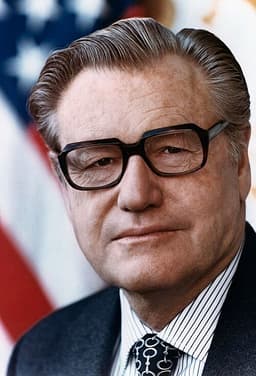
Otho
Emperor · Ancient
39.5Total
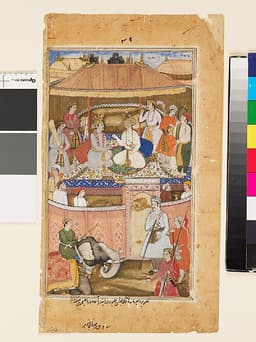
Purukutsa
Emperor · Ancient
39.1Total
Basic Information
Born
32
-1350
Died
69
-1300
Era
Ancient
Ancient
Nationality
Roman Empire
Vedic India
Occupation
Emperor
Emperor
Civilization
Western
Indian
Score Comparison
Military (10%)
35.0
50.0
Political (20%)
30.8
32.1
Influence (20%)
42.4
45.5
Legacy (20%)
33.3
35.8
Leadership (15%)
55.3
33.6
Strategy (15%)
41.7
39.6
TOTAL
39.5
39.1
Otho — Complete Timeline
69 AD
Battle of BedriacumWar◆ Major
Otho's forces were defeated by the army of Vitellius at the First Battle of Bedriacum in northern Italy. Despite having a numerical advantage, Otho's troops were routed. This defeat led Otho to commit suicide to prevent further civil war.
Civil WarBattleSuicide
Impact: nationaltragic
Proclamation as EmperorPolitical Action◆ Major
Otho was proclaimed emperor by the Praetorian Guard after orchestrating the assassination of Galba. He was a former governor of Lusitania and had been a supporter of Nero. His reign began the second phase of the Year of the Four Emperors.
Year of the Four EmperorsPraetorian GuardCoup
Impact: national
Suicide of OthoPolitical Action◆ Major
After his defeat at Bedriacum, Otho committed suicide by stabbing himself. He chose death to spare Rome further bloodshed, a decision praised by some historians. His reign lasted only three months, ending the second phase of the Year of the Four Emperors.
SuicideYear of the Four EmperorsCivil War
Impact: nationaltragic
Purukutsa — Complete Timeline
1350 BC
Mention in Rig VedaCultural
Purukutsa is named in the Rig Veda as a king of the Ikshvaku dynasty. His mention in hymns indicates his historical significance in early Vedic society, though specific deeds are not recorded.
Vedic LiteratureIkshvaku DynastyRoyal Mention
Expert Analysis
Origins
Otho was born in 32 AD into a prominent Roman family. His father, Lucius Otho, was a senator and his mother, Albia Terentia, came from a noble line. Otho was a close friend of Emperor Nero and served as governor of Lusitania from 58 to 68 AD. His early life was marked by luxury and political maneuvering.
Purukutsa is a king mentioned in the Rig Veda, one of the oldest texts in human history. He belonged to the Ikshvaku dynasty, a legendary solar line. Details of his early life are sparse, but he is described as a powerful ruler who performed sacrifices and led his people. His era is estimated around 1500-1200 BCE.
Rise to Power
Otho rose to prominence through his friendship with Nero and his governorship. After Nero's death in 68 AD, Otho initially supported Galba, but grew resentful when Galba adopted Piso as heir. Otho orchestrated Galba's assassination on January 15, 69 AD, and was proclaimed emperor by the Praetorian Guard. His rise was swift and violent, lasting only three months.
Purukutsa's rise is not documented in historical records. As a Vedic king, he likely inherited the throne. His mention in the Rig Veda suggests he was a patron of the Vedic religion and a warrior. He is associated with the River Sindhu (Indus) and is credited with defeating enemies.
Leadership & Governance
Otho's leadership was marked by attempts to stabilize Rome after Galba's unpopular rule. He granted amnesty to political opponents and tried to secure the loyalty of the legions. However, his governance was short-lived. He faced immediate challenge from Vitellius, whose legions marched on Italy. Otho's leadership score is 55.3, reflecting his ability to rally support but his failure to consolidate power.
Purukutsa's governance is inferred from Vedic hymns. As a king, he likely performed yajnas (sacrifices) and protected his tribe. The Rig Veda mentions his generosity and his role in battles. His political score of 32.1 suggests limited administrative scope compared to Roman emperors.
Triumph & Tragedy
Otho's greatest triumph was his swift seizure of power and initial support from the Praetorian Guard and Senate. His suicide after defeat was seen by some as a noble act to prevent civil war. Tacitus praised him for this. His tragedy is his complete failure: he lost the Battle of Bedriacum despite numerical superiority (his forces were about 70,000 against Vitellius's 60,000, according to ancient sources). His military score is 35.0, reflecting poor strategy.
Purukutsa's triumphs include being celebrated in the Rig Veda (Hymn 1.63) for his victories over the Dasyus (non-Vedic peoples). He is also associated with the legendary king Sudas. His tragedy is obscurity: little is known about his reign, and his legacy is confined to a few hymns. His military score of 50.0 is higher than Otho's but based on limited evidence.
Character & Destiny
Otho was ambitious and ruthless but also capable of self-sacrifice. He was known for his charm and extravagance. His decision to commit suicide was a calculated act to spare Rome further war. Ancient historians like Suetonius and Tacitus portray him as a complex figure, capable of both vice and virtue. His total score of 39.5 reflects his brief, dramatic reign.
Purukutsa's character is inferred from his portrayal in the Rig Veda: a warrior-king, generous to priests, and victorious in battle. He is described as "lord of the people" and "protector of the tribe." His destiny was to be remembered in sacred texts, but his historical impact is minimal.
Legacy
Otho's legacy is as a footnote in Roman history. His reign is a cautionary tale of the instability of the Year of the Four Emperors. His suicide was later romanticized as a noble death. His legacy score of 33.3 reflects his limited long-term impact.
Purukutsa's legacy is tied to the Rig Veda. He is one of the few kings named in that text, giving him a place in the earliest Indian literature. However, his influence on later Indian history is negligible. His legacy score is 35.8.
Conclusion
Otho and Purukutsa both had brief, overshadowed reigns. Otho's total score of 39.5 edges Purukutsa's 39.1, but the gap is minimal. However, Otho's impact on Roman history, however small, is more concrete: his actions precipitated a civil war and his suicide set a precedent for imperial self-sacrifice. Purukutsa remains a name in a hymn. Therefore, Otho had a greater historical impact, even if negative. The data supports this: Otho scored higher in leadership (55.3 vs 33.6) and political (30.8 vs 32.1), reflecting his direct role in Roman politics. Purukutsa's higher military score (50.0 vs 35.0) is based on scarce evidence. Ultimately, Otho's story is more consequential.
Rankings
🥇
OthoLeader
Mil: 35.0Pol: 30.8Inf: 42.4
39.5
🥈
Purukutsa
Mil: 50.0Pol: 32.1Inf: 45.5
39.1
+0.4 behind
How This Comparison Works
Algorithm
Each figure is scored on 6 dimensions (0—100 scale) based on structured historical data: Military (10%), Political (20%), Influence (20%), Legacy (20%), Leadership (15%), Strategy (15%). The weighted total produces the final ranking.
Data Sources
Scores are computed from structured sub-indicators in the database. Scale factors adjust for era (Ancient ×0.85, Modern ×1.0) and civilization size (Eastern ×1.05, Other ×0.80) to account for differences in population and military scale.
Maximum 3 Figures
Comparisons are limited to 2—3 figures to ensure readability and statistical meaningfulness.
Error Margins
±5 points per dimension — Sub-scores are derived from historical records with inherent uncertainty. Two figures within 5 points on a dimension should be considered roughly equivalent in that area.
Total Score Accuracy
±3 points overall — The weighted combination of 6 dimensions produces a total score with approximately ±3 points of uncertainty. Differences of less than 3 points are not statistically significant— the figures are effectively tied.
Known Limitations
- Historical records are incomplete and uneven across civilizations
- Figures from oral-tradition societies may be underrepresented
- Occupation labels can misclassify multi-role figures
- Scores measure capability and impact, not moral character
- Quantitative scoring is a comparison tool, not absolute truth
Capability Radar
Military (10%) — Battles & Warfare
Battles
10
10
Win Rate
10
10
Expansion
0
15
Political (20%) — Governance & Reform
Reform
0
10
Diplomacy
20
10
Economy
5
10
Influence (20%) — Cultural & Global Reach
Cultural
5
20
Global
5
10
Legacy (20%) — Historical Impact
Historical
15
20
Longevity
5
15
Leadership (15%) — Power & Stability
Tenure
5
15
Stability
5
15
Strategy (15%) — Tactics & Innovation
Strategy
10
10
Tactics
15
10
Reform
0
5
Similar Comparisons
Comments & Discussion
No comments yet. Be the first to share your thoughts!