Loading...
Otho vs Ziying
Ziying leads by 1.9 pts · 2 figures compared
…
Otho
Emperor · Ancient
39.5Total
Ziying
Emperor · Ancient
41.4Total
Basic Information
Born
32
-240
Died
69
-206
Era
Ancient
Ancient
Nationality
Roman Empire
China
Occupation
Emperor
Emperor
Civilization
Western
Eastern
Score Comparison
Military (10%)
35.0
47.5
Political (20%)
30.8
43.7
Influence (20%)
42.4
42.4
Legacy (20%)
33.3
32.5
Leadership (15%)
55.3
49.9
Strategy (15%)
41.7
38.6
TOTAL
39.5
41.4
Otho — Complete Timeline
69 AD
Battle of BedriacumWar◆ Major
Otho's forces were defeated by the army of Vitellius at the First Battle of Bedriacum in northern Italy. Despite having a numerical advantage, Otho's troops were routed. This defeat led Otho to commit suicide to prevent further civil war.
Civil WarBattleSuicide
Impact: nationaltragic
Proclamation as EmperorPolitical Action◆ Major
Otho was proclaimed emperor by the Praetorian Guard after orchestrating the assassination of Galba. He was a former governor of Lusitania and had been a supporter of Nero. His reign began the second phase of the Year of the Four Emperors.
Year of the Four EmperorsPraetorian GuardCoup
Impact: national
Suicide of OthoPolitical Action◆ Major
After his defeat at Bedriacum, Otho committed suicide by stabbing himself. He chose death to spare Rome further bloodshed, a decision praised by some historians. His reign lasted only three months, ending the second phase of the Year of the Four Emperors.
SuicideYear of the Four EmperorsCivil War
Impact: nationaltragic
Ziying — Complete Timeline
207 BC
Killed Zhao GaoPolitical Action◆ Major
Ziying, after ascending the throne, plotted with his eunuchs to kill Zhao Gao. He succeeded, ending Zhao Gao's tyranny but failing to save the Qin dynasty from collapse.
AssassinationQinZhao Gao
Impact: nationalconstructive
206 BC
Surrendered to Liu BangPolitical Action
Ziying, the last ruler of Qin, surrendered to Liu Bang's rebel forces at Xianyang. This act ended the Qin dynasty and marked the beginning of the Han dynasty.
SurrenderQinHan
Impact: global
Expert Analysis
Origins
Otho was born in 32 AD into a prominent Etruscan family in Ferentium, Italy. His father was a senator and his mother belonged to the noble Aurelii Cottae. Otho was a childhood friend of Emperor Nero and became part of his inner circle, serving as governor of Lusitania from 58 to 68 AD. His early career was marked by luxury and debauchery, but his governorship was competent.
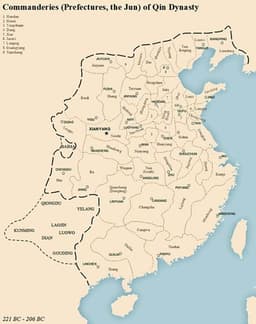
Ziying, born around 250 BC, was a member of the Qin royal family, likely a son or half-brother of Qin Er Shi. Little is known of his early life, but he was raised in the palace of Xianyang. He came from a lineage that had unified China under Shi Huangdi, but the dynasty's harsh Legalist policies had created widespread resentment. Ziying was initially passed over for succession after Zhao Gao's coup, but was later installed as a puppet ruler.
Rise to Power
Otho rose through his connection to Nero and his subsequent betrayal. After Nero's suicide in 68 AD, Otho initially supported Galba, hoping to be named heir. When Galba adopted Piso instead, Otho orchestrated a coup, bribing the Praetorian Guard to assassinate Galba on January 15, 69 AD. He was then proclaimed emperor by the Senate, but his rule was immediately contested by Vitellius, commander of the Rhine legions.
Ziying ascended the throne in October 207 BC after Zhao Gao, the powerful eunuch, had murdered Qin Er Shi. Zhao Gao initially chose Ziying as a figurehead, but Ziying quickly outmaneuvered him. With the help of his eunuchs, he lured Zhao Gao into the palace and killed him, ending his tyranny. However, the Qin dynasty was already crumbling under rebel attacks led by Liu Bang and Xiang Yu.
Leadership & Governance
Otho's leadership was marked by a desire for legitimacy and peace. He attempted to stabilize Rome by confirming Nero's appointments and granting amnesties. However, his governance was short-lived. He led his army to face Vitellius but made strategic errors, such as dividing his forces. At the First Battle of Bedriacum (April 69 AD), his generals fought indecisively, and Otho's army was defeated despite numerical superiority.
Ziying ruled for only 46 days. He attempted to reform the Qin administration by reducing taxes and removing harsh laws, but his authority was limited. He sent troops to defend the Hangu Pass, but the Qin army was demoralized and defeated. His leadership score of 49.9 reflects his brief but decisive action against Zhao Gao, whereas Otho's leadership scores 55.3, indicating slightly better crisis management but with fatal flaws.
Triumph & Tragedy
Otho's greatest triumph was his suicide, which he saw as a noble act to prevent civil war. Tacitus praised him for sparing Italy further bloodshed. His tragedy was his inability to secure his position, leading to a reign of only three months. His military score of 35.0 reflects the defeat at Bedriacum, while his political score of 30.8 shows his failure to build a lasting coalition.
Ziying's triumph was eliminating Zhao Gao, a tyrant who had terrorized the court. This act showed political acumen and courage. His tragedy was his inability to save the Qin dynasty; he surrendered to Liu Bang and was later executed by Xiang Yu. His military score of 47.5 is higher than Otho's, but his political score of 43.7 also reflects a failed state.
Character & Destiny
Otho was described by Suetonius as effeminate and pleasure-loving, but his suicide revealed a stoic resolve. His character was shaped by ambition and a desire for glory, but he lacked the ruthlessness to win a civil war. His decision to die rather than fight on was seen as either honorable or cowardly. His total score of 39.5 reflects a brief, tragic reign.
Ziying was portrayed as a wise but powerless ruler. His killing of Zhao Gao showed strategic thinking, but he inherited an impossible situation. His character was that of a reformer trapped by history. His total score of 41.4 edges out Otho, but both are among the lowest-scoring rulers in history.
Legacy
Otho's legacy is as a footnote in the Year of the Four Emperors. His suicide set a precedent for Roman emperors choosing death over capture. He is remembered more for his dramatic end than his policies. His influence score of 42.4 and legacy score of 33.3 reflect his limited impact.
Ziying's legacy is as the last Qin emperor. His surrender to Liu Bang marked the end of the Qin dynasty and the rise of the Han, which would last over 400 years. His brief reign is often overshadowed by the dynasty's collapse. His influence score of 42.4 matches Otho's, but his legacy score of 32.5 is slightly lower.
Conclusion
While Ziying scores slightly higher overall (41.4 vs 39.5), Otho's decision to commit suicide had a more significant impact on Roman imperial ideology, demonstrating a ruler's responsibility to end civil strife. However, Ziying's elimination of Zhao Gao was a more concrete achievement. In terms of historical impact, Otho's brief reign contributed to the pattern of rapid imperial turnover, while Ziying's surrender was a necessary step for the Han dynasty's establishment. Thus, Ziying had a greater impact due to his role in the Qin-Han transition, but neither ruler was effective. The data supports Ziying as the marginally more influential figure.
Rankings
🥇
ZiyingLeader
Mil: 47.5Pol: 43.7Inf: 42.4
41.4
🥈
Otho
Mil: 35.0Pol: 30.8Inf: 42.4
39.5
+1.9 behind
How This Comparison Works
Algorithm
Each figure is scored on 6 dimensions (0—100 scale) based on structured historical data: Military (10%), Political (20%), Influence (20%), Legacy (20%), Leadership (15%), Strategy (15%). The weighted total produces the final ranking.
Data Sources
Scores are computed from structured sub-indicators in the database. Scale factors adjust for era (Ancient ×0.85, Modern ×1.0) and civilization size (Eastern ×1.05, Other ×0.80) to account for differences in population and military scale.
Maximum 3 Figures
Comparisons are limited to 2—3 figures to ensure readability and statistical meaningfulness.
Error Margins
±5 points per dimension — Sub-scores are derived from historical records with inherent uncertainty. Two figures within 5 points on a dimension should be considered roughly equivalent in that area.
Total Score Accuracy
±3 points overall — The weighted combination of 6 dimensions produces a total score with approximately ±3 points of uncertainty. Differences of less than 3 points are not statistically significant— the figures are effectively tied.
Known Limitations
- Historical records are incomplete and uneven across civilizations
- Figures from oral-tradition societies may be underrepresented
- Occupation labels can misclassify multi-role figures
- Scores measure capability and impact, not moral character
- Quantitative scoring is a comparison tool, not absolute truth
Capability Radar
Military (10%) — Battles & Warfare
Battles
10
5
Win Rate
10
5
Expansion
0
0
Political (20%) — Governance & Reform
Reform
0
0
Diplomacy
20
20
Economy
5
0
Influence (20%) — Cultural & Global Reach
Cultural
5
5
Global
5
5
Legacy (20%) — Historical Impact
Historical
15
10
Longevity
5
5
Leadership (15%) — Power & Stability
Tenure
5
10
Stability
5
5
Strategy (15%) — Tactics & Innovation
Strategy
10
5
Tactics
15
5
Reform
0
0
Similar Comparisons
Comments & Discussion
No comments yet. Be the first to share your thoughts!