Loading...
Otho vs Suppiluliuma II
Otho leads by 2.6 pts · 2 figures compared
…
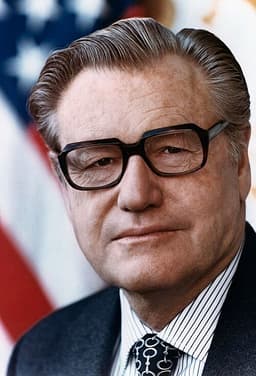
Otho
Emperor · Ancient
39.5Total

Suppiluliuma II
Emperor · Ancient
36.9Total
Basic Information
Born
32
-1207
Died
69
-1178
Era
Ancient
Ancient
Nationality
Roman Empire
Hittite Empire
Occupation
Emperor
Emperor
Civilization
Western
Middle Eastern
Score Comparison
Military (10%)
35.0
25.9
Political (20%)
30.8
35.0
Influence (20%)
42.4
43.2
Legacy (20%)
33.3
35.0
Leadership (15%)
55.3
39.0
Strategy (15%)
41.7
36.8
TOTAL
39.5
36.9
Otho — Complete Timeline
69 AD
Battle of BedriacumWar◆ Major
Otho's forces were defeated by the army of Vitellius at the First Battle of Bedriacum in northern Italy. Despite having a numerical advantage, Otho's troops were routed. This defeat led Otho to commit suicide to prevent further civil war.
Civil WarBattleSuicide
Impact: nationaltragic
Proclamation as EmperorPolitical Action◆ Major
Otho was proclaimed emperor by the Praetorian Guard after orchestrating the assassination of Galba. He was a former governor of Lusitania and had been a supporter of Nero. His reign began the second phase of the Year of the Four Emperors.
Year of the Four EmperorsPraetorian GuardCoup
Impact: national
Suicide of OthoPolitical Action◆ Major
After his defeat at Bedriacum, Otho committed suicide by stabbing himself. He chose death to spare Rome further bloodshed, a decision praised by some historians. His reign lasted only three months, ending the second phase of the Year of the Four Emperors.
SuicideYear of the Four EmperorsCivil War
Impact: nationaltragic
Suppiluliuma II — Complete Timeline
1200 BC
Defense against the Sea PeoplesWar◆ Major
Suppiluliuma II led military campaigns against the Sea Peoples, who were raiding the eastern Mediterranean coast. He fought naval and land battles, but the Hittite defenses were overwhelmed, contributing to the collapse of the empire.
Hittite EmpireSea PeoplesCollapse
Impact: regionaldestructive
1190 BC
Campaign in CyprusWar
Suppiluliuma II launched a naval campaign against the island of Cyprus (Alasiya), which was a base for Sea Peoples' raids. He achieved some success, but the campaign did not prevent the eventual collapse of the Hittite state.
Hittite EmpireCyprusNaval Campaign
Impact: regional
1178 BC
Fall of HattusaWar
The Hittite capital Hattusa was sacked and destroyed, likely by the Sea Peoples or related groups. This event marked the end of the Hittite Empire, as the city was abandoned and the Hittite state ceased to exist.
Hittite EmpireSea PeoplesFall
Impact: regionaltragic
Expert Analysis
Origins
Otho was born in 32 AD into a prominent Etruscan family in the Roman Empire. His father was a senator, and Otho was educated in the elite circles of Rome. He became a close friend of Emperor Nero and served as governor of Lusitania from 58 to 68 AD. Suppiluliuma II, born around 1200 BC, was the son of the Hittite king Tudhaliya IV. He ascended the throne around 1207 BC, inheriting an empire already weakened by internal strife and external pressures from the Sea Peoples and other groups.
Rise to Power
Otho rose to power through political maneuvering. After Nero's death in 68 AD, he supported Galba but soon conspired against him. On January 15, 69 AD, Otho orchestrated Galba's assassination and was proclaimed emperor by the Praetorian Guard. His reign lasted only three months. Suppiluliuma II became king after his brother Arnuwanda III died, likely from plague or assassination. He faced immediate threats from the Sea Peoples, who were ravaging the eastern Mediterranean, and from internal rebellions within the Hittite realm.
Leadership & Governance
Otho's leadership was marked by attempts to stabilize Rome after Galba's unpopular rule. He granted rights to provinces and sought to reconcile with the Senate. However, his military leadership was weak; he delegated command to generals who lost the Battle of Bedriacum. Suppiluliuma II led military campaigns personally, including a naval expedition against Cyprus (Alasiya) to counter the Sea Peoples. He also conducted land battles but could not prevent the fall of Hattusa. His governance was focused on defense rather than reform.
Triumph & Tragedy
Otho's greatest success was his suicide after defeat, which prevented further civil war—an act praised by Tacitus and others. His tragedy was his short, ineffective reign and failure to secure support from the legions. Suppiluliuma II's triumph was his initial success in Cyprus, where he defeated a Sea Peoples fleet. His tragedy was the complete collapse of the Hittite Empire, with Hattusa sacked and burned around 1180 BC, marking the end of a major Bronze Age power.
Character & Destiny
Otho was ambitious but pragmatic; his suicide showed a sense of responsibility. He scored 55.3 in Leadership, reflecting his ability to make a difficult decision for the state. Suppiluliuma II was a determined defender but ultimately overwhelmed by forces beyond his control. His Leadership score of 39.0 indicates his efforts, but the empire's collapse was inevitable given the Bronze Age Collapse.
Legacy
Otho's legacy is as a footnote in the Year of the Four Emperors, remembered for his dramatic suicide. His influence score of 42.4 reflects his brief impact. Suppiluliuma II is remembered as the last Hittite king, his name surviving in inscriptions. His legacy score of 35.0 is low because the empire vanished, but he is a key figure in the Bronze Age Collapse narrative.
Conclusion
Otho had a slightly higher total score (39.5 vs 36.9), but Suppiluliuma II faced a greater existential threat. However, Otho's actions had a more direct impact on Roman history, albeit short-lived. The position is that Otho had greater impact because his reign, though brief, was part of the pivotal transition from the Julio-Claudian to the Flavian dynasty, while Suppiluliuma II presided over the end of an era without lasting influence.
Rankings
🥇
OthoLeader
Mil: 35.0Pol: 30.8Inf: 42.4
39.5
🥈
Suppiluliuma II
Mil: 25.9Pol: 35.0Inf: 43.2
36.9
+2.6 behind
How This Comparison Works
Algorithm
Each figure is scored on 6 dimensions (0—100 scale) based on structured historical data: Military (10%), Political (20%), Influence (20%), Legacy (20%), Leadership (15%), Strategy (15%). The weighted total produces the final ranking.
Data Sources
Scores are computed from structured sub-indicators in the database. Scale factors adjust for era (Ancient ×0.85, Modern ×1.0) and civilization size (Eastern ×1.05, Other ×0.80) to account for differences in population and military scale.
Maximum 3 Figures
Comparisons are limited to 2—3 figures to ensure readability and statistical meaningfulness.
Error Margins
±5 points per dimension — Sub-scores are derived from historical records with inherent uncertainty. Two figures within 5 points on a dimension should be considered roughly equivalent in that area.
Total Score Accuracy
±3 points overall — The weighted combination of 6 dimensions produces a total score with approximately ±3 points of uncertainty. Differences of less than 3 points are not statistically significant— the figures are effectively tied.
Known Limitations
- Historical records are incomplete and uneven across civilizations
- Figures from oral-tradition societies may be underrepresented
- Occupation labels can misclassify multi-role figures
- Scores measure capability and impact, not moral character
- Quantitative scoring is a comparison tool, not absolute truth
Capability Radar
Military (10%) — Battles & Warfare
Battles
10
15
Win Rate
10
10
Expansion
0
5
Political (20%) — Governance & Reform
Reform
0
5
Diplomacy
20
10
Economy
5
5
Influence (20%) — Cultural & Global Reach
Cultural
5
10
Global
5
5
Legacy (20%) — Historical Impact
Historical
15
20
Longevity
5
10
Leadership (15%) — Power & Stability
Tenure
5
20
Stability
5
5
Strategy (15%) — Tactics & Innovation
Strategy
10
10
Tactics
15
15
Reform
0
5
Similar Comparisons
Comments & Discussion
No comments yet. Be the first to share your thoughts!