Loading...
Otho vs Yudhishthira
Yudhishthira leads by 12.0 pts · 2 figures compared
…
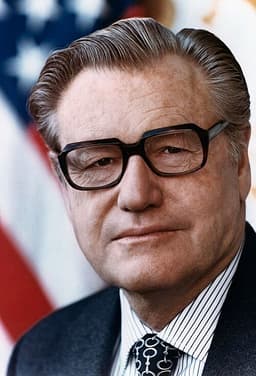
Otho
Emperor · Ancient
39.5Total

Yudhishthira
Emperor · Ancient
51.5Total
Basic Information
Born
32
-1000
Died
69
-950
Era
Ancient
Ancient
Nationality
Roman Empire
Vedic India
Occupation
Emperor
Emperor
Civilization
Western
Indian
Score Comparison
Military (10%)
35.0
30.0
Political (20%)
30.8
68.0
Influence (20%)
42.4
72.0
Legacy (20%)
33.3
40.0
Leadership (15%)
55.3
40.0
Strategy (15%)
41.7
43.3
TOTAL
39.5
51.5
Otho — Complete Timeline
69 AD
Battle of BedriacumWar◆ Major
Otho's forces were defeated by the army of Vitellius at the First Battle of Bedriacum in northern Italy. Despite having a numerical advantage, Otho's troops were routed. This defeat led Otho to commit suicide to prevent further civil war.
Civil WarBattleSuicide
Impact: nationaltragic
Proclamation as EmperorPolitical Action◆ Major
Otho was proclaimed emperor by the Praetorian Guard after orchestrating the assassination of Galba. He was a former governor of Lusitania and had been a supporter of Nero. His reign began the second phase of the Year of the Four Emperors.
Year of the Four EmperorsPraetorian GuardCoup
Impact: national
Suicide of OthoPolitical Action◆ Major
After his defeat at Bedriacum, Otho committed suicide by stabbing himself. He chose death to spare Rome further bloodshed, a decision praised by some historians. His reign lasted only three months, ending the second phase of the Year of the Four Emperors.
SuicideYear of the Four EmperorsCivil War
Impact: nationaltragic
Yudhishthira — Complete Timeline
975 BC
Won the Dice Game Against the KauravasPolitical Action
Yudhishthira, challenged by his cousin Duryodhana, played a rigged dice game. He lost his kingdom, his brothers, his wife Draupadi, and his own freedom, leading to the Pandavas' 13-year exile.
Dice GameExileMahabharata
Impact: nationaltragic
960 BC
Led the Pandavas to Victory at KurukshetraWar◆ Major
Yudhishthira, as the eldest Pandava, commanded the Pandava army in the 18-day Kurukshetra War. Despite moral dilemmas, he led his side to victory, killing the Kaurava army and reclaiming the throne of Hastinapura.
WarVictoryMahabharata
Impact: regional
958 BC
Performed the Ashvamedha YajnaCultural◆ Major
After the war, Yudhishthira performed the Ashvamedha (horse sacrifice) to establish his sovereignty. The ritual horse roamed freely across kingdoms, and those who opposed were conquered, solidifying his rule as emperor.
Vedic RitualImperial ExpansionMahabharata
Impact: nationalconstructive
Expert Analysis
Origins
Otho (born April 28, 32 AD) came from a prominent Etruscan family; his father was a consul. He was a close friend of Emperor Nero and served as governor of Lusitania from 58 to 68 AD. His early career was marked by political maneuvering and alliance with Galba, whom he later betrayed.
Yudhishthira, the eldest Pandava, was born to King Pandu and Queen Kunti, but his divine father was Dharma (Yama). Raised in the forest after Pandu's death, he and his brothers were trained by Drona and others. His early life was defined by exile and the rivalry with his cousins, the Kauravas.
Rise to Power
Otho's rise came through conspiracy: he bribed the Praetorian Guard and orchestrated Galba's assassination on January 15, 69 AD. He was proclaimed emperor with minimal opposition, but his reign lasted only three months. His position was fragile, challenged by Vitellius, commander of the Rhine legions.
Yudhishthira's rise was more complex. He was the rightful heir to Hastinapura, but after losing a rigged dice game to Duryodhana, he and his brothers spent 13 years in exile. He regained his kingdom through the Kurukshetra War (18 days), defeating the Kauravas with Krishna's guidance. He was crowned emperor after the war.
Leadership & Governance
Otho attempted to consolidate power by offering clemency and maintaining Nero's policies. He reduced grain prices and funded the Praetorians. However, his governance was reactive; he lacked a long-term vision. His leadership score of 55.3 reflects his ability to inspire loyalty but his poor strategic decision-making (41.7).
Yudhishthira's governance was rooted in dharma (righteousness). After the war, he performed the Ashvamedha Yajna to assert sovereignty and ruled with a council of ministers. He emphasized justice, but his adherence to dharma sometimes led to indecisiveness. His political score of 68.0 underscores his diplomatic skill, though his military score of 30.0 indicates reliance on others for war.
Triumph & Tragedy
Otho's greatest triumph was his peaceful suicide, which spared Rome from further civil war. Tacitus praised his act as a noble end. His tragedy was his defeat at Bedriacum, where he had a numerical advantage but lost due to poor tactics and the desertion of his troops.
Yudhishthira's triumph was winning the Kurukshetra War and establishing a just rule. His tragedy was the immense cost: millions dead, including his own sons and relatives. He also suffered from guilt over the war's deception and the death of his teacher Drona.
Character & Destiny
Otho was ambitious and cunning, but also pragmatic. His decision to commit suicide showed a sense of responsibility. However, his reliance on political maneuvering over military strength sealed his fate. He scored 35.0 in military, reflecting his weakness in command.
Yudhishthira was characterized by his commitment to truth and dharma, but also by his gambling addiction. His fate was shaped by his choices: the dice game led to exile and war. His score of 72.0 in influence reflects his moral authority, but his leadership (40.0) was often overshadowed by Krishna's guidance.
Legacy
Otho's legacy is minor: he is remembered as a brief footnote in the Year of the Four Emperors. His suicide became a moral exemplar for Roman historians. His influence score of 42.4 reflects his short reign.
Yudhishthira's legacy is vast: he is a central figure in the Mahabharata, embodying the struggle for dharma. His story influences Indian culture, philosophy, and politics. His legacy score of 40.0 is limited by the mythological nature of the epic, but his impact on Hindu thought is profound.
Conclusion
Yudhishthira had greater impact. His story shapes moral and political discourse across millennia, while Otho's reign was a brief crisis. Yudhishthira's total score of 51.5 vs Otho's 39.5 reflects his superior political and influence metrics. Otho's military failure and short tenure cannot match the enduring cultural significance of the Dharmaraja.
Rankings
🥇
YudhishthiraLeader
Mil: 30.0Pol: 68.0Inf: 72.0
51.5
🥈
Otho
Mil: 35.0Pol: 30.8Inf: 42.4
39.5
+12.0 behind
How This Comparison Works
Algorithm
Each figure is scored on 6 dimensions (0—100 scale) based on structured historical data: Military (10%), Political (20%), Influence (20%), Legacy (20%), Leadership (15%), Strategy (15%). The weighted total produces the final ranking.
Data Sources
Scores are computed from structured sub-indicators in the database. Scale factors adjust for era (Ancient ×0.85, Modern ×1.0) and civilization size (Eastern ×1.05, Other ×0.80) to account for differences in population and military scale.
Maximum 3 Figures
Comparisons are limited to 2—3 figures to ensure readability and statistical meaningfulness.
Error Margins
±5 points per dimension — Sub-scores are derived from historical records with inherent uncertainty. Two figures within 5 points on a dimension should be considered roughly equivalent in that area.
Total Score Accuracy
±3 points overall — The weighted combination of 6 dimensions produces a total score with approximately ±3 points of uncertainty. Differences of less than 3 points are not statistically significant— the figures are effectively tied.
Known Limitations
- Historical records are incomplete and uneven across civilizations
- Figures from oral-tradition societies may be underrepresented
- Occupation labels can misclassify multi-role figures
- Scores measure capability and impact, not moral character
- Quantitative scoring is a comparison tool, not absolute truth
Capability Radar
Military (10%) — Battles & Warfare
Battles
10
45
Win Rate
10
40
Expansion
0
35
Political (20%) — Governance & Reform
Reform
0
55
Diplomacy
20
65
Economy
5
50
Influence (20%) — Cultural & Global Reach
Cultural
5
80
Global
5
75
Legacy (20%) — Historical Impact
Historical
15
85
Longevity
5
90
Leadership (15%) — Power & Stability
Tenure
5
60
Stability
5
55
Strategy (15%) — Tactics & Innovation
Strategy
10
40
Tactics
15
35
Reform
0
30
Similar Comparisons
Comments & Discussion
No comments yet. Be the first to share your thoughts!