Loading...
Parakramabahu I vs Prithviraj Chauhan
Parakramabahu I leads by 10.6 pts · 2 figures compared
…
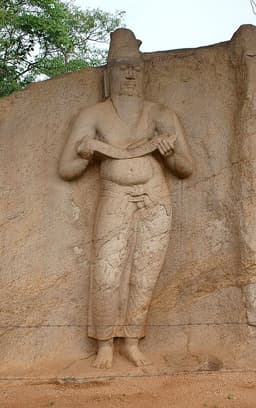
Parakramabahu I
Emperor · Medieval
66.1Total
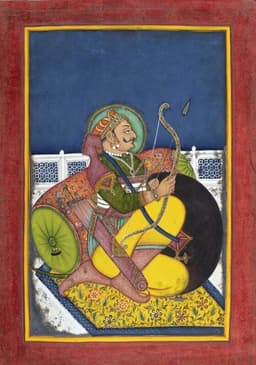
Prithviraj Chauhan
Emperor · Medieval
55.5Total
Basic Information
Born
1123
1166
Died
1186
1192
Era
Medieval
Medieval
Nationality
Sri Lanka
India
Occupation
Emperor
Emperor
Civilization
Indian
Indian
Score Comparison
Military (10%)
82.0
60.0
Political (20%)
72.0
39.4
Influence (20%)
61.0
59.0
Legacy (20%)
52.0
54.0
Leadership (15%)
82.0
67.0
Strategy (15%)
65.4
52.5
TOTAL
66.1
55.5
Parakramabahu I — Complete Timeline
1153 AD
Unification of Sri LankaWar
Parakramabahu I unified the entire island of Sri Lanka under his rule after a series of military campaigns. He defeated the rulers of Ruhuna and other regional kingdoms, ending a period of fragmentation.
Impact: national
1160 AD
Construction of Parakrama SamudraOther◆ Major
Parakramabahu I constructed the Parakrama Samudra, a massive man-made sea of interconnected tanks and canals near Polonnaruwa. This irrigation system, covering over 5,000 acres, was a major engineering achievement.
Impact: regionalconstructive
1165 AD
Invasion of BurmaWar◆ Major
Parakramabahu I launched a naval invasion of Burma (Pagan Kingdom) in retaliation for a trade dispute. The Sinhalese fleet captured the port of Kusumiya and sacked the city, demonstrating Sri Lanka's naval power.
Impact: regional
Reform of the Buddhist SanghaReform◆ Major
Parakramabahu I convened a council to purify the Buddhist Sangha. He expelled corrupt monks and re-established discipline, strengthening Theravada Buddhism in Sri Lanka.
Impact: nationalconstructive
1170 AD
Construction of Polonnaruwa VatadageCultural◆ Major
Parakramabahu I built the Polonnaruwa Vatadage, a circular relic house for the Tooth Relic of the Buddha. This structure is considered a masterpiece of Sinhalese architecture.
Impact: nationalconstructive
Prithviraj Chauhan — Complete Timeline
1177 AD
Accession to the Chauhan ThronePolitical Action
Prithviraj Chauhan succeeded his father Someshvara as ruler of the Chauhan kingdom of Ajmer and Delhi. He was a young king who soon faced threats from the Ghurid Empire under Muhammad of Ghor.
ChauhanAjmerDelhi
Impact: regional
1191 AD
First Battle of TarainWar◆ Major
Prithviraj Chauhan defeated Muhammad of Ghor at the First Battle of Tarain near Thanesar. The Ghurid army was routed, and Muhammad was captured but later released. This victory temporarily halted Ghurid expansion into northern India.
TarainGhuridVictory
Impact: regional
1192 AD
Second Battle of TarainWar
Muhammad of Ghor returned with a larger army and defeated Prithviraj Chauhan at the Second Battle of Tarain. Prithviraj was captured and executed, and the Chauhan kingdom was annexed by the Ghurids, leading to the establishment of Muslim rule in Delhi.
TarainGhuridDefeat
Impact: regionaltragic
Capture and Execution by Muhammad of GhorWar◆ Major
After the Second Battle of Tarain, Prithviraj Chauhan was taken prisoner by Muhammad of Ghor. He was executed shortly after, ending the Chauhan dynasty's rule. His death marked the beginning of the Delhi Sultanate.
ExecutionDelhi SultanateChauhan
Impact: regionaltragic
Expert Analysis
Origins
Parakramabahu I was born around 1123 in the Kingdom of Polonnaruwa, Sri Lanka. He was the son of King Manabharana of Dakkhinadesa, a regional ruler. His early life was shaped by the fragmented political landscape of the island, where multiple kingdoms vied for control. He received education in statecraft and military arts, and his ambition to unify Sri Lanka was evident from a young age. In contrast, Prithviraj Chauhan was born around 1166 in Ajmer, India, into the Rajput Chauhan dynasty. He was the son of King Someshvara, who ruled over Ajmer and later Delhi. Prithviraj's upbringing was typical of Rajput royalty, focusing on martial skills, chivalry, and governance. He ascended the throne at a young age, inheriting a kingdom that faced external threats from the Ghurid Empire.
Rise to Power
Parakramabahu I rose to power through a series of military campaigns. After his father's death, he consolidated control over Dakkhinadesa and then launched campaigns against the Kingdom of Ruhuna. By 1153, he had defeated his rivals, including his uncle Gajabahu II, and became the sole ruler of the entire island. His unification of Sri Lanka was completed by 1165, marking a turning point in his reign. Prithviraj Chauhan, on the other hand, ascended to the throne in 1179 after his father's death. He faced immediate threats from neighboring Rajput kingdoms and the Ghurid Empire. His early reign was marked by victories against the Chandelas and the Ghaznavids, but his defining moment came in 1191 at the First Battle of Tarain, where he defeated Muhammad of Ghor. This victory solidified his reputation as a formidable warrior-king.
Leadership & Governance
Parakramabahu I's leadership was characterized by centralized authority and ambitious public works. He reformed the Buddhist Sangha by convening a council to expel corrupt monks, strengthening Theravada Buddhism. His governance included massive irrigation projects, most notably the Parakrama Samudra, a man-made sea of interconnected tanks and canals that boosted agriculture. He also built the Polonnaruwa Vatadage, a architectural masterpiece. His rule was autocratic but effective in unifying the island. Prithviraj Chauhan's leadership was more feudal, relying on alliances with other Rajput rulers. He was known for his chivalry and valor but lacked a centralized administrative system. His governance focused on military preparedness, but he failed to build lasting institutions. His defeat at the Second Battle of Tarain in 1192 highlighted strategic weaknesses, such as underestimating the Ghurid threat and not securing alliances.
Triumph & Tragedy
Parakramabahu I's greatest triumph was the unification of Sri Lanka, ending centuries of fragmentation. He also launched a successful naval invasion of Burma in 1164, capturing the port of Kusumiya, which demonstrated his military reach. His construction of the Parakrama Samudra remains a lasting achievement. However, his reign saw heavy taxation and forced labor for his building projects, leading to popular discontent. His invasion of Burma, while successful, strained resources. Prithviraj Chauhan's triumph was his victory at the First Battle of Tarain, where he defeated Muhammad of Ghor. This victory made him a symbol of Rajput resistance. His tragedy was his defeat and execution after the Second Battle of Tarain in 1192, which led to the collapse of the Chauhan dynasty and opened North India to Ghurid conquest. His failure to consolidate his victory and prepare for a counterattack was a critical mistake.
Character & Destiny
Parakramabahu I was a visionary and determined ruler, with a strong sense of mission. His personality is reflected in his ambitious projects and military campaigns. Historical assessments describe him as a capable administrator and military strategist, but also as ruthless in suppressing dissent. His destiny was shaped by his ability to mobilize resources and execute grand plans. Prithviraj Chauhan was a chivalrous and brave king, embodying Rajput ideals. However, he was also impulsive and overconfident, as seen in his release of Muhammad of Ghor after the first battle. His character led to his downfall; he failed to adapt to the changing military tactics of the Ghurids. Historians note that his reliance on feudal levies and lack of strategic depth contributed to his defeat.
Legacy
Parakramabahu I's legacy is profound in Sri Lanka. He is remembered as the greatest Sinhalese king, who unified the island and left enduring architectural and irrigation works. The Parakrama Samudra still irrigates thousands of acres. His reforms to the Buddhist Sangha had a lasting impact on Theravada Buddhism. His total score of 66.1 reflects his high military and leadership scores (82.0 and 82.0) but lower influence and legacy (61.0 and 52.0) due to limited global impact. Prithviraj Chauhan's legacy is more ambiguous. He is celebrated in Indian folklore as a symbol of Rajput resistance against Muslim invaders. However, his defeat marked the beginning of Muslim rule in North India. His scores (Military 60.0, Leadership 67.0) are lower than Parakramabahu's, reflecting his ultimate failure. His influence (59.0) and legacy (54.0) are comparable but limited to regional memory.
Conclusion
Parakramabahu I had a greater impact than Prithviraj Chauhan. His unification of Sri Lanka, successful foreign invasion, and massive infrastructure projects demonstrate effective leadership and strategic vision. His total score of 66.1 significantly exceeds Prithviraj's 55.5. While Prithviraj's resistance is notable, his failure to defend his kingdom and the subsequent collapse of Rajput power diminish his historical significance. Parakramabahu's achievements were more concrete and enduring, shaping Sri Lanka's development for centuries. Therefore, Parakramabahu I stands as the more impactful ruler.
Rankings
🥇
Parakramabahu ILeader
Mil: 82.0Pol: 72.0Inf: 61.0
66.1
🥈
Prithviraj Chauhan
Mil: 60.0Pol: 39.4Inf: 59.0
55.5
+10.6 behind
How This Comparison Works
Algorithm
Each figure is scored on 6 dimensions (0—100 scale) based on structured historical data: Military (10%), Political (20%), Influence (20%), Legacy (20%), Leadership (15%), Strategy (15%). The weighted total produces the final ranking.
Data Sources
Scores are computed from structured sub-indicators in the database. Scale factors adjust for era (Ancient ×0.85, Modern ×1.0) and civilization size (Eastern ×1.05, Other ×0.80) to account for differences in population and military scale.
Maximum 3 Figures
Comparisons are limited to 2—3 figures to ensure readability and statistical meaningfulness.
Error Margins
±5 points per dimension — Sub-scores are derived from historical records with inherent uncertainty. Two figures within 5 points on a dimension should be considered roughly equivalent in that area.
Total Score Accuracy
±3 points overall — The weighted combination of 6 dimensions produces a total score with approximately ±3 points of uncertainty. Differences of less than 3 points are not statistically significant— the figures are effectively tied.
Known Limitations
- Historical records are incomplete and uneven across civilizations
- Figures from oral-tradition societies may be underrepresented
- Occupation labels can misclassify multi-role figures
- Scores measure capability and impact, not moral character
- Quantitative scoring is a comparison tool, not absolute truth
Capability Radar
Military (10%) — Battles & Warfare
Battles
75
65
Win Rate
80
60
Expansion
70
45
Political (20%) — Governance & Reform
Reform
80
30
Diplomacy
70
40
Economy
75
35
Influence (20%) — Cultural & Global Reach
Cultural
65
55
Global
40
40
Legacy (20%) — Historical Impact
Historical
70
60
Longevity
60
55
Leadership (15%) — Power & Stability
Tenure
85
50
Stability
80
40
Strategy (15%) — Tactics & Innovation
Strategy
75
55
Tactics
70
70
Reform
65
30
Similar Comparisons
Comments & Discussion
No comments yet. Be the first to share your thoughts!