Loading...
Parakramabahu I vs Taejo of Joseon
Taejo of Joseon leads by 4.3 pts · 2 figures compared
…
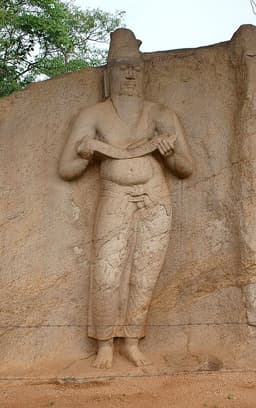
Parakramabahu I
Emperor · Medieval
66.1Total
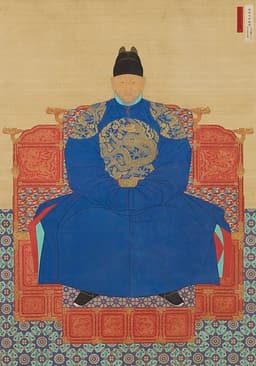
Taejo of Joseon
Emperor · Medieval
70.4Total
Basic Information
Born
1123
1335
Died
1186
1408
Era
Medieval
Medieval
Nationality
Sri Lanka
Korea
Occupation
Emperor
Emperor
Civilization
Indian
Eastern
Score Comparison
Military (10%)
82.0
74.7
Political (20%)
72.0
65.0
Influence (20%)
61.0
65.0
Legacy (20%)
52.0
80.0
Leadership (15%)
82.0
72.0
Strategy (15%)
65.4
61.2
TOTAL
66.1
70.4
Parakramabahu I — Complete Timeline
1153 AD
Unification of Sri LankaWar
Parakramabahu I unified the entire island of Sri Lanka under his rule after a series of military campaigns. He defeated the rulers of Ruhuna and other regional kingdoms, ending a period of fragmentation.
Impact: national
1160 AD
Construction of Parakrama SamudraOther◆ Major
Parakramabahu I constructed the Parakrama Samudra, a massive man-made sea of interconnected tanks and canals near Polonnaruwa. This irrigation system, covering over 5,000 acres, was a major engineering achievement.
Impact: regionalconstructive
1165 AD
Invasion of BurmaWar◆ Major
Parakramabahu I launched a naval invasion of Burma (Pagan Kingdom) in retaliation for a trade dispute. The Sinhalese fleet captured the port of Kusumiya and sacked the city, demonstrating Sri Lanka's naval power.
Impact: regional
Reform of the Buddhist SanghaReform◆ Major
Parakramabahu I convened a council to purify the Buddhist Sangha. He expelled corrupt monks and re-established discipline, strengthening Theravada Buddhism in Sri Lanka.
Impact: nationalconstructive
1170 AD
Construction of Polonnaruwa VatadageCultural◆ Major
Parakramabahu I built the Polonnaruwa Vatadage, a circular relic house for the Tooth Relic of the Buddha. This structure is considered a masterpiece of Sinhalese architecture.
Impact: nationalconstructive
Taejo of Joseon — Complete Timeline
1380 AD
Battle of HwangsanWar
General Yi Seong-gye defeated a Japanese pirate (wokou) force at Hwangsan. This victory enhanced his military reputation and demonstrated his capability as a commander.
WokouGoryeo Military
1388 AD
Wihwado RetreatPolitical Action
General Yi Seong-gye, ordered to invade the Ming dynasty's Liaodong region, turned his army back at Wihwado Island. This act of defiance against the Goryeo court led to a coup that eventually brought him to power.
CoupGoryeo-Ming RelationsPower Shift
Impact: national
1391 AD
Land Reform and the Gwajeon LawReform◆ Major
Taejo implemented the Gwajeon Law, a land reform that redistributed land from the old Goryeo aristocracy to his supporters and the state. This weakened the old elite and strengthened the new Joseon ruling class.
Land ReformSocial ChangeJoseon
Impact: nationalconstructive
1392 AD
Founding of the Joseon DynastyPolitical Action
Yi Seong-gye deposed the last Goryeo king and founded the Joseon dynasty, with its capital at Hanyang (modern Seoul). He established a new ruling class based on Confucian ideology, replacing the Buddhist-influenced Goryeo system.
Joseon DynastyConfucianismKorean History
Impact: regionalconstructive
1394 AD
Promulgation of the Gyeongguk DaejeonReform◆ Major
Taejo of Joseon ordered the compilation of the Gyeongguk Daejeon, a comprehensive legal code that established the administrative and social structure of the Joseon dynasty. This code remained in effect for centuries.
Legal CodeGovernanceConfucianism
Impact: nationalconstructive
Expert Analysis
Taejo of Joseon vs Parakramabahu I
# The Two Founders: Yi Seong-gye and Parakramabahu I
In the summer of 1388, a Korean general named Yi Seong-gye stood on Wihwado Island, facing a decision that would alter the course of East Asian history. His king had ordered him to invade China’s Ming dynasty—a suicidal campaign that could destroy his army and his kingdom. Yi turned his army around, not toward the enemy, but toward his own capital. Three thousand miles away, three decades earlier, another young prince named Parakramabahu had watched his island of Sri Lanka splinter into warring kingdoms, each claiming sovereignty, each bleeding the land dry. Both men would become founders—one of a dynasty that ruled for five centuries, the other of a golden age that still echoes in Sri Lanka’s ancient reservoirs. But their paths reveal starkly different visions of what it means to build a lasting state.
Origins
Yi Seong-gye was born in 1335 into a turbulent Korea. The Goryeo dynasty, once glorious, had rotted from within. Mongol influence still lingered, Japanese pirates ravaged the coasts, and the court was paralyzed by factional infighting. Yi’s father was a minor military official, but the young Yi grew up in a world where survival depended on strength and cunning. He learned archery as a boy, fought his first battle as a young man, and quickly earned a reputation for ruthless competence. The Goryeo system rewarded noble birth, but Yi understood that in a crumbling order, the man who could win battles would eventually write the laws.
Parakramabahu I, born in 1123, came from a different world. Sri Lanka had known unity under the Anuradhapura kingdom, but by the twelfth century, that unity had shattered. The island was divided into three rival principalities: Rajarata, Dakkhinadesa, and Ruhuna. Parakramabahu was a prince of Dakkhinadesa, raised in a palace where Buddhist scriptures and military strategy were taught side by side. His father was a king, his uncles were kings, and his cousins were rivals. He learned early that power in Sri Lanka was not won through a single dramatic turn, but through patient accumulation of alliances, irrigation projects, and religious patronage.
Rise to Power
Yi Seong-gye’s rise was forged in blood. In 1380, at the Battle of Hwangsan, he annihilated a force of Japanese pirates (wokou) that had terrorized the southern coast. The victory made him a national hero, but it also made him a threat. The Goryeo court, desperate and divided, ordered him to invade Ming China’s Liaodong region in 1388. It was a trap—either he would die in China, or he would be destroyed by the political fallout of refusal. Yi chose a third path. At Wihwado Island, he turned his army back toward Kaesong, the capital. He did not immediately seize the throne; instead, he purged his rivals, placed a puppet king on the throne, and waited. In 1392, he finally deposed the last Goryeo king and proclaimed the Joseon dynasty.
Parakramabahu’s rise was slower and more deliberate. He spent years consolidating power in Dakkhinadesa, building irrigation systems to win the loyalty of farmers, and cultivating the Buddhist sangha to secure religious legitimacy. When he finally marched against his rivals in 1153, it was not a sudden coup but the culmination of a decade of preparation. He defeated the king of Rajarata, then the king of Ruhuna, and by the end of the year, he had unified the entire island under a single crown. Where Yi had used a single dramatic betrayal to seize power, Parakramabahu had built his authority brick by brick, canal by canal.
Leadership & Governance
Their styles of rule reflected their paths to power. Yi Seong-gye, now King Taejo of Joseon, understood that a new dynasty needed a new foundation. In 1391, even before formally taking the throne, he implemented the Gwajeon Law, a sweeping land reform that confiscated estates from the old Goryeo aristocracy and redistributed them to his supporters. It was a brutal but effective move: it broke the economic power of the old elite and created a new class of scholar-officials loyal to the throne. In 1394, he ordered the compilation of the Gyeongguk Daejeon, a comprehensive legal code that would govern Korea for centuries. He moved the capital to Hanyang (modern Seoul), a site chosen for its geomantic properties and strategic defensibility.
Parakramabahu governed through infrastructure and religion. His greatest achievement was the Parakrama Samudra, a massive man-made sea built around 1160—a network of interconnected tanks and canals that transformed the dry northern plains into fertile farmland. The reservoir still irrigates Sri Lanka today. He also reformed the Buddhist sangha in 1165, convening a council that expelled corrupt monks and re-established monastic discipline. His Polonnaruwa Vatadage, built around 1170, housed the sacred Tooth Relic of the Buddha, making his capital a pilgrimage center. Where Taejo ruled through law and land, Parakramabahu ruled through water and faith.
Triumph & Tragedy
Taejo’s greatest triumph was the founding of Joseon itself—a dynasty that would last until 1910. But his tragedy was personal. He had multiple sons, and the question of succession tore his family apart. His fifth son, Yi Bang-won, had helped him seize power but was passed over for the crown prince. The resulting conflict led to the deaths of Taejo’s wife and several sons. In 1398, a devastated Taejo abdicated and spent his final years in bitter retirement, watching his children destroy each other.
Parakramabahu’s triumph was the unification of Sri Lanka and the construction of a hydraulic civilization that sustained millions. But his ambition led to overreach. In 1165, he launched a naval invasion of Burma (the Pagan Kingdom) over a trade dispute. The Sinhalese fleet won victories, but the campaign drained resources and achieved no lasting gain. His reign ended in 1186, and within decades, the unified kingdom he built began to fragment again.
Character & Destiny
Taejo was a pragmatist. He was not a visionary philosopher-king but a general who understood that power flows from land and loyalty. His Confucian reforms were not born of deep conviction but of necessity: he needed a new ideology to replace the discredited Buddhist aristocracy of Goryeo. His personality was cautious, even paranoid—he had seen too many betrayals to trust easily. This caution saved him during the Wihwado Retreat but also poisoned his family.
Parakramabahu was a builder, in every sense of the word. His inscriptions boast that “not even a drop of water from the rain should flow into the ocean without being made useful to man.” He saw the kingdom as a machine to be engineered, with canals for arteries and monasteries for a soul. His personality was expansive, almost grandiose—he wanted not just to rule Sri Lanka but to project power across the Indian Ocean. This ambition created wonders, but it also created vulnerabilities.
Legacy
Taejo’s legacy is the Joseon dynasty—one of the longest-lasting kingdoms in world history. His legal code, his land reforms, and his capital city shaped Korea for five centuries. Today, he is remembered as the founder of a civilization, not just a dynasty. His portrait hangs in government buildings, and his tomb in Guri is a national treasure.
Parakramabahu’s legacy is more tangible. The Parakrama Samudra still waters Sri Lanka’s rice fields. The Vatadage still stands in Polonnaruwa, a UNESCO World Heritage site. He is remembered as the greatest king of medieval Sri Lanka, the one who made the island whole. But his kingdom did not outlast him by more than a generation.
Conclusion
Two founders, two islands, two centuries apart. Taejo built a state that lasted five hundred years; Parakramabahu built a golden age that lasted thirty. The difference was not in their ambition—both wanted to create something permanent—but in their understanding of what permanence requires. Taejo understood that a dynasty needs institutions: laws, land systems, a bureaucracy that outlives any single ruler. Parakramabahu understood that a civilization needs infrastructure: water, temples, a shared faith that binds people to the land. Both were right. But institutions outlast canals, and laws outlast reservoirs. In the end, the most durable foundation a founder can build is not stone or water, but the structure of power itself.
Rankings
🥇
Taejo of JoseonLeader
Mil: 74.7Pol: 65.0Inf: 65.0
70.4
🥈
Parakramabahu I
Mil: 82.0Pol: 72.0Inf: 61.0
66.1
+4.3 behind
How This Comparison Works
Algorithm
Each figure is scored on 6 dimensions (0—100 scale) based on structured historical data: Military (10%), Political (20%), Influence (20%), Legacy (20%), Leadership (15%), Strategy (15%). The weighted total produces the final ranking.
Data Sources
Scores are computed from structured sub-indicators in the database. Scale factors adjust for era (Ancient ×0.85, Modern ×1.0) and civilization size (Eastern ×1.05, Other ×0.80) to account for differences in population and military scale.
Maximum 3 Figures
Comparisons are limited to 2—3 figures to ensure readability and statistical meaningfulness.
Error Margins
±5 points per dimension — Sub-scores are derived from historical records with inherent uncertainty. Two figures within 5 points on a dimension should be considered roughly equivalent in that area.
Total Score Accuracy
±3 points overall — The weighted combination of 6 dimensions produces a total score with approximately ±3 points of uncertainty. Differences of less than 3 points are not statistically significant— the figures are effectively tied.
Known Limitations
- Historical records are incomplete and uneven across civilizations
- Figures from oral-tradition societies may be underrepresented
- Occupation labels can misclassify multi-role figures
- Scores measure capability and impact, not moral character
- Quantitative scoring is a comparison tool, not absolute truth
Capability Radar
Military (10%) — Battles & Warfare
Battles
75
75
Win Rate
80
80
Expansion
70
65
Political (20%) — Governance & Reform
Reform
80
85
Diplomacy
70
70
Economy
75
65
Influence (20%) — Cultural & Global Reach
Cultural
65
80
Global
40
60
Legacy (20%) — Historical Impact
Historical
70
85
Longevity
60
80
Leadership (15%) — Power & Stability
Tenure
85
70
Stability
80
75
Strategy (15%) — Tactics & Innovation
Strategy
75
75
Tactics
70
70
Reform
65
60
Similar Comparisons
Comments & Discussion
破阵书生6/16/2026
作为朝鲜史爱好者,我站李成桂。他治国更务实,土田制改革彻底扫除高丽旧贵族的根基。而波罗迦罗摩巴忽一世呢?修大水库确实辉煌,可他留下的中央集权在死后三十年就崩塌了。李成桂建立的朝鲜王朝挺了五百年,这事儿本身就很说明问题。别跟我提那些花哨的庙宇,长久的制度才见真章。
ScribeOfKotte6/16/2026
As a chronicle junkie, I’m backing Parakramabahu. Yes, Yi founded a dynasty that lasted centuries, but Parakramabahu unified Sri Lanka through an engineering vision so vast it reshaped the island’s geography. The Parakrama Samudra isn’t just a reservoir—it’s a monument of statecraft that still irrigates over 6,000 acres today. Yi’s turn at Wihwado was a brilliant political move, but Parakramabahu’s legacy is literally etched into the landscape.
铁骑判官6/16/2026
我偏李成桂。他有真战场直觉——在荒山以少胜多,靠的是蒙古式骑兵战术的灵活运用。波罗迦罗摩巴忽一世呢?史料里他的军事行动全靠僧侣和文官写颂歌吹捧,具体战法模糊得像神话。李成桂亲手射箭的记载就有多处,那位斯里兰卡国王连亲征记录都存疑。一个实打实的军阀,一个被神化的统治者,高下立判。
MarginalNotes6/16/2026
I’m the guy who reads between the lines of official praise, and I’m skeptical of both. Parakramabahu’s “unification” was mostly forcing local chiefs into submission—then burning their capitals. Yi’s “loyal turn” at Wihwado was a coup dressed as moral choice. The Mahavamsa whitewashes Parakramabahu’s massacres; Joseon annals sanitize Yi’s purge of rivals like Jeong Mong-ju. Both were pragmatic warlords who got good scribes. Let’s call it even.