Loading...
Parakramabahu I vs Tamar of Georgia
Tamar of Georgia leads by 5.4 pts · 2 figures compared
…
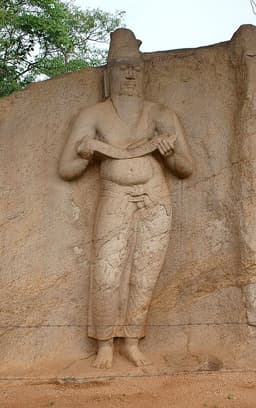
Parakramabahu I
Emperor · Medieval
66.1Total
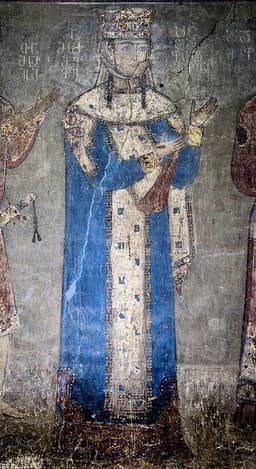
Tamar of Georgia
Emperor · Medieval
71.5Total
Basic Information
Born
1123
1160
Died
1186
1213
Era
Medieval
Medieval
Nationality
Sri Lanka
Georgia
Occupation
Emperor
Emperor
Civilization
Indian
Western
Score Comparison
Military (10%)
82.0
78.0
Political (20%)
72.0
72.0
Influence (20%)
61.0
82.0
Legacy (20%)
52.0
55.0
Leadership (15%)
82.0
80.0
Strategy (15%)
65.4
66.3
TOTAL
66.1
71.5
Parakramabahu I — Complete Timeline
1153 AD
Unification of Sri LankaWar
Parakramabahu I unified the entire island of Sri Lanka under his rule after a series of military campaigns. He defeated the rulers of Ruhuna and other regional kingdoms, ending a period of fragmentation.
Impact: national
1160 AD
Construction of Parakrama SamudraOther◆ Major
Parakramabahu I constructed the Parakrama Samudra, a massive man-made sea of interconnected tanks and canals near Polonnaruwa. This irrigation system, covering over 5,000 acres, was a major engineering achievement.
Impact: regionalconstructive
1165 AD
Invasion of BurmaWar◆ Major
Parakramabahu I launched a naval invasion of Burma (Pagan Kingdom) in retaliation for a trade dispute. The Sinhalese fleet captured the port of Kusumiya and sacked the city, demonstrating Sri Lanka's naval power.
Impact: regional
Reform of the Buddhist SanghaReform◆ Major
Parakramabahu I convened a council to purify the Buddhist Sangha. He expelled corrupt monks and re-established discipline, strengthening Theravada Buddhism in Sri Lanka.
Impact: nationalconstructive
1170 AD
Construction of Polonnaruwa VatadageCultural◆ Major
Parakramabahu I built the Polonnaruwa Vatadage, a circular relic house for the Tooth Relic of the Buddha. This structure is considered a masterpiece of Sinhalese architecture.
Impact: nationalconstructive
Tamar of Georgia — Complete Timeline
1184 AD
Coronation as Queen RegnantPolitical Action
Tamar was crowned as the first female ruler of Georgia after her father George III's death. Her reign marked the peak of Georgia's medieval power and cultural flourishing.
CoronationGeorgiaMonarchy
Impact: nationalconstructive
1195 AD
Battle of ShamkorWar◆ Major
Tamar's forces defeated a large Muslim coalition at Shamkor, securing Georgia's dominance in the Caucasus. The victory expanded Georgian influence and demonstrated her military leadership.
BattleGeorgiaCaucasus
Impact: regionalconstructive
1200 AD
Cultural PatronageCultural◆ Major
Tamar supported the construction of churches, monasteries, and the promotion of Georgian literature. Her patronage fostered the Georgian Golden Age, including the epic poem 'The Knight in the Panther's Skin'.
CulturePatronageGeorgia
Impact: nationalconstructive
Expert Analysis
Tamar of Georgia vs Parakramabahu I
# Two Crowns, One Age: Parakramabahu I and Tamar of Georgia
On a hilltop in Polonnaruwa, a king surveyed his greatest work: a vast artificial sea, shimmering under the tropical sun, fed by canals that stretched across the island. Half a world away, in the Caucasus mountains, a queen rode at the head of her army, her golden armor catching the light as her forces crushed a coalition that had threatened her kingdom. Parakramabahu I and Tamar of Georgia never met, never knew of each other’s existence. Yet both ruled in the same century, both inherited fractured realms, and both built golden ages that would echo through history. What made one a builder of water and stone, the other a warrior and patron of poetry? The answer lies not in their achievements alone, but in the worlds that shaped them.
Origins
Parakramabahu was born in 1123 into a Sri Lanka divided by petty kings and rival claimants. His father, Manabharana, ruled a small principality, and the young prince grew up in the shadow of civil war. The island had known unity before—under the ancient kings of Anuradhapura—but that glory had crumbled. Parakramabahu inherited a land of broken irrigation systems and warring factions, a place where survival demanded both sword and shovel. His education was practical: he learned to lead men, to read the monsoon rains, and to understand that water meant power.
Tamar, born in 1160, entered a different world. Georgia, perched between the Black and Caspian Seas, was a Christian kingdom surrounded by Muslim empires. Her father, George III, had fought to centralize power against rebellious nobles. Tamar grew up in a court where Byzantine elegance met Persian poetry, where the Bible was read alongside the epic romance of “The Knight in the Panther’s Skin.” She was raised to rule—trained in statecraft, theology, and military strategy. But she was also a woman in an age that rarely trusted women with crowns.
Rise to Power
Parakramabahu’s path was forged in blood. In 1153, after years of maneuvering, he launched a campaign to unify Sri Lanka. He defeated rival kings one by one, culminating in the capture of Polonnaruwa. The unification was not a diplomatic marriage or a treaty—it was a conquest. He crushed his enemies, executed those who resisted, and imposed his will by the sword. By 1153, he was the undisputed master of the island. His rise was a story of raw ambition, military genius, and a willingness to wade through rivers of blood.
Tamar’s ascent was quieter but no less dramatic. When her father died in 1184, she was crowned Queen Regnant—a first for Georgia. The nobles, unused to a female ruler, tested her immediately. They demanded she marry a Russian prince to provide a male figurehead. Tamar refused, choosing instead a Georgian nobleman, Yuri Bogolyubsky, who proved incompetent and rebellious. She divorced him, faced a rebellion, and crushed it. Her rise was not a conquest but a negotiation with power, a constant proving of her worth in a world that doubted her simply for being born female.
Leadership & Governance
Parakramabahu ruled as a builder-king. His reign is defined by the Parakrama Samudra, the “Sea of Parakrama,” constructed in 1160. This massive man-made reservoir, connected to a network of canals, transformed Sri Lanka’s agriculture. He did not just conquer—he irrigated. He reformed the Buddhist Sangha in 1165, expelling corrupt monks and restoring discipline, ensuring that religion served the state. His military campaigns extended beyond the island: in 1165, he launched a naval invasion of Burma (the Pagan Kingdom) in retaliation for a trade dispute, proving that Sri Lanka could project power across the Indian Ocean. But his governance was harsh—centralized, authoritarian, and relentless.
Tamar ruled as a diplomat and patron. Her military victories were stunning: at the Battle of Shamkor in 1195, her forces defeated a massive Muslim coalition, securing Georgia’s dominance in the Caucasus. But she did not rule by fear alone. She fostered a cultural renaissance, supporting the construction of churches and monasteries, and promoting the epic poet Shota Rustaveli, whose “The Knight in the Panther’s Skin” became a national treasure. Her court was a place of learning, art, and religious tolerance. She governed through alliance and inspiration, not just force.
Triumph & Tragedy
Parakramabahu’s greatest triumph was the unification of Sri Lanka and the creation of an irrigation system that sustained the island for centuries. His tragedy was that his empire did not long outlast him. After his death in 1186, the kingdom fragmented. His successors lacked his vision, and the golden age of Polonnaruwa faded into decline.
Tamar’s triumph was the Golden Age of Georgia—a period of military power, cultural flowering, and political stability. Her tragedy was that her successors could not maintain it. After her death in 1213, the Mongol invasions swept across the Caucasus, and Georgia’s golden age crumbled under foreign conquest.
Character & Destiny
Parakramabahu was a man of iron will. He saw the world as a problem to be solved through action—conquest, construction, reform. His personality was relentless, his vision singular. He demanded loyalty and punished betrayal without mercy. His destiny was to build something vast and durable, but also brittle—a kingdom that depended on his own strength.
Tamar was a woman of intelligence and grace. She ruled not through brute force but through persuasion, marriage alliances, and cultural patronage. Her personality was more flexible, more adaptive. She understood that a queen could not simply command—she had to inspire. Her destiny was to create a golden age that would outlive her in memory, even if the political structure collapsed.
Legacy
Parakramabahu is remembered as the greatest king of medieval Sri Lanka. His Parakrama Samudra still irrigates the island’s rice fields. His capital, Polonnaruwa, remains a UNESCO World Heritage Site. He is a symbol of national unity and engineering genius.
Tamar is remembered as the “King of Kings” (she was called that, even as a woman). She is a national icon in Georgia, celebrated in literature, art, and folklore. Her reign is seen as the pinnacle of Georgian civilization. She is a symbol of strength, wisdom, and cultural achievement.
Conclusion
Two rulers, two golden ages, two different paths. Parakramabahu built with stone and water; Tamar built with poetry and alliances. One conquered and constructed; the other inspired and cultivated. Their differences reflect their worlds: a tropical island where survival meant controlling water, and a mountain kingdom where survival meant navigating between empires. But both understood that true power is not just about winning battles—it is about leaving something behind that outlasts the sword. In that, they were equals.
Rankings
🥇
Tamar of GeorgiaLeader
Mil: 78.0Pol: 72.0Inf: 82.0
71.5
🥈
Parakramabahu I
Mil: 82.0Pol: 72.0Inf: 61.0
66.1
+5.4 behind
How This Comparison Works
Algorithm
Each figure is scored on 6 dimensions (0—100 scale) based on structured historical data: Military (10%), Political (20%), Influence (20%), Legacy (20%), Leadership (15%), Strategy (15%). The weighted total produces the final ranking.
Data Sources
Scores are computed from structured sub-indicators in the database. Scale factors adjust for era (Ancient ×0.85, Modern ×1.0) and civilization size (Eastern ×1.05, Other ×0.80) to account for differences in population and military scale.
Maximum 3 Figures
Comparisons are limited to 2—3 figures to ensure readability and statistical meaningfulness.
Error Margins
±5 points per dimension — Sub-scores are derived from historical records with inherent uncertainty. Two figures within 5 points on a dimension should be considered roughly equivalent in that area.
Total Score Accuracy
±3 points overall — The weighted combination of 6 dimensions produces a total score with approximately ±3 points of uncertainty. Differences of less than 3 points are not statistically significant— the figures are effectively tied.
Known Limitations
- Historical records are incomplete and uneven across civilizations
- Figures from oral-tradition societies may be underrepresented
- Occupation labels can misclassify multi-role figures
- Scores measure capability and impact, not moral character
- Quantitative scoring is a comparison tool, not absolute truth
Capability Radar
Military (10%) — Battles & Warfare
Battles
75
75
Win Rate
80
85
Expansion
70
75
Political (20%) — Governance & Reform
Reform
80
80
Diplomacy
70
75
Economy
75
85
Influence (20%) — Cultural & Global Reach
Cultural
65
80
Global
40
60
Legacy (20%) — Historical Impact
Historical
70
75
Longevity
60
70
Leadership (15%) — Power & Stability
Tenure
85
85
Stability
80
70
Strategy (15%) — Tactics & Innovation
Strategy
75
80
Tactics
70
70
Reform
65
65
Similar Comparisons
Comments & Discussion
Tank-Builder vs. Poet-Queen6/16/2026
Honestly, give me Parakramabahu any day. Tamar inspired poets; he *moved mountains*. Building the Parakrama Samudra wasn't just a reservoir—it was a 5,000-acre economic engine that transformed Sri Lanka. You can *see* his vision in stone and water. Tamar's legacy is beautiful verses. His is a landscape permanently reshaped. That's real power.
水利史官6/16/2026
比起塔玛尔那些浪漫的骑士传说,帕拉克拉马巴胡的“海”才是真功夫。这座巨型人工湖蓄水超过8000万立方米,至今还在灌溉农田。战争文人谁都可能当几回赢家,但能创造持续八百年民生基建的,才是真正的明君。塔玛尔是贵族的偶像,但他是农民的救星。
Sea-Dragon Wrangler6/16/2026
Call Tamar a "golden age" ruler all you want, but her realm crumbled within a century of her death. Parakramabahu's administrative reforms and irrigation networks kept Sri Lanka fed and functional for generations. You can't eat a poem. You can't fight a Mongol horde with courtly epics. One built for permanence; the other built for a fleeting moment of Caucasian splendor.
帝国分析员6/16/2026
这对比根本是错位的!塔玛尔面临的是生存危机——塞尔柱、蒙古、拜占庭三面夹击。帕拉克拉马巴胡面对的不过是岛内割据。塔玛尔在1204年十字军洗劫君士坦丁堡后,让格鲁吉亚成了东正教唯一灯塔。而帕王修的不过是维护自家后院。格局完全不同,塔玛尔的压力等级高了一个量级。
History's Balance Sheet6/16/2026
Let's be real: Parakramabahu unified a fractured island through sheer infrastructural megalomania, while Tamar rode cultural prestige to hold together a feudal kingdom. But who had the harder terrain? Georgia was a mountainous crossroads of empires; Sri Lanka was a fertile island. Tamar juggled Crusaders, Turks, and Byzantines. He just had to dig canals. Context matters—Tamar's balancing act was geopolitical gymnastics.