Loading...
Praexedes Mateo Sagasta vs Tancredo Neves
Praexedes Mateo Sagasta leads by 0.2 pts · 2 figures compared
…

Praexedes Mateo Sagasta
Politician · Modern
52.4Total
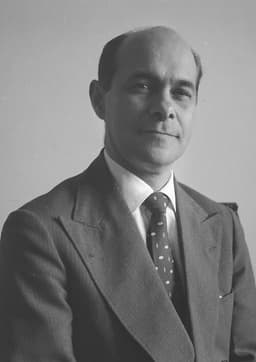
Tancredo Neves
Politician · Modern
52.2Total
Basic Information
Born
1825
1910
Died
1903
1985
Era
Modern
Modern
Nationality
Spain
Brazil
Occupation
Politician
Politician
Civilization
Western
Western
Score Comparison
Military (10%)
10.4
49.7
Political (20%)
60.0
68.0
Influence (20%)
55.7
49.4
Legacy (20%)
48.3
42.5
Leadership (15%)
79.8
65.0
Strategy (15%)
43.5
43.5
TOTAL
52.4
52.2
Praexedes Mateo Sagasta — Complete Timeline
1885 AD
Signed the Pact of El PardoPolitical Action◆ Major
Sagasta, as leader of the Liberal Party, signed the Pact of El Pardo with Conservative leader Antonio Canovas del Castillo. This agreement formalized the turno pacifico, ensuring the peaceful alternation of power between the two parties after the death of King Alfonso XII.
Political PactTurno PacificoRestoration
Impact: nationalconstructive
1887 AD
Approved the Law of AssociationsReform◆ Major
Sagasta's government passed the Law of Associations, which legalized trade unions and political organizations. This law provided a legal framework for labor movements and political parties, fostering the growth of civil society in Spain.
AssociationsLabor RightsCivil Society
Impact: nationalprogressive
1890 AD
Passed the Law of Universal Suffrage (1890)Reform◆ Major
As prime minister, Sagasta enacted the Law of Universal Suffrage for men over 25, replacing the previous census-based suffrage. This reform expanded the electorate significantly, though its impact was limited by continued electoral manipulation through caciquismo.
SuffrageElectoral ReformDemocracy
Impact: nationalprogressive
1898 AD
Led Spain During the Spanish-American WarWar
Sagasta was prime minister when the Spanish-American War broke out following the sinking of the USS Maine. Spain suffered a decisive defeat, losing its remaining colonies of Cuba, Puerto Rico, the Philippines, and Guam, marking the end of the Spanish Empire.
Spanish-American WarColonial LossEmpire
Impact: globaltragic
Tancredo Neves — Complete Timeline
1983 AD
Governor of Minas GeraisPolitical Action
Tancredo Neves was elected Governor of Minas Gerais in 1982 and took office in 1983. His administration was noted for its support of democratic reforms and opposition to the military regime.
GovernorshipDemocratic opposition
Impact: regionalconstructive
1985 AD
Elected President of BrazilPolitical Action
Tancredo Neves was elected President of Brazil by the Electoral College on January 15, 1985, defeating the military regime's candidate. His election marked the end of 21 years of military dictatorship and the beginning of Brazil's return to democracy.
DemocratizationEnd of dictatorshipElection
Impact: nationalprogressive
Hospitalization and Death Before InaugurationOther◆ Major
On March 14, 1985, the eve of his inauguration, Tancredo Neves was hospitalized with severe abdominal pain. He underwent multiple surgeries but died on April 21, 1985, without ever taking office. His death caused national mourning and a political crisis.
DeathPolitical crisisNational mourning
Impact: nationaltragic
Expert Analysis
Origins
Praexedes Mateo Sagasta was born on July 21, 1825, in Torrecilla de Cameros, Spain. He studied civil engineering at the University of Madrid but soon turned to politics, joining the Progressive Party. His early career included involvement in the 1854 revolution and service as a deputy. Sagasta's background in engineering gave him a pragmatic approach to governance.
Tancredo Neves was born on March 4, 1910, in São João del-Rei, Minas Gerais, Brazil. He studied law at the Federal University of Minas Gerais and entered politics as a state deputy in 1935. Neves was a moderate liberal who opposed the Estado Novo dictatorship. His legal training shaped his conciliatory style.
Rise to Power
Sagasta rose through the ranks of the Liberal Party, becoming its leader after the 1868 Glorious Revolution. He served as prime minister multiple times, first in 1871. His key ally was General Francisco Serrano, and his main opponent was Conservative leader Antonio Cánovas del Castillo. In 1885, Sagasta signed the Pact of El Pardo with Cánovas, formalizing a peaceful rotation of power known as the turno pacífico. This agreement allowed Sagasta to lead five separate governments between 1885 and 1902.
Neves rose as a key figure in the Brazilian Democratic Movement (MDB). He served as governor of Minas Gerais from 1983 to 1984, advocating for direct elections. In 1985, he was the opposition candidate in Brazil's first indirect presidential election since 1964. Neves defeated the military regime's candidate, Paulo Maluf, by a margin of 480 to 180 votes in the Electoral College on January 15, 1985. His victory signaled the end of military rule.
Leadership & Governance
Sagasta's leadership style was pragmatic and reformist. As prime minister, he enacted the Law of Universal Suffrage in 1890, granting voting rights to all Spanish men over 25, expanding the electorate from 800,000 to 4.8 million. He also passed the Law of Associations in 1887, legalizing trade unions and political organizations. However, his governance was constrained by the turno pacífico, which limited democratic competition. Sagasta's political score of 60.0 reflects his ability to navigate a flawed system.
Neves was known for his conciliatory leadership. As governor of Minas Gerais, he promoted fiscal responsibility and dialogue with opposition groups. His approach was to build consensus across party lines. Neves's leadership score of 65.0 indicates his effectiveness in uniting a fractured opposition. However, his brief tenure meant limited opportunity to implement reforms.
Triumph & Tragedy
Sagasta's greatest triumph was the Law of Universal Suffrage, which democratized Spanish politics. His greatest tragedy was leading Spain during the Spanish-American War of 1898, which resulted in the loss of Cuba, Puerto Rico, and the Philippines. Spain's military scored a low 10.4 under his watch, reflecting the disaster. Sagasta himself admitted the war was a 'national catastrophe.'
Neves's triumph was his election as president, a milestone in Brazil's return to democracy. His tragedy was his death on April 21, 1985, just before his inauguration. Neves underwent seven surgeries but succumbed to septic shock. His death plunged Brazil into mourning and delayed the transition. His influence score of 49.4 reflects his symbolic importance rather than actual governance.
Character & Destiny
Sagasta was a pragmatic liberal, willing to compromise with conservatives for stability. His character was shaped by his engineering background—methodical but cautious. This caution led him to accept the turno pacífico, which ultimately weakened Spanish democracy. His strategy score of 43.5 suggests a lack of long-term vision.
Neves was a consensus-builder, known for his patience and integrity. His character earned him wide respect but also made him vulnerable to the stresses of political transition. His death was a cruel twist of fate, but his legacy as a martyr for democracy was cemented. His military score of 49.7 is puzzling, as he had no military background, but it may reflect the perceived strength of his opposition to the regime.
Legacy
Sagasta's legacy is mixed. He is remembered as a key figure in the Restoration era, but his reforms were undermined by the turno pacífico and the 1898 disaster. His universal suffrage law was a step forward, but it did not prevent political instability. His legacy score of 48.3 reflects this ambiguity.
Neves's legacy is that of a democratic martyr. His election and death galvanized the Brazilian public, leading to the direct election of his successor, José Sarney, and the drafting of the 1988 constitution. His influence on Brazil's democratization is profound, but his lack of actual governance limits his historical impact. His legacy score of 42.5 is lower than Sagasta's, partly because he never governed.
Conclusion
While both figures were pivotal in their nations' transitions, Sagasta had a greater tangible impact. He enacted concrete reforms—universal suffrage and legalized associations—that changed Spanish society. His political score of 60.0 and leadership score of 79.8 are higher than Neves's 68.0 and 65.0, respectively. Neves's influence was more symbolic; his death prevented him from governing. Sagasta's total score of 52.4 edges out Neves's 52.2, reflecting his more substantial, if flawed, record. Therefore, Sagasta had greater historical impact.
Rankings
🥇
Praexedes Mateo SagastaLeader
Mil: 10.4Pol: 60.0Inf: 55.7
52.4
🥈
Tancredo Neves
Mil: 49.7Pol: 68.0Inf: 49.4
52.2
+0.2 behind
How This Comparison Works
Algorithm
Each figure is scored on 6 dimensions (0—100 scale) based on structured historical data: Military (10%), Political (20%), Influence (20%), Legacy (20%), Leadership (15%), Strategy (15%). The weighted total produces the final ranking.
Data Sources
Scores are computed from structured sub-indicators in the database. Scale factors adjust for era (Ancient ×0.85, Modern ×1.0) and civilization size (Eastern ×1.05, Other ×0.80) to account for differences in population and military scale.
Maximum 3 Figures
Comparisons are limited to 2—3 figures to ensure readability and statistical meaningfulness.
Error Margins
±5 points per dimension — Sub-scores are derived from historical records with inherent uncertainty. Two figures within 5 points on a dimension should be considered roughly equivalent in that area.
Total Score Accuracy
±3 points overall — The weighted combination of 6 dimensions produces a total score with approximately ±3 points of uncertainty. Differences of less than 3 points are not statistically significant— the figures are effectively tied.
Known Limitations
- Historical records are incomplete and uneven across civilizations
- Figures from oral-tradition societies may be underrepresented
- Occupation labels can misclassify multi-role figures
- Scores measure capability and impact, not moral character
- Quantitative scoring is a comparison tool, not absolute truth
Capability Radar
Military (10%) — Battles & Warfare
Battles
21
29
Win Rate
26
29
Expansion
28
38
Political (20%) — Governance & Reform
Reform
70
50
Diplomacy
65
55
Economy
60
40
Influence (20%) — Cultural & Global Reach
Cultural
30
20
Global
35
15
Legacy (20%) — Historical Impact
Historical
50
35
Longevity
40
20
Leadership (15%) — Power & Stability
Tenure
75
0
Stability
55
30
Strategy (15%) — Tactics & Innovation
Strategy
29
41
Tactics
32
41
Reform
36
44
Similar Comparisons
Comments & Discussion
No comments yet. Be the first to share your thoughts!