Loading...
Chen Yun vs Tancredo Neves
Chen Yun leads by 3.0 pts · 2 figures compared
…
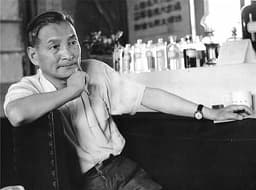
Chen Yun
Politician · Modern
55.2Total
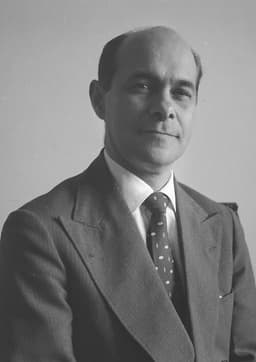
Tancredo Neves
Politician · Modern
52.2Total
Basic Information
Born
1905
1910
Died
1995
1985
Era
Modern
Modern
Nationality
China
Brazil
Occupation
Politician
Politician
Civilization
Eastern
Western
Score Comparison
Military (10%)
11.7
49.7
Political (20%)
70.3
68.0
Influence (20%)
62.0
49.4
Legacy (20%)
55.0
42.5
Leadership (15%)
78.0
65.0
Strategy (15%)
25.6
43.5
TOTAL
55.2
52.2
Chen Yun — Complete Timeline
1925 AD
Joined the Chinese Communist PartyPolitical Action◆ Major
Chen Yun joined the Chinese Communist Party during the May Thirtieth Movement. He began his career as a labor organizer in Shanghai, rising through the ranks of the party's underground apparatus.
CCP MembershipLabor MovementShanghai
Impact: nationalconstructive
1961 AD
Led economic reconstruction after the Great Leap ForwardReform◆ Major
Chen Yun was appointed to lead economic recovery efforts after the disastrous Great Leap Forward. He implemented policies that reduced central planning, allowed private plots, and stabilized the economy, saving millions from famine.
Economic ReformGreat Leap ForwardFamine Relief
Impact: nationalconstructive
1966 AD
Purged during the Cultural RevolutionPolitical Action◆ Major
Chen Yun was purged from his leadership positions during the Cultural Revolution, accused of being a capitalist roader. He was sent to work in a factory in Jiangxi, but survived the period without being killed.
Cultural RevolutionPurgeEconomic Planning
Impact: nationaldestructive
1978 AD
Advocated for market reforms under Deng XiaopingReform◆ Major
Chen Yun supported Deng Xiaoping's economic reforms, advocating for a 'birdcage economy' that combined state planning with market mechanisms. He helped design the Special Economic Zones and agricultural decollectivization.
Deng XiaopingEconomic ReformMarket Economy
Impact: nationalconstructive
1987 AD
Served as Chairman of the Central Advisory CommissionPolitical Action
Chen Yun became Chairman of the Central Advisory Commission, a body of retired senior leaders. He used this position to influence economic policy, often cautioning against excessive market liberalization.
Advisory CommissionEconomic PolicyElder Statesman
Impact: national
Tancredo Neves — Complete Timeline
1983 AD
Governor of Minas GeraisPolitical Action
Tancredo Neves was elected Governor of Minas Gerais in 1982 and took office in 1983. His administration was noted for its support of democratic reforms and opposition to the military regime.
GovernorshipDemocratic opposition
Impact: regionalconstructive
1985 AD
Elected President of BrazilPolitical Action
Tancredo Neves was elected President of Brazil by the Electoral College on January 15, 1985, defeating the military regime's candidate. His election marked the end of 21 years of military dictatorship and the beginning of Brazil's return to democracy.
DemocratizationEnd of dictatorshipElection
Impact: nationalprogressive
Hospitalization and Death Before InaugurationOther◆ Major
On March 14, 1985, the eve of his inauguration, Tancredo Neves was hospitalized with severe abdominal pain. He underwent multiple surgeries but died on April 21, 1985, without ever taking office. His death caused national mourning and a political crisis.
DeathPolitical crisisNational mourning
Impact: nationaltragic
Expert Analysis
Origins
Chen Yun was born in 1905 into a poor peasant family in Qingpu, Jiangsu province. Orphaned at a young age, he worked as an apprentice in a bookstore, where he encountered Marxist literature. He joined the Chinese Communist Party in 1925 during the May Thirtieth Movement, starting as a labor organizer in Shanghai. His early experiences shaped his pragmatic approach to economics, grounded in the realities of China's agrarian society.
Tancredo Neves was born in 1910 in São João del-Rei, Minas Gerais, Brazil, into a traditional political family. His father was a local politician. He studied law at the University of Minas Gerais, graduating in 1932. He entered politics early, serving as a state deputy and later federal deputy. His formative years were marked by the Vargas era, which influenced his commitment to democratic governance.
Rise to Power
Chen Yun rose through the CCP's organizational and economic apparatus. During the Long March, he served as a political commissar. In the 1940s, he became a key economic planner in the Communist base areas. His major breakthrough came after the Communist victory in 1949, when he was appointed Vice Premier and tasked with stabilizing the economy. By 1956, he was a member of the Politburo Standing Committee, the top leadership circle. However, his influence waned during the Great Leap Forward (1958-1961), though he was later recalled to lead economic recovery.
Tancredo Neves built his career as a moderate opposition figure during Brazil's military dictatorship (1964-1985). He served as Minister of Justice under President João Goulart (1961-1964) and later as Governor of Minas Gerais (1983-1984). His pivotal moment came in 1984 when he led the Diretas Já campaign for direct presidential elections, though the amendment failed. Nevertheless, he became the opposition candidate in the 1985 indirect election, winning against the regime's candidate, Paulo Maluf, on January 15, 1985.
Leadership & Governance
Chen Yun's leadership style was technocratic and cautious. He advocated for balanced economic planning, famously comparing the economy to a bird in a cage: the bird (market forces) needed freedom but within the cage (state planning). His governance approach emphasized stability over rapid growth. For example, after the Great Leap Forward, he implemented policies that reduced central planning and allowed for small-scale private enterprise, scoring 78.0 in leadership for his measured reforms. He opposed Mao's radical policies, which led to his purge during the Cultural Revolution (1966-1976).
Tancredo Neves was a conciliatory leader, skilled in coalition-building. He was known for his ability to negotiate with diverse factions, from the military to leftist groups. His governance philosophy was rooted in democratic transition and social justice. As governor of Minas Gerais, he focused on education and infrastructure. However, his leadership was cut short; he never assumed the presidency, making it difficult to assess his executive capacity. His political score of 68.0 reflects his electoral success but limited governance record.
Triumph & Tragedy
Chen Yun's greatest triumph was his role in China's economic recovery after the Great Leap Forward. He implemented policies that increased agricultural output and stabilized prices. He also contributed to Deng Xiaoping's reforms in the 1980s, helping to design the 'birdcage economy' that allowed market mechanisms while maintaining state control. His tragedy was the Cultural Revolution, where he was purged and sent to work in a factory, losing influence for a decade. Additionally, his cautious approach later clashed with Deng's faster reforms, leading to his marginalization in the 1990s.
Tancredo Neves's triumph was his election as president, which ended 21 years of military rule and symbolized Brazil's return to democracy. His victory was a testament to his political acumen and the strength of the opposition. His tragedy was his sudden illness and death on April 21, 1985, just before his inauguration. This left Brazil in shock and his vice president, José Sarney, to take over. Neves never implemented his policies, and his legacy remains largely symbolic.
Character & Destiny
Chen Yun was pragmatic, disciplined, and frugal. He was known for his humility and dedication to empirical analysis. His character—cautious and methodical—shaped his destiny: he survived political storms but never achieved top leadership. His score of 25.6 in strategy reflects his preference for incremental change over bold moves. Historians often describe him as a 'steady hand' during economic crises.
Tancredo Neves was charismatic, eloquent, and a master of compromise. His ability to unite disparate groups made him the ideal candidate for a democratic transition. However, his destiny was cruel: his death before taking office turned him into a martyr for democracy. His legacy is defined by what could have been, rather than what he accomplished. His leadership score of 65.0 is based on his political skills, not governance.
Legacy
Chen Yun's legacy is profound in China's economic development. He is credited with laying the groundwork for market reforms while preserving socialist principles. The 'birdcage economy' concept influenced China's dual-track system. He is remembered as a pragmatist who prioritized stability. His influence score of 62.0 reflects his long-term impact on economic policy, though his name is less known to the public.
Tancredo Neves is a national hero in Brazil, symbolizing the peaceful transition to democracy. His death elevated him to iconic status. However, his lack of actual governance means his legacy is mostly commemorative. Schools, roads, and a major airport are named after him. His legacy score of 42.5 is moderate, as his impact was more symbolic than substantive.
Conclusion
Chen Yun had a greater impact than Tancredo Neves. While Neves's role in Brazil's democratization is significant, his premature death prevented any concrete achievements. Chen Yun, with a total score of 55.2 versus Neves's 52.2, shaped economic policies that affected hundreds of millions of people over decades. His pragmatic reforms helped China avoid the pitfalls of radicalism and laid the foundation for its economic rise. Neves's legacy, though emotionally powerful, is largely symbolic. Chen Yun's tangible contributions to governance and economic management give him a clear edge in historical influence.
Rankings
🥇
Chen YunLeader
Mil: 11.7Pol: 70.3Inf: 62.0
55.2
🥈
Tancredo Neves
Mil: 49.7Pol: 68.0Inf: 49.4
52.2
+3.0 behind
How This Comparison Works
Algorithm
Each figure is scored on 6 dimensions (0—100 scale) based on structured historical data: Military (10%), Political (20%), Influence (20%), Legacy (20%), Leadership (15%), Strategy (15%). The weighted total produces the final ranking.
Data Sources
Scores are computed from structured sub-indicators in the database. Scale factors adjust for era (Ancient ×0.85, Modern ×1.0) and civilization size (Eastern ×1.05, Other ×0.80) to account for differences in population and military scale.
Maximum 3 Figures
Comparisons are limited to 2—3 figures to ensure readability and statistical meaningfulness.
Error Margins
±5 points per dimension — Sub-scores are derived from historical records with inherent uncertainty. Two figures within 5 points on a dimension should be considered roughly equivalent in that area.
Total Score Accuracy
±3 points overall — The weighted combination of 6 dimensions produces a total score with approximately ±3 points of uncertainty. Differences of less than 3 points are not statistically significant— the figures are effectively tied.
Known Limitations
- Historical records are incomplete and uneven across civilizations
- Figures from oral-tradition societies may be underrepresented
- Occupation labels can misclassify multi-role figures
- Scores measure capability and impact, not moral character
- Quantitative scoring is a comparison tool, not absolute truth
Capability Radar
Military (10%) — Battles & Warfare
Battles
16
29
Win Rate
17
29
Expansion
20
38
Political (20%) — Governance & Reform
Reform
80
50
Diplomacy
70
55
Economy
90
40
Influence (20%) — Cultural & Global Reach
Cultural
40
20
Global
60
15
Legacy (20%) — Historical Impact
Historical
75
35
Longevity
65
20
Leadership (15%) — Power & Stability
Tenure
75
0
Stability
85
30
Strategy (15%) — Tactics & Innovation
Strategy
26
41
Tactics
27
41
Reform
28
44
Similar Comparisons
Comments & Discussion
No comments yet. Be the first to share your thoughts!