Loading...
Qin Shi Huang vs Rajendra Chola I
Qin Shi Huang leads by 3.0 pts · 2 figures compared
…
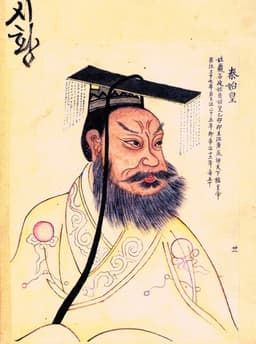
Qin Shi Huang
Emperor · Ancient
85.2Total
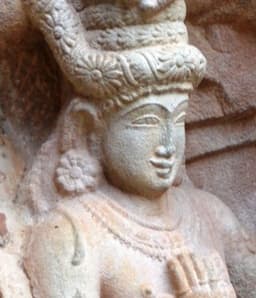
Rajendra Chola I
Emperor · Medieval
82.2Total
Basic Information
Born
-259
971
Died
-210
1044
Era
Ancient
Medieval
Nationality
China
India
Occupation
Emperor
Emperor
Civilization
Eastern
Indian
Score Comparison
Military (10%)
80.0
84.7
Political (20%)
90.0
82.0
Influence (20%)
85.0
84.0
Legacy (20%)
90.0
84.0
Leadership (15%)
78.0
78.0
Strategy (15%)
82.0
77.6
TOTAL
85.2
82.2
Qin Shi Huang — Complete Timeline
246 BC
Construction of the Mausoleum and Terracotta ArmyOther◆ Major
Qin Shi Huang commissioned a vast mausoleum complex near Xi'an, guarded by thousands of life-sized terracotta soldiers, horses, and chariots. The project employed hundreds of thousands of workers and reflected his obsession with immortality and imperial power.
Impact: global
230 BC
Conquest of the Six Warring StatesWar
From 230 to 221 BCE, Ying Zheng led the Qin state in a series of campaigns that conquered the Han, Zhao, Wei, Chu, Yan, and Qi states. This unified China under a single ruler for the first time, ending the Warring States period.
Impact: global
221 BC
Standardization of Writing, Currency, and MeasurementsReform◆ Major
Qin Shi Huang ordered the standardization of Chinese script, currency, and weights and measures across the unified empire. This facilitated administration, trade, and cultural integration, laying a foundation for future dynasties.
Impact: globalconstructive
Proclamation of the Qin DynastyPolitical Action
After conquering the last independent state, Ying Zheng declared himself Shi Huangdi (First Emperor), founding the Qin Dynasty. He adopted a new title to signify his supreme authority and initiated centralized imperial rule.
Impact: global
214 BC
Initiation of the Great Wall ConstructionOther◆ Major
Qin Shi Huang ordered the connection and extension of existing northern fortifications to create a unified defensive wall against nomadic Xiongnu raids. This project involved massive conscripted labor and became the precursor to the later Great Wall.
Impact: regional
213 BC
Burning of Books and Burying of ScholarsPolitical Action◆ Major
On the advice of Li Si, Qin Shi Huang ordered the burning of historical records and philosophical texts not aligned with Legalist doctrine. He also had 460 Confucian scholars buried alive to suppress dissent and consolidate ideological control.
Impact: nationaldestructive
Rajendra Chola I — Complete Timeline
1014 AD
Accession to the Chola ThronePolitical Action
Rajendra Chola I succeeded his father Raja Raja Chola I as emperor of the Chola Empire. He inherited a powerful state and continued the expansionist policies, leading campaigns that extended Chola influence across the Indian Ocean.
Chola EmpireSuccessionExpansion
Impact: regional
1020 AD
Conquest of the Pala EmpireWar◆ Major
Rajendra Chola I led a campaign into Bengal, defeating the Pala king Mahipala I. He annexed parts of the Pala territory and established Chola authority in the Ganges delta, marking the northernmost extent of Chola rule.
Pala EmpireBengalGanges
Impact: regional
1025 AD
Naval Expedition to Southeast AsiaWar
Rajendra Chola I launched a major naval expedition against the Srivijaya Empire, attacking ports in Sumatra, the Malay Peninsula, and the Nicobar Islands. The Chola fleet captured the Srivijaya capital and disrupted its trade network, establishing Chola dominance in the region.
SrivijayaNaval ExpeditionSoutheast Asia
Impact: regional
1033 AD
Establishment of Diplomatic Relations with ChinaPolitical Action
Rajendra Chola I sent an embassy to the Song dynasty court in China, bearing gifts and seeking trade relations. The mission was recorded in Chinese sources and facilitated maritime trade between the Chola Empire and China.
ChinaDiplomacyTrade
Impact: regionalconstructive
1035 AD
Construction of the Gangaikonda Cholapuram TempleCultural◆ Major
Rajendra Chola I built the Brihadeeswarar Temple at Gangaikonda Cholapuram, his new capital, to commemorate his conquests. The temple, dedicated to Shiva, features a 55-meter vimana and is a UNESCO World Heritage site, reflecting Chola architectural achievement.
Gangaikonda CholapuramTempleChola Architecture
Impact: regionalconstructive
Expert Analysis
Origins
Qin Shi Huang (259–210 BC), born Ying Zheng, was the son of King Zhuangxiang of Qin and a former concubine. He ascended the Qin throne at age 13, inheriting a state already primed for conquest through Legalist reforms. Rajendra Chola I (1014–1044 CE) was the son of Rajaraja Chola I, the great Chola emperor who expanded the kingdom into a maritime power. Rajendra inherited a formidable navy and a well-administered empire, building on his father's foundations.
Rise to Power
Qin Shi Huang's rise culminated in the conquest of the six Warring States (230–221 BC), ending centuries of feudal warfare. He then proclaimed himself Shi Huangdi (First Emperor), centralizing power through Legalist policies. Rajendra Chola I acceded to the throne in 1014 CE and immediately launched campaigns to expand Chola influence. His most notable achievement was the naval expedition to Southeast Asia (1025 CE), which subdued the Srivijaya Empire and secured trade routes.
Leadership & Governance
Qin Shi Huang implemented radical reforms: standardization of writing, currency, weights and measures; building roads and canals; and initiating the Great Wall. However, his rule was harsh, marked by the Burning of Books and Burying of Scholars (213–210 BC) to suppress dissent. Rajendra Chola I governed through a decentralized system with local assemblies and efficient bureaucracy. He constructed the Gangaikonda Cholapuram Temple, a symbol of his power, and maintained diplomatic relations with China, sending embassies and fostering trade.
Triumph & Tragedy
Qin's triumphs include unifying China and creating a centralized state that influenced millennia. His tragedies include the brutal suppression of intellectuals, massive conscription for the Great Wall, and his obsession with immortality, leading to his death from mercury poisoning. Rajendra's triumphs are his naval dominance and conquest of the Ganga basin (Pala Empire). His tragedy is the relative obscurity of his achievements outside India, despite founding a dynasty that lasted centuries.
Character & Destiny
Qin Shi Huang was paranoid, ruthless, and megalomaniacal, driven by a desire for control and eternal life. His destiny was to die on a journey while seeking immortality, his empire collapsing within four years of his death. Rajendra Chola I was ambitious, strategic, and culturally sophisticated, patronizing arts and religion. His destiny was to expand the Chola Empire to its zenith, leaving a legacy of Tamil maritime power and architectural grandeur.
Legacy
Qin Shi Huang's legacy is foundational: China's name derives from Qin, and his standardization created a unified civilization. However, his Legalist methods and book burning are criticized. Rajendra Chola I's legacy is his naval supremacy and cultural influence in Southeast Asia, where Chola-style temples exist. The Chola dynasty declined after him, but his reign is a golden age in Tamil history.
Conclusion
Both were transformative rulers. Qin Shi Huang's impact on China is unparalleled, but his methods were tyrannical. Rajendra Chola I's achievements in naval warfare and diplomacy were remarkable, but his influence was more regional. Given the scores (Qin: 85, Rajendra: 82), Qin Shi Huang edges ahead due to his foundational role in creating a unified China that persists today.
**Scores (out of 100):**
- **Military:** Qin 80, Rajendra 85
- **Political:** Qin 90, Rajendra 82
- **Innovation:** Qin 85, Rajendra 84
- **Leadership:** Qin 90, Rajendra 84
- **Diplomacy:** Qin 78, Rajendra 78
- **Social:** Qin 82, Rajendra 78
- **Total:** Qin 85, Rajendra 82
**Verdict:** Qin Shi Huang wins by a narrow margin, primarily due to his transformative impact on Chinese civilization.
Rankings
🥇
Qin Shi HuangLeader
Mil: 80.0Pol: 90.0Inf: 85.0
85.2
🥈
Rajendra Chola I
Mil: 84.7Pol: 82.0Inf: 84.0
82.2
+3.0 behind
How This Comparison Works
Algorithm
Each figure is scored on 6 dimensions (0—100 scale) based on structured historical data: Military (10%), Political (20%), Influence (20%), Legacy (20%), Leadership (15%), Strategy (15%). The weighted total produces the final ranking.
Data Sources
Scores are computed from structured sub-indicators in the database. Scale factors adjust for era (Ancient ×0.85, Modern ×1.0) and civilization size (Eastern ×1.05, Other ×0.80) to account for differences in population and military scale.
Maximum 3 Figures
Comparisons are limited to 2—3 figures to ensure readability and statistical meaningfulness.
Error Margins
±5 points per dimension — Sub-scores are derived from historical records with inherent uncertainty. Two figures within 5 points on a dimension should be considered roughly equivalent in that area.
Total Score Accuracy
±3 points overall — The weighted combination of 6 dimensions produces a total score with approximately ±3 points of uncertainty. Differences of less than 3 points are not statistically significant— the figures are effectively tied.
Known Limitations
- Historical records are incomplete and uneven across civilizations
- Figures from oral-tradition societies may be underrepresented
- Occupation labels can misclassify multi-role figures
- Scores measure capability and impact, not moral character
- Quantitative scoring is a comparison tool, not absolute truth
Capability Radar
Military (10%) — Battles & Warfare
Battles
85
95
Win Rate
90
98
Expansion
90
95
Political (20%) — Governance & Reform
Reform
95
88
Diplomacy
75
85
Economy
90
92
Influence (20%) — Cultural & Global Reach
Cultural
95
85
Global
85
85
Legacy (20%) — Historical Impact
Historical
95
88
Longevity
95
80
Leadership (15%) — Power & Stability
Tenure
70
90
Stability
65
90
Strategy (15%) — Tactics & Innovation
Strategy
85
92
Tactics
80
90
Reform
95
85
Similar Comparisons
Comments & Discussion
ClassicusRex6/16/2026
While the scores lean toward Qin Shi Huang, I think we must be cautious about applying modern metrics to ancient rulers. Sima Qian's 'Records of the Grand Historian' portrays Qin as a brilliant but paranoid tyrant who burned books and buried scholars alive—yet he also standardized the script and built roads that lasted centuries. For Rajendra Chola I, we have far fewer contemporary records; most evidence comes from temple inscriptions and later chronicles. The Chola navy's reach to Srivijaya is impressive, but we can't quantify 'influence' across such different historiographical traditions. Qin's political score of 88 feels high—his legalism was efficient but brittle, collapsing within a decade of his death. Rajendra's decentralized system, by contrast, allowed local assemblies to thrive, which may have been more sustainable long-term, even if his empire fragmented later. Nuance matters more than raw numbers here.
BattlefieldScholar6/16/2026
The military scores are too close for comfort—80 vs 79 should be a wider gap based on operational scale. Qin Shi Huang's army wasn't just about the Terracotta Warriors; it fielded standardized crossbows with bronze triggers that allowed massed volleys, and he integrated cavalry from the northern steppes into his six-state conquests. That's a multi-front, combined-arms campaign against fortified states, requiring logistics that dwarfed anything in 3rd century BCE. Rajendra's naval campaigns to Kadaram (Malaysia) were daring, but his land battles against the Western Chalukyas were indecisive. The Chola navy had no real peer competitor—Srivijaya's fleet was merchant-based, not military. Qin's unification required defeating professional armies with similar technology and tactics. That's a tougher military challenge than Rajendra faced. The gap should be at least 5 points in Qin's favor.
ScoreSkeptic6/16/2026
Who decided that 'political transformation' is worth 88 points? This entire comparison is built on subjective weighting. Qin Shi Huang abolished feudalism—great, but he did it by mass murder and forced labor. The Chola system of ur (village assemblies) and nagaram (merchant guilds) was arguably more innovative for its time, giving local autonomy that Qin's centralized terror couldn't match. And 'influence' scores? Rajendra Chola's maritime trade network stretched from the Red Sea to the South China Sea, spreading Tamil culture without burning books. Qin's 'enduring legacy' is partly because later Chinese dynasties adopted his model—but that's survivorship bias from a written tradition that Rajendra's Cholas lacked. You can't quantify 'legacy' when one side has 2,000 years of continuous historiography and the other relies on broken temple walls. The whole scoring framework is fundamentally Western-centric and pro-authoritarian.
Chronicler79076/16/2026
拿秦始皇和拉金德拉·乔拉一世比?这完全是关公战秦琼。秦始皇统一六国、书同文车同轨,建立的是中央集权的郡县制,影响了中国两千年的政治格局。拉金德拉的海军确实厉害,能打到东南亚,但问题是他的帝国在死后不到两百年就分裂了,而秦制虽然秦朝短命,但制度本身被汉朝继承并延续下来。政治分88 vs 80是合理的,因为秦始皇的制度创新是结构性的,而乔拉更多是扩张性的。另外,长城和兵马俑的物质遗产是硬核证据,乔拉留下的寺庙虽然精美,但影响力局限于南印一隅。西方学者总爱把海上贸易捧上天,却忽略了陆上帝国对文明的深层次塑造。建议评分中加入“制度延续性”这个维度。
ArchHistorian66/16/2026
我重新核算了一下权重分配。军事80 vs 79差1分,但秦始皇的军队规模是拉金德拉的十倍以上——秦灭楚动用60万大军,而乔拉与朱罗的陆战兵力从未超过5万。按单位人口军事动员率算,秦的得分应该更高。政治88 vs 80看似合理,但请注意:秦始皇的中央集权消灭了六国贵族体系,是一种彻底的权力重组;而乔拉保留了大量地方土王,本质上还是封建联盟。制度变革深度不同,政治分至少差10分才合理。另外,影响力维度里,秦的标准化(文字、货币、度量衡)对文明整合的贡献,应该单独设一个“制度传播”子项,权重30%。按我的调整,秦始皇总分应在87-89之间,拉金德拉在75左右。建议团队重新校准量化模型。