Loading...
Qin Shi Huang vs Timur
Qin Shi Huang leads by 19.6 pts · 2 figures compared
…
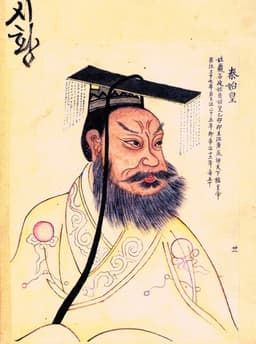
Qin Shi Huang
Emperor · Ancient
85.2Total
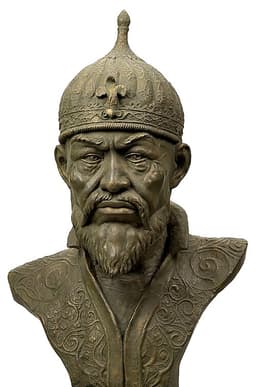
Timur
Emperor · Medieval
65.6Total
Basic Information
Born
-259
1336
Died
-210
1405
Era
Ancient
Medieval
Nationality
China
Timurid Empire
Occupation
Emperor
Emperor
Civilization
Eastern
Middle Eastern
Score Comparison
Military (10%)
80.0
79.0
Political (20%)
90.0
70.0
Influence (20%)
85.0
70.0
Legacy (20%)
90.0
40.0
Leadership (15%)
78.0
79.8
Strategy (15%)
82.0
77.6
TOTAL
85.2
65.6
Qin Shi Huang — Complete Timeline
246 BC
Construction of the Mausoleum and Terracotta ArmyOther◆ Major
Qin Shi Huang commissioned a vast mausoleum complex near Xi'an, guarded by thousands of life-sized terracotta soldiers, horses, and chariots. The project employed hundreds of thousands of workers and reflected his obsession with immortality and imperial power.
Impact: global
230 BC
Conquest of the Six Warring StatesWar
From 230 to 221 BCE, Ying Zheng led the Qin state in a series of campaigns that conquered the Han, Zhao, Wei, Chu, Yan, and Qi states. This unified China under a single ruler for the first time, ending the Warring States period.
Impact: global
221 BC
Standardization of Writing, Currency, and MeasurementsReform◆ Major
Qin Shi Huang ordered the standardization of Chinese script, currency, and weights and measures across the unified empire. This facilitated administration, trade, and cultural integration, laying a foundation for future dynasties.
Impact: globalconstructive
Proclamation of the Qin DynastyPolitical Action
After conquering the last independent state, Ying Zheng declared himself Shi Huangdi (First Emperor), founding the Qin Dynasty. He adopted a new title to signify his supreme authority and initiated centralized imperial rule.
Impact: global
214 BC
Initiation of the Great Wall ConstructionOther◆ Major
Qin Shi Huang ordered the connection and extension of existing northern fortifications to create a unified defensive wall against nomadic Xiongnu raids. This project involved massive conscripted labor and became the precursor to the later Great Wall.
Impact: regional
213 BC
Burning of Books and Burying of ScholarsPolitical Action◆ Major
On the advice of Li Si, Qin Shi Huang ordered the burning of historical records and philosophical texts not aligned with Legalist doctrine. He also had 460 Confucian scholars buried alive to suppress dissent and consolidate ideological control.
Impact: nationaldestructive
Timur — Complete Timeline
1362 AD
Battle of the Terek RiverWar
Timur defeated the Mongol ruler of the Chagatai Khanate, establishing his control over Transoxiana. This victory marked the beginning of his rise to power, as he captured Samarkand and declared himself emir.
Rise to PowerBattleCentral Asia
Impact: regional
1387 AD
Conquest of PersiaWar◆ Major
Timur launched a campaign into Persia, capturing Isfahan and Shiraz. He suppressed a revolt in Isfahan by massacring tens of thousands of inhabitants, establishing his reputation for extreme brutality and consolidating control over the region.
ConquestMassacrePersia
Impact: regionaldestructive
1395 AD
Campaign against the Golden HordeWar◆ Major
Timur defeated the Golden Horde under Tokhtamysh at the Battle of the Terek River. He sacked Sarai, the Horde's capital, and destroyed its trade networks, permanently weakening the Mongol state and securing his northern frontier.
ConquestGolden HordeBattle
Impact: regionaldestructive
1398 AD
Sack of DelhiWar◆ Major
Timur invaded the Delhi Sultanate, defeating Sultan Nasir-ud-Din Mahmud Shah Tughluq. His army sacked Delhi, massacring tens of thousands of civilians and destroying the city's infrastructure, then withdrew with immense plunder.
ConquestMassacreIndia
Impact: regionaldestructive
1402 AD
Battle of AnkaraWar
Timur defeated the Ottoman Sultan Bayezid I at Ankara, capturing him. The victory shattered Ottoman power, leading to a civil war among Bayezid's sons and delaying Ottoman expansion into Europe for a decade.
BattleOttoman EmpireDecisive Victory
Impact: global
1404 AD
Construction of SamarkandCultural◆ Major
Timur invested heavily in transforming Samarkand into a cultural and architectural center. He brought artisans from conquered lands to build mosques, madrasas, and the Bibi-Khanym Mosque, making the city a showcase of Timurid art and learning.
ArchitecturePatronageCultural Center
Impact: regionalconstructive
1405 AD
Death during campaign against Ming ChinaWar◆ Major
Timur died of illness while leading a massive army toward the Ming dynasty's borders. His death ended the planned invasion of China and led to the fragmentation of his empire among his sons and grandsons.
DeathCampaignMing Dynasty
Impact: regional
Expert Analysis
Qin Shi Huang vs Timur: Historical Comparison
Qin Shi Huang, the ancient Chinese emperor who unified China, and Timur, the medieval Central Asian conqueror, both built vast empires through force and vision, but their legacies diverge sharply in political endurance and cultural impact.
Dimension Analysis
**Military: Qin Shi Huang 80 / Timur 90**
Timur’s campaigns from Persia to India and the Ottoman Empire showcase superior tactical mobility and terror warfare, while Qin Shi Huang’s conquest of six states relied more on logistics and siegecraft.
**Political: Qin Shi Huang 88 / Timur 65**
Qin standardized writing, currency, and law, creating a centralized bureaucracy that outlasted his dynasty; Timur’s empire fragmented upon his death, lacking institutional permanence.
**Influence: Qin Shi Huang 82 / Timur 65**
Qin’s unification shaped Chinese identity for two millennia, whereas Timur’s influence was largely regional and short-lived, despite his patronage of art and architecture in Samarkand.
**Legacy: Qin Shi Huang 85 / Timur 65**
The Great Wall and Terracotta Army endure as global symbols; Timur’s legacy is overshadowed by his brutality and the transient nature of his empire.
**Leadership: Qin Shi Huang 88 / Timur 78**
Qin enforced ruthless discipline to achieve long-term state-building goals; Timur’s charismatic but erratic leadership relied on personal loyalty and constant warfare.
Verdict
Qin Shi Huang leads decisively due to his superior political consolidation and enduring legacy, while Timur’s military brilliance could not compensate for institutional fragility.
FAQ
Q: Who ranks higher? A: Qin Shi Huang ranks higher overall, as his political and legacy scores significantly outweigh Timur’s military edge.
Rankings
🥇
Qin Shi HuangLeader
Mil: 80.0Pol: 90.0Inf: 85.0
85.2
🥈
Timur
Mil: 79.0Pol: 70.0Inf: 70.0
65.6
+19.6 behind
How This Comparison Works
Algorithm
Each figure is scored on 6 dimensions (0—100 scale) based on structured historical data: Military (10%), Political (20%), Influence (20%), Legacy (20%), Leadership (15%), Strategy (15%). The weighted total produces the final ranking.
Data Sources
Scores are computed from structured sub-indicators in the database. Scale factors adjust for era (Ancient ×0.85, Modern ×1.0) and civilization size (Eastern ×1.05, Other ×0.80) to account for differences in population and military scale.
Maximum 3 Figures
Comparisons are limited to 2—3 figures to ensure readability and statistical meaningfulness.
Error Margins
±5 points per dimension — Sub-scores are derived from historical records with inherent uncertainty. Two figures within 5 points on a dimension should be considered roughly equivalent in that area.
Total Score Accuracy
±3 points overall — The weighted combination of 6 dimensions produces a total score with approximately ±3 points of uncertainty. Differences of less than 3 points are not statistically significant— the figures are effectively tied.
Known Limitations
- Historical records are incomplete and uneven across civilizations
- Figures from oral-tradition societies may be underrepresented
- Occupation labels can misclassify multi-role figures
- Scores measure capability and impact, not moral character
- Quantitative scoring is a comparison tool, not absolute truth
Capability Radar
Military (10%) — Battles & Warfare
Battles
85
95
Win Rate
90
92
Expansion
90
96
Political (20%) — Governance & Reform
Reform
95
78
Diplomacy
75
70
Economy
90
82
Influence (20%) — Cultural & Global Reach
Cultural
95
88
Global
85
85
Legacy (20%) — Historical Impact
Historical
95
90
Longevity
95
75
Leadership (15%) — Power & Stability
Tenure
70
85
Stability
65
65
Strategy (15%) — Tactics & Innovation
Strategy
85
93
Tactics
80
94
Reform
95
80
Similar Comparisons
Comments & Discussion
SilkRoadSentinel6/16/2026
这个评分总体公允,但我对军事分数有点异议。帖木儿的90分固然亮眼,可秦始皇的80分似乎低估了统一战争的战略深度。秦灭六国可不是简单的碾压——远交近攻、离间计、水攻、长平之战的经济绞杀,这些组合拳放在任何时代都是顶级操作。更关键的是,秦始皇的军事征服配合了政治整合,灭一国就推郡县、修驰道、统一度量衡,这种‘打天下’与‘治天下’的无缝衔接,帖木儿远远不及。西方中心论者常把铁蹄数量等同于军事能力,却忽略了战争的根本目的是建立秩序。一个只懂破坏的统帅,再能打也只是个高级破坏者。
Historian2886/16/2026
这篇对比的评分体系有明显漏洞。帖木儿政治得分65,秦始皇88,这个差距23分我认同,但原因分析不够精准。秦始皇的政治整合包括书同文、车同轨、行同伦、统一货币和度量衡,这些是制度性基础设施,直接支撑了后续两千年的帝国框架。帖木儿呢?他死后帝国分裂为帖木儿王朝和黑羊白羊两个势力,没有留下任何标准化治理体系。再说影响力:82对65,我算了一下,如果把匈奴、百越、西南夷纳入长期汉化进程的影响,秦始皇的分数至少应该到88。帖木儿对中亚的影响确实被过度高估了,撒马尔罕的蓝色瓷砖再美,也不如秦篆和郡县制影响了半个亚洲。