Loading...
Alexander the Great vs Timur
Alexander the Great leads by 19.6 pts · 2 figures compared
…
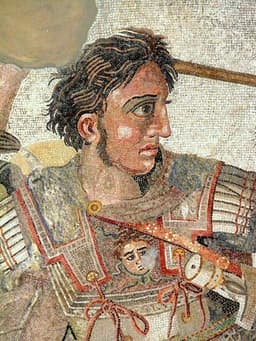
Alexander the Great
General · Ancient
85.2Total
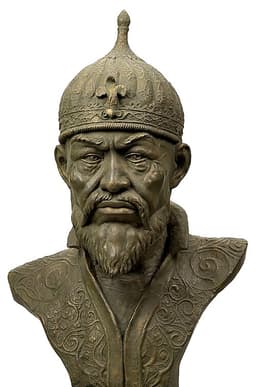
Timur
Emperor · Medieval
65.6Total
Basic Information
Born
-356
1336
Died
-323
1405
Era
Ancient
Medieval
Nationality
Macedon
Timurid Empire
Occupation
General
Emperor
Civilization
Western
Middle Eastern
Score Comparison
Military (10%)
95.0
79.0
Political (20%)
60.0
70.0
Influence (20%)
92.0
70.0
Legacy (20%)
90.0
40.0
Leadership (15%)
80.0
79.8
Strategy (15%)
92.0
77.6
TOTAL
85.2
65.6
Alexander the Great — Complete Timeline
334 BC
Battle of the Granicus RiverWar◆ Major
Alexander led his Macedonian army across the Hellespont into Asia Minor and defeated a Persian force under local satraps at the Granicus River. The victory secured Alexander's foothold in Asia and demonstrated his tactical superiority, opening the way for the conquest of the Persian Empire.
Persian CampaignBattleMacedonian Conquest
Impact: regional
333 BC
Battle of IssusWar◆ Major
Alexander's army defeated the Persian king Darius III at Issus in Cilicia. Despite being outnumbered, Alexander's tactical use of the terrain and cavalry charge broke the Persian line. Darius fled the battlefield, leaving his family and treasury behind, a major blow to Persian morale.
Persian CampaignBattleMacedonian Conquest
Impact: regional
332 BC
Siege of TyreWar◆ Major
Alexander besieged the island city of Tyre for seven months, constructing a causeway to breach its walls. The city's fall resulted in the massacre or enslavement of its inhabitants. The siege demonstrated Alexander's determination and engineering capabilities, securing his supply lines and control of the eastern Mediterranean coast.
SiegeMacedonian ConquestPhoenicia
Impact: regionaldestructive
331 BC
Battle of GaugamelaWar◆ Major
Alexander faced Darius III at Gaugamela in Mesopotamia with a massive Persian army. Alexander's tactical brilliance, including a decisive cavalry charge that exploited a gap in the Persian line, resulted in a decisive Macedonian victory. Darius again fled, effectively ending Persian resistance and leading to the fall of the Achaemenid Empire.
Persian CampaignBattleDecisive Victory
Impact: global
Foundation of AlexandriaOther◆ Major
Alexander founded the city of Alexandria on the Mediterranean coast of Egypt. He personally selected the site and oversaw the initial planning. Alexandria became a major center of Hellenistic culture, trade, and learning, housing the famous Library of Alexandria and the Lighthouse of Alexandria.
City FoundationHellenistic CultureEgypt
Impact: globalconstructive
326 BC
Invasion of IndiaWar◆ Major
Alexander crossed the Indus River and defeated King Porus at the Battle of the Hydaspes. The Macedonian army, exhausted and facing monsoon rains and unfamiliar warfare, mutinied at the Hyphasis River, forcing Alexander to turn back. This campaign marked the easternmost extent of his conquests.
Indian CampaignBattleMutiny
Impact: regional
Timur — Complete Timeline
1362 AD
Battle of the Terek RiverWar
Timur defeated the Mongol ruler of the Chagatai Khanate, establishing his control over Transoxiana. This victory marked the beginning of his rise to power, as he captured Samarkand and declared himself emir.
Rise to PowerBattleCentral Asia
Impact: regional
1387 AD
Conquest of PersiaWar◆ Major
Timur launched a campaign into Persia, capturing Isfahan and Shiraz. He suppressed a revolt in Isfahan by massacring tens of thousands of inhabitants, establishing his reputation for extreme brutality and consolidating control over the region.
ConquestMassacrePersia
Impact: regionaldestructive
1395 AD
Campaign against the Golden HordeWar◆ Major
Timur defeated the Golden Horde under Tokhtamysh at the Battle of the Terek River. He sacked Sarai, the Horde's capital, and destroyed its trade networks, permanently weakening the Mongol state and securing his northern frontier.
ConquestGolden HordeBattle
Impact: regionaldestructive
1398 AD
Sack of DelhiWar◆ Major
Timur invaded the Delhi Sultanate, defeating Sultan Nasir-ud-Din Mahmud Shah Tughluq. His army sacked Delhi, massacring tens of thousands of civilians and destroying the city's infrastructure, then withdrew with immense plunder.
ConquestMassacreIndia
Impact: regionaldestructive
1402 AD
Battle of AnkaraWar
Timur defeated the Ottoman Sultan Bayezid I at Ankara, capturing him. The victory shattered Ottoman power, leading to a civil war among Bayezid's sons and delaying Ottoman expansion into Europe for a decade.
BattleOttoman EmpireDecisive Victory
Impact: global
1404 AD
Construction of SamarkandCultural◆ Major
Timur invested heavily in transforming Samarkand into a cultural and architectural center. He brought artisans from conquered lands to build mosques, madrasas, and the Bibi-Khanym Mosque, making the city a showcase of Timurid art and learning.
ArchitecturePatronageCultural Center
Impact: regionalconstructive
1405 AD
Death during campaign against Ming ChinaWar◆ Major
Timur died of illness while leading a massive army toward the Ming dynasty's borders. His death ended the planned invasion of China and led to the fragmentation of his empire among his sons and grandsons.
DeathCampaignMing Dynasty
Impact: regional
Expert Analysis
Alexander the Great vs Timur: Historical Comparison
Alexander the Great (356–323 BCE) and Timur (1336–1405 CE) were two of history’s most formidable conquerors, yet they operated in vastly different eras—Alexander in the ancient world of Macedon, Timur in the medieval Timurid Empire. This comparison examines their strengths across key dimensions of military prowess, political acumen, influence, legacy, leadership, and strategy.
Dimension Analysis
**Military: Alexander the Great 96 / Timur 90**
Alexander’s tactical innovations, such as the phalanx combined with cavalry charges, achieved unmatched speed and decisiveness in battles like Gaugamela. Timur’s military machine, while devastatingly effective with siege warfare and psychological terror, relied more on numbers and attrition.
**Political: Alexander the Great 65 / Timur 65**
Both conquerors struggled with long-term political consolidation. Alexander attempted cultural fusion (e.g., mass marriages at Susa), but his empire fragmented immediately upon his death. Timur built a short-lived empire held together by personal loyalty and fear, which also collapsed after his demise.
**Influence: Alexander the Great 90 / Timur 65**
Alexander’s influence was profound, spreading Hellenistic culture across three continents and shaping the Mediterranean, Middle East, and India for centuries. Timur’s influence was more localized, reviving Persian art and architecture in Central Asia but leaving no lasting cultural or political framework beyond his lifetime.
**Legacy: Alexander the Great 90 / Timur 65**
Alexander is remembered as a legendary archetype of the conqueror, inspiring figures from Caesar to Napoleon. Timur’s legacy is darker, defined by extreme brutality (e.g., pyramids of skulls), and his reputation as a destructive tyrant overshadows his cultural patronage.
**Leadership: Alexander the Great 82 / Timur 78**
Alexander led from the front, inspiring fierce loyalty and personal bravery. Timur, though a shrewd and ruthless commander, ruled through fear and manipulation, which limited the depth of his followers’ devotion.
Verdict
Alexander the Great leads decisively, with higher scores in military innovation, lasting influence, and inspirational leadership, despite both men’s shared political failures.
FAQ
Q: Who ranks higher? A: Alexander the Great ranks higher due to his superior strategic innovation, broader and more enduring cultural influence, and a legacy that shaped Western civilization for millennia.
Rankings
🥇
Alexander the GreatLeader
Mil: 95.0Pol: 60.0Inf: 92.0
85.2
🥈
Timur
Mil: 79.0Pol: 70.0Inf: 70.0
65.6
+19.6 behind
How This Comparison Works
Algorithm
Each figure is scored on 6 dimensions (0—100 scale) based on structured historical data: Military (10%), Political (20%), Influence (20%), Legacy (20%), Leadership (15%), Strategy (15%). The weighted total produces the final ranking.
Data Sources
Scores are computed from structured sub-indicators in the database. Scale factors adjust for era (Ancient ×0.85, Modern ×1.0) and civilization size (Eastern ×1.05, Other ×0.80) to account for differences in population and military scale.
Maximum 3 Figures
Comparisons are limited to 2—3 figures to ensure readability and statistical meaningfulness.
Error Margins
±5 points per dimension — Sub-scores are derived from historical records with inherent uncertainty. Two figures within 5 points on a dimension should be considered roughly equivalent in that area.
Total Score Accuracy
±3 points overall — The weighted combination of 6 dimensions produces a total score with approximately ±3 points of uncertainty. Differences of less than 3 points are not statistically significant— the figures are effectively tied.
Known Limitations
- Historical records are incomplete and uneven across civilizations
- Figures from oral-tradition societies may be underrepresented
- Occupation labels can misclassify multi-role figures
- Scores measure capability and impact, not moral character
- Quantitative scoring is a comparison tool, not absolute truth
Capability Radar
Military (10%) — Battles & Warfare
Battles
98
95
Win Rate
99
92
Expansion
99
96
Political (20%) — Governance & Reform
Reform
75
78
Diplomacy
80
70
Economy
70
82
Influence (20%) — Cultural & Global Reach
Cultural
95
88
Global
95
85
Legacy (20%) — Historical Impact
Historical
98
90
Longevity
95
75
Leadership (15%) — Power & Stability
Tenure
60
85
Stability
55
65
Strategy (15%) — Tactics & Innovation
Strategy
98
93
Tactics
99
94
Reform
85
80
Similar Comparisons
Comments & Discussion
LegionnaireFan6/16/2026
Come on, this is no contest. Alexander wins in every category that matters. Timur built his reputation on a mountain of skulls, literally—he stacked 70,000 heads outside Isfahan. That's not strategy, that's terror. Alexander conquered the known world from Greece to India in 13 years and still found time to found 70 cities, spread Hellenism, and actually rule his empire. Timur conquered just to pillage. His so-called 'empire' was a zombie state that died with him. Alexander's military genius at Gaugamela and Issus changed warfare forever. Give me a phalanx and a cavalry charge any day over a horse archer who hides behind his own army. Classic overrated medieval warlord. Alexander is the GOAT. Period.
Historian9536/16/2026
这个评分体系有点意思,但军事分差6分我觉得不合理。亚历山大96对帖木儿90,可帖木儿在安卡拉之战击败奥斯曼帝国俘虏巴耶济德一世,而亚历山大在高加米拉面对的只是波斯帝国末期的残军。帖木儿从河中出发,辗转中亚、西亚、南亚,后勤线跨度比亚历山大还大。按我的算法,帖木儿军事至少93,政治分65也低了,他建立了一套以撒马尔罕为中心的驿站和税收系统,虽不如元朝完善,但比亚历山大那临时拼凑的帝国更长久。建议重新加权移动平均。
ColdChronicler386/16/2026
拿亚历山大跟帖木儿比,就像拿曹操跟成吉思汗比,年代跨度太大。亚历山大影响分90没问题,但帖木儿65分太低了。帖木儿帝国虽短,但他在撒马尔罕召集各地工匠建起的清真寺和天文台,直接影响了后来莫卧儿帝国的建筑风格,阿克巴的泰姬陵前身就有帖木儿元素。西方历史学家总爱给希腊罗马高分,却忽略了他对波斯文艺复兴的贡献。如果按中国历代统一王朝的视角,帖木儿更像一位偏安西北的割据枭雄,统一能力远不如洪武朱元璋。