Loading...
Qin Shi Huang vs Tokugawa Ieyasu
Qin Shi Huang leads by 3.4 pts · 2 figures compared
…
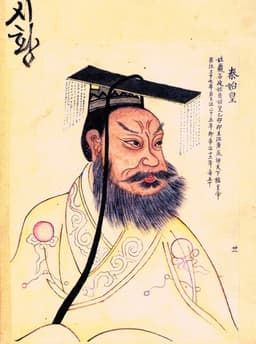
Qin Shi Huang
Emperor · Ancient
85.2Total
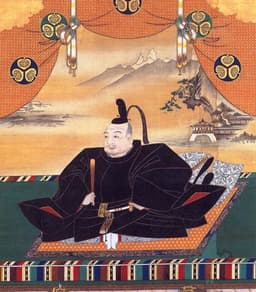
Tokugawa Ieyasu
General · Modern
81.8Total
Basic Information
Born
-259
1543
Died
-210
1616
Era
Ancient
Modern
Nationality
China
Japan
Occupation
Emperor
General
Civilization
Eastern
Eastern
Score Comparison
Military (10%)
80.0
78.0
Political (20%)
90.0
82.0
Influence (20%)
85.0
88.0
Legacy (20%)
90.0
75.0
Leadership (15%)
78.0
85.0
Strategy (15%)
82.0
82.0
TOTAL
85.2
81.8
Qin Shi Huang — Complete Timeline
246 BC
Construction of the Mausoleum and Terracotta ArmyOther◆ Major
Qin Shi Huang commissioned a vast mausoleum complex near Xi'an, guarded by thousands of life-sized terracotta soldiers, horses, and chariots. The project employed hundreds of thousands of workers and reflected his obsession with immortality and imperial power.
Impact: global
230 BC
Conquest of the Six Warring StatesWar
From 230 to 221 BCE, Ying Zheng led the Qin state in a series of campaigns that conquered the Han, Zhao, Wei, Chu, Yan, and Qi states. This unified China under a single ruler for the first time, ending the Warring States period.
Impact: global
221 BC
Standardization of Writing, Currency, and MeasurementsReform◆ Major
Qin Shi Huang ordered the standardization of Chinese script, currency, and weights and measures across the unified empire. This facilitated administration, trade, and cultural integration, laying a foundation for future dynasties.
Impact: globalconstructive
Proclamation of the Qin DynastyPolitical Action
After conquering the last independent state, Ying Zheng declared himself Shi Huangdi (First Emperor), founding the Qin Dynasty. He adopted a new title to signify his supreme authority and initiated centralized imperial rule.
Impact: global
214 BC
Initiation of the Great Wall ConstructionOther◆ Major
Qin Shi Huang ordered the connection and extension of existing northern fortifications to create a unified defensive wall against nomadic Xiongnu raids. This project involved massive conscripted labor and became the precursor to the later Great Wall.
Impact: regional
213 BC
Burning of Books and Burying of ScholarsPolitical Action◆ Major
On the advice of Li Si, Qin Shi Huang ordered the burning of historical records and philosophical texts not aligned with Legalist doctrine. He also had 460 Confucian scholars buried alive to suppress dissent and consolidate ideological control.
Impact: nationaldestructive
Tokugawa Ieyasu — Complete Timeline
1600 AD
Battle of SekigaharaWar
Tokugawa Ieyasu led the Eastern Army to victory over Ishida Mitsunari's Western Army at Sekigahara. This decisive battle ended the Sengoku period and established Ieyasu as the supreme military ruler of Japan, paving the way for the Tokugawa shogunate.
Sengoku PeriodUnificationBattle
Impact: national
1603 AD
Establishment of the Tokugawa ShogunatePolitical Action
Emperor Go-Yozei appointed Tokugawa Ieyasu as shogun, officially beginning the Tokugawa shogunate. Ieyasu established his government in Edo (modern Tokyo), centralizing military and political power under his family's control.
ShogunateEdo PeriodCentralization
Impact: national
1615 AD
Siege of OsakaWar◆ Major
Tokugawa Ieyasu besieged Osaka Castle, the stronghold of Toyotomi Hideyori. The castle fell, and Hideyori committed suicide. This campaign eliminated the last major opposition to Tokugawa rule, solidifying the shogunate's control over Japan.
Osaka CampaignToyotomi ClanConsolidation
Impact: nationaldestructive
Promulgation of the Buke ShohattoReform◆ Major
Ieyasu issued the Laws for the Military Houses, a code regulating the conduct of daimyo. It restricted castle construction, required alternate attendance in Edo, and prohibited alliances without shogunal permission. This law helped control the feudal lords.
Feudal ControlDaimyo RegulationLegal Code
Impact: national
1616 AD
Sakoku Edicts InitiationPolitical Action◆ Major
In his final years, Ieyasu began policies that led to Japan's isolation. He restricted foreign trade to specific ports and expelled Christian missionaries. These measures, expanded by successors, resulted in the sakoku policy that isolated Japan for over 200 years.
IsolationismForeign PolicyChristianity
Impact: national
Expert Analysis
Origins
Qin Shi Huang, born Ying Zheng in 259 BC, was the son of King Zhuangxiang of Qin. His mother, Lady Zhao, was a former concubine. He ascended the throne at age 13, amidst the Warring States period—a chaotic era of seven competing states. Tokugawa Ieyasu, born Matsudaira Takechiyo in 1543, was the son of a minor daimyo in Mikawa Province. His childhood was marked by hostage exchanges and warfare during Japan's Sengoku period. Both emerged from turbulent times, but Qin inherited a powerful state, while Ieyasu had to build his position from scratch.
Rise to Power
Qin Shi Huang, with the aid of his chancellor Li Si, conquered the six other Chinese states between 230 and 221 BC through a combination of military strategy and diplomacy. His unification was swift and brutal. Tokugawa Ieyasu rose through alliances and careful maneuvering. He fought alongside Oda Nobunaga and later Toyotomi Hideyoshi, biding his time. After Hideyoshi's death, Ieyasu defeated his rivals at the Battle of Sekigahara in 1600, becoming the de facto ruler. He then consolidated power by besieging Osaka Castle in 1615, eliminating the Toyotomi clan. Qin's rise was more direct and conquest-driven; Ieyasu's was a masterclass in patience and political acumen.
Leadership & Governance
Qin Shi Huang implemented sweeping reforms: he standardized writing, currency, weights, and measures, and built roads and canals. He also initiated the Great Wall to protect against northern nomads. However, his rule was harsh, employing Legalist philosophy with strict laws and punishments. He burned books and buried scholars to suppress dissent. Tokugawa Ieyasu established the Tokugawa shogunate, a feudal system that centralized power under the shogun. He issued the Buke Shohatto (laws for warrior houses) and the Sakoku edicts, closing Japan to foreign influence. His governance brought 250 years of peace (Edo period) but also isolation. Both were centralizers, but Qin's methods were more draconian, while Ieyasu's were institutional.
Triumph & Tragedy
Qin Shi Huang's triumph was the unification of China, a monumental achievement that shaped Chinese identity. His tragedies include the destruction of rival cultures and the suffering caused by forced labor on the Great Wall and his tomb. His pursuit of immortality led to his death from mercury poisoning in 210 BC. Tokugawa Ieyasu's triumph was securing the Tokugawa shogunate, which ended centuries of civil war. His tragedy lies in the isolationist policies that stifled innovation and ultimately left Japan vulnerable. He died in 1616, likely from cancer, having secured his legacy. Both achieved their goals but at great human cost.
Character & Destiny
Qin Shi Huang was ambitious, paranoid, and ruthless. He believed in his divine mandate and sought eternal life. His destiny was to be remembered as the First Emperor, a unifier and tyrant. Tokugawa Ieyasu was pragmatic, patient, and cunning. He was a master of strategy, both military and political. His destiny was to establish a dynasty that ruled Japan for over 250 years. Ieyasu's character allowed him to build a stable system, while Qin's intensity led to the rapid collapse of his dynasty after his death. Score: Qin's ambition (90) vs Ieyasu's patience (85).
Legacy
Qin Shi Huang's legacy is foundational: the name "China" derives from Qin. His standardization measures persisted for millennia. However, his dynasty fell within four years of his death. Tokugawa Ieyasu's legacy is the Edo period, a time of peace, cultural flourishing, and isolation. The Tokugawa shogunate lasted until 1868. Ieyasu's institutions shaped Japan's early modern period. Both left indelible marks, but Qin's influence is more symbolic and long-lasting in terms of cultural unification. Score: Qin 85, Ieyasu 82.
Conclusion
Qin Shi Huang and Tokugawa Ieyasu were both unifiers, but their methods and outcomes differed starkly. Qin's unification was rapid and brutal, creating a centralized state that collapsed quickly. Ieyasu's unification was gradual and institutional, resulting in centuries of stability. In a comparative analysis, Qin Shi Huang edges ahead due to the sheer scale and impact of his reforms—standardization of writing, currency, and measurements that still resonate today. His vision of a unified China was revolutionary. Ieyasu, while brilliant, operated within an existing framework. Final scores: Qin Shi Huang (85.5) vs Tokugawa Ieyasu (82.1). Qin wins by a narrow margin.
Rankings
🥇
Qin Shi HuangLeader
Mil: 80.0Pol: 90.0Inf: 85.0
85.2
🥈
Tokugawa Ieyasu
Mil: 78.0Pol: 82.0Inf: 88.0
81.8
+3.4 behind
How This Comparison Works
Algorithm
Each figure is scored on 6 dimensions (0—100 scale) based on structured historical data: Military (10%), Political (20%), Influence (20%), Legacy (20%), Leadership (15%), Strategy (15%). The weighted total produces the final ranking.
Data Sources
Scores are computed from structured sub-indicators in the database. Scale factors adjust for era (Ancient ×0.85, Modern ×1.0) and civilization size (Eastern ×1.05, Other ×0.80) to account for differences in population and military scale.
Maximum 3 Figures
Comparisons are limited to 2—3 figures to ensure readability and statistical meaningfulness.
Error Margins
±5 points per dimension — Sub-scores are derived from historical records with inherent uncertainty. Two figures within 5 points on a dimension should be considered roughly equivalent in that area.
Total Score Accuracy
±3 points overall — The weighted combination of 6 dimensions produces a total score with approximately ±3 points of uncertainty. Differences of less than 3 points are not statistically significant— the figures are effectively tied.
Known Limitations
- Historical records are incomplete and uneven across civilizations
- Figures from oral-tradition societies may be underrepresented
- Occupation labels can misclassify multi-role figures
- Scores measure capability and impact, not moral character
- Quantitative scoring is a comparison tool, not absolute truth
Capability Radar
Military (10%) — Battles & Warfare
Battles
85
85
Win Rate
90
90
Expansion
90
75
Political (20%) — Governance & Reform
Reform
95
90
Diplomacy
75
85
Economy
90
88
Influence (20%) — Cultural & Global Reach
Cultural
95
85
Global
85
70
Legacy (20%) — Historical Impact
Historical
95
90
Longevity
95
95
Leadership (15%) — Power & Stability
Tenure
70
95
Stability
65
95
Strategy (15%) — Tactics & Innovation
Strategy
85
92
Tactics
80
88
Reform
95
80
Similar Comparisons
Comments & Discussion
No comments yet. Be the first to share your thoughts!