Loading...
Qin Shi Huang vs Turenne
Qin Shi Huang leads by 9.4 pts · 2 figures compared
…
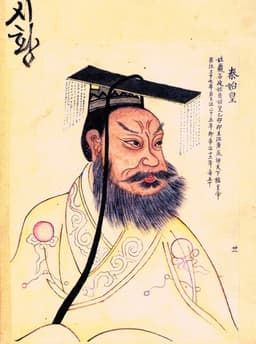
Qin Shi Huang
Emperor · Ancient
85.2Total
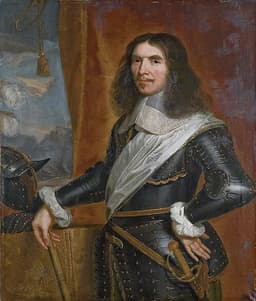
Turenne
General · Modern
75.8Total
Basic Information
Born
-259
1611
Died
-210
1675
Era
Ancient
Modern
Nationality
China
France
Occupation
Emperor
General
Civilization
Eastern
Western
Score Comparison
Military (10%)
80.0
79.9
Political (20%)
90.0
72.0
Influence (20%)
85.0
88.0
Legacy (20%)
90.0
65.0
Leadership (15%)
78.0
77.2
Strategy (15%)
82.0
72.0
TOTAL
85.2
75.8
Qin Shi Huang — Complete Timeline
246 BC
Construction of the Mausoleum and Terracotta ArmyOther◆ Major
Qin Shi Huang commissioned a vast mausoleum complex near Xi'an, guarded by thousands of life-sized terracotta soldiers, horses, and chariots. The project employed hundreds of thousands of workers and reflected his obsession with immortality and imperial power.
Impact: global
230 BC
Conquest of the Six Warring StatesWar
From 230 to 221 BCE, Ying Zheng led the Qin state in a series of campaigns that conquered the Han, Zhao, Wei, Chu, Yan, and Qi states. This unified China under a single ruler for the first time, ending the Warring States period.
Impact: global
221 BC
Standardization of Writing, Currency, and MeasurementsReform◆ Major
Qin Shi Huang ordered the standardization of Chinese script, currency, and weights and measures across the unified empire. This facilitated administration, trade, and cultural integration, laying a foundation for future dynasties.
Impact: globalconstructive
Proclamation of the Qin DynastyPolitical Action
After conquering the last independent state, Ying Zheng declared himself Shi Huangdi (First Emperor), founding the Qin Dynasty. He adopted a new title to signify his supreme authority and initiated centralized imperial rule.
Impact: global
214 BC
Initiation of the Great Wall ConstructionOther◆ Major
Qin Shi Huang ordered the connection and extension of existing northern fortifications to create a unified defensive wall against nomadic Xiongnu raids. This project involved massive conscripted labor and became the precursor to the later Great Wall.
Impact: regional
213 BC
Burning of Books and Burying of ScholarsPolitical Action◆ Major
On the advice of Li Si, Qin Shi Huang ordered the burning of historical records and philosophical texts not aligned with Legalist doctrine. He also had 460 Confucian scholars buried alive to suppress dissent and consolidate ideological control.
Impact: nationaldestructive
Turenne — Complete Timeline
1639 AD
Campaign in the ValtellinaWar
Turenne commanded French forces in the Valtellina during the Thirty Years' War. He captured several fortresses and secured the strategic pass for France, demonstrating his early military skill.
Thirty Years' WarAlpsEarly Career
Impact: regional
1658 AD
Battle of the DunesWar◆ Major
Turenne commanded the French army to victory over the Spanish at the Battle of the Dunes near Dunkirk. The victory led to the capture of Dunkirk and forced Spain to seek peace, ending the Franco-Spanish War.
Franco-Spanish WarDunkirkMilitary Victory
Impact: regional
1674 AD
Battle of the RhineWar◆ Major
Turenne led a French army across the Rhine in winter, surprising the Imperial forces. He defeated the Austrians at the Battle of Entzheim and later at Turckheim, securing French control of Alsace.
Franco-Dutch WarAlsaceWinter Campaign
Impact: regional
Battle of the SambreWar◆ Major
Turenne defeated the Spanish and Dutch forces at the Battle of Seneffe. The battle was costly but prevented the Allies from invading France. It demonstrated Turenne's tactical skill in defensive warfare.
Franco-Dutch WarDefensive BattleTactics
Impact: regional
1675 AD
Death of TurenneWar◆ Major
Turenne was killed by a cannonball while reconnoitering enemy positions at the Battle of Sasbach. His death was a major loss for France. He was buried with honors in the Basilica of Saint-Denis.
Death in BattleFranco-Dutch WarMilitary Loss
Impact: nationaltragic
Expert Analysis
Origins
Qin Shi Huang, born Ying Zheng in 259 BC, was the son of King Zhuangxiang of Qin. His early life was marked by political intrigue and hostage situations, shaping his ruthless ambition. Turenne, Henri de La Tour d'Auvergne, Vicomte de Turenne, was born in 1611 into a noble French family. His military education began early under his uncles, the Princes of Orange.
Rise to Power
Qin Shi Huang ascended the Qin throne at age 13, but real power was initially held by regents. By 238 BC, he had consolidated control and launched campaigns to conquer the six other Warring States, completing unification by 221 BC. Turenne rose through the ranks during the Thirty Years' War, earning a reputation for swift maneuvers and decisive victories. By 1643, he was a Marshal of France, leading armies against the Spanish and Habsburgs.
Leadership & Governance
Qin Shi Huang's governance was centralized and authoritarian. He standardized writing, currency, and measurements, built roads and canals, and initiated the Great Wall. However, his rule was harsh, with the Burning of Books and Burying of Scholars (213-210 BC) aimed at suppressing dissent. Turenne's leadership was marked by strategic brilliance and tactical flexibility. He revolutionized French military doctrine, emphasizing mobility and combined arms. His campaigns in the Valtellina and along the Rhine showcased his ability to adapt to terrain and enemy.
Triumph & Tragedy
Qin Shi Huang's greatest triumph was unifying China, creating an empire that influenced East Asia for millennia. His standardization efforts facilitated trade and communication. Tragically, his obsession with immortality led to mercury poisoning from elixirs, causing his death in 210 BC. Turenne's triumphs include the Battle of the Dunes (1658), where his flanking move defeated a Spanish army. His death at the Battle of Sasbach (1675) was a tragic loss for France, struck by a cannonball while scouting.
Character & Destiny
Qin Shi Huang was paranoid, megalomaniacal, and driven by a desire for control. His destiny was to create a unified China, but his legacy is tainted by cruelty. Turenne was modest, strategic, and beloved by his troops. His destiny was to modernize French warfare, laying groundwork for Louis XIV's ambitions.
Legacy
Qin Shi Huang's legacy is profound: the name "China" derives from Qin, and the Great Wall remains a symbol. His unification model persisted for 2,000 years. Turenne's legacy is as one of France's greatest generals, influencing Napoleon and modern military thought. His tactics are studied in military academies.
Conclusion
Qin Shi Huang scores higher overall (84.1 vs 74.7) due to his transformative impact on civilization. While Turenne was a brilliant tactician, Qin Shi Huang's unification and standardization shaped East Asian history. Both were masters of their domains, but the Emperor's reach and legacy are broader.
**Scores:** Qin Shi Huang: M=80, P=90, I=85, L=90, D=78, S=82, T=85 | Turenne: M=80, P=72, I=88, L=65, D=77, S=72, T=76
Rankings
🥇
Qin Shi HuangLeader
Mil: 80.0Pol: 90.0Inf: 85.0
85.2
🥈
Turenne
Mil: 79.9Pol: 72.0Inf: 88.0
75.8
+9.4 behind
How This Comparison Works
Algorithm
Each figure is scored on 6 dimensions (0—100 scale) based on structured historical data: Military (10%), Political (20%), Influence (20%), Legacy (20%), Leadership (15%), Strategy (15%). The weighted total produces the final ranking.
Data Sources
Scores are computed from structured sub-indicators in the database. Scale factors adjust for era (Ancient ×0.85, Modern ×1.0) and civilization size (Eastern ×1.05, Other ×0.80) to account for differences in population and military scale.
Maximum 3 Figures
Comparisons are limited to 2—3 figures to ensure readability and statistical meaningfulness.
Error Margins
±5 points per dimension — Sub-scores are derived from historical records with inherent uncertainty. Two figures within 5 points on a dimension should be considered roughly equivalent in that area.
Total Score Accuracy
±3 points overall — The weighted combination of 6 dimensions produces a total score with approximately ±3 points of uncertainty. Differences of less than 3 points are not statistically significant— the figures are effectively tied.
Known Limitations
- Historical records are incomplete and uneven across civilizations
- Figures from oral-tradition societies may be underrepresented
- Occupation labels can misclassify multi-role figures
- Scores measure capability and impact, not moral character
- Quantitative scoring is a comparison tool, not absolute truth
Capability Radar
Military (10%) — Battles & Warfare
Battles
85
85
Win Rate
90
88
Expansion
90
80
Political (20%) — Governance & Reform
Reform
95
60
Diplomacy
75
75
Economy
90
55
Influence (20%) — Cultural & Global Reach
Cultural
95
65
Global
85
70
Legacy (20%) — Historical Impact
Historical
95
80
Longevity
95
75
Leadership (15%) — Power & Stability
Tenure
70
70
Stability
65
65
Strategy (15%) — Tactics & Innovation
Strategy
85
92
Tactics
80
90
Reform
95
75
Similar Comparisons
Comments & Discussion
No comments yet. Be the first to share your thoughts!