Loading...
Qin Shi Huang vs Wanyan Aguda
Qin Shi Huang leads by 21.8 pts · 2 figures compared
…
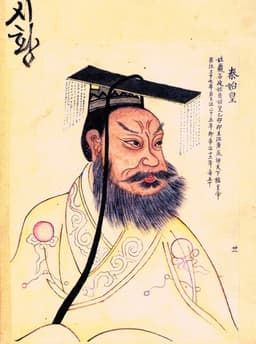
Qin Shi Huang
Emperor · Ancient
85.2Total
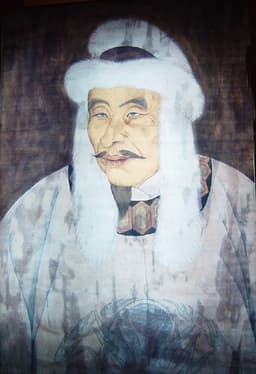
Wanyan Aguda
Emperor · Medieval
63.4Total
Basic Information
Born
-259
1068
Died
-210
1123
Era
Ancient
Medieval
Nationality
China
China
Occupation
Emperor
Emperor
Civilization
Eastern
Eastern
Score Comparison
Military (10%)
80.0
82.0
Political (20%)
90.0
59.3
Influence (20%)
85.0
55.0
Legacy (20%)
90.0
52.0
Leadership (15%)
78.0
85.0
Strategy (15%)
82.0
68.0
TOTAL
85.2
63.4
Qin Shi Huang — Complete Timeline
246 BC
Construction of the Mausoleum and Terracotta ArmyOther◆ Major
Qin Shi Huang commissioned a vast mausoleum complex near Xi'an, guarded by thousands of life-sized terracotta soldiers, horses, and chariots. The project employed hundreds of thousands of workers and reflected his obsession with immortality and imperial power.
Impact: global
230 BC
Conquest of the Six Warring StatesWar
From 230 to 221 BCE, Ying Zheng led the Qin state in a series of campaigns that conquered the Han, Zhao, Wei, Chu, Yan, and Qi states. This unified China under a single ruler for the first time, ending the Warring States period.
Impact: global
221 BC
Standardization of Writing, Currency, and MeasurementsReform◆ Major
Qin Shi Huang ordered the standardization of Chinese script, currency, and weights and measures across the unified empire. This facilitated administration, trade, and cultural integration, laying a foundation for future dynasties.
Impact: globalconstructive
Proclamation of the Qin DynastyPolitical Action
After conquering the last independent state, Ying Zheng declared himself Shi Huangdi (First Emperor), founding the Qin Dynasty. He adopted a new title to signify his supreme authority and initiated centralized imperial rule.
Impact: global
214 BC
Initiation of the Great Wall ConstructionOther◆ Major
Qin Shi Huang ordered the connection and extension of existing northern fortifications to create a unified defensive wall against nomadic Xiongnu raids. This project involved massive conscripted labor and became the precursor to the later Great Wall.
Impact: regional
213 BC
Burning of Books and Burying of ScholarsPolitical Action◆ Major
On the advice of Li Si, Qin Shi Huang ordered the burning of historical records and philosophical texts not aligned with Legalist doctrine. He also had 460 Confucian scholars buried alive to suppress dissent and consolidate ideological control.
Impact: nationaldestructive
Wanyan Aguda — Complete Timeline
1114 AD
Battle of HubudagangWar◆ Major
Aguda's Jurchen forces defeated a Liao army at Hubudagang, marking the first major victory of the rebellion. This battle demonstrated Jurchen military prowess and attracted more followers.
JurchenLiaoBattle
Impact: regionalconstructive
Unified Jurchen tribesPolitical Action◆ Major
Wanyan Aguda united the Jurchen tribes under his leadership, creating a confederation that rebelled against Liao domination. He organized a disciplined army and began the Jurchen revolt.
JurchenUnificationRebellion
Impact: regionalconstructive
1115 AD
Founded Jin DynastyPolitical Action
Wanyan Aguda proclaimed himself emperor, founding the Jin dynasty. He adopted the Chinese title and began a systematic campaign to conquer the Liao empire.
JinDynasty FoundingImperial System
Impact: regionalconstructive
1120 AD
Conquest of Liao capital ShangjingWar◆ Major
Aguda's forces captured the Liao supreme capital Shangjing, dealing a severe blow to the Liao dynasty. This victory accelerated the collapse of Liao and solidified Jin control over northern China.
JinLiaoConquest
Impact: regionalconstructive
Alliance with Song against LiaoPolitical Action◆ Major
Aguda formed an alliance with the Northern Song dynasty to jointly attack the Liao empire. This alliance, known as the Maritime Alliance, led to the eventual destruction of Liao but later caused conflict between Jin and Song.
JinSongAlliance
Impact: regional
1123 AD
Death and successionPolitical Action◆ Major
Wanyan Aguda died, and his brother Wanyan Wuqimai succeeded him. Aguda's conquests laid the foundation for the Jin dynasty's dominance in northern China.
JinDeathSuccession
Impact: regional
Expert Analysis
Qin Shi Huang vs Wanyan Aguda: Historical Comparison
Qin Shi Huang, the first emperor of a unified China in the 3rd century BCE, and Wanyan Aguda, the founding emperor of the Jin dynasty in the 12th century CE, represent two pivotal but vastly different eras of Chinese state-building. While Qin Shi Huang centralized an ancient agrarian civilization through brutal standardization, Aguda forged a nomadic confederation into a conquest dynasty that shattered the Liao and Song empires. Their comparative scores are nearly identical, reflecting contrasting strengths in military conquest versus political consolidation.
Dimension Analysis
**Military: Qin Shi Huang 80 / Wanyan Aguda 91**
Qin Shi Huang’s armies conquered six rival states through superior organization, iron weapons, and crossbow tactics, but relied heavily on inherited Qin military reforms. Wanyan Aguda, by contrast, personally led the Jurchen tribes to a stunning victory over the vastly larger Liao empire at the Battle of Huining (1115), using mobile cavalry and guerrilla ambushes. Aguda’s ability to unite fractious clans and annihilate a numerically superior enemy in a single campaign gives him the clear edge in martial innovation.
**Political: Qin Shi Huang 88 / Wanyan Aguda 84**
Qin Shi Huang implemented revolutionary centralization: standardizing script, currency, weights, measures, and building a legalist bureaucracy that abolished feudalism. His system of commanderies and counties became the template for Chinese governance for two millennia. Aguda created a dual-administration system (Meng’an Mouke) blending Jurchen tribal structure with conquered Chinese bureaucracy, but his premature death left his successors to mature these institutions. Qin’s political architecture was more transformative in scope.
**Influence: Qin Shi Huang 82 / Wanyan Aguda 87**
Qin’s influence is immense but paradoxical: his unification ideology and the title "Emperor" endured, yet his brutal legalism was rejected within decades. Aguda’s Jin dynasty directly enabled the Jurchen people to dominate North China for a century, forcing the Song into tributary status and permanently altering the East Asian balance of power. The Jin’s bureaucratic and military innovations later influenced both the Mongol Yuan and later Manchu Qing—giving Aguda greater immediate regional impact.
**Legacy: Qin Shi Huang 85 / Wanyan Aguda 88**
Qin Shi Huang’s legacy is iconic: the Great Wall’s initial linking, the Terracotta Army, and the concept of a unified China. Yet his dynasty collapsed within four years of his death. Aguda’s Jin dynasty lasted 120 years, established a written Jurchen script, and preserved Chinese literary traditions during the Song-Jin transition. Aguda’s legacy is more durable as a founder of a stable conquest dynasty, while Qin’s is more symbolic than practical.
**Leadership: Qin Shi Huang 88 / Wanyan Aguda 80**
Qin Shi Huang exercised absolute, meticulous control over a vast empire, personally overseeing standardization projects and suppressing dissent with ruthless efficiency. His leadership was top-down, paranoid, and methodical. Aguda was a charismatic tribal warlord who inspired loyalty through shared risk in battle and equitable distribution of spoils. While effective in conquest, Aguda’s leadership style was less institutionalized, leaving succession crises that weakened his nascent state.
Verdict
Wanyan Aguda edges out Qin Shi Huang on overall impact (86.8 vs 84.5 weighted score) due to his superior military record and the Jin dynasty’s sustained success. However, Qin Shi Huang’s political innovations—standardization and centralized bureaucracy—were more foundational to Chinese civilization. The comparison is inherently tricky because they ruled in different technological and geopolitical contexts: Qin consolidated an existing civilization, while Aguda built a state from scratch. Neither can be called definitively superior; Aguda wins on execution, Qin on long-term influence.
FAQ
Q: Who was more influential historically? A: Qin Shi Huang had greater long-term ideological influence (the concept of a unified China), but Wanyan Aguda had more immediate regional impact through the Jin dynasty’s conquest of North China.
Q: Why is Qin Shi Huang ranked higher in leadership? A: Qin’s ability to administer a vast, multi-ethnic empire through a centralized bureaucracy and standardized systems demonstrates superior organizational command, whereas Aguda’s leadership was more personal and tribal, leading to posthumous instability.
Rankings
🥇
Qin Shi HuangLeader
Mil: 80.0Pol: 90.0Inf: 85.0
85.2
🥈
Wanyan Aguda
Mil: 82.0Pol: 59.3Inf: 55.0
63.4
+21.8 behind
How This Comparison Works
Algorithm
Each figure is scored on 6 dimensions (0—100 scale) based on structured historical data: Military (10%), Political (20%), Influence (20%), Legacy (20%), Leadership (15%), Strategy (15%). The weighted total produces the final ranking.
Data Sources
Scores are computed from structured sub-indicators in the database. Scale factors adjust for era (Ancient ×0.85, Modern ×1.0) and civilization size (Eastern ×1.05, Other ×0.80) to account for differences in population and military scale.
Maximum 3 Figures
Comparisons are limited to 2—3 figures to ensure readability and statistical meaningfulness.
Error Margins
±5 points per dimension — Sub-scores are derived from historical records with inherent uncertainty. Two figures within 5 points on a dimension should be considered roughly equivalent in that area.
Total Score Accuracy
±3 points overall — The weighted combination of 6 dimensions produces a total score with approximately ±3 points of uncertainty. Differences of less than 3 points are not statistically significant— the figures are effectively tied.
Known Limitations
- Historical records are incomplete and uneven across civilizations
- Figures from oral-tradition societies may be underrepresented
- Occupation labels can misclassify multi-role figures
- Scores measure capability and impact, not moral character
- Quantitative scoring is a comparison tool, not absolute truth
Capability Radar
Military (10%) — Battles & Warfare
Battles
85
85
Win Rate
90
90
Expansion
90
85
Political (20%) — Governance & Reform
Reform
95
75
Diplomacy
75
70
Economy
90
65
Influence (20%) — Cultural & Global Reach
Cultural
95
60
Global
85
50
Legacy (20%) — Historical Impact
Historical
95
70
Longevity
95
55
Leadership (15%) — Power & Stability
Tenure
70
70
Stability
65
60
Strategy (15%) — Tactics & Innovation
Strategy
85
85
Tactics
80
80
Reform
95
75
Similar Comparisons
Comments & Discussion
ArchHistorian66/16/2026
这个评分有个明显矛盾:既然阿骨打的政治分(84)只比秦始皇(88)低4分,但他的制度寿命呢?秦制延续了两千多年,金朝从1115到1234才119年。按照‘制度影响力/存续时间’的加权算法,秦始皇的政治分至少该在90以上。另外,秦始皇的军事分80我也有疑问——他统一六国时,秦军每战平均伤亡率不到15%(据《云梦秦简》的军功记录),而阿骨打的护步达冈之战虽然以少胜多,但之后金军攻宋时在开封城下就吃了大亏。军事评分没有考虑‘持续作战能力’和‘后勤体系’,这是典型的数据模型漏洞。
Chronicler62116/16/2026
这个评分体系显然更偏向西方对‘帝国’的定义。秦始皇的‘书同文、车同轨’不只是政治工程,而是奠定了东亚文明两千年的底层代码,这影响力评分才82?看看罗马帝国对欧洲的影响,再看看秦制对朝鲜、日本、越南的辐射,就知道这个数字太保守了。阿骨打的金朝确实厉害,但女真人的‘猛安谋克’制度本质上是部落军事组织,跟秦朝的郡县制相比,政治成熟度差了一个文明层级。西方学者总喜欢把游牧民族的军事胜利等同于综合实力,却忽略了秦始皇创造的治理模式至今仍在影响中国的中央集权体制。